Why Does Direct Injection Produce Particulates?
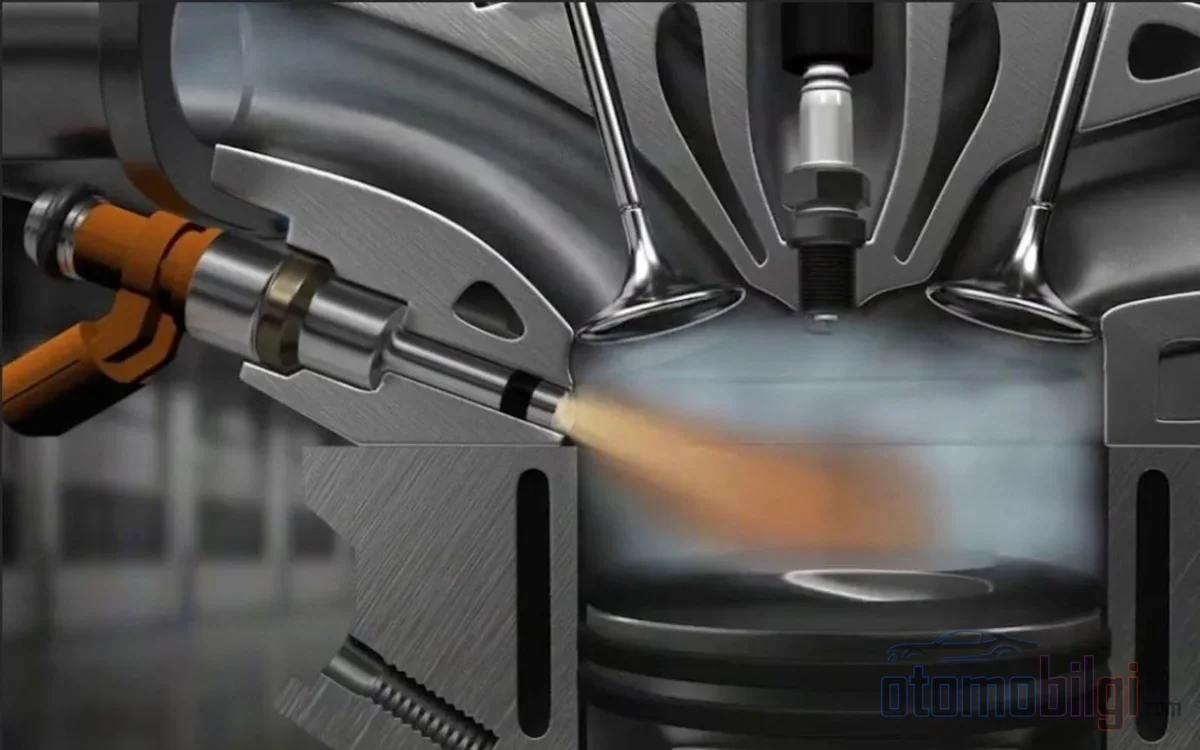
A gasoline engine does not appear to produce as much soot as a diesel; indeed, for many years regulators did not even take gasoline particulate emissions seriously. Then direct injection arrived and the picture changed. This system, which sprays fuel directly into the cylinder instead of the intake manifold, brought a clear gain in efficiency and CO2 - but at the same time it multiplied the number of particles exiting the exhaust many times over. So with the same fuel and the same engine, why does changing the location of injection start producing soot? The answer lies hidden in a few physical mechanisms inside the combustion chamber.
On this page, we will explain step by step the reasons behind particulate production in gasoline direct injection (GDI) - rich mixture zones, wall wetting, and the shortened mixing time; then we will look at how manufacturers responded to this problem alongside Euro 6.
What Is Direct Injection and Why Did It Become Widespread?
GDI (Gasoline Direct Injection), unlike conventional port fuel injection (PFI), where fuel is sprayed into the intake manifold, is a system that delivers fuel directly into the combustion chamber. The idea is not new: the first series-production example is the 1925 Swedish-built Hesselman engine, and in 1954 the Mercedes-Benz 300 SL took to the roads as the first four-stroke automobile engine to use this technique. The modern electronic GDI era began in 1996 with the Mitsubishi Galant.
The reason for the system's rapid adoption is technically clear. Fuel injected directly into the cylinder at high pressure <20 m alt nda ok ince damlac klara ayr l r PFI de damlac klar m aral ndad r Ayn yak t miktar yla daha homojen bir kar m ve daha y ksek zg l a rl k m mk n olur Bu motor k ltme downsizing stratejisinin temel ta d r k k hacimli o unlukla a r beslemeli motorlarla ayn performans daha d k CO2 emisyonuyla elde edilir ABD de GDI n n pay model y l i inde y zde birka iken sonraki model y llar nda yakla k y zde elliye ula t p>
Highlights
- GDI droplets are <20 μm in diameter; in PFI, this value is in the range of 120-200 μm.
- GDI engines emit on average 2 times more particles than PFI engines, and in some measurements 5-10 times more.
- Euro 6 introduced a PN limit of 6x10^11 particles/km for direct-injection gasoline vehicles.
- In one study, increasing the PFI ratio to 35% reduced in-cylinder film density by 40% and soot mass ratio by 77%.
- The solution: the GPF (gasoline particulate filter) mounted below the catalytic converter.
Three Physical Causes of Particulate Formation
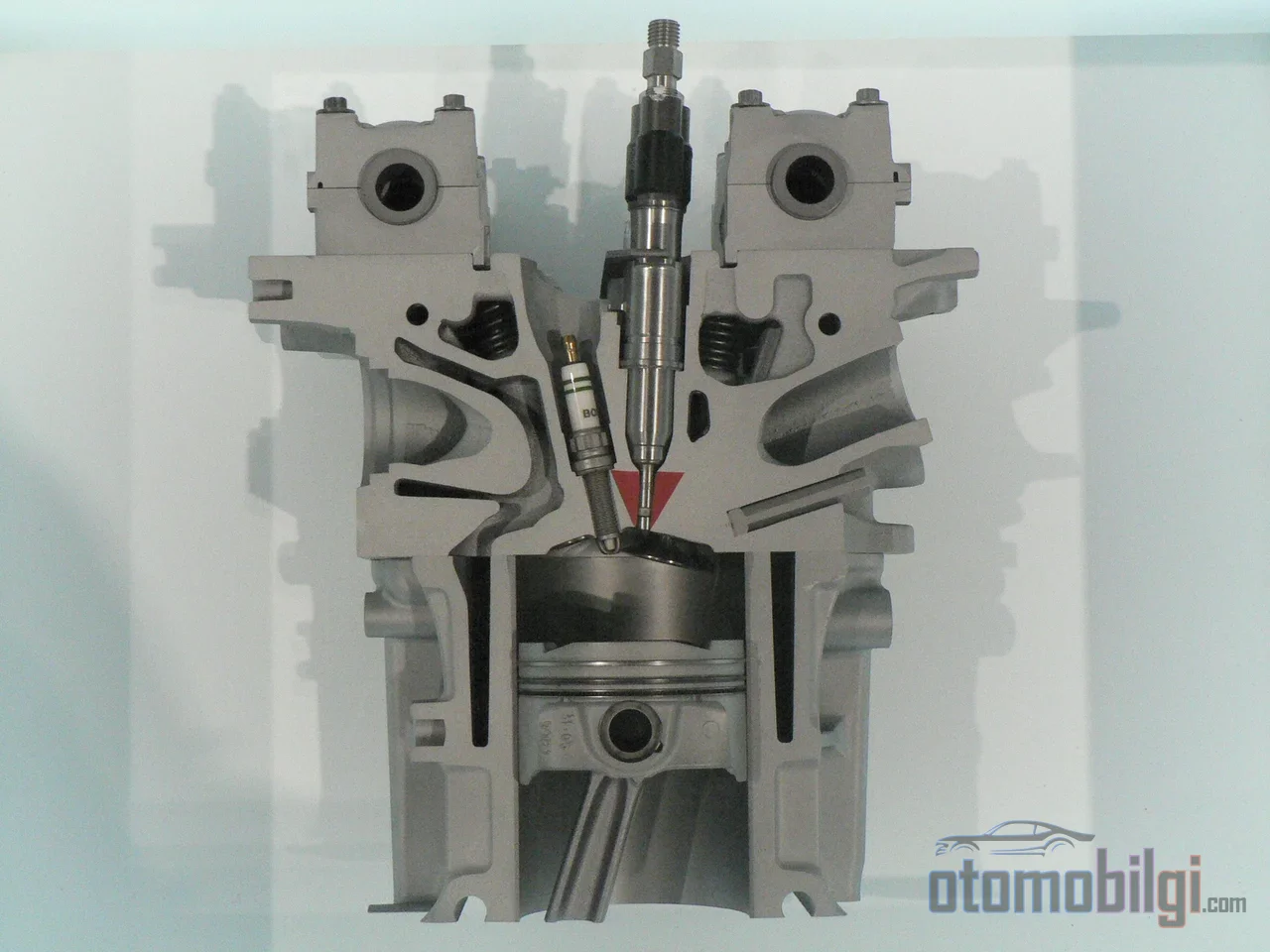
Gasoline does not burn like diesel or like oil in a vapor mixture; it ignites with a spark plug. In theory, a homogeneous mixture burns completely and leaves no soot. The problem is that the mixture in a real cylinder is never perfectly homogeneous. Direct injection deepens this homogeneity problem in three separate ways.
Rich mixture zones: the main source of soot
Soot forms in regions where the fuel cannot meet oxygen, where the mixture is locally too rich. When fuel is injected late into the cylinder, the time available for mixing with air is shortened, leaving pockets inside the cylinder where the lambda value drops well below 1. Combustion cannot be completed in these pockets; hydrocarbon chains undergo pyrolysis in the oxygen-free environment and turn into soot particles. These conditions arise especially easily near the injector nozzle, in the core of the spray. Injection timing is therefore critical: at the very beginning of the intake stroke, when injected in homogeneous mode, maximum time is allowed for mixture preparation and particulate emissions drop noticeably.
Wall wetting and pool fire
The second mechanism is that part of the fuel strikes the piston surface and cylinder wall, forming a thin film - wall wetting. This film remains on the surface even after the main mixture has burned, evaporates with high surface temperature, and burns uncontrollably; known in the literature as a pool fire, it is one of the most efficient mechanisms of soot production. The film's evaporation and pyrolysis processes play a direct role in soot formation. In wall-guided systems, this effect is large because the spray is directed onto the cold piston, resulting in high HC emissions and carbon deposits. Spray-guided designs produce far fewer particulates than wall-guided ones. A numerical study showed that raising the PFI ratio to 35 percent in a dual-injection engine reduced in-cylinder film density by 40 percent and soot mass fraction by 77 percent: as the wall film decreases, soot decreases too.
Shortened mixture time
The third reason is the common root of the first two. In PFI, fuel is injected behind the intake valve, well before the intake stroke; the fuel evaporates, is carried by the intake air, and enters the cylinder nearly ready, with a long mixture preparation time. In GDI, this journey disappears. All of the fuel must be delivered into the cylinder within milliseconds during the compression or intake stroke. The mixture preparation time is dramatically shortened, and the generous timing allowed by the previous technique for homogeneity is no longer available. This is the primary explanation for the particle number at the engine outlet being higher than in PFI engines.
How Big Is the Difference Between GDI and PFI?
Numbers make the abstract explanation of mechanisms concrete. Measurements show that GDI engines have on average twice the PM emissions of PFI engines on a mass basis, and that this difference is largely due to elemental carbon, i.e. soot. Engineering measurements are also available showing that sample GDI engines emit 5-10 times more particulate matter than their PFI counterparts. GDI engines also emit more black carbon aerosol; black carbon is a strong absorber of solar radiation and its contribution to global warming is high. A 2020 study projected that vehicle-related premature deaths in the US could rise from 855 to 1,599 with the GDI transition, which would mean an annual societal cost of approximately 5.95 billion dollars.
An interesting comparison, too: independent tests revealed that new GDI gasoline engines can emit greater numbers of harmful particles than some modern diesels. So the particulate problem is no longer solely a diesel problem.
| Feature | GDI | PFI |
|---|---|---|
| Injection point | Directly into combustion chamber | Intake manifold |
| Droplet diameter | <20 μm | 120-200 μm |
| Mixture time | Very short | Long |
| PM mass emission | ~2x that of PFI | Reference |
| Particle number | Up to 5–10x that of PFI | Low |
Why Did Euro 6 Become the Breaking Point?
Traditional gasoline engines had such low particulate emissions that environmental agencies considered regulating them unnecessary. Direct injection shattered that comfort. In the Euro 5/6 era, a particulate mass limit of 0.0045 g/km (4.5 mg/km) was set for direct-injection gasoline engines; but the real challenge was the particulate number (PN) limit introduced with Euro 6. Initially set at 6x10¹² particles/km, the limit was tightened three years later to the same level as diesel: 6x10¹¹ particles/km. Considering that GDI engines can produce particulates on the order of 4.5 mg/km due to local rich zones, these limits were targets to be met not by the engine itself, but with an after-exhaust solution.
Manufacturers' steps on the engine side are also interesting. The stratified (layered) combustion mode, which promised efficiency in theory, failed to deliver the expected gains in practice; due to high NOx and particulate production, European manufacturers largely abandoned this concept. Most GDI engines after 2017 operate in homogeneous mode with variable valve timing. Some manufacturers combined the two systems: the first example using direct and manifold injection in the same engine was the 2005 Toyota 2GR-FSE (D-4S) - this approach is the engine-side answer to keeping particulates under control.
GPF: The Manufacturers' Answer to the Problem
The most common way to meet the Euro 6 PN limit was to adapt a technology known from the diesel world to gasoline engines: the gasoline particulate filter (GPF, known as OPF or PPF in some markets). Mounted below the catalytic converter, the honeycomb-structured ceramic wall-flow filter traps soot particles as the exhaust gas passes through it. The basic architecture is the same as a diesel particulate filter, but the operation differs: since GDI soot emissions are lower than diesel, less accumulates in the filter, and the system typically cleans itself through passive regeneration under operating conditions where exhaust temperature is high; it does not require the forced and aggressive active regeneration cycles of a DPF. During regeneration, the trapped soot is oxidized into CO2. Measurements have shown that the GPF reduces black carbon emissions by 73–88 percent across various ambient temperatures in a tested GDI vehicle.
At this point, a reasonable question arises: Doesn't the GPF increase fuel consumption? The filter's pressure effect on the exhaust line is a debated issue; but since low GDI soot reduces both accumulation and the need for regeneration, under balanced operating conditions the answer largely favors the filter.
Short Answer and Looking Ahead
In summary, the answer to the question is: direct-injection gasoline engines, because when fuel is injected into the cylinder late and at high pressure, the remaining time for the mixture to become homogeneous is shortened; some of the fuel strikes the piston and cylinder wall, forming films that produce soot, and locally rich zones remain in the core of the spray. This fuel, which does not fully burn, exits as particles in the exhaust; Euro 6's particle number limit turned this physical reality into an engineering constraint for the industry, and the GPF became the practical solution to the problem on the exhaust side.
A new chapter of this story is also open: Euro 7, adopted in 2024 and entering into force in November 2026, extends the regulation to non-exhaust sources for the first time - brake and tire particles - and introduces much stricter rules in real-driving emissions monitoring. The mass limit for gasoline engines, meanwhile, remained unchanged at 4.5 mg/km. The battle against particles is now shifting from inside the cylinder to the brake pad and the tire.
Sources
- Gasoline direct injection
- A Review of Particulate Number (PN) Emissions from Gasoline Direct Injection Engines
- Particulate emissions from gasoline direct injection engines
- Will GDI engines mean higher particulate emissions?
- Direct Injection Emissions: Understanding PM and NOx Control
- Modern gasoline direct-injection engines
- Gasoline Direct Injection Particulate Study
- New petrol engines cause more air pollution than dirty diesels
- Impact of Fuel and Injection System on Particle Emissions from a GDI Engine