Why Don't Electric Cars Interfere with Radio Waves?
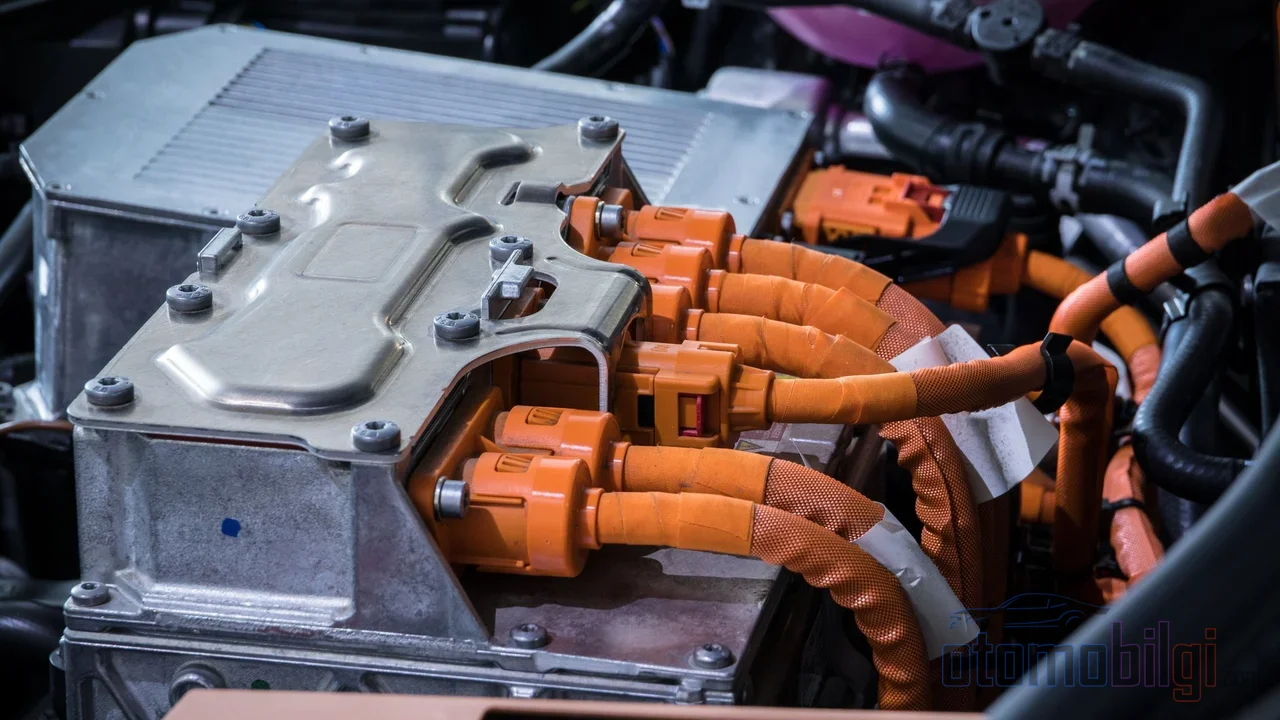
Under the hood of an electric car, a component that is in theory the nightmare of radio receivers is at work: the traction inverter. This power electronics unit converts the battery's direct current into alternating current suitable for the motor, switching thousands of times per second, and at each switching instant it produces a burst of high-frequency noise. It is reasonable to wonder why a device breathing in the same frequency band as radio waves, inside a fast-moving car, does not manage to disable the car's own radio, or even its own control units. The answer is no accident; it is the product of a disciplined engineering field: electromagnetic compatibility (EMC).
Why Does an Inverter Behave Like a Radio Broadcast?
To understand the problem, one must look at what the inverter does. The traction inverter is the interface between the battery and the motor, and it generates the output waveform through fast switching known as PWM (pulse-width modulation). The switching frequency is typically chosen above the threshold of hearing; precisely for this reason, no high-pitched whine is heard from the motor. But at every switching instant, voltage and current fall and rise in a very short time, and these sharp transitions generate harmonics spread across a wide frequency spectrum.
The more dangerous part lies here: PWM is a source that raises the common-mode voltage - the voltage component seen simultaneously on both power conductors relative to chassis ground. Common-mode noise is the dominant emission type in electric vehicles and can spread along the motor toward ground. The motor cables that carry high-frequency switched power from the inverter to the motor are also, in this respect, like an ideal antenna for radiating radio-frequency energy: they are long, they carry current, and they run along the entire vehicle.
The risk spectrum is broad; interference-induced disturbances can range from a minor user annoyance, such as static on the radio, to the loss of a major vehicle function. Moreover, in the automotive world this problem is particularly difficult, because packaging constraints bring electronic systems close together; hybrid and electric powertrains and high-voltage battery packs are already additional noise sources. So how is this chaos brought under control?
Three Strategies: Don't Generate It, Filter It, Shield It
There are essentially three ways to deal with EMI, and a mature electric vehicle design uses all three at once. Suppressing it at the source is the most efficient; then the noise is filtered before it spreads; whatever escapes is shielded and connected to ground. Each layer verifies what the previous one does.
Highlights
- The CISPR 25 standard covers the range of 150 kHz–2500 MHz and performs radiated emission measurements at a distance of only 1 meter
- EMI filters can occupy about one-third of an inverter's total volume; hybrid filter designs have reduced magnetic component volume by approximately 50%
- In 800 V inverters, active filtering uses approximately 20 nF of capacitance; the limit per system is 220–440 nF
- Cable shielding is one of the most effective techniques for reducing radio frequency interference in electric vehicles
Suppression at the Source: The Modulation Wars
The most effective noise is the noise that is never generated. For this reason, designers' first line of attack is switching behavior. Soft-switching ensures that transitions occur when the voltage across the switch is near zero, reducing the harmonic content of sharp transitions; transmitted emission prediction and filter design for variable-frequency, soft-switched inverter control is a research and design field in its own right. Multilevel inverter topologies also serve the same purpose: by dividing the voltage into smaller steps, they significantly reduce switching losses and the spectral density of the noise. The choice of PWM frequency is also critical; whether or not there is interference in the AM broadcast band depends largely on the PWM frequency chosen by the chip manufacturer.
Alternative converter architectures can also be designed to reduce common-mode voltage from the outset. While working on post-800V topologies, rising common-mode emissions are evaluated separately; because the transition to an 800 V architecture also raises the noise-generating potential of every volt.
Filters: The Noise Bouncers
EMI filters stand in the way of noise that escapes from the source. These capacitors sit at the inverter's input and output, diverting or shunting common-mode and differential-mode noise to ground, and preventing signal distortion in sensitive circuits. In electric powertrain modules, front-end filter design is critical; it serves to block the noise coming from the inverter's power switches. For EV power electronics, filters must suppress common-mode and differential-mode conducted emissions above 150 kHz simultaneously.
The cost-volume trade-off is painful here. Since EMI filters can occupy roughly a third of an inverter's total volume, optimal design directly touches vehicle packaging. That is why hybrid filter approaches brought significant gains: for automotive traction inverters, a hybrid common-mode EMI filter reduced the magnetic component volume by about 50%. Active filters, on the other hand, shrink passive component size; in an 800 V inverter system, an active filter uses about 20 nF of capacitance, which is within the total capacitance limit of 220-440 nF per system. In automotive motor drivers, these filters must meet strict EMI specifications together with tight cost constraints.
Shielding and Grounding: Give the Noise an Exit Door
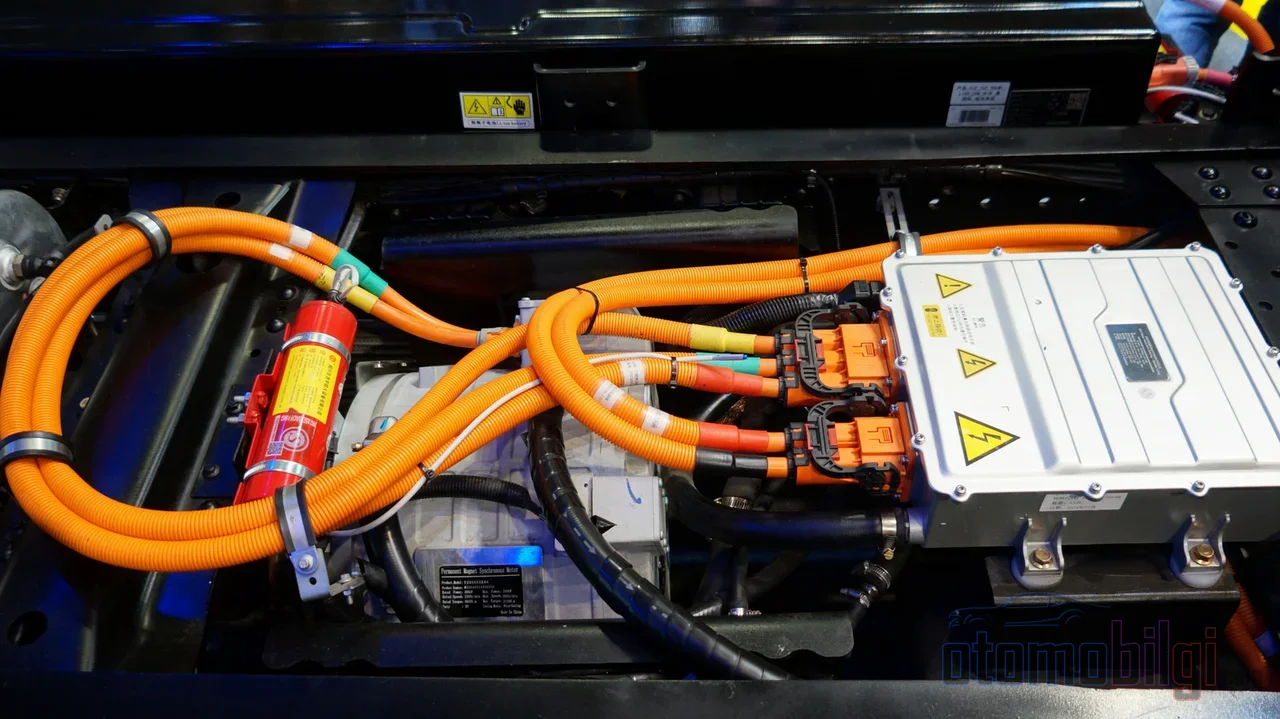
Since electric motors using PWM generate a great deal of EMI, shielding of high-voltage cables is a necessity. A conductive shield layer reduces the magnetic field distribution around the conductor and protects other electronic devices from interference. The most common solution in the industry is braided shielding: the copper braid wrapped around the conductor offers a high coverage ratio and effective EMI suppression. Newer solutions that combine a semiconductor extrusion layer with copper braid improve both interference performance and cable flexibility. Automotive manufacturers minimize EMI effects in high-voltage wiring harnesses by using quick connectors and braided shielding, and cable shielding is considered one of the most effective techniques for reducing radio frequency emissions.
For the shield to be effective, where it is connected also matters: high-voltage cable shields are grounded to the chassis. The shield must be able to drain the noise it captures in a controlled path; therefore, a good grounding and bonding design alone can solve a significant percentage of noise problems. The same discipline continues at the sensitive board level; in battery management system PCB designs, strategies such as multi-point grounding are standard practice.
CISPR 25: The Measurable Limit of Noise
None of these efforts are arbitrary; they are framed by the international automotive EMC emissions standard CISPR 25. The standard defines radio disturbance limits and measurement methods for the protection of on-board radio receivers, covers the frequency range from 150 kHz to 2500 MHz, and governs both the vehicle as a whole and individual components. One detail summarizes the seriousness of the standard: radiated emissions measurements are performed at a distance of 1 meter, much closer than in most EMC standards. An electric vehicle is expected to be quiet enough, on its own power, not to disturb a radio receiver from one meter away.
The AM Radio Case and the Shadow of High Frequencies
Proof that the system works lies where the problem appears. AM radio sits at the very bottom of the frequency band, and by the nature of amplitude modulation it stands out as the format most vulnerable to interference; BMW's 2015 decision to remove the AM radio option, on the grounds that its electric motors created interference on AM, was an early and concrete example of this tension. The amateur radio community also hopes for improved radio frequency interference shielding in EVs; in other words, the issue is not closed, only well managed.
The upcoming tension, however, lies higher up in frequency. Silicon carbide (SiC) based traction inverters switch faster; this means higher efficiency, but it opens a new area of scrutiny for switching-induced disturbances and conducted EMI. Wolfspeed addresses EMI mitigation separately in its SiC solutions; groups such as MIT researchers and the power electronics team (IEH) at the University of Stuttgart have developed active and hybrid common-mode filter prototypes for automotive traction inverters. The faster the switching, the more critical the suppression and filtering layers at the source become.
So, the Answer: Why Don't Electric Cars Interfere with Radio Waves?
The answer is not a single miracle component, but a layered defense architecture: Electric vehicles do not interfere with radio waves, because inverter noise is suppressed at its source (soft-switched and multilevel topologies), leaked noise is captured by EMI filters, and the final residue is discharged in a controlled manner through shielded high-voltage cables and chassis grounding - each step is measurably verified against the 150 kHz–2500 MHz limits of CISPR 25.
This is radio engineering and power electronics shaking hands within the same vehicle body. In the next page, we will discuss why the 800V architecture is a new threshold in terms of both efficiency and EMI, and how the internal architecture of the traction inverter changes this balance; the filters, which are the heroes of this page, belong to the main cast there as well.
Sources
- EMI - E-Mobility Engineering
- EMI Shielding in Electric Vehicle Applications | Interference Technology
- What is the Role of EMI Filters in Electric Vehicles?
- Mitigating EMI with SiC Solutions (Wolfspeed)
- CISPR 25 - Automotive Radio Disturbance Testing Standard
- Active EMI Filters for Automotive Motor Drives (MIT)
- Design of a Hybrid Common Mode EMI Filter for Traction Inverters (Univ. Stuttgart)
- Conducted Emissions Prediction and EMI Filter Design for a Soft-Switching Inverter (Columbia MPLab)
- Performance and EMI Assessment of Post-800V Traction Inverter Topologies (EVS38)
- AM Radio in Electric Vehicles (ARRL Nediv, 2023)