Why Is the Externally Excited Synchronous Motor BMW's Choice?
In the world of electric vehicles, motor choice has for years converged into two camps: permanent magnet synchronous motors with magnets embedded in the rotor, and asynchronous motors that operate on the principle of slip. With its fifth-generation eDrive, BMW has added a remarkable third path to this pair: the wound-rotor synchronous motor, whose rotor is fed with electricity from outside and therefore requires no rare earth metals at all. So why would a manufacturer decide to put a magnet-free design into series production in a field where it usually turns to permanent magnets for efficiency and torque density? The answer lies jointly in the motor's operating principle and in the fragility of the rare earth supply chain.
How Does a Wound-Rotor Synchronous Motor Work?
The single, decisive difference between a wound-rotor synchronous motor (WRSM or EESM in English-language literature) and a permanent magnet motor lies in its rotor. Instead of magnets, there are windings wound onto the rotor and fed with direct current. The current flowing through these windings produces an adjustable magnetic field in the rotor. The rotating magnetic field created by the stator's three-phase alternating current drags the rotor's field at synchronous speed; the rotor turns at the same rpm as the stator field.
The concept of synchronous operation is also the key to what distinguishes it from the asynchronous motor. In an asynchronous motor, the rotor is induced with current through a slip relative to the stator field, and this slip inevitably means loss. In a synchronous motor, however, the rotor field is produced not by induction but directly; the motor runs locked to the line frequency, without slip and with consistent performance. In industrial applications, the electrical efficiency of synchronous motors exceeds 95%, and this construction tends to deliver high torque at low rpm.
How Is Current Delivered to the Rotor? The Slip Ring Problem
Supplying electricity to a rotating rotor is a seemingly simple but engineering-wise delicate question. The classic solution is the slip ring and brush: the excitation current is transferred to rings mounted on the rotor shaft via stationary brushes. This construction is functional, but it means frictional contact and requires maintenance. In terms of longevity and service intervals, a brush-based construction is a natural source of hesitation in a maintenance-free product like an electric vehicle.
The academic and industrial side is trying to solve this problem in two ways: designs that excite the rotor via wireless power transfer, i.e. inductive excitation, and brushless self-excited variants. For the inductive excitation approach, a machine design optimized for the same mechanical power and torque as the BMW i3 has been published; brushless self-excited designs, meanwhile, aim to eliminate the need for frequent maintenance altogether. In short, the slip ring is not a permanent fate of this motor type, but an engineering problem that is still being actively overcome.
Highlights
- The wound-rotor synchronous motor produces a magnetic field without magnets, using the current supplied to the rotor winding.
- BMW's fifth-generation eDrive motors contain no rare earth metals at all.
- The BMW i4 eDrive40 uses a single electrically excited synchronous motor producing 250 kW of power.
- While the permanently excited motor reaches 97% efficiency at full load, this figure drops to 82% at 25% load.
- The fifth-generation electric drive system won the 2024 AJAC Best Green Innovation award for containing no rare earths.
Comparison with Permanent Magnet and Induction Motors: Efficiency, Torque, Mass
Placing the three motor types side by side is the clearest way to understand BMW's choice. The permanent magnet synchronous motor (PMSM) is known as the efficiency champion: the magnetic field in the rotor comes for free, no excitation current is spent, and no-load losses remain low. In a PMSM that can reach 97% efficiency at full load, efficiency drops noticeably with load: it falls to 89% at 50% load and to 82% at 25% load. In the externally excited motor, the rotor field is produced by current; although this looks like a loss, it is also a control advantage - since the field can be adjusted according to load and speed, partial-load losses can be optimized.
| Feature | Externally Excited | Permanent Magnet | Induction |
|---|---|---|---|
| Rotor field | Current supplied to the winding, adjustable | Permanent magnets | Slip-dependent induction |
| Rare earth requirement | None | Yes | None |
| Operating principle | Synchronous, slip-free | Synchronous, slip-free | Asynchronous, with slip |
| Efficiency profile | Can be optimized via field adjustment | High at full load, drops at partial load | Limited due to slip losses |
| Power density | Lower than PMSM | High torque density | Medium |
| Maintenance sensitivity | Ring maintenance required in brushed designs | Maintenance-free | Maintenance-free |
Scientific comparison studies show that the externally excited synchronous motor has lower power loss, lower inverter power requirements, and lower cost and active material mass than the induction motor. In the electric vehicle context, this motor stands out as a promising alternative to the permanent magnet motor; it delivers strong performance across different speed ranges and eliminates the concern of magnet material supply altogether. A balancing note is necessary: in a specific 3 kW / 3600 rpm reference application, the PMSM has a lower mass to achieve the same efficiency. The power density advantage belongs to the permanent magnet motor; the externally excited design, however, pulls ahead with its cost, supply security, and field adjustability.
Why Was This Architecture Chosen for the BMW i4 and iX?
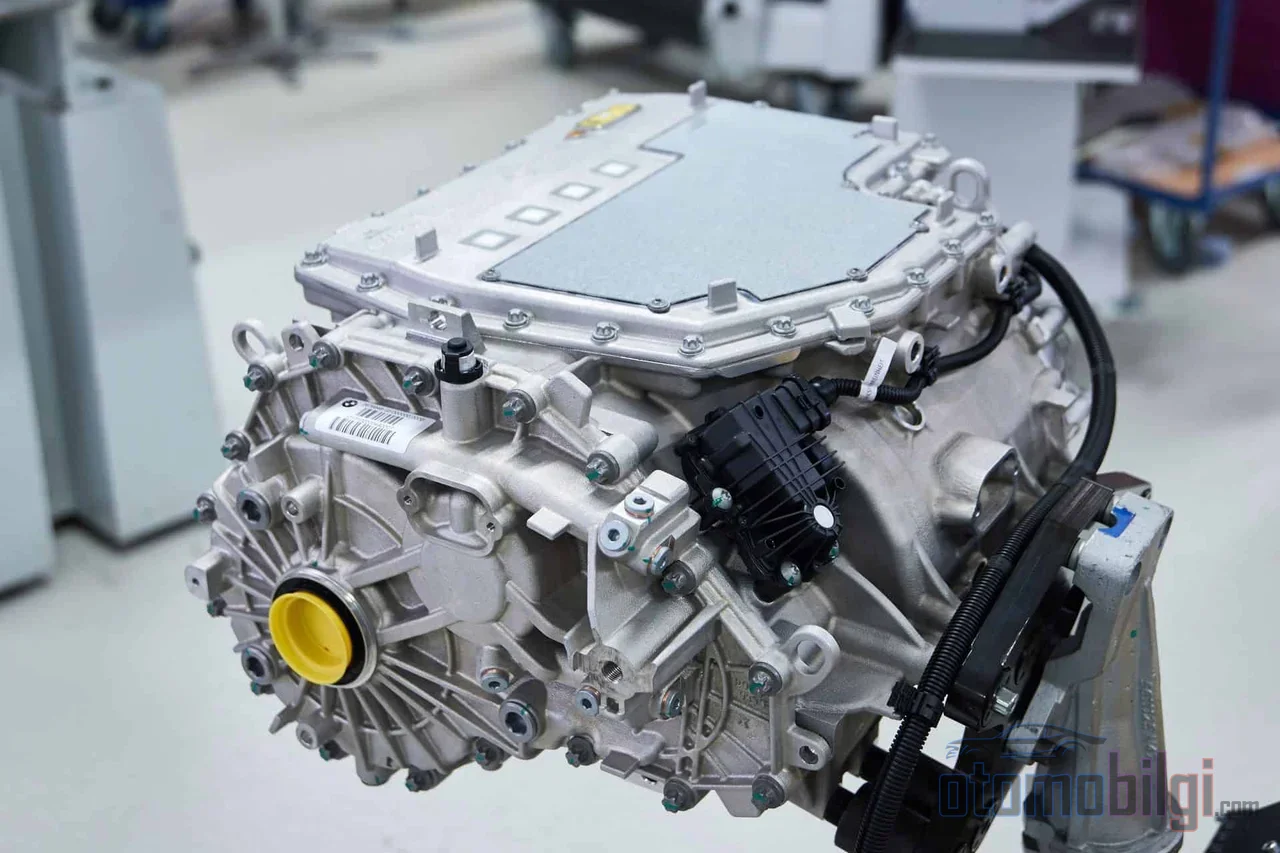
BMW's fifth-generation eDrive units are defined as three-phase AC synchronous motors, and the manufacturer has officially announced that they require no rare earth metals or magnets. In the most powerful electric models, such as the iX M60, the rotor came with this drive system containing no rare earth magnets. The fifth-generation electric drive system also won the 2024 AJAC Best Green Innovation award for containing no rare earth metals.
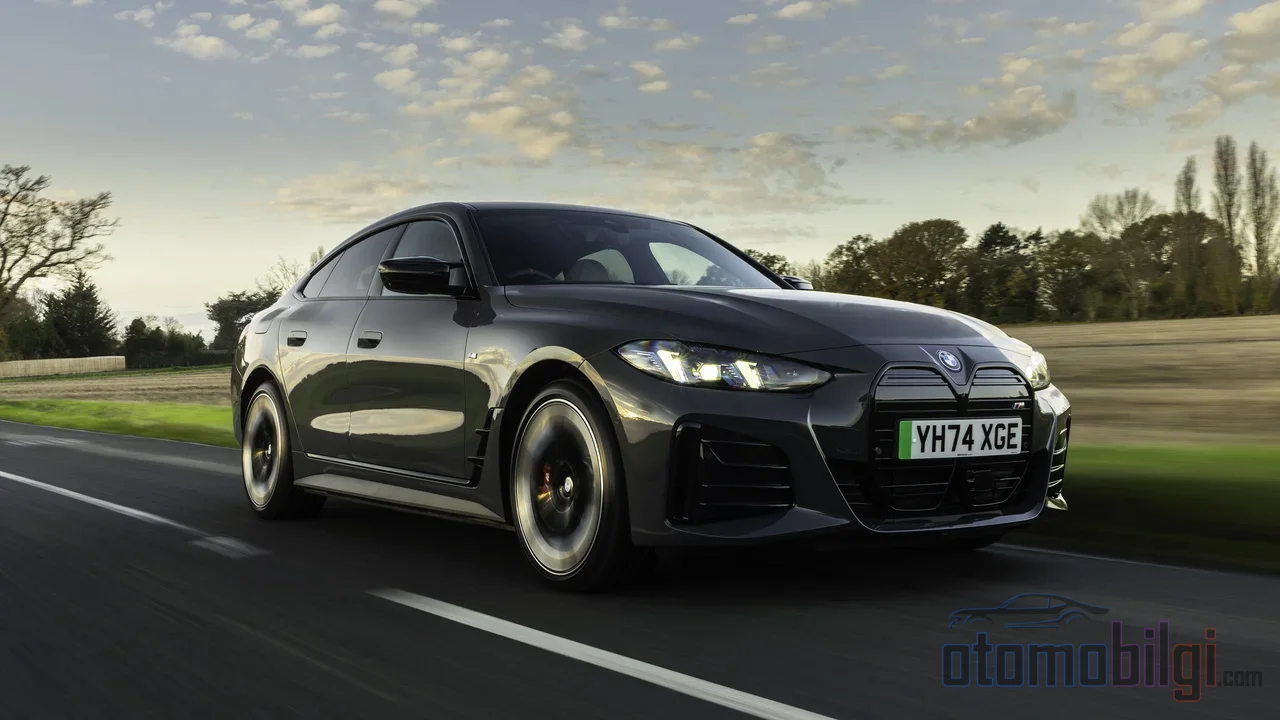
The concrete example is the BMW i4 eDrive40: a single 250 kW (340 PS) electrically excited synchronous motor driving the rear wheel. This magnet-free motor carries some of the characteristics of both synchronous and asynchronous motors: From the synchronous side it takes slip-free, consistent operation, plus the wide efficiency map that comes from field adjustability. BMW's move on the inverter side is also part of the same architecture: the inverter, which serves as the motor's brain, is equipped with 800V technology and silicon carbide (SiC). Choosing a rare-earth-free rotor and seeking compensation in power electronics is the hallmark of a systematic engineering decision.
Does the Magnet-Free Design Carry a Size Penalty?
Academic studies provide examples showing that the wound-rotor synchronous motor is heavier at the same efficiency; this is the inevitable advantage of a magnet, which produces a magnetic field for free. BMW, however, claims that the rare-earth-free rotor does not lead to an increase in size and weight in its most powerful drive unit. There is no real contradiction between the two claims: one describes a general design point, the other the optimization of a specific product. The rotor winding opens up room for other system-level goals in place of power density - supply security, cost stability, adjustable field.
Why Is the Rare Earth Issue Bringing This Motor Into the Spotlight Now?
The wound-field synchronous motor is not a new invention; but the economic and geopolitical context has brought it back to the center. The processing of rare earth elements relies heavily on a single geography in its supply chain, and China's export restrictions have become the main driving force pushing automakers toward magnet-free motors. This concern is not unique to BMW: The largest US automaker has also reported that it is investigating limiting or entirely eliminating rare earth materials in EV motors. Vimag Labs, based in Bengaluru, receiving its fifth patent for a magnet-free EV motor in mid-2026 is an indicator of how fast the field is developing.
Market analyses point in the same direction: today, the externally excited synchronous motor is cited as the only commercially viable magnet-free alternative. There is also a second path alongside it - rare-earth-free permanent magnets - and players such as Honda/Astemo are developing rare-earth-free motors based on synchronous reluctance. But the solution with proven mass production and in daily use in passenger EVs is currently the architecture BMW has chosen.
Why Is the Wound-Field Synchronous Motor BMW's Choice? Short Answer
BMW's choice cannot be reduced to a single reason, but it rests on three pillars. The first is supply security: the rotor winding requires no magnets, so rare earth export restrictions cannot be applied to this motor. The second is control: since the rotor field is adjusted by current, the efficiency map can be optimized across different speed and load ranges - this is the flexibility that the fixed field of a permanent magnet motor lacks. The third is cost and materials: comparative studies show lower losses, inverter demands, and active material mass compared to the asynchronous motor. In return, some compromise is made on power density, and the brushless design requires the excitation ring to be managed; BMW is among those trying to compensate for the torque need with strong power electronics and, in the long term, brushless and inductive excitation solutions.
Frequently Asked Questions
Where does a motor without permanent magnets produce torque?
From the direct current supplied to the rotor winding. This current creates an adjustable magnetic field in the rotor; the stator's rotating field drags this field at synchronous speed. The fact that the magnetic source is electricity, not a mineral, makes all the difference.
How does the slip ring solve the maintenance problem?
Brushed ring structures require maintenance due to frictional contact. Alternatives are progressing through the development stage: wireless, inductive power transfer to the rotor and brushless self-excited designs aim to eliminate the maintenance need.
Is the externally excited motor less efficient than the permanent magnet one?
At loads close to full load, the permanent magnet motor is generally more efficient; its efficiency rises up to 97%. However, its efficiency drops quickly as the load decreases. In the externally excited motor, since the rotor field can be adjusted, losses can be optimized in partial load regions. There is no clear champion; there are different efficiency profiles.
Why is rare earth dependency such a critical problem?
It carries three reasons at once: concentrated supply chains and export controls, cost volatility, and sustainability concerns. An architecture that holds no magnets in the rotor eliminates all three of these risks structurally.
Conclusion: The Magnet-Free Path Is Being Solidified
The externally excited synchronous motor is a genuine third option positioned between the permanent magnet and asynchronous motors: it combines the no-slip discipline of the synchronous with a rotor that avoids the increasingly obsolete magnet problem. BMW's carrying this architecture into series production in the i4 and iX motors showed that the concept can stand not only on paper but also in daily use. While the engineering debates over slip rings and power density continue, and as long as the tension in the rare earth supply chain persists, this motor type's place in EV motor comparisons seems set to become even more solid.
Sources
- BMW's Fifth-Generation eDrive Electric Motors Explained - BimmerLife
- BMW's Externally-Excited EV Motors Explained - BMWBlog
- BMW i4 - Wikipedia
- BMW Efficient Dynamics - BMW Group Press
- BMW's 5th-Gen Electric Drive wins 2024 AJAC Award - BMW Group Press
- Rare earth metals - BMW Australia
- BMW's Most Powerful e-Propulsion Skips Rare-Earth Magnets - Magnetics Magazine
- Inductive Electrically Excited Synchronous Machine - MDPI Energies
- Comparative Study of Induction and WRSM - IEEE
- PMSM vs WRSM comparison - Purdue
- PMSM Introduction - Brogen Motors
- Motor Efficiency - FluxSpeed
- Synchronous motor - Wikipedia
- WRSM - EVKX.net
- Routes to Reduce Rare Earth Reliance - IDTechEx
- Vimag Labs rare earth-free motor patent - Electrek
- Automakers cutting rare earths - Reuters
- Rare-earth-free motors - Astemo