The Role of Rare Earth Elements in Electric Motors
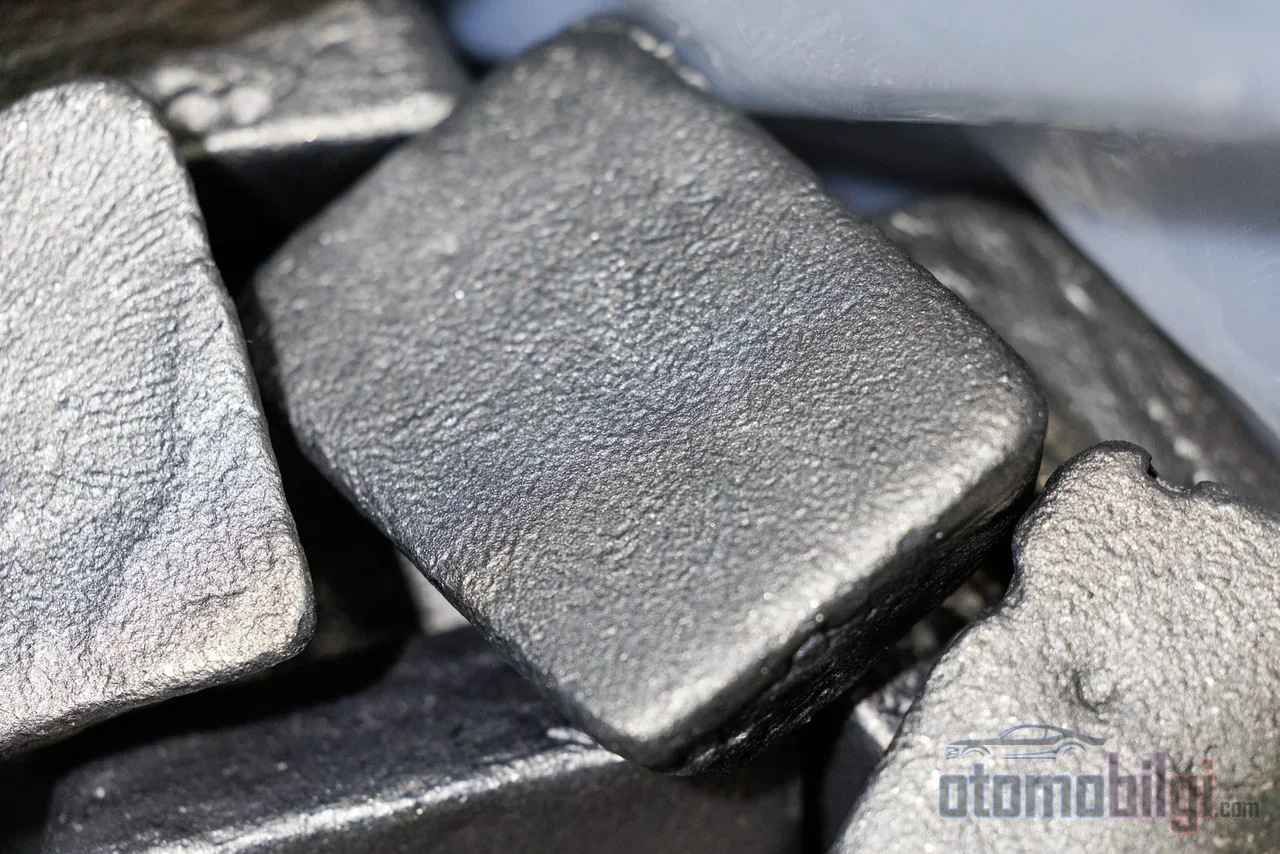
When you disassemble the motor of an electric vehicle and look at the rotor, you cannot see the real hero of the story: an alloy of silvery brilliance, embedded in the rotor in millimeter-sized pieces. Neodymium-iron-boron. This material, small enough to hold in your hand, single-handedly determines how efficient, how compact, and how dependent the motor will be. And precisely because of this, the rare earth export restrictions imposed in 2025 did not surprise the automotive world once again; on the contrary, they brought to light a vulnerability that had long been anticipated.
The answer to why permanent magnet motors operate more efficiently than induction motors lies not in electronics, but in the physics of magnetism. Understanding the role of rare earth metals in an electric vehicle motor begins by answering three questions: where does the magnetic field come from, what does heat degrade, and how vulnerable is the supply chain? This page addresses all three with measurable data.
How a Permanent Magnet Motor Works: A Machine with No Rotor Loss
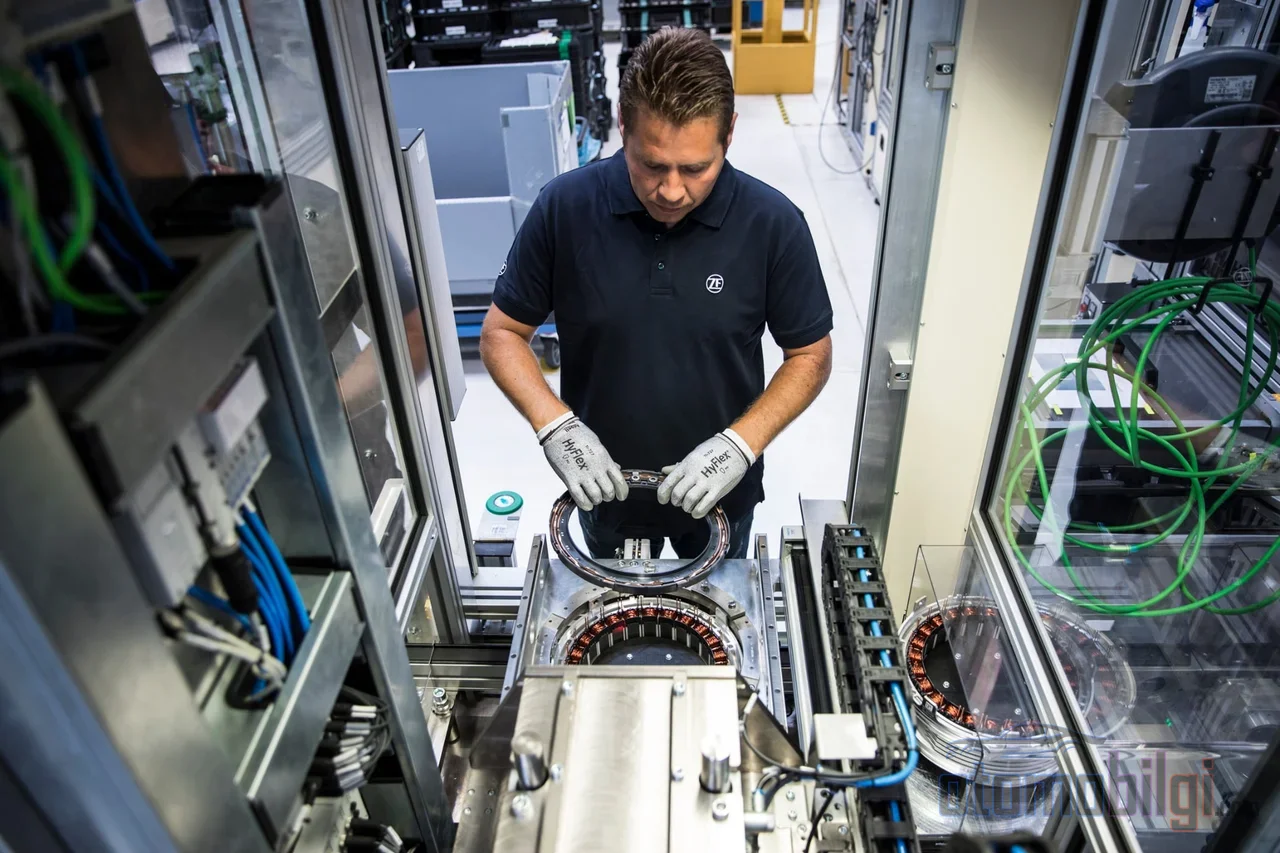
Every electric motor relies on magnetic fields, but not every motor requires permanent magnets. In a permanent magnet (PM) motor, the division of labor is clear: the stator windings create a rotating magnetic field, the permanent magnets placed in the rotor interact with this field to produce torque, and the power electronics keep the stator field synchronized with the rotor position. The rotor itself carries no excitation current.
This is exactly where the critical point lies. In an asynchronous (induction) motor, rotor magnetism is created by induced currents, and these currents mean a continuous electrical loss in the rotor's conductivity. In a permanent magnet motor, however, the magnet provides pre-excitation for free: since there is no continuous rotor excitation current, rotor electrical losses are eliminated. Depending on their design, PM brushless motors represent the class with the highest efficiency and the highest power density; lower losses, higher torque density, and naturally a smaller, lighter motor block.
The position of the magnets on the rotor is also a design decision that affects efficiency. In a surface-mounted (SPM) design, the magnets are on the rotor surface; in an interior (IPM) design, the magnets are placed inside the rotor. Interior magnets do not merely provide structural strength: the rotor slots create high-reluctance zones, adding an extra torque component known as reluctance torque and broadening the motor's efficiency map.
Highlights
- NdFeB is the strongest permanent magnet material in the industry: 30-55 MGOe energy product (compared to 3.5-5.0 MGOe for ferrite).
- Dysprosium addition increases the magnet's resistance to irreversible magnetization loss in hot rotors.
- Motors requiring rare earths accounted for approximately 94.7% of the global light vehicle e-motor market in 2025.
- Magnet-to-magnet recycling reduces environmental impacts by 64-96% depending on the impact category.
How Powerful Is an NdFeB Magnet: Magnetic Superiority in Numbers
The NdFeB alloy is produced by sintering at an approximate composition of Nd14Fe78B8 and derives its characteristic magnetic strength from the Nd2Fe14B phase. It is the strongest permanent magnet material used in industrial applications; the same material works not only in electric vehicle motors but also in hard disk drives, power tools, generators and MRI devices. The comparison can be summarized in a single figure: in maximum energy product, NdFeB ranges from 30 to 55 MGOe; Alnico offers 5 to 12, while ferrite offers only 3.5 to 5.0 MGOe.
This difference is reflected in the motor's geometry. High magnetic flux density allows torque to be increased without raising the current; a motor designed with ferrite for the same magnetic target must be significantly larger and heavier than its NdFeB counterpart. In an electric vehicle, every kilogram and every liter directly means range; which is why neodymium magnets have become the de facto standard in compact drive units.
Two key quantities define the character of the material: remanence (Br) is the residual flux density remaining in the magnet; while intrinsic coercivity (HcJ) measures resistance to irreversible loss of magnetization due to heat and opposing magnetic field. The balance between strength and durability across these two axes determines the motor designer's choice of magnet grade.
What Does Dysprosium Do: The Fuse of the Hot Rotor
NdFeB's weak point is heat. Although the material, with a Curie temperature of approximately 320 °C, never approaches this limit under motor operating conditions, it loses its magnetic strength as temperature rises. The motor; is exposed to high temperatures due to copper losses, rotor losses and ambient heat; moreover, armature reaction applies a magnetic field in the direction opposing the magnet. If the operating point falls below the critical threshold of the demagnetization curve known as the knee, the loss becomes irreversible: the motor permanently loses power.
This is where dysprosium's role comes in - it is all about this threshold. Adding dysprosium to NdFeB increases resistance to loss of magnetization, that is, coercivity. For this reason, NdFeB grades with higher coercivity are preferred in motors with hot operating environments. One should also think in the opposite direction: the highest grade number is not always the right choice. In a hot rotor, a low-energy but high-coercivity grade can be safer than a standard grade with high remanence. The choice of magnet grade; is an engineering calculation that depends on the required flux, geometry, operating temperature, opposing field and air gap.
The material has one more weakness: it is susceptible to corrosion along the sintered grain boundaries. That is why NdFeB magnets in motors are protected with a copper-nickel or aluminum coating.
Rare Earth Supply Risk: A Chain Dependent on a Single Point
Neodymium is a relatively abundant element; yet in 2017, global demand exceeded production by approximately 10%. This balance fragility was also reflected in practice, with China restricting shipments to Japan in 2010 and export quotas lifted in 2015. Commercial restrictions introduced in 2025 once again made it difficult for the rest of the world to secure rare earth materials; rare earths are identified as one of the biggest bottlenecks in the electric vehicle supply chain.
The striking aspect of the picture is the scale of the dependency: motors requiring rare earths accounted for approximately 94.7% of the global light-vehicle e-motor market in 2025. In other words, almost every electric vehicle produced depends on a raw material chain that rests on a single geographic concentration. At the level of international energy agencies, the assessment is the same: new projects, partnerships and policies are needed to manage this risk. Warnings that this dependency could trigger the next major automotive supply chain crisis are now also appearing in white papers.
Why Are Manufacturers Turning to Magnet-Free Motors?
Although the shift to magnet-free motors may seem like a step backwards in terms of efficiency, it is in fact a calculation of cost and supply. The choice of technology in an electric vehicle motor; is determined by the trade-off between motor cost, range and battery cost, and the equilibrium point shifts as rare earth prices and supply risk increase.
Externally Excited Synchronous Motor (EESM)
In this topology, the rotor's magnetic field is generated not by a permanent magnet but by a winding fed from an external power source. It requires an additional power source and slip-ring-like transmission for excitation; in return, the flux can be adjusted instantly according to operating conditions. Offering high efficiency across the entire operating range makes the EESM highly suitable for axle drives, and this is the main reason for its widespread adoption in modern electric vehicles.
Induction Motor
In an induction motor, the rotor current is created by electromagnetic induction; there are no permanent magnets at all, production is cheaper, and the rotor's magnetism disappears when power is cut off. It can be efficient in the region requiring high speed and low torque. This is why it is not unusual to see a hybrid approach in dual-motor architecture: for example, it is known that one manufacturer uses a permanent magnet motor at the rear and an induction motor at the front in its dual-motor models; while the induction motor can be deactivated at highway cruising speeds, the permanent magnet motor continues to rotate at all times due to its magnetic torque.
| Motor Type | Magnet in Rotor | Strength | Challenge |
|---|---|---|---|
| Permanent magnet (PM) | Yes | Highest efficiency and power density | Rare earth dependency |
| Externally excited synchronous (EESM) | No | High efficiency across the entire operating range | Additional power source for excitation |
| Induction | No | Cheap production, magnet-free | Rotor losses |
Magnet-free NdFeB or Iron Nitride: The Quest on the Materials Front
Alternatives are developing on two fronts. The first front targets NdFeB itself: In July 2025, a manufacturer announced it had developed a high-performance sintered neodymium magnet that can be used in electric vehicle traction motors without containing heavy rare earths (i.e. dysprosium). This means that by leaving out neodymium... no, by eliminating dysprosium, the most critical supply risk is removed.
The second front abandons rare earths entirely. Iron nitride (FeN) magnet-based rare-earth-free motor technology will be showcased at the component level at a defense fair in 2026; research into candidate materials such as Fe-Co-Mo alloys, nano Co-Pt structures, and meteoritic-type Fe-Ni (tetrataenite) is also ongoing. Ferrite, meanwhile, is a realistic rare-earth-free option today: cheap and corrosion-resistant, but weak; it works well in designs where cost matters more than size minimization. SmCo magnets offer strength comparable to NdFeB along with a Curie temperature exceeding 700 °C and good corrosion resistance; however, they are expensive due to their higher rare earth content and are now limited to specialized applications.
Rare Earth Recycling from Motors: Magnet-to-Magnet
The lasting solution to supply risk may be recovering rare earths from motors rather than digging new ones out of the ground. Comprehensive assessments going beyond battery materials have made rare earth recycling from electric vehicle motors a priority agenda item; yet traditional magnet recycling is not yet widespread and is described as an emerging priority.
The technically promising route is magnet-to-magnet recycling. Making a new magnet from recycled material produced from a motor magnet reduces environmental impacts by 64-96% depending on the impact category. A European Union-backed project also took the logic one step further: it developed the world's first recyclable e-motor using recycled neodymium magnets; in other words, a motor whose design makes its own future recycling possible.
In summary: Is a Rare-Earth-Free Motor Possible?
It is possible, and some are already being produced: induction and externally excited synchronous motors require no permanent magnets, heavy rare-earth-free NdFeB grades have been announced, and iron nitride-based motors have entered the scene. But the balance is clear: thanks to the pre-excitation physics that completely eliminates rotor losses, the permanent magnet motor still offers the highest efficiency and power density, and market share is shaping up accordingly. The realistic picture is not the dominance of a single motor, but of a spectrum: NdFeB where efficiency and compactness are needed, magnet-free topologies when supply risk and cost pressure rise, and in the long term, recycling and new magnet chemistries. What is actually chosen when selecting an electric vehicle motor is a deliberate engineering trade-off between magnetic performance and supply chain resilience.
Sources
- Permanent magnet motor
- How Do Magnets Work In Electric Motors? BLDC, PMSM & More
- The Important Role of Dysprosium in Modern Permanent Magnets
- Proterial Develops High-Performance Heavy-Rare-Earth-Free Magnets
- Rare Earths Are Becoming the EV Supply Chain's Greatest Chokepoint
- Supply chain risks for rare earth elements
- Eliminating rare earth elements from EV motor supply chain
- Life Cycle Assessment of NdFeB Magnet Recycling
- Designing and recycling electric motors - DEMETER Project
- Rare-Earth-Free Motor Technology Showcase