Magnet-Free Electric Motor Is Possible and on the Way
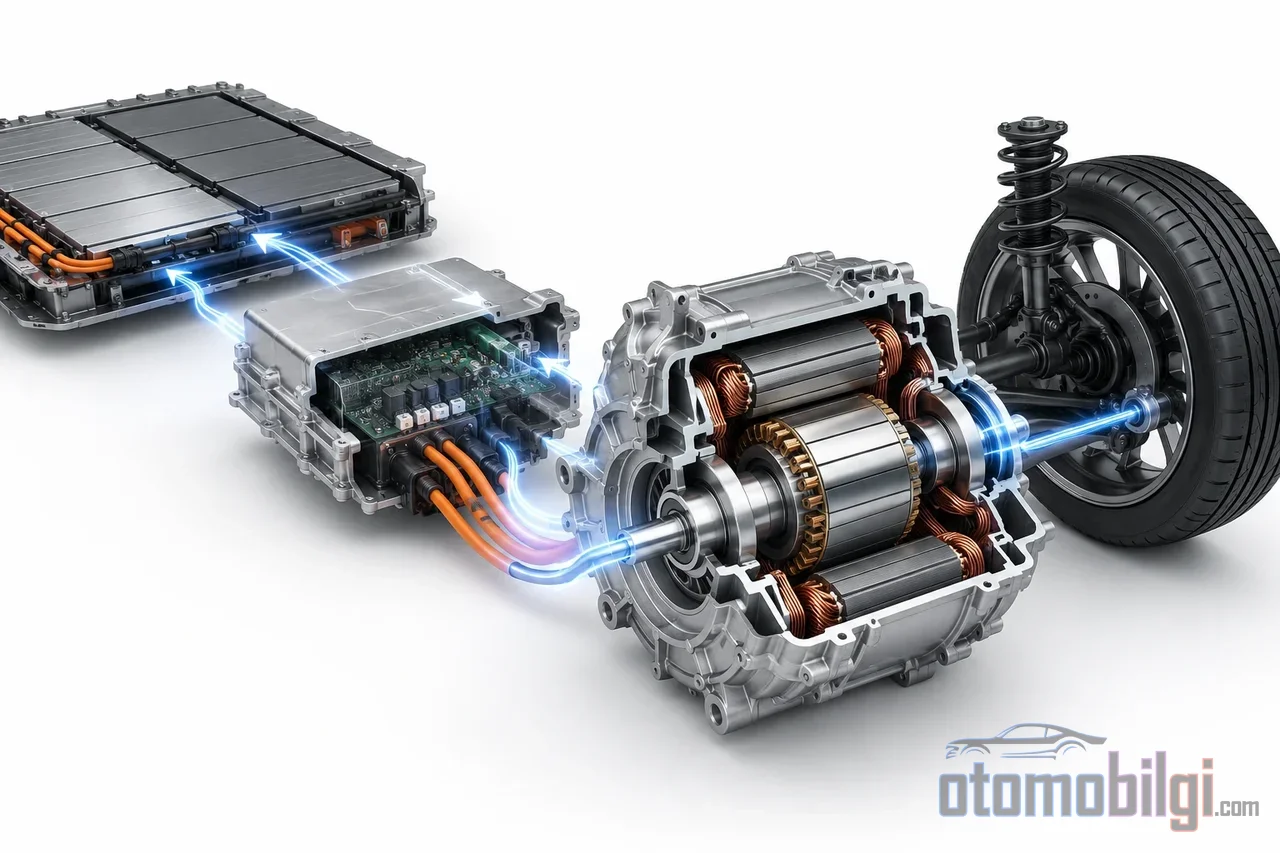
The vast majority of electric vehicle motors owe their performance to the presence of just a few grams of metal: rare earth elements such as neodymium and dysprosium. The problem is that the processing and refining of these elements is concentrated in a single region of the world; export controls, price fluctuations, and supply disruptions hit automakers directly. The 1-2 kilograms of magnet material in a drive motor can determine the fate of production plans worth billions of dollars. So is a completely magnet-free electric motor possible? The short answer is yes - but every solution has its own cost.
Why Are We So Dependent on Rare Earths?
About 85% of electric vehicles use a permanent magnet synchronous motor (PMSM). The rotors of these motors contain neodymium-iron-boron (NdFeB) magnets; heavy rare earth elements such as dysprosium are added to this compound for high temperature resistance. The rotor produces its permanent magnetic field effortlessly; the stator's rotating field follows this field, and this is where high efficiency, strong dynamic response, and compact design come from. IPM (interior permanent magnet) designs deliver high power density while maintaining efficiency across most of the operating range.
The scale of the dependency is growing: In 2024, rare earth demand from EV motors rose by 32% annually to 37 kilotonnes and was expected to reach 43 kilotonnes in 2025. PMSM and axial flux motors together account for more than 86% of the EV motor market. Demand is projected to grow by roughly 70% over this decade.
Interestingly, rare earths are not actually rare: some are more abundant in the Earth's crust than copper. The real bottleneck is on the processing side. 85-90% of rare earth refining takes place in China, and export controls can turn this concentration into a supply weapon. The price of dysprosium in Europe in April 2025 was $280 per kilogram and later rose to $2,250 - an increase exceeding 700%. In this picture, motor material rises to a position that determines both an engineering choice and a supply strategy.
Highlights
- Neodymium magnets produce approximately 1.4 Tesla, while ferrite magnets produce 0.5-1 Tesla of magnetic field.
- The price of dysprosium in Europe rose in 2025 from $280/kg to $2,250/kg.
- BMW's 5th generation eDrive motor, with its wound rotor synchronous design, contains no rare earths at all.
- In EESM motors, copper requirements can rise to twice that of a permanent magnet motor.
Ferrite Magnets: A Cheap but Weak Alternative
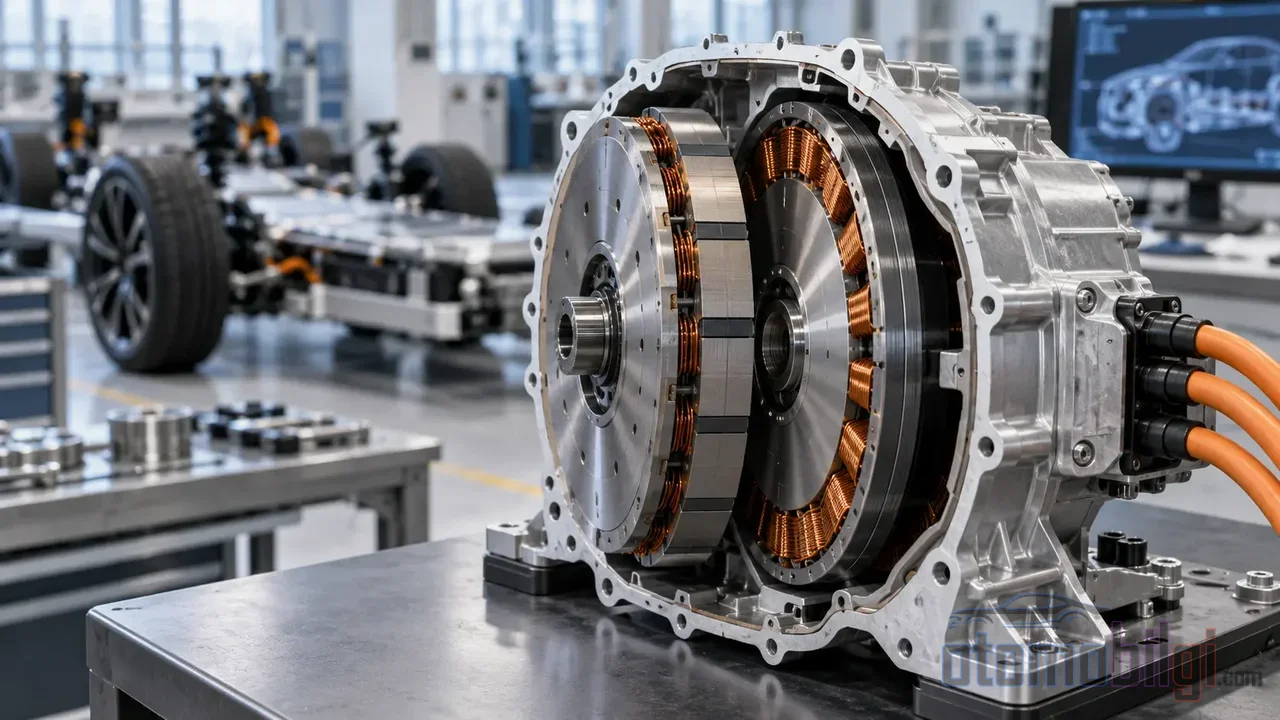
Ferrite is the most practical permanent magnet material that could replace rare earths. Its cost is low, supply is stable, and its environmental footprint is comparatively small. At a glance, it is attractive in terms of magnetic field offered per dollar: with the same budget, ferrite provides 2-3 times the field of neodymium. But physics does not negotiate.
| Feature | Neodymium (NdFeB) | Ferrite |
|---|---|---|
| Magnetic field | ~1.4 Tesla | 0.5-1 Tesla |
| Relative field strength | Reference | 8-20 times weaker |
| Thermal stability | Improved with dysprosium doping | Less stable |
| Rotor size/weight | Compact | Much larger for similar performance |
| Material cost | High, supply risk | Low, accessible |
Neodymium produces a much stronger field per unit volume than ferrite; to achieve the same torque as ferrite, the rotor would have to be much larger and heavier. This affects the motor, the drivetrain, and ultimately the vehicle's range balance. That's why while ferrite-based PMSMs work in some segments, they cannot easily keep up in compact and performance vehicles where power density is critical.
Wound-Rotor Synchronous Motor: An Electromagnet Instead of a Permanent Magnet
There is a way that works synchronously without permanent magnets: the externally excited synchronous motor (EESM). In this design, the rotor contains windings instead of a permanent magnet; current transmitted through slip rings enters the rotor and the rotor becomes an electromagnet. The stator's rotating field works in synchronization with this electromagnet. The result: the motor contains no rare earth elements at all, and moreover, the magnetic field strength of the magnet can be adjusted instantly with electricity - in the high-rpm range, this adjustability reduces losses.
The most visible manufacturer pursuing this path is BMW. The company's 5th generation eDrive system offers a drive motor free of rare earth metals with a brushed, commutated three-phase AC synchronous architecture, and this system is cited in the automotive press as the flagship example of rare-earth-free design. Nissan is also among the names that prefer the wound synchronous solution in some of its motors.
Three important nuances need to be pointed out:
- The slip ring is a mechanical complexity: Carrying current to a rotating rotor adds a dimension of wear and maintenance that a permanent magnet motor never has to deal with; this is why other motor types avoid this design.
- Excitation current means loss: A portion of the energy delivered to the rotor turns into heat; with a permanent magnet, this energy would have been free.
- The copper paradox comes into play: Rotor windings can double the copper requirement compared to a permanent magnet motor. Since copper refining is also largely concentrated in a single geography, escaping rare earths creates a new supply dependency.
Let's also make this clear: a motor being rare-earth-free does not mean the vehicle or the battery is entirely rare-earth-free. Reducing dependency is a strategy with a scope; it is not a complete liberation.
Second-Generation Solutions: Reluctance and Induction
The wound-rotor synchronous motor is not the only alternative. Switched reluctance motors (SRM) produce torque entirely from the reluctance difference of the magnetic circuit; they use no permanent magnets at all, so the rare earth problem disappears. They offer a simple and robust structure, but torque ripple and noise are issues that practically need to be addressed with control software, like table salt. Induction (asynchronous) motors also do not use permanent magnets; rotor current is generated by magnetic field induction, and historically this has been a preferred solution in electric vehicles.
On the research front, the parity goal is clear: the developed 220 kW magnet-free prototypes show power density and efficiency characteristics comparable to motors with NdFeB permanent magnets. LUT University's magnet-free design, which promises performance close to permanent magnet motors, is another example of this direction. Another research strategy is selective elimination rather than complete elimination: removing only heavy rare earths such as dysprosium and relying on neodymium offers a pragmatic intermediate step that partially reduces supply risk.
Which Path Are Manufacturers Choosing?
Supply strategy is now part of product strategy. Tesla has openly announced its goal of removing rare earth minerals from its EVs; Astemo is developing rare-earth-free motors as part of its long-term sustainability vision; Mahle is working on a magnet-free motor concept. As of November 2025, manufacturers' priority is reducing rare earth usage against future disruptions. Players such as MP Materials, on the other hand, are pursuing the other arm of reducing dependence - localization - by building regional supply chains stretching from mining to refining and magnet production.
Manufacturers' calculation is more strategic than technical: the PMSM's efficiency and compactness advantage is tangible; but the cost of dependence on a single supplier has become measurable with the 700 percent jump in dysprosium prices. Protean Electric's assessment summarizing its design rationale is a good formula for this balance: choosing magnet-free asynchronous motors is not a coincidence, but a deliberate decision based on rare earth prices and supply concerns.
So Which Is Better: Efficiency or Supply Security?
The magnet-free electric motor is technically feasible and on its way: BMW's 5th generation eDrive and Nissan's wound-rotor synchronous motors in series production are proof of this. However, a transparent balance sheet is needed. The permanent magnet motor still holds the advantage in size, power density, and efficiency today; magnet-free designs, meanwhile, buy these advantages at a compromise in size, weight, copper consumption, and range. Ferrite magnets reduce material cost, but require a much larger rotor volume for similar performance and are thermally less stable.
The most honest answer is this: there is no single winner, but a portfolio that manages supply risk according to price. PMSM is a sensible choice for upper-segment vehicles in the efficiency and compactness market, while EESM and reluctance-based solutions make sense for models where supply security is a priority. Unless the geographic concentration of rare earth refining is resolved, motor design will likely remain at the center of this equation - and from an engineering standpoint, that is exactly what makes for a good debate.
Sources
- The Matter of Motors and Magnets
- BMW's 5th-Generation Electric Drive System wins 2024 AJAC award – BMW Group PressClub Canada
- BMW's Fifth-Generation Electric Motor – MotorTrend
- BMW's Fifth-Generation Electric Motor Is a Magnet-Free Masterpiece – Interesting Engineering
- Neodymium Magnets VS Ferrite Magnets – Stanford Magnets
- How to Build EV Motors Without Rare Earth Elements – IEEE Spectrum
- LUT magnet-free motor – LUT University
- Magnet Or Magnet Free Motors? – Protean Electric
- Driving a sustainable future with rare-earth-free motors – Astemo
- Electric Motors Research and Development – US DOE