Electric Motor Cooling: Water or Oil?
Share This Page
There is no one-sentence answer to whether water/glycol cooling or oil cooling is better for an electric vehicle motor: water is a more efficient coolant, but due to its electrical conductivity it cannot touch the motor; oil, although a physically weaker fluid, is able to seep into the very place where heat is generated and therefore in practice produces cooler motors. For this reason, while modern drive units are increasingly shifting toward oil, they are not abandoning the water/glycol circuit entirely. In this article we compare the working principles of the two strategies, their numerical differences, and design decisions.
Highlights
- Direct oil cooling reduces winding temperature under high load by at least 14 °C compared to a water-jacketed system, and at high speeds by up to 40 °C. lowers it.
- Oil-cooled motors reached a 50% share of the electric car market in the first half of 2022, becoming the dominant form.
- In hybrid cooling, oil spraying accounts for about 80% of the total cooling capacity.
- In comparable heavy commercial motors, while the water-cooled version delivers 220 kW continuous power, the oil-cooled version maintains 400 kW continuous power.
Why Is Water/Glycol a Better Coolant but a Worse Neighbor?
In terms of heat carrying capacity, water has almost no rival. Its specific heat capacity and thermal conductivity are markedly higher than oil's; that is, the same volume of flowing water carries away more heat, faster, than oil. Adding ethylene glycol to the mixture regulates the freezing point and corrosion behavior without changing the fluid's fundamental thermal character.
The problem lies in water's fundamental incompatibility with the world of electronics: the glycol mixture is electrically conductive. Wherever it touches the surface of windings, connectors, or power electronics, there is a risk of short circuits and electrolytic corrosion. For this reason, water/glycol can be used in the drive unit only in areas separated from electrical components by a metal wall. In practice, this boundary is the water jacket surrounding the outside of the stator.
How Does the Water Jacket Work and Where Does Its Limit Begin?
The water jacket is conceptually similar to the water channels of a classic internal combustion engine: the glycol-water mixture circulates in a closed housing cavity that surrounds the outer surface of the stator stack and carries the heat to the radiator outside. In this way, the heat generated by the copper windings is first conducted along the stator laminations to the outer surface, and then transferred to the fluid. The system is robust, electrically safe, and inexpensive.
Its weak point lies in its geometry. Since the rotor is separated from the stator by an air gap, it never comes into contact with the fluid; the rotor and its permanent magnets are essentially cooled through the air gap and shaft, i.e. by conduction and inefficiently. In thermal simulations, the rotor and magnets emerge as the most critical temperature points in water/glycol systems. Motor temperature can exceed 200 °C under high load, which leads to partial demagnetization of the permanent magnets, accelerated aging of the insulation, and a drop in continuous power.
Engineers sometimes stretch this limit in creative ways. Audi has implemented a solution that targets the rotor directly by adding a water channel passing through the center of the rotor alongside the water jacket; however, this type of design is an exception, and the rule is that water must not enter electrical zones.
Oil Spraying: Cooling at the Point Where Heat Is Generated
The physical advantage of oil can be reduced to a single word: dielectric. Insulating oil can come into direct contact with the windings, rotor, and magnets; moreover, it also performs the task of lubrication. Heat is transferred to the fluid not at the end of the conduction chains, but at the point where it originates. This single difference shortens the entire thermal resistance chain.
The numerical difference is striking. In a simulation comparison by TotalEnergies and EnginSoft, the direct oil-cooled configuration provided an advantage of 10 °C in average temperature and at least 14 °C in winding temperature - and this under comparison conditions where the oil flow rate was kept low. In a high-revving overtaking scenario, at around 10,000 rpm, the difference reaches 40 °C. An independent academic study points in the same direction: during highway driving, the directly cooled motor stays approximately 30 °C cooler than the water-jacketed one, and this is directly reflected in maximum torque and power.
How is the oil delivered into the motor?
There are several mature methods for end-winding cooling:
- Manifold drip cooling: The coolant is dripped onto the winding ends in a precise and homogeneous manner; it requires less oil than a rotor bath.
- Pressurized spraying: Oil pressurized by a pump is sprayed directly onto the end windings, providing perpendicular impingement cooling.
- Rotor spraying through a hollow shaft: Oil enters through one end of the shaft and is distributed thanks to the rotating structure; this is a common solution in hairpin-wound PMSMs.
- Axial-channel rotor cooling: Axial channels within the rotor carry oil close to the hot spots at the winding ends.
The centrifugal force from the rotor makes the job easier: rotating parts act like an auxiliary pump in distributing the oil to the windings and the core. In a hybrid architecture, the contribution of oil spraying to the total cooling capacity is around 80% - the rest is mostly the job of the water side.
How Motor Type Changes the Thermal Load: PMSM and Induction
The cooling strategy begins with a different problem definition depending on the type of motor. In a permanent magnet synchronous motor (PMSM), the rotor magnetic field is provided not by induction but by magnets embedded in the rotor; rotor losses are very low, which makes thermal management easier. The trade-off is the temperature sensitivity of the magnets: the rotor is the most thermally vulnerable zone of the system, and the demagnetization risk determines the heat limits of the design.
In asynchronous motors, on the other hand, current is induced in the rotor, so rotor losses are structurally higher and efficiency falls below that of a PMSM. In return, the motor carries no risk of magnet demagnetization; thermal limits can be managed more loosely. This is precisely the engineering logic behind some manufacturers choosing an efficient PMSM for the front axle and a more heat-tolerant asynchronous motor for the rear axle: each motor is cooled according to its own thermal character.
This thermal difference is also decisive in fluid selection. In every motor whose rotor and magnets carry a heat risk, the value of oil - which can reach areas the water jacket cannot - increases. Oil-cooled motors reaching a 50% share of the electric car market in the first half of 2022 is a concrete result of this trend; the market share is expected to keep growing, though purely water-jacket-cooled motors are also expected to retain a significant place.
How Does the Cooling Plate in the Inverter Work?
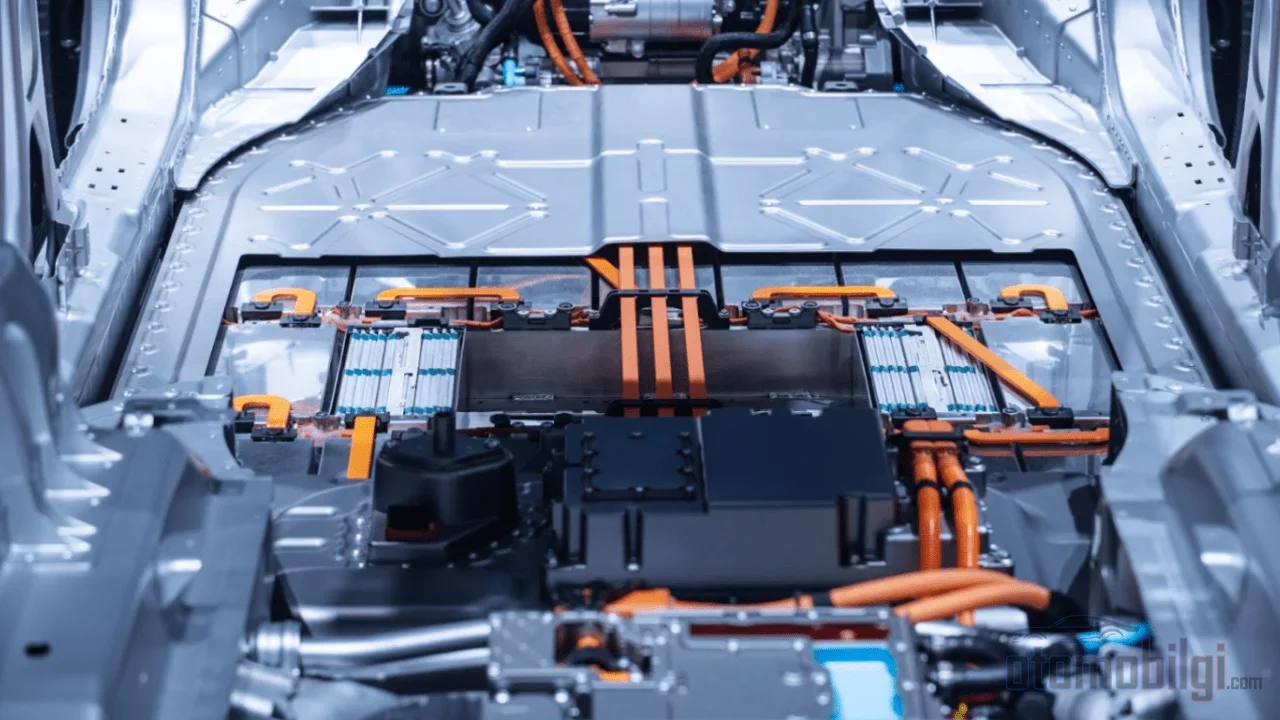
The most heat-sensitive component of the drivetrain is not the motor but the inverter. The silicon IGBT or SiC MOSFET switches inside it generate heat with every ampere switched on and off, and the semiconductors' temperature budget is very narrow. For this reason, inverter modules are almost always cooled by water/glycol-filled cooling plates.
The principle is conduction-based: the power semiconductors are connected directly to the cooling plate (thermal paste is used to reduce contact resistance), heat passes to the plate by conduction, and the liquid flowing through the channels inside the plate picks up this heat and carries it via a pump to a remote heat exchanger. Since liquid carries heat far faster than air, it is practically the only option in compact power electronics. The cooling plate design of IGBT modules remains a key issue in improving inverter performance.
So why isn't the inverter cooled directly with oil? The answer again lies in conductivity and circuit complexity: change is being researched - consortium projects aiming to cool the motor and inverter with a single fluid (such as SingleOilCnL, involving Dana, Diabatix, Lubrizol, Siemens and Flanders Make) are seen as promising - but it is not expected to become the dominant strategy in the near future. Today's typical architecture is hybrid: dielectric oil cools the rotor and stator, transferring the heat to the water/glycol circuit at the heat exchanger; the glycol in turn feeds the inverter plate and the radiator.
Why Is the Difference Between Peak Power and Continuous Power Dependent on the Cooling System?
The kW figure in the brochure is peak power: the motor's short-term maximum output. Continuous power, on the other hand, is the power the motor can sustain indefinitely without overheating, and the only thing determining the gap between the two is thermal management. The cooling system acts as a thermal buffer: the better it cools, the longer the peak power is sustained and the higher the continuous power remains.
To make it concrete, the data from two heavy commercial motors with similar external dimensions clearly show the difference:
| Feature | Dual water-cooled | Dual oil-cooled |
|---|---|---|
| Peak power | 420 kW | 600 kW |
| Continuous power | 220 kW | 400 kW |
| Peak torque | 620 Nm | 1200 Nm |
| Continuous torque | 360 Nm | 600 Nm |
In a water-cooled motor, the winding temperature on a peak climb can typically exceed the limit within a minute; the system reduces torque (thermal torque limitation) and, if necessary, the vehicle is forced into power reduction. Oil cooling raises continuous performance because it eliminates unnecessary thermal resistances: on a 10-kilometer ramp with a 4% grade, the oil-cooled motor maintains approximately 20% higher continuous power and 37.5% higher continuous torque This difference is of a magnitude that could change the purchase decision not for city commuters, but for those who drive trucks or heavy commercial vehicles - in situations where long ramps and high average speeds are a reality.
Efficient cooling also has an indirect benefit: with the same thermal budget, a smaller and more powerful motor can be designed, which means weight and cost savings.
Which One Should Be Preferred in Which Situation?
The table summarizes the strengths and weaknesses of the two approaches:
| Criterion | Water/glycol jacket | Direct oil cooling |
|---|---|---|
| Thermal capacity | Superior (specific heat and conductivity) | Lower, but compensated by direct contact |
| Electrical safety | Conductive - cannot enter the motor directly | Dielectric - makes direct contact with winding and rotor |
| Rotor/magnet cooling | Weak; hot spot risk | Effective; can be targeted with spraying |
| Continuous power | Lower, thermally limited | Significantly higher at comparable size |
| Complexity and cost | Low, mature solution | High precision, additional components and cost |
The choice is really not a matter of competition, but of optimization. Oil and water cooling should not be seen as alternatives to each other, but as different answers to different duty cycles: in low and medium load profiles, where cost and simplicity are prioritized, the water jacket is usually sufficient. In applications requiring long ramps, high average speeds, and high revs, the advantage of direct oil cooling becomes clear. Moreover, a water/glycol circuit is usually still present in an oil-cooled drive unit - this is the circuit that ultimately carries the heat absorbed by the oil to the atmosphere and also feeds the inverter plate.
In addition, the integration trend is strengthening the position of oil: as motor and transmission are combined into a single package, solving lubrication and motor cooling with a single fluid is becoming a practical necessity. In fluid formulation, thermal management is regarded as a primary design criterion alongside lubrication performance.
Conclusion: A Comparison of Fluids, Not a Comparison of Placement
The right way to read this comparison is not to look for a winner, but to place the terms correctly. Water is a better coolant on paper; oil is in a better position in practice - because it is the only fluid that can reach the point where heat is born. An average temperature difference of 10 °C, exceeding 14 °C in the windings and climbing to 40 °C at high revs, is the result of contact superiority, not physical superiority. In the next generation of drive units, the water/glycol circuit will remain for a while longer, but the share of the oil next to the heat source will continue to grow. When choosing a motor, look not at the peak power in the brochure, but at the continuous power and the cooling architecture that makes it possible: the real performance is hidden there.
Sources
- Comparison of Commonly Used Cooling Concepts for EV Traction Motors
- The Transition to Oil in EV Thermal Management
- Comparing cooling methods for e-motors
- How to Choose the Right Electric Truck Motor: Oil-Cooled vs. Water-Cooled
- Study on high-speed electric motor cooling with oil spray
- Thermal Management in Electric Vehicles | E-Motor Cooling Technology
- A hybrid oil cooling strategy for thermal management of electric motors
- Optimization of rotational oil-spray-cooling structure
- A review of structural design for direct oil cooling
- Rotor oil injection cooling, hairpin end winding
- Cooling and dynamic performance of electric vehicle motors
- Induction vs. Permanent Magnet Motors | Efficiency & Torque
- Comparative Thermal Performance Analysis of Induction and PMSM
- Cold Plate Cooling Systems: Design, Optimization
- Advanced Cooling for Power Electronics
- Oil Cooling Systems for EV Drive Motors
- Although Electric Cars Don't Need Petroleum, Their Motors Still Require Oil
- EV Motor Heating Issue and Oil Cooling