5 Key Differences Between Super Cruise and Tesla FSD
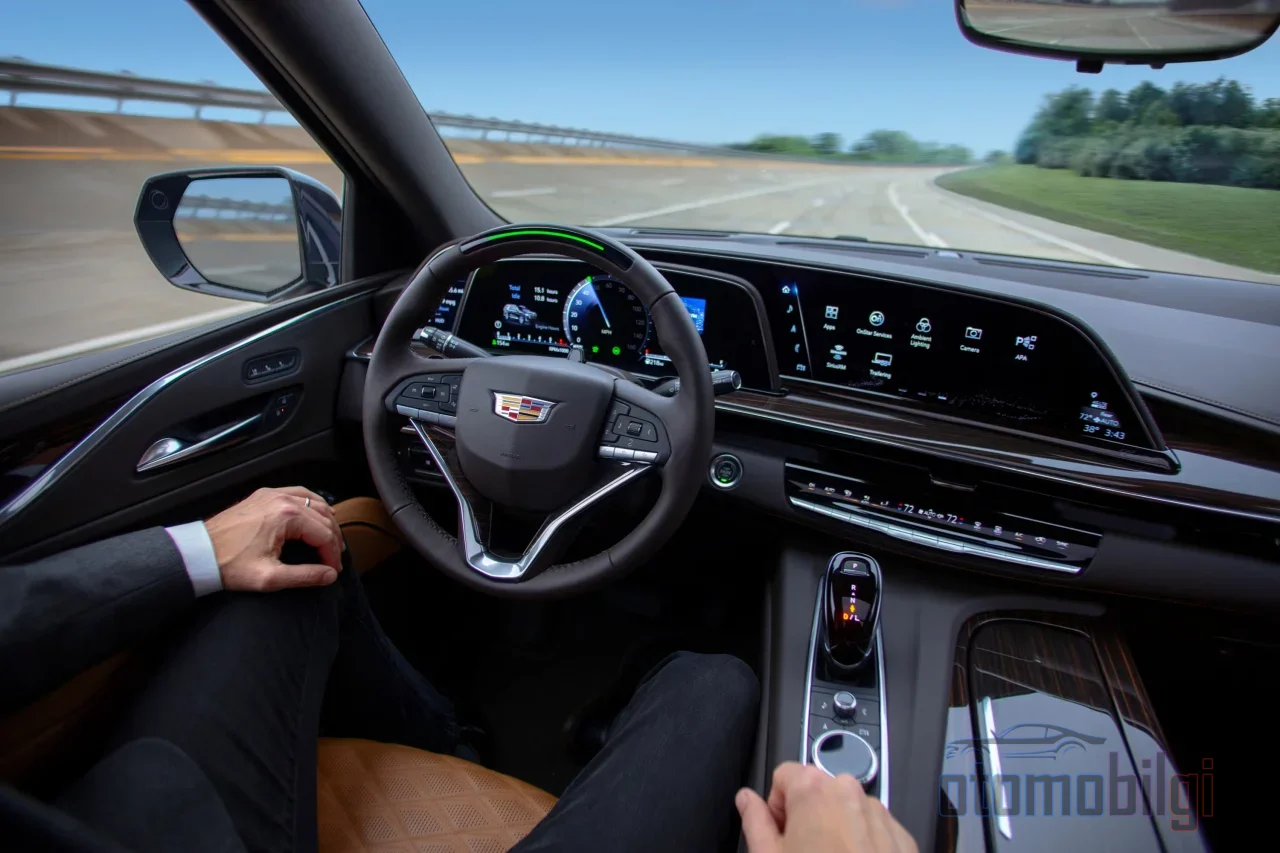
Everyone who has dreamed of taking their hands off the wheel and watching a movie on the highway has that moment when they are rudely awakened: no mass-production vehicle, today, takes the responsibility for you. But here is the interesting part: General Motors' Super Cruise and Tesla's FSD are in the same category on paper, that is, SAE Level 2. One only works on pre-scanned highways but grants hands-free permission; the other works almost everywhere but you are absolutely not allowed to take your eyes off the road. Being in the same class does not mean they are the same thing. So where does the real difference begin: in the sensors, in the maps, or on the lawyers' desks?
First, the Levels: What Exactly Does Level 2 Mean?
SAE's automation scale goes from 0 to 5, and Level 2 means partial driving automation. In other words, the vehicle can control both the steering and acceleration and deceleration, but the critical part does not change: even while the system is active, supervising and operating the vehicle is entirely the driver's responsibility. You can take your hands off, but not your mind.
Tesla's official name for FSD already admits this: Full Self-Driving (Supervised). That is, supervised full driving. In some states, for example Colorado, it is officially classified as a Level 2 driver assistance system and requires continuous human supervision. GM's Super Cruise and Ford's BlueCruise also sit in the same Level 2 box.
So is there such a thing as "L2+"? There is, but not the way you think. L2+ is a marketing and engineering category in which location intelligence, that is, knowledge of where the vehicle is and on which road, is added on top of Level 1-2 driver assistance features to increase usefulness. The system is still Level 2; just a smarter Level 2.
Key Highlights
- Super Cruise, FSD, and BlueCruise are all SAE Level 2 on paper; liability in an accident remains with the driver.
- Super Cruise only works on roads scanned and mapped with LiDAR; there are approximately 750,000 miles of compatible roads in the US and Canada.
- Tesla FSD dropped radar and relies solely on cameras; Super Cruise, on the other hand, uses a LiDAR map, GPS, cameras, and radar together.
- Mercedes Drive Pilot is Level 3: while the system is active, legal responsibility shifts to the manufacturer.
How Super Cruise Works: A System That Trusts the Map
Let me explain Super Cruise's logic with an analogy: it is like a passenger in the back seat giving directions, not blindfolded, but holding a very detailed map. GM pre-scans compatible roads with LiDAR and creates a millimeter-precision map database. When the system is engaged, the vehicle combines this map with real-time corrected GPS positioning, cameras, and radar. And this is exactly why the system does not work everywhere, only on registered roads.
The coverage is too large to underestimate: while there were initially 130,000 miles of compatible roads, today it has reached approximately 750,000 miles in the US and Canada. Since its introduction in 2017, GM has talked about more than 160 million accident-free hands-free miles; these are, of course, manufacturer and dealer figures, not independent verification.
But pay attention, here's the catch: Super Cruise lives like a subscription. An active Connected Services (OnStar) plan, GPS and cellular signal are required. If your map stays older than 7 months, the system is disabled until the next update. So if you're left with no signal on a mountaintop, you put your hands back on the steering wheel.
Driver monitoring: it locks onto your eyes on the road
The smartest part of Super Cruise, in my opinion, is the driver monitoring. On top of the steering column, there's a camera working with infrared light, and it tracks not head position but directly eye gaze. It doesn't record photos, audio, or video. So wherever you look, the system knows it; if you look at your phone, a warning arrives within seconds.
The warning chain also plays out like a staged theater: first the light bar on the steering wheel flashes green, then turns red, and an audible warning along with seat vibration kicks in. If the driver still doesn't respond, the vehicle comes to a controlled stop in its own lane, hazard lights come on, and the OnStar Emergency Advisor connects to the vehicle. The system stays locked until the next ignition cycle. So even the "I fell asleep and the car handled it" scenario has a Plan B.
What can't it do? Not a short list, but a long one
GM speaks openly in its own manual: Super Cruise is not a fully autonomous driving system. It doesn't prevent collisions, and it doesn't see stationary vehicles, pedestrians, intersections, traffic lights, or oncoming traffic. It shouldn't be used at intersections, in city driving, in tunnels, and in construction zones; it doesn't make turns and doesn't navigate highway entrances and exits. Lane changing is also available but limited: automatic lane change and Lane Change on Demand commanded via the signal stalk are supported, but you can't use the automatic mode while towing a trailer.
There's also a legal nuance: some state and local laws don't allow hands-free driving. In that case, even if Super Cruise is active, you need to hold the steering wheel lightly. No matter how good the technology is, the law has the final say.
Ford BlueCruise: The Second Representative of the Same Philosophy
Ford's BlueCruise is also a student of the same school: a hands-free system built on top of Adaptive Cruise Control, working on pre-mapped and designated highways. The vehicle takes over steering, braking, and acceleration; the infrared camera facing the driver monitors the eyes, just like in Super Cruise. Ford positions BlueCruise for the 2026 model year as a "driver collaboration" and trust-based technology; so even its marketing language is far more cautious than Tesla's bold tone.
Independent tests also support this approach: In Consumer Reports' comparative test, while Tesla's camera-based driver monitoring failed at high speeds, BlueCruise managed to warn the driver. The difference between an infrared camera that does eye tracking and a camera that does face estimation looks small on paper, but critical on the road.
Where Tesla FSD Is Different: Level 2 That Goes Everywhere
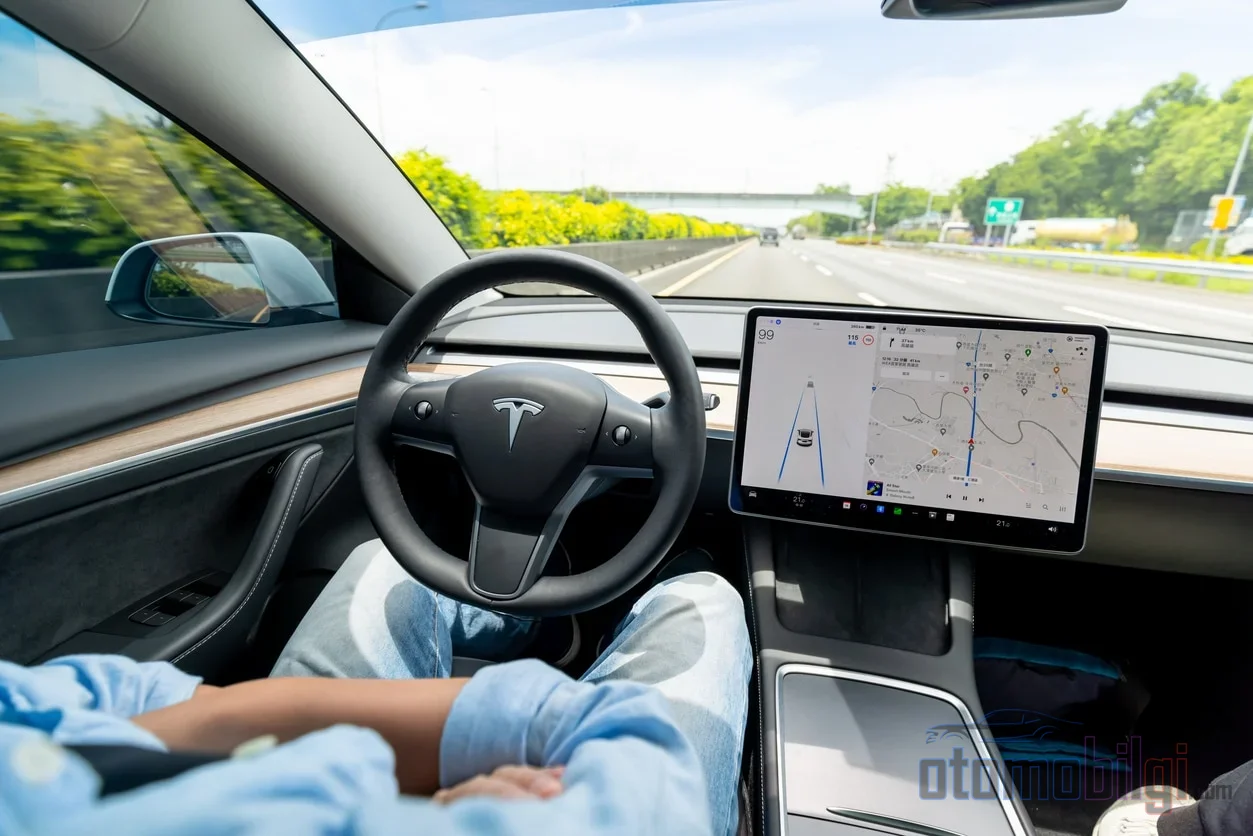
Tesla's approach is in the opposite direction. FSD (Supervised) handles route navigation, steering, lane changes and parking maneuvers, and works across a much wider range of roads, including city streets. It can manage intersections, roundabouts, traffic lights and even unprotected left turns. While Super Cruise waits for a compatible highway, FSD even attempts the road to the supermarket. The cabin camera checks that the driver's attention is maintained, but constant supervision is required.
On the sensor side, Tesla deliberately walks alone: Radar was removed from the Model 3 and Model Y, and the system relies solely on cameras, i.e. Tesla Vision. This camera-first approach is also at the center of an ongoing debate with systems that use LiDAR. Notable tests conducted in heavy rain and fog conditions showed that the camera-based system struggles, while the vehicle equipped with LiDAR passes. The camera is cheap and versatile, but physics doesn't always behave easily.
| Feature | GM Super Cruise | Tesla FSD (Supervised) | Ford BlueCruise |
|---|---|---|---|
| SAE level | Level 2 | Level 2 | Level 2 |
| Sensor approach | LiDAR map + GPS + camera + radar | Camera only (Tesla Vision) | Camera + map (automaker data) |
| Operating area | Only mapped compatible roads | Very broad road network including city streets | Mapped divided highways |
| Driver monitoring | Infrared eye tracking | Cabin camera | Infrared eye tracking |
| Accident liability | Driver | Driver | Driver |
Legal Gray Zone: Who Bears the Liability?
This is the least discussed but most important part of the matter. Since Tesla FSD, GM Super Cruise and Ford BlueCruise are all Level 2, liability in the event of an accident remains with the driver. You are the person sitting behind the wheel, responsible for supervising the system. Legal guides also make this clear: While Tesla's Level 2 system places liability on the driver, in Level 4 robotaxis like Waymo it shifts to the manufacturer. GM's Super Cruise is described as a "gray zone" between these two poles: it grants hands-free permission but not responsibility.
For comparison, the real reference is Mercedes' Drive Pilot. This system is Level 3: under certain conditions, in geographically restricted (geo-fenced) areas, the vehicle drives itself, and Mercedes being the first automaker to assume full legal liability while the system is active is a milestone. While Drive Pilot is engaged, the driver is not legally responsible for the use of the vehicle until the system disengages. In fact, under Level 3 conditions, eyes-free activities such as watching videos are allowed in certain situations.
GM, for its part, explicitly states in its manual that Super Cruise is not a fully autonomous driving system: the driver cannot sleep, read a book, or use their phone. So "hands-free" does not mean "mind-free" and it never will, at least not at Level 2.
A Fair Comparison: Is Super Cruise a Rival to FSD?
This is one of the most frequently asked questions, and the answer is no, at least not one-to-one. In terms of capability, Super Cruise corresponds to Tesla's basic Autopilot, meaning Adaptive Cruise Control plus lane keeping; FSD, on the other hand, is a far more ambitious system aiming to navigate streets from end to end. One is narrow but deep, the other broad but requiring supervision. Super Cruise promises a lot of safety on few roads; FSD requires constant human supervision across many roads.
As for safety statistics: there are discussions in forums praising Super Cruise for a record of nearly zero incidents over millions of miles, and Tesla also publishes its own Safety Report data. But these figures are produced with different measurement methods, different usage areas, and different reporting standards; in other words, we are comparing apples to oranges. The only thing that is certain: neither of them took the responsibility away from you.
The Short Answer: What Is the Difference, and Where Does Responsibility End?
In short, here is the summary of the summary: Super Cruise and BlueCruise are hands-free systems with LiDAR-mapped roads, eye tracking, and a narrow operating area; Tesla FSD, on the other hand, is a camera-based system that works on almost every road but requires constant supervision. All three are officially Level 2, and in all three, accident responsibility lies entirely with the driver. The only true leap came with the Level 3 Mercedes Drive Pilot, which transfers responsibility to the manufacturer while the system is active.
So on your next electric vehicle shopping trip, you are safe as long as you drive with your eyes and your brain, not your hands. Letting go of the steering wheel is easy; letting go of responsibility, at least today, is not easy at all.
Sources
- SUPER CRUISE Getting To Know Guide (official GM guide)
- Ford BlueCruise | Hands-Free Driving, Features & Pricing
- Full Self-Driving (Supervised) - Tesla Support
- Levels of Automation - NHTSA
- Understanding L2+ in Five Questions - Mobileye
- An Automated Driving System for the Highway - Mercedes-Benz Group (Drive Pilot)
- Tesla vs. GM vs. Waymo: A 2026 Guide to AV Liability - Joel Lopez Law