Why Is Tesla Full Self-Driving a Misleading Name?
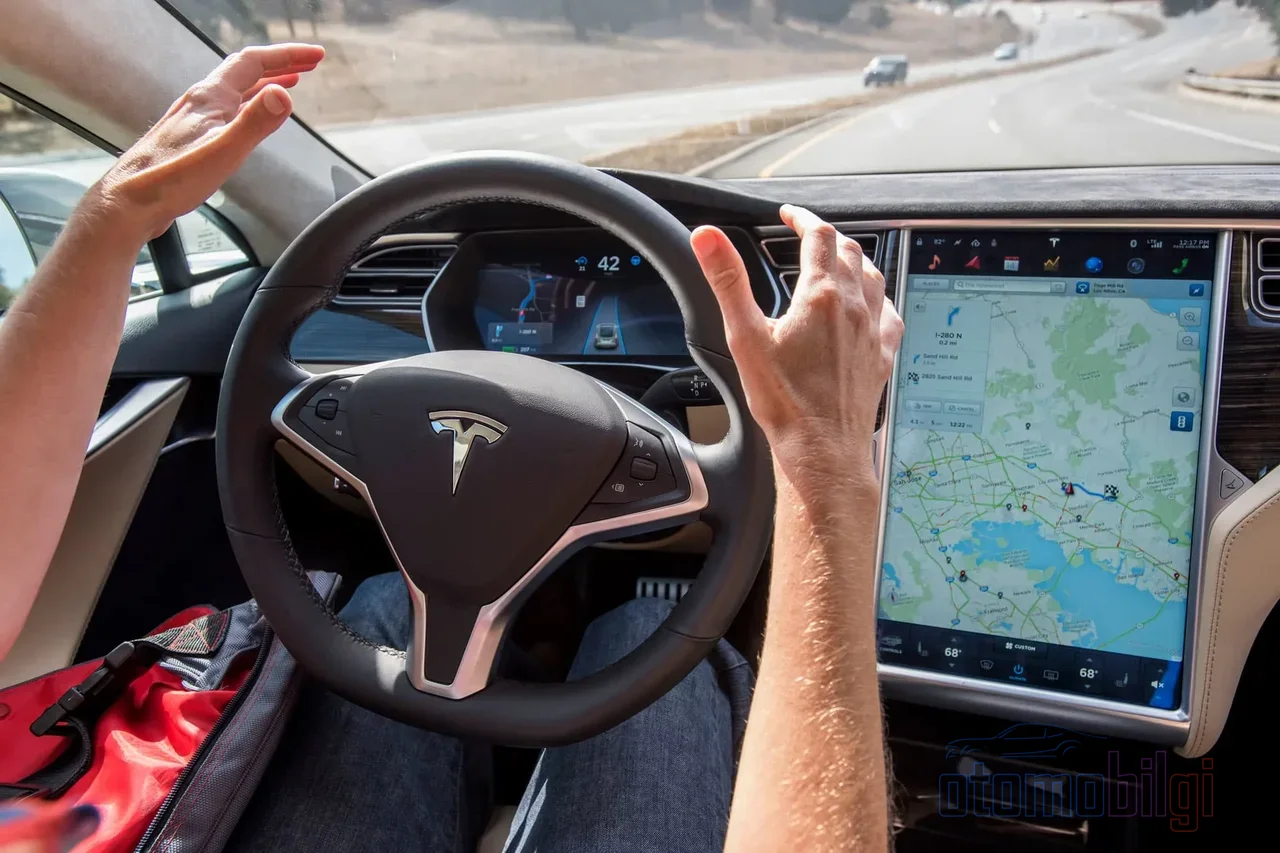
Calling a car "Full Self-Driving" while asking you to keep your eyes on the road at all times... How can these two go together? That very question put Tesla face to face with a historic decision in California at the end of 2025: regulators ruled that the name "Full Self-Driving" is misleading. So what is actually going on? Is the vehicle's name wrong, or are our expectations? If you're ready, let's examine this gap between promise and reality together.
SAE Levels: The Official Map of Autonomous Driving
Before diving into the subject, let's look at the map at hand, because the entire debate revolves around this map. The J3016 standard by SAE International divides driving automation into six steps, from Level 0 to Level 5. At Level 0, everything is on you: steering, throttle, braking, all of it. Level 5 is the exact opposite end: the vehicle doesn't need anyone as a driver, under any conditions. In the steps in between, responsibility is shared with the system gradually.
Most vehicles on the roads today are somewhere between Level 2 and Level 3. At Level 2, the system can take over both steering and speed control, but the responsibility is 100% on the driver; eyes on the road, hands on the wheel. Level 3, that is, conditional automation, is a step further: under certain conditions, the system can manage all aspects of driving. Mercedes-Benz, with its Drive Pilot system, had already overtaken Tesla in this area as the first manufacturer to offer it.
And here is the key point: By Tesla's own definition, Full Self-Driving (Supervised) is an SAE Level 2 driver assistance system. Even Tesla's own website clearly states that the currently enabled features require active driver supervision and do not make the vehicle autonomous. So the name says "fully autonomous," while the technical reality says "don't stop paying attention." This tension is also the core of a legal process that has been growing for the past five years.
The California DMV Case: The Decision and What Followed
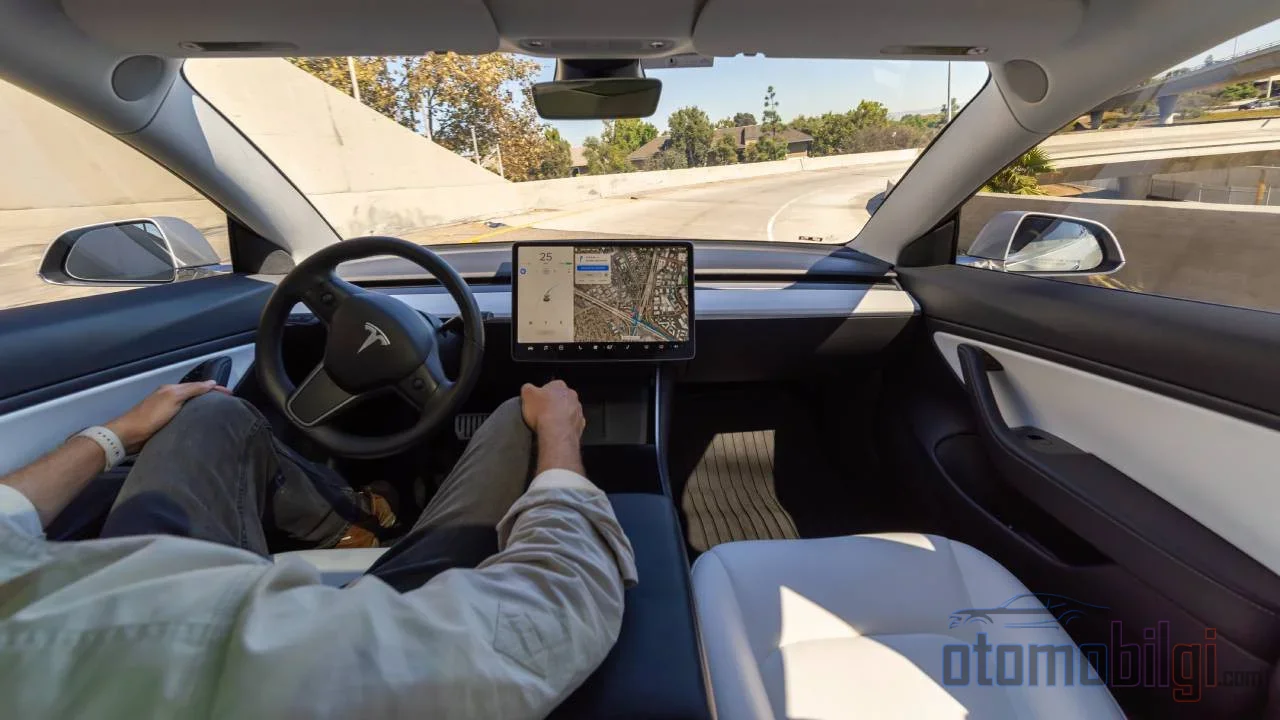
The turning point of the story is December 16, 2025. The California Department of Motor Vehicles (DMV), by accepting the administrative law judge's proposed decision, confirmed that Tesla's use of the terms "Autopilot" and "Full Self-Driving Capability" is misleading and violates state law. The judge's proposed decision actually included suspending the manufacturer and dealer licenses for 30 days; the DMV accepted the decision but softened the penalty: a permanent stay was placed on the suspension of the manufacturer license, and Tesla was given 60 days to correct its use of "Autopilot."
The background of the case is also important. From May 2021 onward, Tesla had advertised that the system was designed to make short and long-distance journeys without requiring any action from the person in the driver's seat. Yet these vehicles could not operate autonomously back then, and they still cannot today. The charges were filed in November 2023, and Tesla subsequently added the "(Supervised)" qualifier to the name. The ruling stated that the Autopilot name follows a long tradition that could not be legally protected, while the Full Self-Driving name is openly wrong and detached from reality.
Tesla's Response and Compliance Process
Tesla did not want to let the matter rest. In February 2026 it filed a lawsuit to reverse the DMV's decision, arguing that being branded a false advertiser was unjust. It claimed that the DMV had known of the Autopilot trademark since 2014 and the Full Self-Driving name since 2016, and that the statute of limitations had therefore expired.
Even so, the picture in the field is clear: In January 2026 Tesla removed Autopilot as a separate product in the US and Canada, ended the $8,000 one-time purchase option, moved to a subscription model at $99 per month, and added the "(Supervised)" qualifier to its name. On February 18, 2026, the DMV also confirmed that Tesla had taken corrective action, and no license suspension was necessary. One of the most striking details among the case files is this: Tesla's own survey expert confirmed that even in a survey designed to favor the company, roughly one third of buyers were at least partially confused about the systems' capabilities based on the names.
Key Highlights
- December 16, 2025: The California DMV found Tesla's Autopilot and Full Self-Driving names misleading.
- Tesla FSD is an SAE Level 2 system; it requires active driver supervision and the vehicle is not autonomous.
- In January 2026 Autopilot ceased to be a separate product, and FSD moved to a $99 per month subscription.
- The NHTSA investigation was expanded in March 2026 to cover 3.2 million vehicles.
- Tesla changed the name in Europe to "Tesla Assisted Driving".
NHTSA Investigations and Consumer Groups' Long-Running Pressure
The naming problem is not limited to California. In October 2025, the US National Highway Traffic Safety Administration (NHTSA) launched a broad investigation covering 2.88 million Tesla vehicles, following incidents involving 58 events linked to FSD, including 14 crashes and 23 injuries. The focus was FSD running red lights and crossing into oncoming lanes. The investigation was expanded to 3.2 million vehicles on March 19, 2026; at this stage, the system's failure to detect low-visibility conditions such as fog and to warn the driver in time is being examined. Nine crashes, one of them fatal, have been associated with this scope.
The problem is not new either. Back in May 2018, the Center for Auto Safety and Consumer Watchdog had already asked the FTC and the California DMV to investigate Autopilot advertising. Consumer Reports also called, in the same period, for an examination of Autopilot and FSD marketing claims. In other words, regulatory unease had taken root years before it turned into a lawsuit.
Other Signals from the Courtroom
In August 2025, a federal judge upheld the historic $243 million damages award in a fatal Autopilot crash; Tesla had rejected a $60 million settlement offer before the trial. Following this decision, it was determined that Tesla had quietly settled at least four Autopilot crash lawsuits. In September 2026, NHTSA opened an investigation into approximately 1,000 Tesla Cybercabs; and in October 2026, reports emerged that 2026 Model Y robotaxis and Cybercabs were exceeding speed limits in school zones while their automatic driving systems were active.
Safety Claims: Whose Word Should We Trust?
Tesla says FSD reduces crash rates by a factor of 7 and off-road departures by a factor of 5, and that the system logs roughly 5.3 million miles between collisions; the US average is about 660,000 miles. Sounds impressive, doesn't it? But there is a critical detail here: these are the company's own statements and do not appear in independent evaluation materials. Senator Markey's letter to NHTSA questions whether the claims of being 7 to 10 times safer than human driving have been independently evaluated.
To be honest, this is one of the hardest questions when it comes to cars. To decide that a system is "safer," it must be examined under the same conditions, with the same measurements, through independent eyes. The picture presented by the company itself cannot alone be the answer to this question; and that is precisely why the demand for independent verification is as important a topic as the naming dispute.
Name Change and the Door to Europe
So what is Tesla doing now? Two moves stand out. First, the software update triggered by the California lawsuit led to a change in how the system's features are named. Second, and broader in scope: Tesla is moving away from the "Full Self-Driving" name in its effort to gain regulatory approval in Europe, and has started using the name Tesla Assisted Driving on its European websites. The company's application for FSD approval across the EU was submitted in the second quarter of 2026. or third quarter of 2026.
The reading of this move is quite clear. The "(Supervised)" qualifier, added in the US under the compulsion of a court ruling, has evolved in Europe into a complete change of the name. The name is no longer a marketing choice, but a matter of regulatory negotiation.
Where Does the Rest of the Industry Stand?
Don't assume the debate has a single yardstick. Mercedes-Benz had taken the lead with its Level 3 Drive Pilot, the first system to free up hands and eyes (though only under strict conditions). However, according to news from January 2026, Mercedes is removing Drive Pilot and turning toward a Tesla FSD-style approach; both BMW and Mercedes are stepping back from eyes-off driving due to high costs and limited usage. So on the question of "how much can the human be disengaged," both camps of the industry are on the move.
Comparative tests also offer interesting data. In one test, Mercedes' NVIDIA-backed system was judged to be noticeably more advanced than Tesla FSD 14/HW4 in most basic capabilities. Moreover, some writers who tried FSD can decide not to buy it even if they find the system impressive; the gap between the name and its actual capability tops the list of reasons.
So, the conclusion: Is the FSD Name Really Misleading?
We can now give a clear answer. Tesla Full Self-Driving is a Level 2 driver assistance system that does not deliver the full autonomous driving its name promises and requires constant driver supervision; the California DMV has also confirmed that this naming violates state law. In its reasoning, the ruling emphasized that the vehicle was never capable of operating autonomously at any point, so the "full self-driving" claim is plainly untrue. Tesla filed a lawsuit against the decision but in practice complied: a qualification was added, the model switched to a subscription, and the name was changed in Europe.
The lesson for you is this: Listen not to what a system can do, but to what its name says and who bears the responsibility. At Level 2, no matter how capable that system is, the responsibility at the wheel is on you. Names can change, and so can subscription models and price tags; but that fundamental truth has now been sealed with regulatory decisions. Pay attention not to what is on the road, but to who is in control.
Sources
- DMV Finds Tesla Violated California State Law
- Tesla sues California DMV to reverse 'Full Self-Driving' false advertising ruling
- Tesla avoids suspension by California regulator after corrective marketing
- Tesla drops 'Full Self-Driving' name to win regulatory approval in Europe
- Full Self-Driving (Supervised) | Tesla Support
- SAE Levels of Driving Automation Refined for Clarity
- US agency upgrades probe into 3.2 million Tesla vehicles
- California judge says Tesla engaged in deceptive Autopilot marketing
- Tesla Data NHTSA Letter - Sen. Markey
- Full Self-Driving (Supervised) - Tesla