Why Did GM Shut Down the Cruise Robotaxi Service?
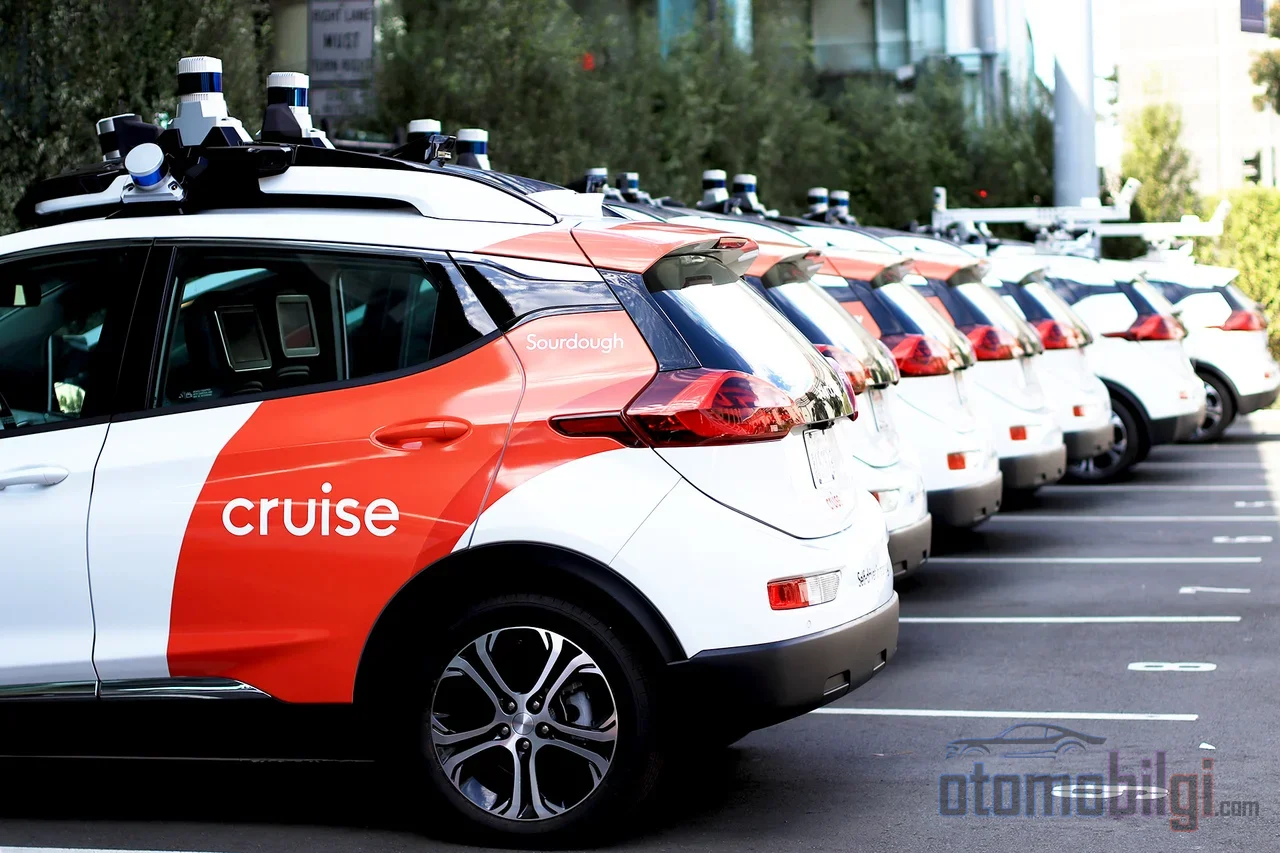
On the night of October 2, 2023, a robotaxi on the streets of San Francisco failed to notice a pedestrian who had been struck by a human driver, and while trying to pull over, dragged the person under the vehicle for about 6 meters. This single accident triggered the collapse of the robotaxi dream into which General Motors had sunk roughly 10 billion dollars. So why did GM shut down Cruise? Get ready, because this story features a massive acquisition, mountains of lost money, a concealed video, and the industry's most expensive lesson.
How Cruise Rose: From 1 Billion Dollars to a 30 Billion Dollar Promise
Cruise was founded in San Francisco in October 2013 by Kyle Vogt and Dan Kan. Its first product was actually interesting: A 10,000-dollar aftermarket autonomous driving kit for the Audi A4 and S4. Before this kit ever hit the market, the team pivoted its strategy to fully autonomous vehicles in 2015.
GM bought the company in March 2016; the amount was not officially disclosed, but estimates range between 580 million and 1 billion dollars. Then the money rain began: 2.25 billion dollars from SoftBank Vision Fund, 1.1 billion dollars contributed by GM itself, 750 million dollars from Honda, and another 2 billion dollars in 2021 from Microsoft, Honda, and institutional investors. The company's valuation climbed to 30 billion dollars in 2021. Imagine it: one of the country's oldest automakers had transformed into Silicon Valley's brightest robotaxi hope.
The results were coming too: In February 2022 a public robotaxi service launched, in June 2022 California's first permit to operate driverless vehicles and charge fares was obtained, and in August 2023 approval came for round-the-clock uninterrupted service in San Francisco. In 2022, management set easily stated targets: 1 billion dollars in revenue by 2025, 50 billion dollars by 2030. The reality, however, was brutal: In the first quarter of 2023, revenue was about 30 million dollars, while the loss was 561 million dollars.
Highlights
- GM invested a total of about 10 billion dollars in Cruise; in December 2024 it stopped funding the robotaxi operation.
- In October 2023, the California DMV suspended the driverless permits on safety grounds.
- Cruise admitted it had submitted false reports to influence a federal investigation and paid a 1.5 million dollar fine.
- GM carried Cruise's technology over to the Super Cruise driver assistance system.
October 2, 2023: The Night That Changed Everything
The Technical Anatomy of the Accident
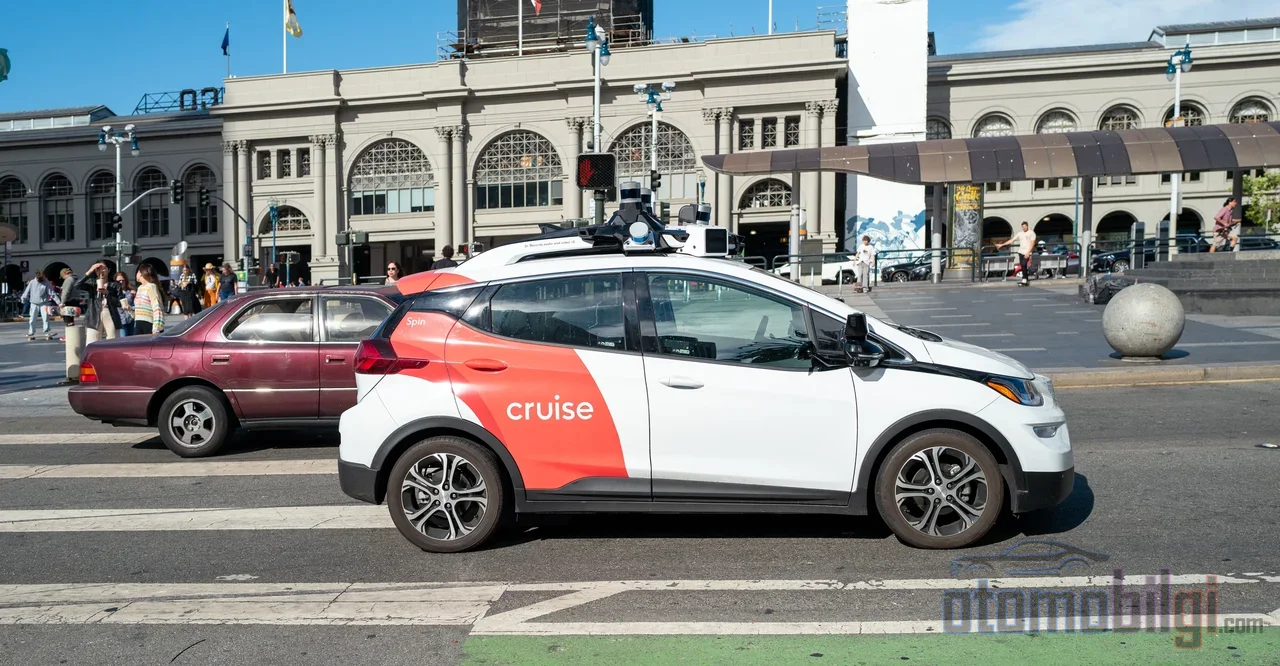
That night, a Cruise robotaxi first failed to notice a pedestrian who had been hit by a vehicle driven by a human; the pedestrian was thrown into the lane where the Cruise was located. The Cruise vehicle failed to detect the pedestrian and initiated a pull-over maneuver. During the maneuver, the pedestrian was dragged under the vehicle for 20 feet, or about 6.1 meters, at 11 km/h. A subsequent technical review identified three failures: the vehicle's inability to determine the pedestrian's position, its misidentification of which part of the striking vehicle had hit it, and an error related to the vehicle's own position. In other words, what was actually a single accident turned into a catastrophe through a chain reaction of three separate software faults.
Revoking Hidden Video and Permits
The real damage came not from the crash itself, but from the way the crash was narrated. In its meeting with the California DMV, Cruise showed only the part of the incident up to the initial full stop; it did not show or describe the recording of the pulling-over maneuver that included the dragging moment. When the DMV learned of the dragging from another government agency, it demanded the full recording. Cruise claimed the full video had been shown multiple times, but it was too late.
On October 24, 2023, the California DMV immediately suspended Cruise's driverless testing and operating permits on the grounds that the vehicles were not safe for public use and posed an unreasonable risk. Three days later, Cruise voluntarily halted all of its operations, including in Arizona, Texas, and Florida, and 950 vehicles were recalled with a software update. In November, founding CEO Kyle Vogt resigned. The internal investigation in January 2024 revealed that the suspension was largely due to deficient leadership within the company. Cruise also admitted to submitting false reports with the aim of influencing a federal investigation and reached a $1.5 million penalty settlement with NHTSA.
Why Did GM Pull the Plug? Money, Competition, and Priorities
On December 10, 2024, GM announced it was halting funding for Cruise's robotaxi business and merging the company with its own technical teams. The official rationale was clear: scaling the robotaxi business would require serious time and resources, the market had rapidly become competitive, and GM was shifting its capital toward other priorities. The numbers also confirmed the rationale: Cruise had accumulated operating losses of over $10 billion against revenues below $500 million.
The merger was completed in February 2025, and it was announced that Cruise's technology would be integrated into Super Cruise. According to GM's calculations, this restructuring would reduce annual spending by more than $1 billion once the plan was complete; Reuters estimated that spending would drop from roughly $2 billion to $1 billion. GM already owned about 90 percent of Cruise's shares, and through agreements with other shareholders it raised that share above 97 percent. In other words, when no external investment came, GM was the only player left at the table, and GM chose to walk away from it. In fact, in December 2025, GM hired former Tesla executive Ronalee Mann in an attempt to revive Cruise; but this represents not a robotaxi revival, but a continuation of moving the technology into personal vehicles.
Super Cruise: A Retreat or a Smart Move?
Right now, Super Cruise is a hands-free driver assistance system offered on more than 20 GM models in North America, logging more than 10 million miles per month. But there is a critical distinction here, and many people are unaware of it: Super Cruise is not autonomous driving. According to the SAE J3016 standard, it falls into the Level 2 ADAS class; meaning the responsibility at the wheel still lies with the driver, and the system requires continuous supervision.
Cruise, on the other hand, was targeting Level 4: driverless within a certain geographic area, under specific conditions. The Cruise Origin vehicle, designed without a steering wheel or pedals entirely for robotaxi use, was planned for mass production at a cost of approximately $50,000 with a lifespan target of 1.6 million kilometers. But when the NHTSA exemption did not come, Origin's production was halted in November 2023. GM's return is a four-level retreat: from Level 4 to Level 2, from robotaxi to personal vehicle. Is this a surrender or a realistic strategy? We find the answer by looking at Waymo and Tesla.
Waymo and Tesla: Two Different Paths That Keep Winning
Waymo is living the exact opposite of Cruise's closure. As of 2026, it expanded to 10 cities in the US, announced a target of 1 million robotaxi rides per week within 2026, and with a $16 billion funding round reached a valuation of over $126 billion. Waymo's approach is built on sensor redundancy: In its 5th generation vehicle, it uses 29 cameras, 6 radars and 5 lidars. Tesla chose the exact opposite, pursuing a low-cost, easily scalable model based on only 8 cameras. Tesla is still operating its robotaxi on a small scale only in Austin in 2026, and its growth rate falls short of expectations; some analyses predict that a full-scale launch could take until 2028.
The market itself is a small but rapidly inflating balloon: The robotaxi market, approximately $1.25 billion in 2025, is forecast to reach $198.6 billion by 2033, with 66.7 percent annual growth projected. So the market is not yet big enough to vindicate Cruise, but it is also promising enough to push Waymo to be patient. Cruise's cost structure also reveals this reality: Even Waymo has to make a roughly $100,000 addition to a stock vehicle for robotaxi conversion. Cruise, which aimed to break even with the $50,000 Origin, left the table without making the numbers work.
So What Actually Killed Cruise? The Clear Answer
The short answer is this: GM shut down Cruise to transform a robotaxi operation that had lost its reputation through a trust crisis and kept burning money into personal vehicle technology like Super Cruise, which can be sold to millions of people every month. What killed Cruise was not a single accident, but the transparency crisis that followed the accident, the unsustainable cost of the Level 4 robotaxi business model, and outside investors' withdrawal leaving GM alone.
And this story has concrete lessons for the industry. First: trust is the currency of autonomous driving; whoever loses it loses the permit, the investor and the future. Second: sensors can break the chain of failure; only 40 percent of Cruise's hardware was dedicated to autonomous driving, yet software bugs still determined its fate. Third: the gap between promise and reality can be as striking as the difference between the $1 billion 2025 revenue target announced in 2022 and the actual revenue that came in below $500 million. Considering that Level 5, the pinnacle of full automation, does not seem possible even by 2035, patience is this industry's most expensive virtue. GM's decision to pursue this patience only with Super Cruise may be the most honest lesson from a lisence: not every dream fits every budget.
Sources
- GM to refocus autonomous driving development on personal vehicles
- Cruise (autonomous vehicle)
- GM to exit loss-making Cruise robotaxi business
- How GM's Cruise robotaxi tech failures led it to drag pedestrian 20 feet
- Cruise Admits To Submitting A False Report
- GM's Cruise Failed to Fully Report Pedestrian Crash
- SAE Levels of Driving Automation
- Everything you need to know about Super Cruise
- Waymo vs Tesla: Who is closer to Level 5
- GM Shut Down Cruise When Outside Investors Walked