Zoox Robotaxi Does Not Reverse Thanks to Its Bidirectional Design
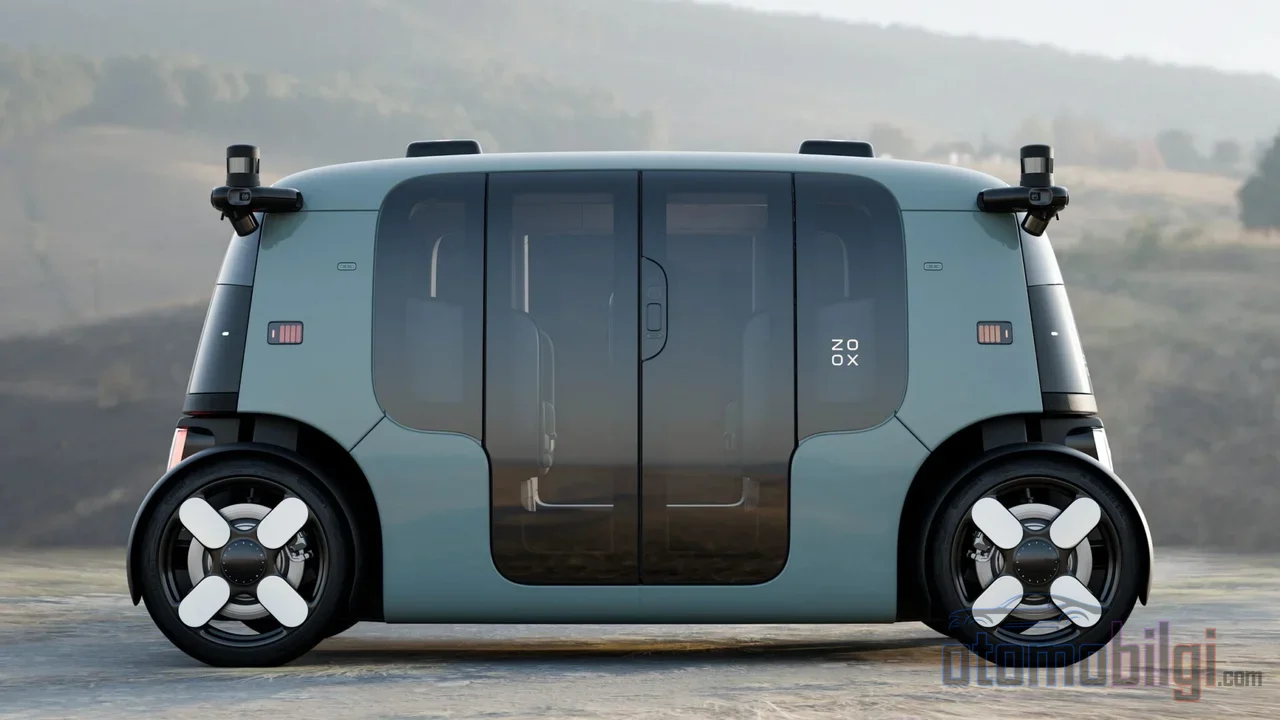
Say you get into a robotaxi and the vehicle starts moving. After a while it stops, then, in the direction opposite to where you're looking - in short, it moves backward. There's no driver's seat, because there's no driver, and no steering wheel either. Confused? Don't worry, this isn't a car. Amazon's Zoox is a robotaxi designed from scratch solely for autonomous driving, with both ends completely identical, and this symmetry sits at the very center of the answer to why it can move both forward and backward.
On this page, we examine - with curiosity and excitement - why Zoox is a purpose-built vehicle rather than a modified car, how the symmetric design leaves its mark on everything from the sensors to the cabin, and, questioning the gap between promises and the actual situation as of 2026, we take a close look. If you're ready, let's begin.
What Does Purpose-Built Vehicle Mean: How It Differs from the Retrofit Approach
Let's do a quick brainstorm: Most robotaxis in the world are actually cars we know with autonomous hardware added on top. Waymo, for example, uses vehicles from outside manufacturers that have been modified; the estimated cost of these vehicles, which carry 29 cameras, 5 radars and 6 lidars, is reported to be around USD 100,000. Tesla, on the other hand, expects a target cost of about USD 30,000 with its camera-focused, steering-wheel-free two-seat Cybercab concept.
Zoox chooses the third way: Neither converting an existing car nor staying loyal to classic automotive patterns. The company's way of defining itself is clear: This is not a car, it's a robotaxi designed for the user. Conventional automobiles are engineered around the human driver; the steering wheel, pedals and dashboard are all there on the assumption that a driver exists. In Zoox, autonomy is not a feature added later, it's the starting point built into the vehicle's DNA.
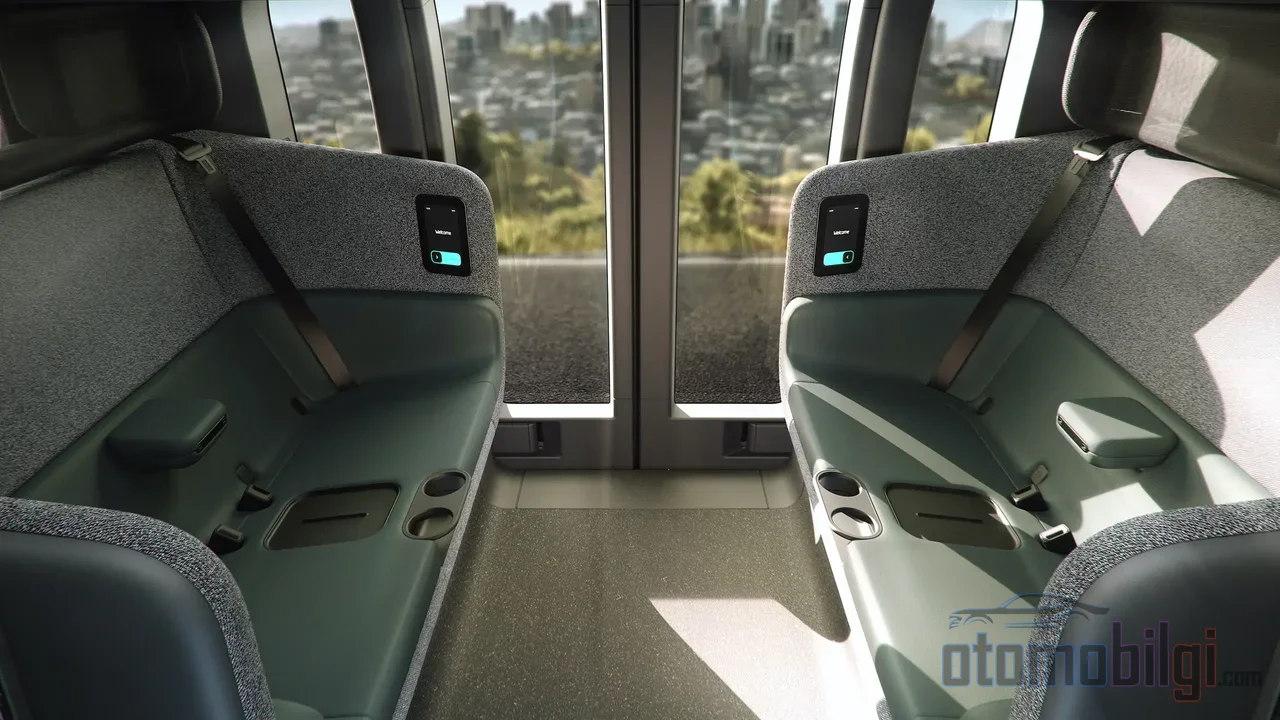
This distinction may sound like a slogan, but the results are concrete: With the steering wheel and pedals completely removed, the cabin can be symmetric and spacious, four passengers can sit facing each other, and the sensors can be placed at the vehicle's corners, at a height from which they can look over traffic. In other words, the design philosophy makes itself felt in every meter of the journey.
Highlights
- Zoox is a completely symmetric and bidirectional robotaxi: every direction is considered forward
- Length 3,630 mm, height 1,936 mm, turning diameter 8.4 m
- Battery 133 kWh, up to 16 hours of uninterrupted use on a single charge
- Top speed in both directions 75 mph (approximately 120 km/h)
- In 2026, it received the first commercial exemption in history under NHTSA Part 555
Why Zoox Moves Both Forward and Backward: The Logic of Symmetry
Here's one of our first approaches to the answer in our headline: Zoox's ability to move in both directions with equal ease is not a party trick, it's an engineering choice. The vehicle is completely symmetric and bidirectional. According to the philosophy the company expresses, every direction counts as forward; so no matter which direction the vehicle moves in, the perception system and driving behavior have the same consistency.
Let me give an everyday analogy: You can open both doors of the fridge with the same ease because the design is symmetrical. With the same logic, Zoox doesn't force a one-directional car to reverse; it can exit narrow city streets from whichever end needs to exit. There's also a hardware detail supporting this: The vehicle features four-wheel steering, in other words a four-wheel steering system. With an 8.4-meter turning radius, it makes its job quite easy in tight corners.
So does this bidirectional structure compromise on speed? No. The vehicle can reach a top speed of 75 mph in both directions and carry four passengers at this speed. In other words, it was built without compromising symmetry.
Sensor Layout and Cabin: What It's Like Inside a Vehicle Without a Steering Wheel
Corner Pods for 360-Degree Perception
Each corner of Zoox houses a sensor pod. These pods offer a high viewing angle that allows the vehicle to look down at traffic from above. Inside them is quite a full menu: Cameras, lidar, radar, long-wave infrared sensors, and even microphones. Together they create a 360-degree, uninterrupted layer of perception.
The critical point here is this: In retrofit robotaxis, sensors are added onto the vehicle later, most often on the roof. In Zoox, on the other hand, perception was designed together with the vehicle's geometry. Thanks to the symmetrical body, the sensor pod placement works equally whichever direction the vehicle travels.
Four Facing Seats: A Living Room-Like Cabin
The complete removal of the steering wheel and pedals transforms the cabin into a passenger lounge. Four seats are arranged inward, meaning facing each other. You can think of it like the back row of a bus or the facing seats of a train: The journey is now a space not just for the destination, but for conversation too. The refreshed design introduced in 2026 also added comfort and smarter cabin features.
There are also impressive things on the safety side: The vehicle is said to carry more than 100 new safety innovations not found in conventional cars; seatbelt trackers and new types of airbags are among them. High-speed scenarios are first tested in simulation, then on real roads.
Technical Data: The Zoox Robotaxi in Numbers
We're talking about a vehicle that doesn't boast horsepower and torque figures like sports cars; what matters here is not power, but perception, range, and agility. Zoox hasn't disclosed the engine power (Hp) and torque (Nm) values in these materials, so you won't see made-up figures under this heading.
| Feature | Value |
|---|---|
| Length (between bumpers) | 3,630 mm |
| Height | 1,936 mm |
| Top speed (both directions) | 75 mph |
| Turning radius | 8.4 m |
| Battery capacity | 133 kWh |
| Operating time (single charge) | Up to 16 hours |
| Passenger capacity | 4 people (facing seats) |
| Sensor suite | Camera, lidar, radar, long-wave infrared, microphone |
The 133 kWh battery is more than satisfying for an urban robotaxi mission: The capacity to serve uninterrupted for up to 16 hours on a single charge means the vehicle can be charged just once a day and carry passengers all day long.
How Does a Vehicle Without a Steering Wheel Become Legal: NHTSA Part 555 Exemption
Here is the legal side of the matter, in other words the most critical question of the robotaxi world. In the US, federal motor vehicle safety standards (FMVSS) require vehicles to have human controls, namely a steering wheel and pedals. So how does a vehicle without a steering wheel comply with these rules? It doesn't comply; it gets an exemption.
Zoox, after applying in August 2025, received a commercial exemption from NHTSA under Part 555 in July 2026. This is the first approval granted for the commercial deployment of a robotaxi without human controls in the US. In the process where regulators sought public comment in March 2026, Zoox had given assurances that the vehicle would offer at least an equivalent level of safety. Following the approval, the way was also opened for Zoox to charge fares on its vehicles.
However, there is a fine line here: The exemption is not unlimited. The commercial fleet is restricted to 2,500 vehicles per year or a total of 5,000 driverless robotaxis according to reported limitations; the figure varies depending on the reported scope. In other words, the winning side opened a door but did not throw the stadium gates wide open. Even after the approval, some assessments note that federal-level obstacles still remain in front of the vehicle.
Promise vs. Reality: Where Zoox Stands Today and How It Operates
Las Vegas: Paid Rides Have Begun
Let's look at the concrete situation. Paid robotaxi rides in Las Vegas have been ongoing since August 10, 2026. The service is offered between 06:00 and 01:00, and the system also includes transportation information for Harry Reid International Airport. So Zoox is no longer a promotional video but a money-making service.
San Francisco: Invitation and Waiting List Period
In San Francisco, the picture is more cautious: From spring 2026 onward, service is being provided across a broad section of the east side, including Marina, but rides in the Bay Area are by invitation and free of charge, with a waiting list system in place. It is reported that there are approximately 500,000 people on the list. It had also been announced that testing would begin in Austin and Miami in March 2026.
So the picture is this: The purpose-built vehicle, regulatory approval, and the first paid service are in place; but the road has not yet reached the point of a citywide, robotaxi network anyone can board. A similar transformation is happening on the Waymo side as well: The company's new Ojai vehicle is also being developed as purpose-built for robotaxi use. This is a strong sign that the retrofit approach is beginning to be abandoned.
Summary of the Answer: Why Symmetry Is the Key to Everything
Since the question has been asked from the very beginning, let's clarify it: Zoox goes both forward and backward because the vehicle is designed to be fully symmetric and bidirectional; since all directions are accepted as forward, the sensor pods and perception system provide the same consistent awareness in both directions. The absence of a steering wheel and pedals is also a result of this symmetry: In a vehicle not designed for a human driver, there is no longer such a thing as reverse, and four-wheel steering handles tight urban maneuvers. Its purpose is to provide safe, efficient service in dense and complex urban environments; symmetry is the most fundamental engineering tool for that.
In contrast, today's reality paints a younger picture: In Las Vegas, a paid service with limited hours; in San Francisco, an invitation and waiting list; and federal boundaries on fleet size. But the direction is clear. In experience comparisons made after more than 150 rides, Zoox stands out as the most purpose-built and experience-focused robotaxi. The next car you love might be one with no direction at all, a salon with facing seats. Are you ready for that?
Sources
- Zoox: It's Not a Car | Autonomous Ride-Hailing | Robotaxi Service
- Introducing our next Zoox robotaxi design
- Designing the Zoox Robotaxi Experience
- Zoox gets NHTSA Part 555 Exemption for purpose-built robotaxi
- Zoox-Grant of Temporary Exemption - Federal Register / NHTSA
- Zoox Las Vegas Service Page
- Amazon subsidiary Zoox reveals first look at autonomous robotaxi
- Amazon's Zoox wins first US approval for paid robotaxis with no human controls
- Zoox Safety
- The 6 Levels of Vehicle Autonomy (SAE 0-5) Explained