The Remote Operators Behind Robotaxis
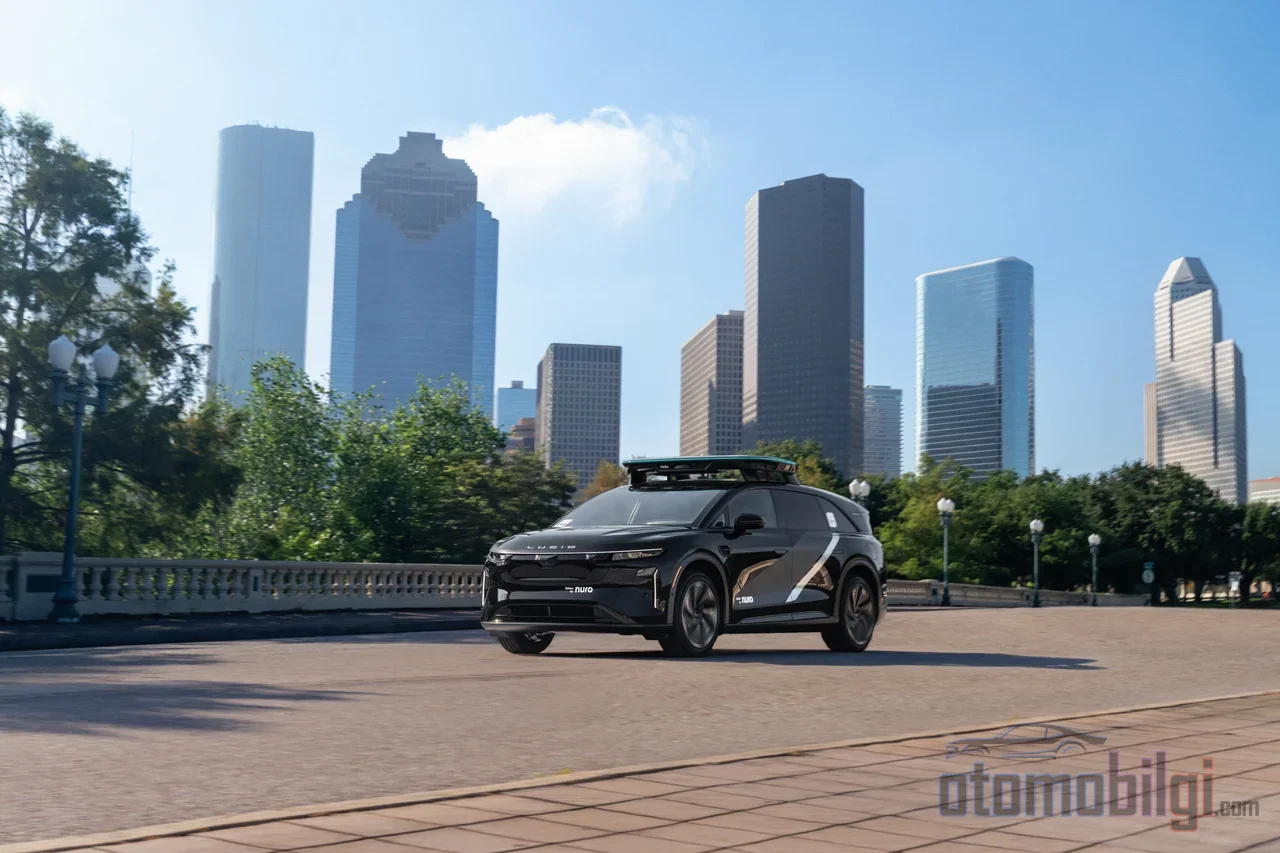
You settle into your seat; there is no steering wheel in the front, no pedals, and no driver. The car moves forward in its lane, taking the corners by itself. Then a construction site appears: the cones are not in the usual arrangement, and it is unclear which lane is closed. The car stops. And right at that moment, miles away, a human watching a screen starts to speak. So is this still a driverless journey, or a journey with an invisible driver?
Robotaxi companies usually gloss over this with two words: remote assistance. In fact, there is a far more interesting reality behind this concept. According to Waymo's official statement, remote assistance teams provide advice and support to vehicles but do not directly control them. On the other hand, a hearing in the US Senate made it clear that the industry relies on remote human operators in difficult situations; even the NHTSA opened an investigation into Tesla's driverless claims about the Cybercab. Let's peel back this invisible layer, layer by layer.
When Exactly Does the Remote Operator Step In?
The model Waymo describes works like this: Remote assistance agents do not continuously monitor the vehicles. Instead, when the autonomous driving system itself encounters an uncertainty, it requests information. The operator sends a suggestion, but the vehicle still makes the final decision; the system can choose to use that advice or to reject it. So they are not driving the car with a game controller in the classic sense - they work more like an advisor on the other end of a phone.
Typical scenarios sound familiar from everyday life: confirming which lane is actually closed at a construction site with an unusual cone arrangement, clarifying what to do in ambiguous traffic management situations, or discussing a plan to avoid a skidding vehicle. In the most complex cases, the operator can suggest a specific lane or route that the vehicle has evaluated. But if the vehicle decides it is not safe, it can stop, and in some cases a manual intervention by a roadside recovery team may be needed to continue the journey. Just think about it: guess who comes to the rescue when the so-called fully autonomous system gets stuck on a stretch it cannot handle on its own.
70 People, 3,000 Vehicles: Is the Monitoring Myth Collapsing?
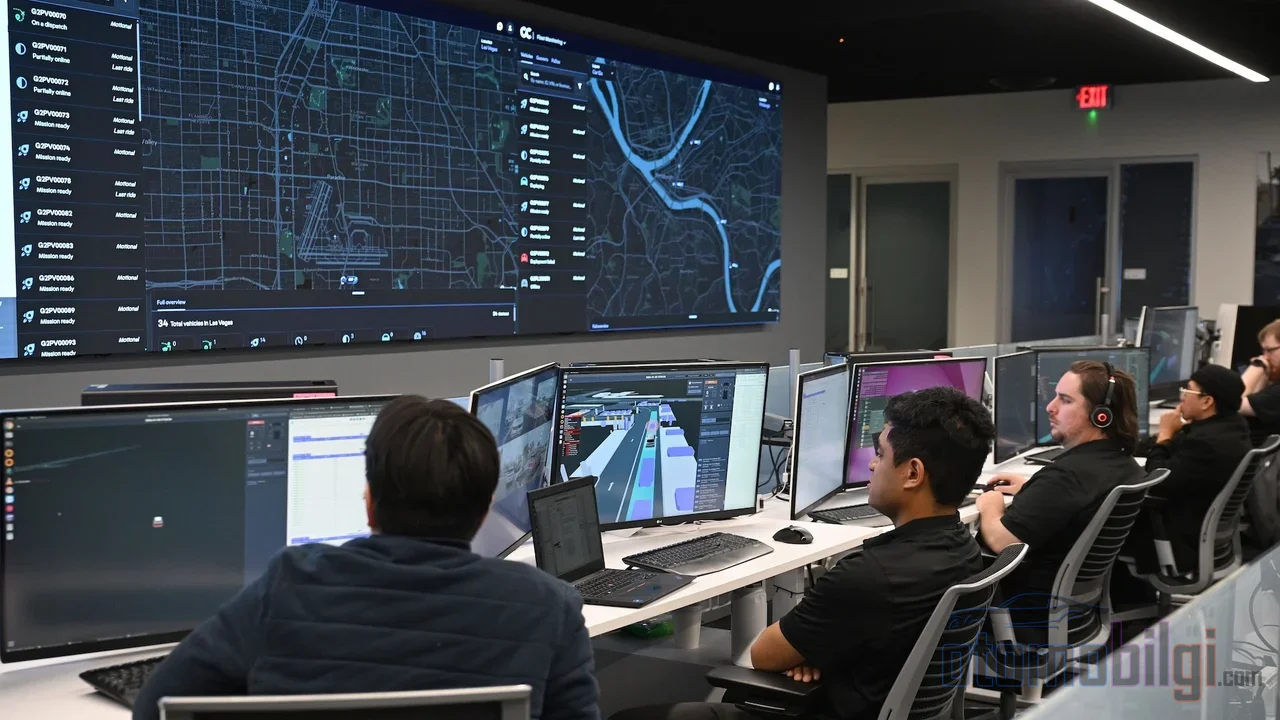
Here is the most striking figure, one that hardly anyone knows: As of February 17, 2026, the number of Waymo's remote assistance agents on duty worldwide at any given moment is about 70 people. In contrast, the fleet consists of 3,000 vehicles, the vehicles drive more than 4 million miles per week, and more than 400,000 trips are made. 70 people cannot monitor 3,000 cars in real time - and the company itself already says that continuous monitoring is not being done. This ratio is not a monitoring ratio, just the number of staff on duty. Doesn't it seem strange to you that in a supposedly driverless system there are people, yet they almost never look at a screen; they only respond when the car calls out?
On the Zoox side, things are a bit more classic: The company operates a Fleet Operations unit that keeps the fleet running with 24/7 remote assistance and passenger support, maintenance, and route operations. And Zoox doesn't hide it; it emphasizes that there is no driver, but that safety is at the core of the design. Nuro likewise admits that it relies on remote assistance teams. So all three major robotaxi players officially admit there are humans behind the scenes - even though the name and scope of that admission differ.
Moreover, the hiring of these operators is anything but lax. A driver's license is required, driving history is reviewed, criminal background checks are performed, and drug tests, color blindness and spatial perception assessments are conducted. So it's not random people sitting behind the door, but drivers who have passed the filters. Waymo's emergency response team, on the other hand, is located only in the US and is certified for more complex tasks such as post-accident procedures.
Highlights
- The number of Waymo's remote assistance agents on duty at any given moment is around 70; the fleet has 3,000 vehicles.
- One-way median latency to their US centers is about 150 ms, and about 250 ms to overseas centers.
- In teleoperation, latency must stay below 160 ms for control; above 500 ms, remote driving is nearly impossible.
- The NHTSA opened an investigation into Tesla's driverless claims about the Cybercab.
- Tesla launched its unsupervised robotaxi service with Model Ys in Austin in January 2026.
Why Is Latency the Heart of Safety?
Think of playing a video game. If there were a half-second delay between the moment you press a key and the character on screen moving, you couldn't get past any team. Driving a car remotely works on the same logic, but with far heavier consequences. The 5GAA's targets for teleoperation are clear: An ideal end-to-end latency of 100 ms for the uplink that carries sensor data, and 20 ms for the downlink that delivers control commands. According to experiments with human operators, remote steering is generally possible at latencies below 100 ms, but performance degrades rapidly above that. An academic study shows that latency must be kept below 160 ms for adequate control. Between 300 and 500 ms it becomes challenging, and above 500 ms it is nearly impossible.
Waymo's own data fits this picture: One-way median latency of about 150 ms to US operations centers, and about 250 ms to overseas centers. So connecting to an assistance center abroad means being well above the critical threshold in terms of control. At this point, let me remind you of an important detail: Waymo's model is not direct control, but recommendation. While a 250 ms latency wouldn't upset you for a recommendation, in a scenario where someone actually takes over the steering, this figure becomes a matter of vital importance.
Why Is Transmitting LiDAR Over 5G So Difficult?
If you want to send the sensor data produced by an autonomous vehicle out, you face a massive pipe. According to a real-world 5G field study conducted in Minneapolis, 78.3% of the sensor data transmitted by an autonomous vehicle comes from LiDAR and 18% from cameras. While a single camera requires 8 Mbps, a LiDAR with 64 or 128 beams demands 277 or 307 Mbps of capacity. The average uplink of commercial 5G networks is around 47-77.7 Mbps depending on the operator. In short, transmitting LiDAR over today's 5G is nearly impossible without aggressive compression.
And this is not just a bandwidth problem. Cell handovers, meaning the phone jumping from one base station to another, can increase sensor frame latency by up to 85%. Deteriorating channel conditions increase latency by about 48%. The most dangerous part is this: Queue latency, as we call it, the moments when the network is slowest, can coincide with an event that is fully safety-critical. Teleoperation needs to work not in perfect laboratory conditions but in real city traffic.
Where Does the Perception Chain End and Human Intervention Begin?
The perception chain in the vehicle consists of radar, camera and lidar. Radar has weak imaging and low resolution; the camera is good but dependent on light. Lidar loses performance in fog, rain and smoky environments and is expensive. In other words, the system does not see everything clearly in every condition. This uncertainty is precisely what creates the need for human contextualization: the sensors see something, but when interpreting what that thing is and turning it into a decision becomes difficult, the human above steps in. The perception chain starts with machines, but the final link that turns into a decision is still often a brain.
The Driverless Claim: Promise or Reality?
Waymo refuses to compare it to an airline dispatch center; according to the company's position, remote assistance is a limited intervention tool used to get the vehicle out of unusual situations. But critical voices are much harsher. Safety researcher Philip Koopman writes that the robotaxi industry has declared defeat in edge cases and has embraced remote assistants as the solution; he emphasizes that as long as heavily-tailed edge cases exist, human involvement will be needed for robotaxis to operate on public roads. In his view, every robotaxi has a remote driver.
The regulators are not standing idle either. The NHTSA opened an investigation into Tesla Cybercab's driverless safety claims; there are assessments that trust in teleoperation has weakened the driverless claim, and that remote operators directly drive the vehicles when the autonomous system makes an error. A hearing in the US Senate revealed that robotaxi companies rely on remote human operators when their systems fail or encounter difficult situations.
The Tesla side is a separate story. The company launched its unsupervised robotaxi service in Austin with Model Ys in January 2026, then added its purpose-built Cybercabs. But analyst Brad Templeton argues that this service is probably not truly unsupervised. On the other hand, Tesla claims its Full Self-Driving software is 10 times safer than human drivers; however, the figures supporting this claim are being questioned, and there are serious findings suggesting Tesla's own AI trainers do not trust the technology. After years of broken promises, Tesla owners have filed a lawsuit against the company over FSD's capabilities.
Two Models, Two Different Realities
Now let's clarify the big picture. There are actually two different approaches in the industry, and it's important not to confuse them:
| Feature | Waymo model (recommended) | Classic teleoperation |
|---|---|---|
| Role of the human | Advisor giving recommendations | Operator directly driving the vehicle |
| Continuous monitoring | No; connects when the vehicle requests it | Usually uninterrupted connection |
| Latency tolerance | Relatively high (150-250 ms median) | Below 160 ms required for control |
| Zoox/Nuro position | Both companies admitting they rely on remote assistance teams | |
| Industry criticism | According to Koopman, all robotaxis have a remote driver | |
This distinction lies at the heart of the problem. In the advice model, latency is often not critical, but in the control model every millisecond matters. Unless companies clarify which model they use, the driverless claim remains an empty marketing phrase.
So Are There Really No Drivers in Robotaxis?
There is no human sitting at the wheel; that's true. But the driverless claim doesn't mean there is no human behind the vehicle. Here's the reality: When the car runs into a situation it cannot solve on its own, it calls out to a human kilometers away, receives their suggestion, and makes its decision. In some cases, the crew on the road manually rescues the spot where the system was helpless. So robotaxis today are not fully autonomous; they are human-assisted systems with high levels of autonomy. This doesn't make them useless - on the contrary, they are among the most advanced driving systems in the world. But it's essential to separate the promise from the reality: If something tells you it's driverless, you should also ask not just who isn't in the seat, but who is saving you from where.
What makes me think is this: if these remote assistance centers grow into a genuine profession in the future, will the driverless claim become even more meaningful, or will we have simply changed the name of the job? Which do you think it is?
Sources
- Advice, not control: the role of Remote Assistance in Waymo's operations (Waymo, Feb 2026)
- Fleet response: Lending a helpful hand to Waymo's autonomously driven vehicles (Waymo, May 2024)
- Waymo defends use of remote assistance workers in robotaxi operations (Reuters, Feb 2026)
- Teleoperating Autonomous Vehicles over Commercial 5G Networks: Are We There Yet? (arXiv/UMN)
- Network Latency in Teleoperation of Connected and Autonomous Vehicles (PMC, 2024)
- Evaluating the Impact of Network Latency on the Teleoperation of AVs (ACM)
- All Robotaxis Have Remote Drivers (Philip Koopman, Substack)
- NHTSA opens inquiry into Tesla Cybercab safety claims (Automotive World)
- Tesla's Cybercab Robotaxi Is Probably Not 'Unsupervised' (Forbes, Oct 2026)
- The people supporting your robotaxi journey (Zoox Journal, Sep 2024)