Why Autonomous Trucks Still Have Drivers on US Highways
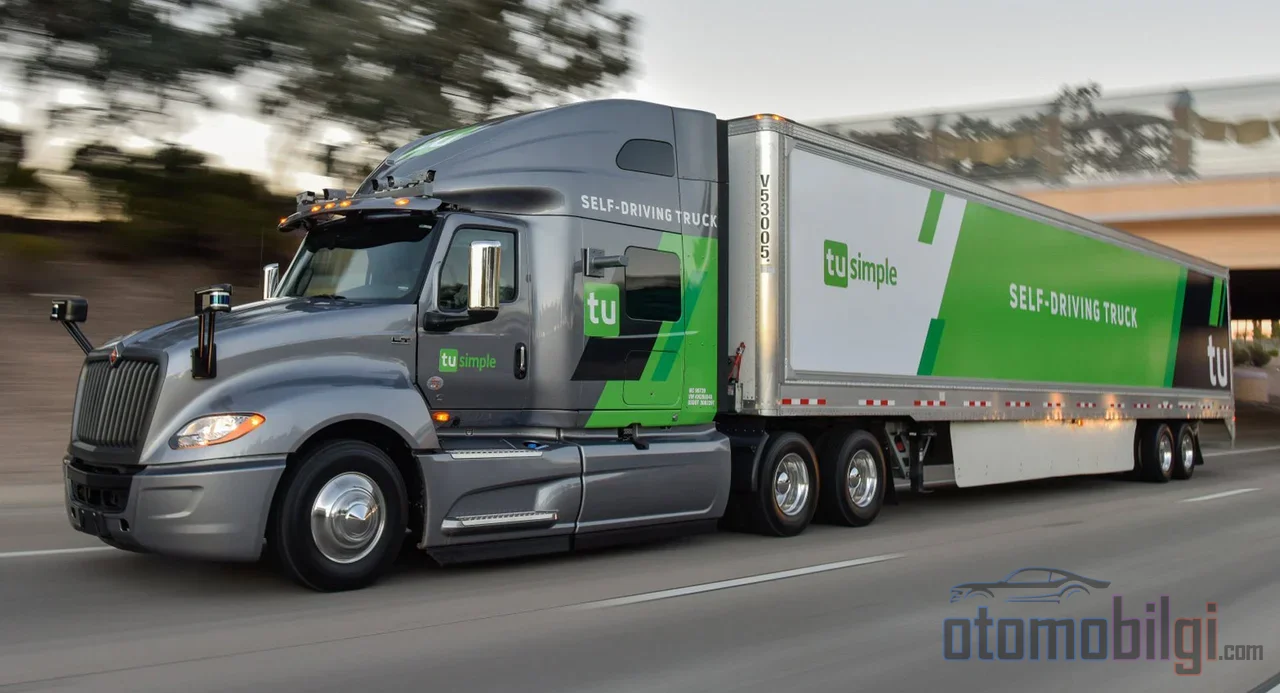
Picture a truck gliding smoothly down the highway: the steering wheel dead straight, the cab completely empty. Companies have been saying driverless delivery is just around the corner for years, tech giants are marketing it, but on a US highway today you still see a driver sitting in a seat, sipping coffee. Why? It's not just curiosity, it's a genuinely interesting question - and the answer is far more layered than you might think. Let's break it down.
First, Let's Clarify One Thing: What Do Autonomy Levels Mean for Trucks?
When it comes to autonomous driving, not everyone means the same thing, and that's where the real confusion begins. SAE's J3016 standard defines a vehicle's level of automation in six steps, from 0 to 5. Between Level 0 and 2, no matter how smart the system is, a human is responsible for part or all of the task - meaning you're still the driver. The real turning point is Level 4: within a defined service area, the system is responsible for the entire driving task and no human driver is needed. A highway route or a specific region, just like the map of a game: if the system is within that map, it can play on its own.
This is exactly what truck companies are targeting. Level 4 autonomy depends on specific conditions: defined routes, predictable scenarios like highway driving. So there's no situation where the truck can go anywhere under any conditions; the straight, long sections of the highway are actually the most suitable terrain for a computer. So if the technology has come this far, why is there still a human sitting inside the truck? Here's the answer, in several layers.
Key Highlights
- In Level 4 automation, the system is responsible for the entire drive on a defined route - no human driver needed
- Aurora and Kodiak received a five-year federal exemption for cab-mounted warning lights that came into force on October 7, 2026
- Kodiak expanded its driverless fleet in Texas from 5 trucks to 10 and reported over 3 million driverless miles
- Labor accounts for roughly 40% of trucking costs - that's where automation's real commercial promise lies
- The number of states that clearly allow fully driverless commercial operations ranges from 5 to 24+, depending on how you count
The Hub-to-Hub Model: Robot on the Highway, Human at the Ends
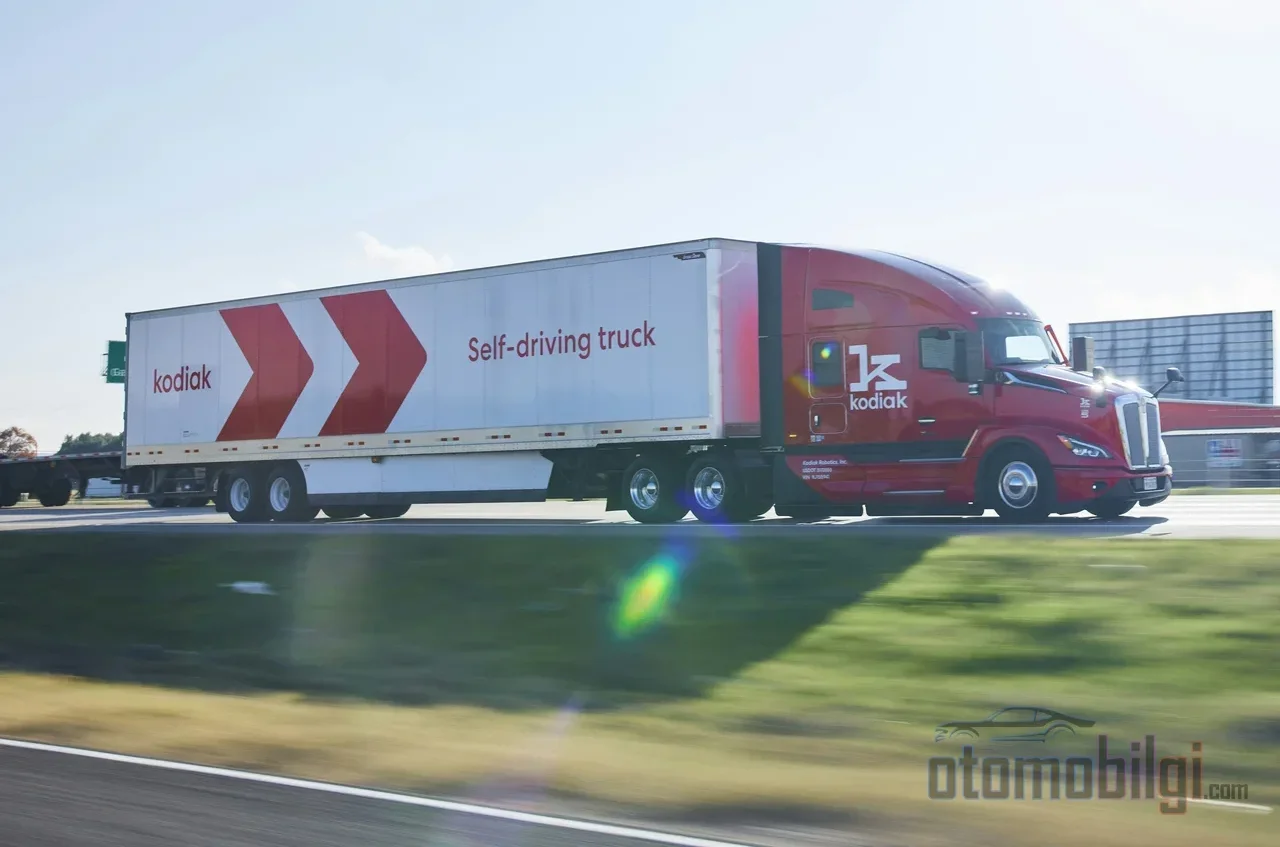
The real-world version of the driverless delivery dream looks a bit different from the picture in your head. Companies aren't building trucks that go driverless from start to finish, but a relay model we call hub-to-hub. The logic is very simple: the autonomous system handles the long, boring, but technically easiest part of the highway; human drivers take on the complex parts at the beginning and end of the shipment. The truck runs autonomously between distribution centers, while navigating narrow city streets and loading dock work stays with humans.
There's a very clear real-world example of this model. In 2022, Kodiak ran a pilot with the freight giant Werner Enterprises on a line stretching from Dallas to Lake City, Florida: four rounds, eight different trips. A total of 152 hours of driving and, every single time, yes, accompanied by a safety driver, 100% on-time delivery. So the system drove the highway, but there was always a backup human in the cab. Werner's local drivers handled the first and last mile; the truck's time on the highway was maximized.
The picture is similar on Aurora's side: to reach commercial launch, the company needs to complete a closed safety case - that is, a set of documents step by step proving the system is safe. And Aurora makes an honest assessment of itself: highway performance alone is not enough; some situations, like a blown tire, always require a human on site. Gatik, on the other hand, positions itself in medium-distance logistics on shorter, fixed routes - not the king of the highway but the leader of its own narrow niche.
Why Still With a Driver? Here Are the Four Big Reasons
1. Proving safety is harder than building it
The industry's most prominent observation is this: the biggest missing piece is not the technology, but safety validation. Before you can send an 80-ton truck into traffic with your bag slung over your shoulder, you first have to prove it is safe enough under every condition. And you have to prove it not in individual scenarios but over millions of miles and thousands of surprise situations. The technology is advancing rapidly, but this exam, unlike what the truck does, cannot be rushed.
2. The rulebooks were not written for an empty cab
Let's give a nice example: What happens if the truck breaks down on the road? The driver gets out of the cab, places the warning triangle behind, and puts on a reflective vest if necessary. But what if the cab is empty? Current federal rules assume precisely that a human driver will exit the cab and place the warning devices. Since this rule cannot be applied to a Level 4 vehicle, an exemption is required. And this is exactly why Aurora and Kodiak obtained a federal exemption: a five-year FMCSA exemption, effective October 7, 2026, allowing them to use LED warning lights on top of the cab. In other words, even for an empty-cab truck to issue a warning on the road, a special solution first had to be invented in the language of the law. If your head is spinning a little, you're right - things really are exactly that bureaucratic.
3. Rules that change from state to state
In the US, most transportation regulation belongs to the states, and for autonomous trucks this means a pile of rules that unfolds gradually but doesn't fit together. The industry describes it as a patchwork; what you may be free to do on one route can be stopped in the next state. California's new rules taking effect in 2026 are also a typical example of this phased approach: manufacturers must complete 500,000 miles of testing in each phase and prove hardware, software, and operational safety - and in the first phase a safety driver is still required. So even the most advanced companies operate with drivers during testing in one of the strictest states.
4. The first and last mile is still human work
The highway is an ideal terrain for a computer: flat, predictable, no pedestrians, few intersections. But the places where the shipment starts and ends - warehouse ramps, crowded industrial zones, narrow streets - are another world. A truck exiting the highway and pulling up to a warehouse is among the moments when technology is most fragile. The hub-to-hub model exists precisely for this reason: leave the part where the system is best to it, give the rest to humans. The next question is: how long will this patchwork system last, and will the interstate gap close?
Is the Patchwork Falling Apart? Federal Framework at the Door
There is a two-pronged effort underway in Washington to resolve the chaos of state-based regulation. The SELF DRIVE Act of 2026 foresees overriding state restrictions and allowing autonomous trucks to generate revenue in pilot operations for the first time, and it has passed one legislative hurdle. Alongside it is the BUILD America 250 act: this proposal, backed by autonomous trucking companies, aims to replace state-based uncertainty with a national safety framework. The new highway law taking effect in 2026 also establishes a federal safety framework for automated driving systems - exactly what the industry has been waiting for for years.
Still, it is necessary to know the current picture. Autonomous vehicles are fully legal for driverless commercial and personal operations in 21 US states; major hubs like Texas and California are included in that. The number of states explicitly allowing fully driverless trucks varies depending on the definition: under a narrow definition, 5 states like Texas, Arizona, Nevada, Florida, and California explicitly allow it; under a broad definition, more than 24 states do. The practical rule is also simple: a driverless truck can travel interstate today if both states at either end of the route permit it. The number of states with rules has passed half, but lawmakers are still working to catch up with the technology.
The Commercial Side: How Far Along Is the Code?
Not words, but numbers are needed - and as of 2026, the numbers are speaking. Kodiak expects to begin commercial long-haul driverless operations in the second half of the year; through its merger with Ares Acquisition II, it went public on Nasdaq under the symbol KDK and carries $146.2 million in cash. Its driverless fleet operating for Atlas Energy Solutions in Texas grew from 5 trucks to 10, with a commitment of 100 driverless trucks. The cumulative figures the company reported: over 5,200 hours of paid autonomous operation, over 3 million driverless miles, and over 10,000 completed deliveries. Its collaboration with ZF and NXP continues; Roush Industries completed the first truck designed for fully autonomous use. Atlas Energy, meanwhile, announces that it has autonomously completed approximately 70% of deliveries at active well sites. Kodiak also established a trucking hub in Georgia with Pilot to support a 29,000 km autonomous delivery network.
Why is the sector being pushed so fast? Economics, in short. Labor accounts for roughly 40% of trucking costs - and that is exactly where automation's real promise lies. The long-term picture is even more ambitious: the total cost of ownership advantage of autonomous truck fleets is estimated to grow into a $405 billion market by 2035. The industry's narrative revolves around the driver shortage; but the other side of the coin is just as strong. The warning that, without policy intervention, automation could eliminate high- and mid-wage trucking jobs while creating low-quality driving jobs is the main counterargument in the debate from a labor perspective. So this is not just a technology story, but also a labor story - and who will win and who will lose is still on the table.
Let's be transparent: while noting that some of the pieces claiming driverless trucks could lower shipping and food prices are sponsored content. The promise is real and logical, but it's worth looking at who's telling it.
So Why Are Robotaxis Moving Faster?
A fair question: if Waymo operates a full robotaxi service in multiple cities, why are trucks still running with a driver in the seat? The answer lies partly in scale. Waymo has reached a milestone of about 200 million fully autonomous miles; Baidu is at the level of 137 million driverless miles, while Tesla lags behind in fully driverless scale. More miles means more data, which means faster safety proof.
The second difference is sensor philosophy. While Tesla adopts a camera-only approach, Waymo uses multiple sensors including lidar. The debate in the trucking industry is also built on a similar fusion logic: every sensor has its advantages and limits. Active sensors measure distance, cameras provide context, but detection obstacles can occur in bad weather conditions. When all three come together, they cover each other's blind spots. It is also critical that robotaxis are confined to slow, short journeys within the city: the truck's job is hours of uninterrupted highway speed - a completely different safety exam.
In summary: Where Is the Driverless Truck Today, and Where Is It Headed Tomorrow?
Here is the clear answer we promised. Autonomous trucks on US highways still mostly operate with drivers because, although the technology is ready, three things are not yet in place: proof that the system is safe at scale, federal rules adapted to empty cabs, and a consistent legal framework across states. Today's reality is the narrow valley of Level 4: the hub-to-hub model, with the middle of the highway nearly driverless and the ends human-handled. Kodiak's numbers and its federal exemption and legal efforts in 2026 show how quickly this is changing; while the blowout tire scenario and California's first phase with drivers show why it is not yet complete.
My reading is this: the driverless truck is not a fantasy, but it is not an overnight revolution either. The driver's seat on the highway will remain occupied for a few more years - but the job of the person sitting in the cab will change a little more every year. And I think the real thing to watch is this transition: how will the profession evolve as the driver turns into a safety operator waiting alertly? To me, that's a more interesting question than the software behind the wheel of the truck. What do you think - how many truck drivers will be left on a US highway in 2030?
Sources
- SAE Levels of Driving Automation Refined for Clarity
- Levels of Automation – NHTSA
- FMCSA Driverless Truck Safety Exemption: 2026 Rules – Metier Law
- Kodiak AI Prepares Autonomous Trucks for 2026 – El Trailero Magazine
- Autonomous & Self-Driving Vehicle News: Gatik, Kodiak... – Auto Connected Car News
- The Biggest Gap in Driverless Trucking Isn't Tech – Trucking Info
- Self-Driving Vehicles Enacted Legislation – NCSL
- Impact of automation on long haul trucking operator-hours – Nature
- Driverless? Autonomous Trucks and the Future of Work – Berkeley Labor Center
- The business case for autonomous truck fleets – McKinsey