Apollo Go or Waymo? Who's Ahead in the Robotaxi Race
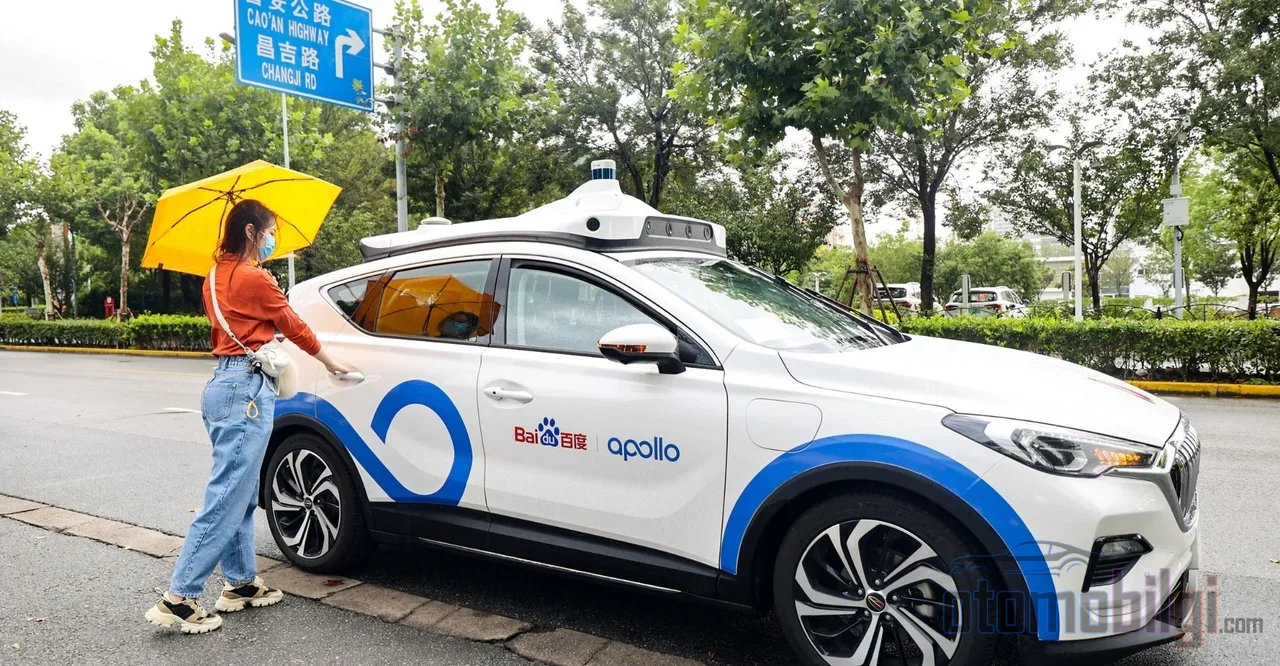
One morning in Wuhan, dozens of robotaxis came to a stop in the middle of the road at the same time. No one at the wheel, the vehicles motionless, traffic locked up. A few months later, in the same city, those vehicles were back on the road - but this time with a safety attendant in each one. This is exactly the kind of arc traced by the story of China's robotaxi giant Apollo Go: on one side, more than 20 million rides, 26 cities and triple-digit growth; on the other, a regulatory reality where a single incident could freeze the entire operation. So is Baidu's service really bigger than Waymo, or is this matter simpler than we think? Buckle up, this ride will be full of twists.
Just How Big Is Apollo Go's Scale, Really?
First, let's get acquainted with the numbers, because in this business the numbers really do speak. As of February 2026, Apollo Go has completed more than 20 million rides worldwide, and its coverage has spread to 26 cities. In the first quarter of 2026 alone, 3.2 million fully driverless rides were completed, and growth continues at triple-digit rates. Add to that an average of more than 250,000 driverless orders per week as of October 2025.
On the fleet side, things are a bit murkier, let's be honest. Baidu no longer officially discloses its total vehicle count; instead, it brags about the number of rides. According to third-party calculations, the fleet had surpassed 1,400 vehicles as of March 25, 2026, with a target of 3,000 vehicles set for the end of the year. The company's plan is to add 1,200 more vehicles by the end of 2026 in five major cities, starting with Beijing, Guangzhou and Shenzhen. So the numbers are big, but the "giant fleet" picture still stands a bit ahead, on the target side.
Highlights
- As of February 2026, Apollo Go has 20 million+ rides across 26 cities
- 3.2 million fully driverless rides in Q1 2026, with triple-digit growth
- Fleet reached 1,400+ vehicles in March 2026, year-end target of 3,000+
- Waymo leads the fleet race: 3,500-4,000 vehicles, 80% of them in California and Texas
- The RT6 robotaxi costs about $37,000
In Which Cities Do You Ride Driverless?
According to Baidu's regulatory filings, the mainland cities where it has reached fully driverless operation include Beijing, Chengdu, Chongqing, Haikou, Sanya, Shenzhen and Shanghai. As of January 2026, operations in China span a total of 20 cities. But the most striking name on the list is Wuhan: the situation there changed completely because of the incident we are about to tell you about. Moreover, there are only two countries where the public can board driverless vehicles with an empty driver's seat: China and the UAE. This is also proof of just how narrow a lane this race is being run in.
Waymo vs Apollo Go Comparison: Who Is Ahead?
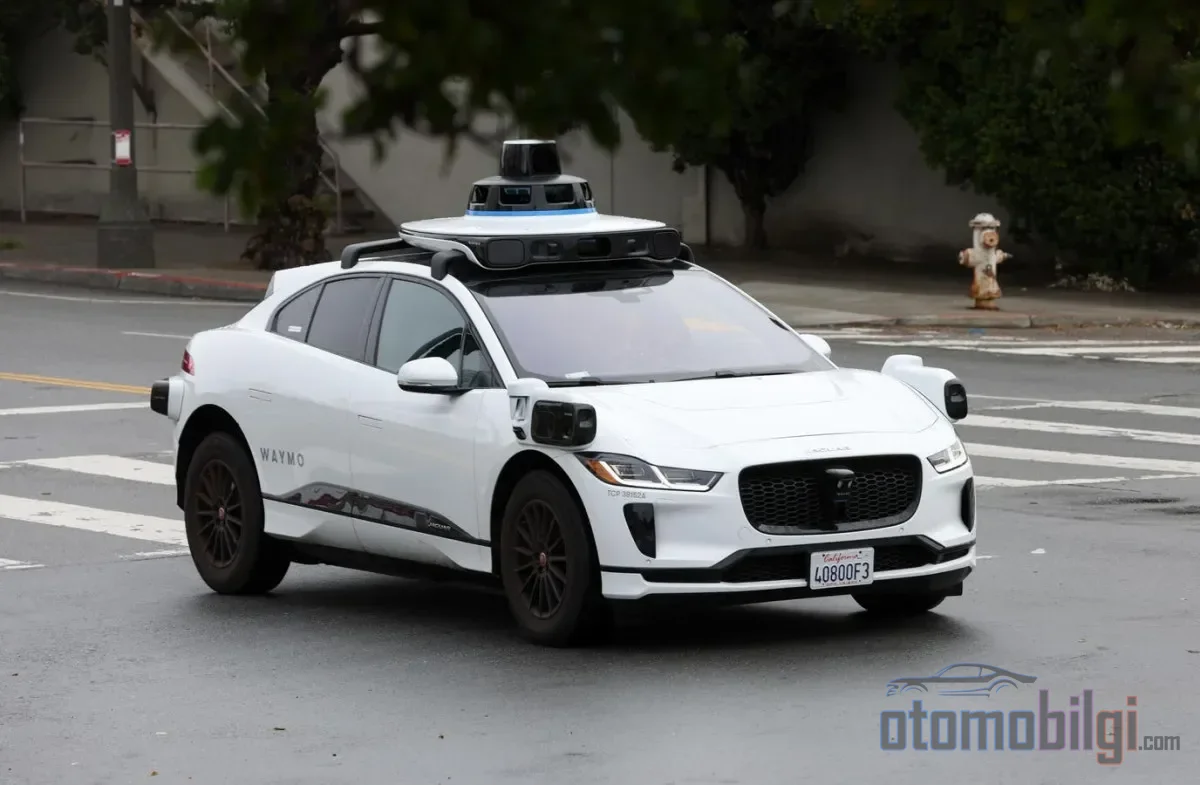
Here is the question everyone is asking, and unfortunately there is no short answer. Because the answer to "who is bigger" changes depending on which metric you look at. In fleet size, Waymo is clearly ahead: as of mid-2026, it is the world's largest robotaxi operator with more than 3,500 active vehicles. By September 2026 this number has reached about 4,000, and roughly 80% of the vehicles are concentrated in California and Texas. In trip volume, Apollo Go stands out with 3.2 million fully driverless trips per quarter.
| Metric | Apollo Go | Waymo |
|---|---|---|
| Fleet size | 1,400+ vehicles (March 2026), target 3,000+ | 3,500-4,000 vehicles (2026) |
| Trip volume | 3.2 million driverless trips (Q1 2026) | Does not disclose official quarterly data |
| Geographic reach | 26 cities, China + UAE + testing | US-based, 80% in California and Texas |
| 2026 target | Adding 1,200 vehicles in 5 cities | Preparation for more than 20 additional cities |
Some analyses run headlines claiming Apollo Go has overtaken Waymo in the global robotaxi ranking; the same analyses acknowledge that Waymo is still the leader in fleet size. Industry assessments also show that Waymo is ahead in audited, fully operational fleet size, followed closely by Pony.ai, WeRide and Apollo Go. So headlines and the picture sometimes tell different stories; you ask for the metric, and we give you the right one.
Why Cruise Was Left Out of the Race?
To complete the comparison, the third name needs to be mentioned. GM shut down Cruise's robotaxi development in December 2024; the reason was capital allocation priorities and the time and resources required to scale a robotaxi business. About 10 billion dollars had been invested in the program, and a fatal pedestrian-dragging incident brought the program to its end. About a year after the shutdown, GM is restarting its autonomy vision with a new test fleet, but it is no longer a favorite in the robotaxi race. Cruise's story is actually this industry's painful lesson: money and technology alone are not enough; trust is a one-way street - years to earn it, a single accident is enough to lose it.
Why China Scaled Faster: The RT6 and State Support
So how did Chinese operators reach this speed? The answer has two legs: cheap vehicles and supportive regulation. The first leg is the Apollo RT6, Baidu's sixth-generation driverless vehicle. The RT6 has 38 sensors: including 8 LiDARs and 12 cameras, delivering high-precision long-range detection in every direction. The real bombshell is the cost: The RT6's unit cost has been brought down to about 37,000 dollars, around 250,000 yuan. Think of it this way: many ordinary passenger cars do not even sell for more than the modification cost of a Waymo robotaxi. According to its LiDAR supplier, the RT6 achieved operational efficiency with a 60% cost reduction compared to previous generations.
The second leg is the state. China's Ministry of Industry and Information Technology and eight other agencies published a plan covering the 2026-2030 period, targeting the mass deployment of autonomous vehicles by 2030. The Economist and similar analyses argue that thanks to strong state support, China could win the robotaxi race; Comments that Chinese operators have adapted to chaotic traffic and moved to global leadership at low cost also point in the same direction. The narrative in the Western press is sometimes exaggerated, sometimes dismissive - the reality is out there: China has both scaled rapidly and paid the price of that speed with regulatory fragility.
Maps, Licenses and the Pricing Reality
In the West, a robotaxi service requires map approval city by city, licensing processes state by state, and long testing periods. In the Chinese model, these processes can be accelerated through central planning - until a problem arises. As for pricing, this is where we need to be honest: No reliable, precise data has been shared on Apollo Go's current passenger fares within China as of 2026. What is known is this: In Dubai, the service was initially free and became paid through Uber starting August 20, 2026; In Abu Dhabi too, rides were free until April 12, 2026. So the claims circulating that "robotaxis in China are very cheap" cannot currently be verified with exact figures - separating promise from reality starts precisely here.
The Wuhan Incident and the Regulatory Freeze: In the Shadow of Success
On March 31, 2026, the opening scene of this article became reality: dozens of Apollo Go vehicles stopped on the road in Wuhan and were pulled off the streets for a fleet safety review. Before that, Baidu had claimed 100% driverless operations across almost all of Wuhan since June 2024. Following the incident, China froze robotaxi licenses citing a prominent autonomous vehicle accident; Companies like Momenta and Baidu had their test and operation expansions postponed for months. Licenses began to be reissued in July 2026, following a sector-wide safety review.
Service in Wuhan restarted in August 2026 - but at a much lower profile: In the Jingkai, Caidian and Hanyang districts, with vehicles carrying a safety officer in the driver's seat. In Baidu's own earnings call, it was also announced that operations in some Chinese cities had been adjusted for regulatory reasons. This picture shows that in China, state support also means operational risk: the same hand that quickly opens the door can shut it entirely with a single mistake. Even though 50 million trips of success have accumulated, a single high-profile incident can shake public trust - this is the cruelest arithmetic of running a robotaxi business.
China Expands Overseas: Dubai, Abu Dhabi and Hong Kong
Apollo Go's story does not stay within China's borders. In Dubai, fully driverless commercial rides began on March 30, 2026 through a partnership with a local taxi company; the first-year plan is 50 vehicles, and from August 20, 2026, UberX and Uber Comfort passengers can be matched with driverless Apollo Go vehicles. In Abu Dhabi, a fully driverless public service opened on Yas Island in January 2026; this was one of the first two driverless permits granted by the regional transportation authority. In Hong Kong, the process has been more cautious: Manned passenger trials are ongoing at North Lantau, with 20 vehicles approved on the Airport Island and 8 in Tung Chung; In July 2026, permission was granted for driverless tests without an in-vehicle backup operator.
Rivals are not standing still either: Pony.ai announced plans to deploy more than 4,000 robotaxis. So in China, this is not just one company's race but a race in which an entire lane is running together - and that lane is now spilling beyond China.
So, the Conclusion: Why Is Apollo Go Carrying Millions of Passengers?
Let's sum it up, because the question at the beginning deserves a clear answer. Apollo Go is carrying millions of passengers because three things are true at once: a purpose-built Level-4 vehicle whose unit cost has fallen to 37,000 dollars, license and mapping processes accelerated through centralized planning, and real-world experience accumulated by testing simultaneously in more than thirty cities. Waymo is still ahead in fleet size and is ambitious in technology; while Apollo Go is the fastest-moving name in the scaling race thanks to its ride volume, number of cities, and cost advantage. Cruise exited this race with a 10-billion-dollar lesson.
But the freeze in Wuhan also showed that this speed comes at a price: it does not simply mean "more vehicles, better service," and a robotaxi influx without infrastructure upgrades can squeeze traffic even further. Robotaxi rides ultimately replace chauffeured rides; so the real stake lies not in the general market but in the ride-hailing market. The 2026-2030 plan and the 2030 mass rollout target are on the table. For now, there is a nice rule of thumb: Stay away from narratives that either instantly declare China's robotaxi victory or completely deny it. The real story lies exactly between the exaggeration and the dismissal, and it continues.
Sources
- Apollo Go had a strong start to 2026 (Baidu Inc. official)
- World Robotaxi Map 2026 (DockDuty)
- Robotaxi Statistics 2026 (SQ Magazine)
- Baidu's Apollo Go has expanded its robotaxi operations to 20 cities (CnEVPost)
- Waymo is scaling fast: Here's what the fleet data shows (TechCrunch)
- 2025 Year in Review (Waymo Blog)
- GM to exit loss-making Cruise robotaxi business (Reuters)
- Baidu Unveils Next-Gen Autonomous Vehicle (PRNewswire - Baidu)
- China Resumes Issuing Robotaxi Licenses After Long Freeze (Bloomberg)
- Dubai Taxi Company and Baidu's Apollo Go Launch Fully Driverless Commercial Ride-Hailing (Dubai Taxi Company)