Why Do Cameras Monitor the Driver at the Wheel?
Share This Page
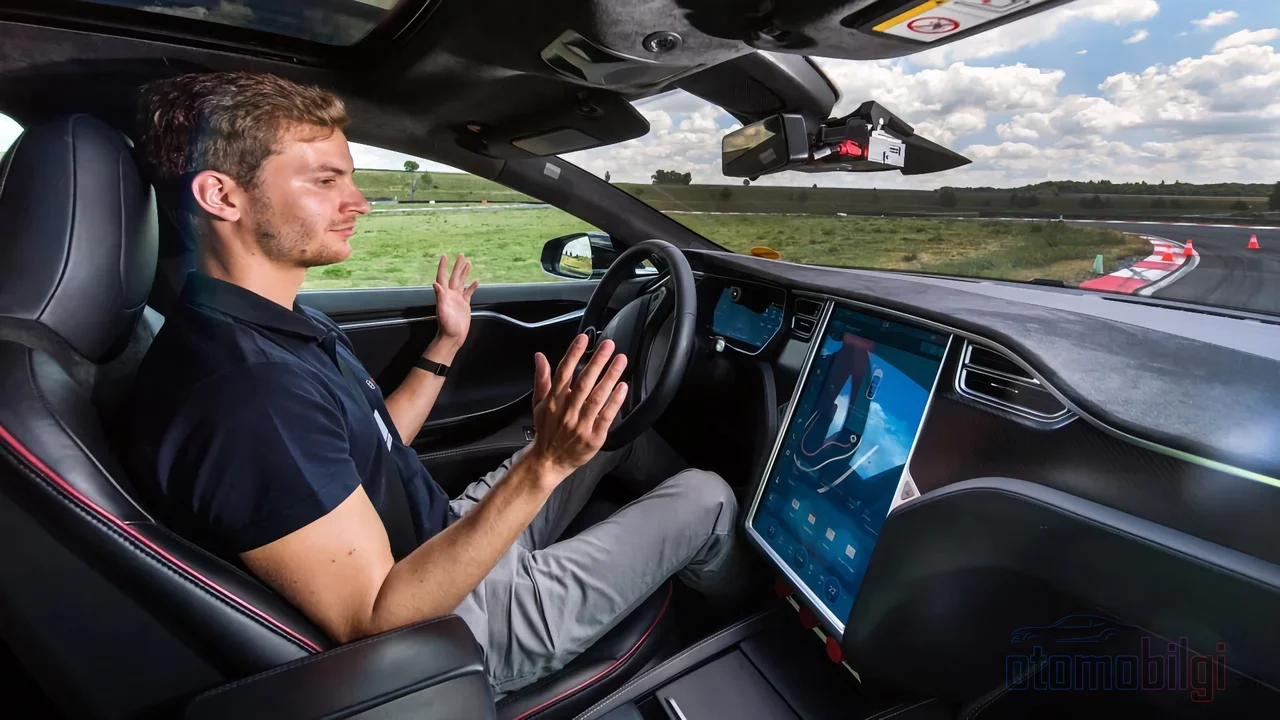
Cameras are watching the driver behind the wheel, because today's semi-autonomous systems still cannot read the road safely on their own: the driver monitoring system (DMS), using infrared cameras placed inside the cabin and artificial intelligence algorithms, analyzes eye movements, blink frequency, head position, and facial expressions to continuously evaluate whether the driver is awake and attentive. In Level 2 and Level 3 systems, the vehicle's weakest link is the human - and the system has to monitor that link.
Highlights
- Mobileye systems process 60 frames per second of eye imagery to detect drowsiness and phone use.
- The system in Volvo's 2025 XC60 and XC90 models uses two separate cameras and cannot be permanently disabled.
- The EU's mandatory fatigue monitoring takes effect in 2026; Euro NCAP will also start requiring DMS validation the same year.
- Mercedes has paused Level 3 Drive Pilot in the US for the 2026 S-Class; the reason is the imbalance between cost and customer demand.
What Exactly Does a Driver Monitoring System Do?
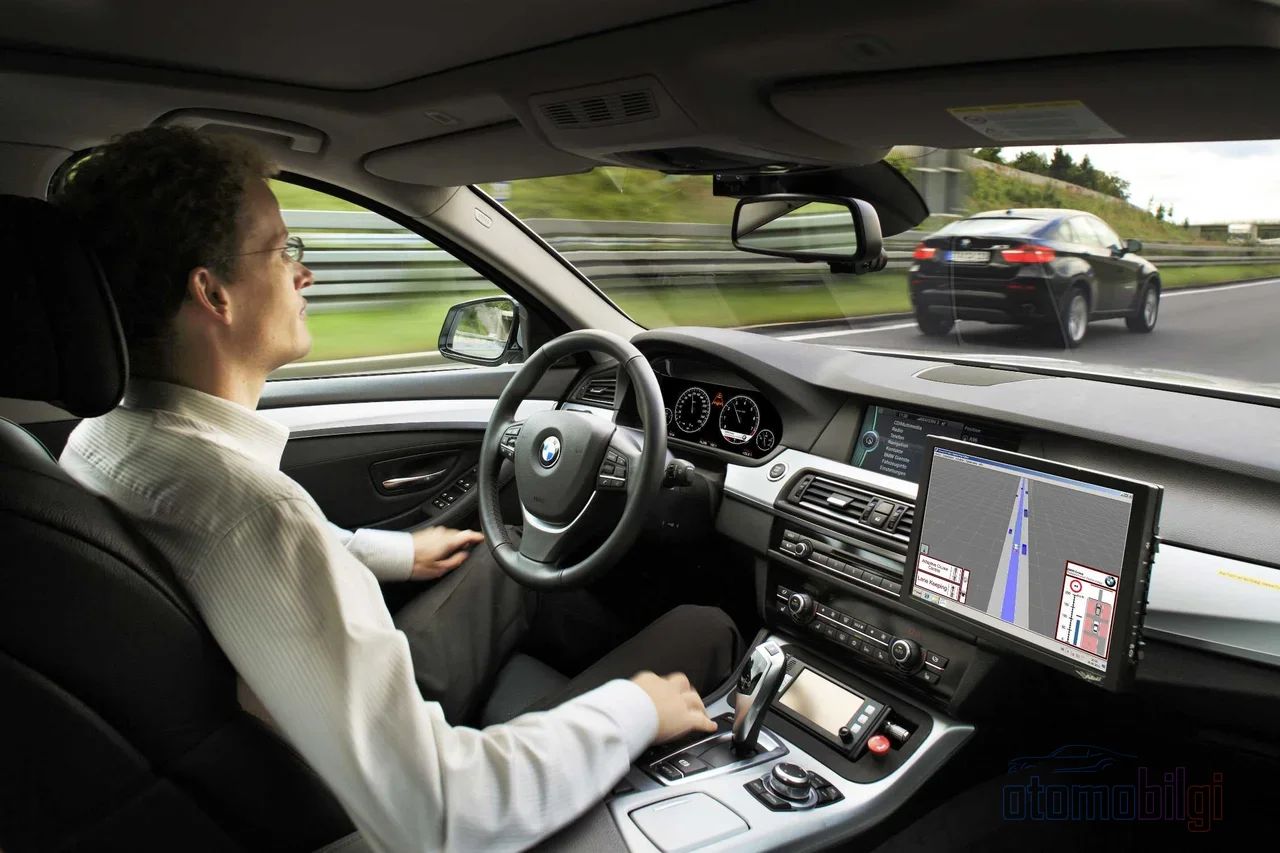
Think of it this way: someone sitting in the seat is constantly watching you, and the moment your eyes drift from the road, they raise a hand and say "pay attention." That is roughly what an in-cabin DMS does, except it leaves the job to infrared cameras and facial recognition software. The system measures blink duration and frequency, moments of eye closure, head position, and even micro facial expressions. Some advanced applications can even look at biometric data such as heart rate.
Infrared light works like a hero here: it can track head and eye movements even in the dark of night or behind sunglasses. When the system detects a sign of fatigue or inattention, a triple warning combination usually kicks in - a different sound tone, a visual LED alert, and a voice command.
Volvo's two-eye system
The Driver Understanding System offered in Volvo's 2025 XC60 and XC90 models is one of the most understandable examples of this work. It uses two separate cameras: one tracks eye movements and gaze direction, the other monitors head position. It combines this with steering angle, lane position, and speed data. A brief glance at the mirror or dashboard is considered perfectly normal; gazes lingering on the center console or the phone are counted as problematic. So the system is not scolding you, it is trying to read your intent.
Intervention is also gradual: first a coffee cup icon appears on the screen along with an audible warning. If the driver does not respond, the system touches the steering wheel to correct the lane - which the driver can override. The harshest step is automatic braking, which engages only when multiple systems confirm both inattention and collision risk. And note: this system cannot be permanently disabled in Volvo vehicles. No recordings are stored or transmitted either; processing is done locally, inside the vehicle.
How Far Does Eye Tracking Go?
The most striking detail here is that the DMS no longer merely checks whether the driver's eyes are open. A system needs to be able to catch even a driver whose eyes are open but whose mind is elsewhere - because that is exactly where the danger begins.
The most interesting approach in this field comes from systems that combine the interior camera with the outward-facing ADAS camera. The infrared camera captures 60 frames per second of eye imagery and analyzes eye movement and blink rate; it is specifically trained to detect drowsiness, i.e. the onset of sleep, and phone use. When combined with exterior camera data, an interesting capability emerges: even if the eyes are open, distraction can be detected if the hazard zones are not being scanned. When the system notices attention declining, it can increase the following distance, restrict lane changes, and even require a brief glance at the side mirror before a lane change.
Of course, there is a limit to this. Applications like Volvo's system cannot yet detect cognitive inattention - the type of driver whose eyes are on the road but whose mind is entirely elsewhere. Sunglasses, direct sunlight, and multiple drivers using the same vehicle affect accuracy; the system may also require an adaptation period for itself after a driver change.
Tesla, GM, Ford and Mercedes: Different Methods for the Same Job
Each manufacturer's answer to the question ' is the driver alert? ' is different. Some trust the steering wheel, some trust the eyes. When compared, the picture becomes clear:
| Manufacturer | Monitoring method | Standout detail |
|---|---|---|
| Tesla | Eye and head tracking via cabin camera (added to Model 3/Y in 2021) | Works on all roads; Autopilot temporarily shuts off for an unresponsive driver |
| GM Super Cruise | Head movement and attention monitoring via infrared camera | Limited to pre-mapped highways; from 2025 onwards, the vehicle can come to a stop with an unresponsive driver |
| Ford BlueCruise | Driver-facing camera | Limited to mapped highways, visual and audible warnings |
| Mercedes Drive Pilot | Level 3 - eyes may leave the road | Up to 95 km/h in Germany; the company has announced that it assumes full legal responsibility while active |
| Toyota | High-resolution camera and millimeter-wave radar (Safety Sense 3.0) | There is customer demand for a focus-monitoring system |
The essence of the difference is this: While Tesla works through haptic feedback and pressure control on the steering wheel, GM directly monitors eye movement. GM's Driver Attention Assist 2.0 can detect distraction, slowly bring the vehicle to a stop, and call OnStar - meaning it is not an alarm that stays silent after merely warning, but a chain with an ending. Mercedes, on the other hand, opens a completely different door: While Drive Pilot is active, the driver can look at their phone, because control has been gradually transferred to the system. But this comfort comes at a heavy price; Mercedes announced that it has paused its Level 3 rollout in the United States in the 2026 S-Class and has switched to a ' Level 2++ ' assistant system. The reason is that the development cost is not proportionate to customer demand. Although Mercedes and BMW offer Level 3, this feature is for now available only in expensive upper-segment models.
So Why Is It Needed?
Let's start with simple math: drowsy driving alone causes tens of thousands of accidents and hundreds of deaths every year in the US. Semi-autonomous features have been proven to improve safety, as long as the driver's attention does not lapse. In other words, the car must monitor both the road and the driver - if either one is missing, the chain breaks.
The real insidious danger is partial automation itself. When the car takes over the steering for you, your brain switches to 'everything is under control' mode; this increases inattention and loss of situational awareness. That is why camera-based direct driver monitoring has become a critical criterion in safety tests evaluating active driver assistance systems. And regulation has locked onto the same direction: Euro NCAP's 2026 tests award points to advanced systems that detect fatigue, distraction and signs of substance influence through behavioral analysis; DMS, occupant monitoring and child presence detection verification are required. In the EU, the mandate to integrate fatigue monitoring technology into every new vehicle also comes into force in 2026. In the US, federal regulations will make advanced DMS mandatory in newly sold vehicles by 2027 - some sources say this applies from model year 2026, but this date has not yet been verified from primary sources.
The official position is also clear: NHTSA's approach boils down to 'if you are driving, you are monitoring'. Even if the system can hold the steering wheel, accelerate and brake, the responsibility rests with the driver. At Levels 0-2, active driver monitoring is mandatory; At Levels 3-5, control gradually passes to the system, and only at that point does legal responsibility shift as well. Mercedes assuming responsibility with Drive Pilot was precisely crossing that threshold.
The Annoying Alarm Problem: When Safety Clashes With User Experience
The bitter side of the matter is this: a system that monitors perfectly and a system that does not monitor at all are both dangerous. When high sensitivity combines with insufficient contextual understanding, what we call 'nuisance alerts' - annoying false alarms - are born. Normal driving behaviors can trigger false alarms. This is such a tangible problem that a class-action lawsuit filed against one manufacturer claims that the system routinely misreads eye and head position and issues repetitive, distracting alerts.
In the fleet industry, the dilemma is already openly debated: either you set up real-time monitoring and put up with alert flooding, or you skip it and take the risk. When the frequency of false alarms rises in the cabin, commercial drivers start ignoring the alerts entirely - giving rise to the classic outcome known as 'alarm fatigue'. There is a fair question you might ask: if a system keeps giving false alarms, would you still believe it will warn you at a real moment of danger?
Frequently Asked Questions
Is DMS now standard on all vehicles?
Not yet. In the EU, the 2026 mandate covers new vehicles, and in the US a federal mandate is also defined through 2027. As of today, the feature is widespread mainly in models that offer active driving assistance and in upper-segment vehicles; it's worth checking whether it comes as standard when buying an ordinary compact.
Can the driver monitoring system be turned off?
It varies by manufacturer. At Volvo, the system cannot be permanently disabled; on the other hand, this setting is a subject of debate among owners of some models. The general trend is that the option of a full shutdown will disappear as safety regulations tighten.
Where is my camera data going?
At least in some systems, it never leaves the car: Volvo states that it does not store or transmit video recordings, and that processing is done locally inside the vehicle. On the Tesla side, data is processed inside the vehicle and can only be exported externally with the driver's approval. But this is not a guarantee that applies to every manufacturer - you must read the privacy policy before buying your car.
The Tension Between Promise and Reality
Here is the other side of the coin: most systems marketed as 'autonomous' actually expect you to be a backup driver 24/7. The system has to monitor you because true autonomy doesn't exist yet - and this monitoring is the reluctantly accepted price of the promised comfort. Mercedes pausing Level 3 due to the balance of cost and demand is the most tangible evidence of this tension: the technology exists, but no one is ready to pay enough money for that price and that tangle of responsibility.
Add that the global DMS market is $5.7 billion in 2026 and is forecast to reach $12.4 billion by 2036 with 8.1% annual growth, and the picture becomes clear - this is not a transitional product, but on its way to being a permanent safety layer. My take is this: as long as you don't take your eyes off the road, these cameras are a companion protecting you; the moment you do, they turn into an informant. Which do you think is the more reasonable trade-off - a driver who is constantly monitored, or an indecisive semi-autonomous system?
Sources
- Presenting the Mobileye Driver Monitoring System
- Understanding ADAS: Driver Monitoring Systems
- How Volvo's Driver Understanding System Works
- Direct Driver Monitoring System
- Automated Vehicle Safety | NHTSA
- Semi-autonomous vehicles must watch the road and the driver
- CR Rates Active Driving Assistance Systems
- How GM works to combat distracted driving
- Driver Attention Assist | Chevrolet
- GM Super Cruise vs Tesla Autopilot
- Mercedes pauses Level 3 driving assistance | electrive
- Mercedes accepts legal liability for Level 3 Drive Pilot
- DRIVE PILOT 95 km/h | Mercedes-Benz Group
- Mercedes-Benz Driver Assistance Features
- On-road driving | Euro NCAP
- Euro NCAP 2026 and ADAS testing
- 2026 EU Driver Monitoring Mandate | Neonode
- Improving Driver Monitoring User Experience
- Hyundai Lawsuit over DMS false alerts
- How Driver Monitoring Systems Reduce Distracted Driving
- Pros and Cons of Self-Driving Cars
- How BMW, Mercedes aim to make supervised driving work
- Driver Monitoring Systems Market
- 2026 Toyota Safety Sense 3.0 Features