Can OTA Updates Make a Car Autonomous?
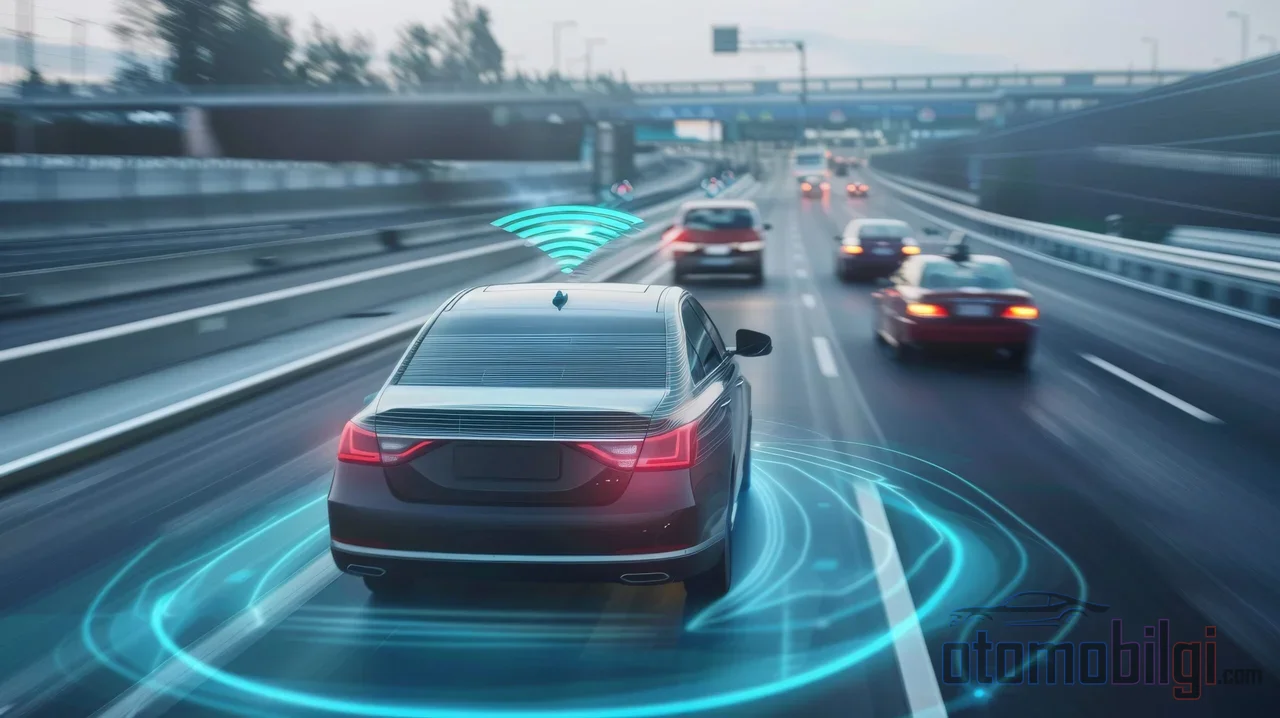
Last month your car was driving at a certain speed; this month you woke up one morning and the same car was smarter. Sounds like magic, doesn't it? This is exactly the promise of OTA, i.e. over-the-air updates: a machine that keeps improving even after you take delivery of the car. But there is one question whose answer breaks many a fan's heart: Can these updates really take your car to true autonomous driving one day? Or does that cold reality called hardware rein in the imagination of software every time?
This question is not just a friendly debate on forums; it directly concerns the money out of your pocket, your safety, and the future of the industry. Let's separate the promise from the reality.
What Is an OTA Update, and What Can It Add to Autonomous Driving?
An OTA update means the vehicle's software being updated remotely and wirelessly without going to the dealer. These updates fall into two main types: SOTA (software over-the-air) covers software components such as navigation and climate control; FOTA (firmware over-the-air) covers embedded software that controls hardware such as drivetrain or battery management. Updates arrive over a 4G/5G cellular connection or Wi-Fi, are installed while the vehicle is not in use, and the system restarts after verification. On the safety side, encryption, authentication and signed software images are used; the update must reach the right vehicle from the right source.
When it comes to autonomous driving, things get even more interesting. Manufacturers can remotely improve sensor systems and collision-avoidance algorithms via OTA; for example, the software's ability to recognize pedestrians, cyclists or unexpected obstacles can be enhanced. Up-to-date maps and traffic data can be provided in real time, allowing rapid adaptation to dynamic challenges such as road works and weather conditions. The ISO/SAE 21434 standard and the UNECE R155/R156 regulations also provide a framework for secure OTA infrastructure.
A concrete example: The Polestar 2, with its 15. OTA update, gained the YouTube app; the company also offered a performance boost package via software and stated that it had increased the vehicle's efficiency by approximately 10% over time. So OTA really works; the question is: how well does it work?
Highlights
- No vehicle today is at the SAE Level 5 (full automation) level; the de facto standard is Level 2.
- Elon Musk admitted in January 2025 that HW3 hardware would fall short for FSD.
- The Mercedes DRIVE PILOT subscription costs $2,500 per year; the system offers Level 3 up to 60 km/h.
- Tesla removed the one-time purchase option from FSD, moving to subscription only, starting February 2026.
- According to US DOT data, 9% of ADS accidents were found to involve hardware issues and 6% software issues.
What Software Cannot Solve: The Hardware Limit
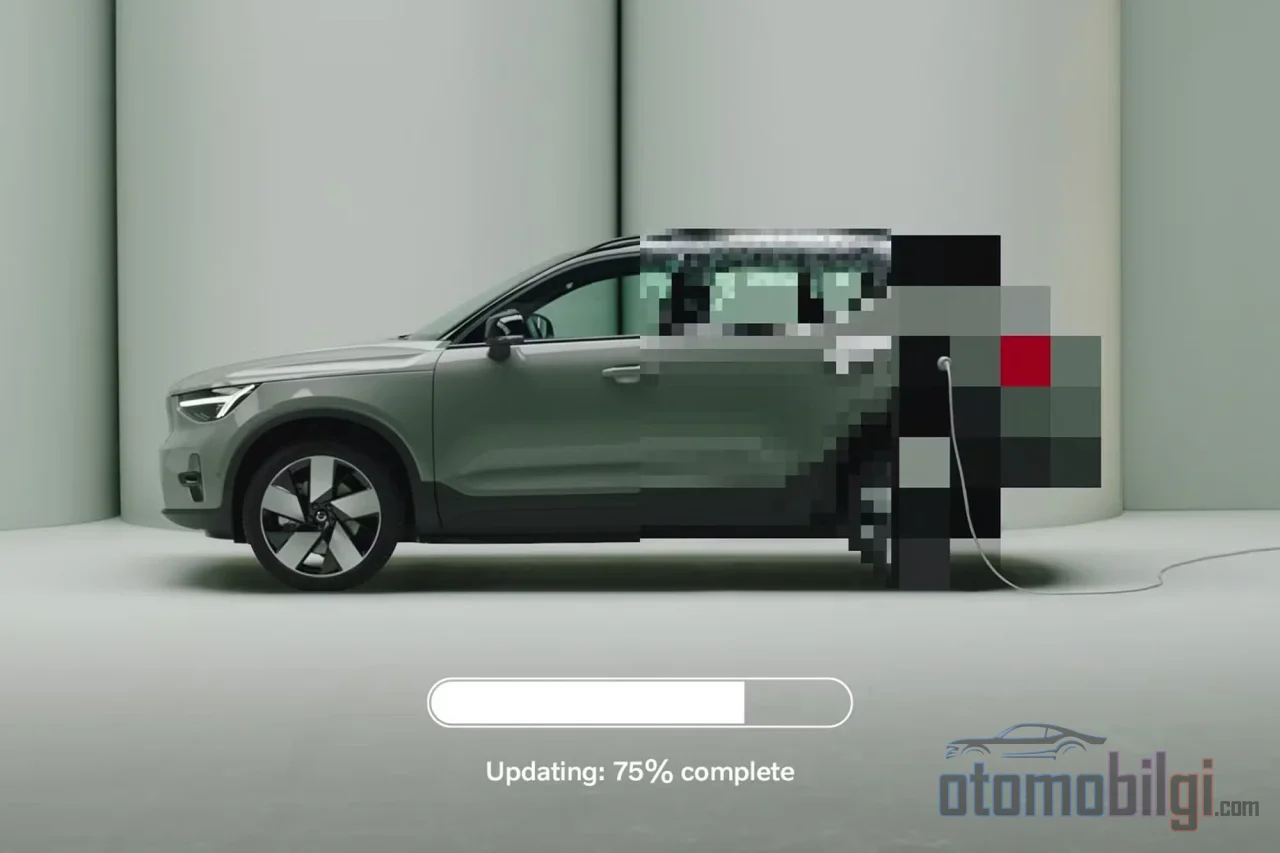
Here is where simplicity ends. OTA updates can make software improvements within the capabilities of the existing hardware, but they cannot physically transform that hardware. Think of it this way: No matter how many apps you install on your phone, you can't turn an old processor into a new chip.
The most famous example of this truth is Tesla. While the company was moving forward with HW3 (FSD Computer 3.0), it switched to the next-generation AI4/HW4, and the difference is not small: Moving a car with HW3 hardware to AI4 level requires new cameras, an updated computer, and a comprehensive interior revision. In short, a job that can't be solved without a trip to the dealership. Tesla's official support page states that users who purchased FSD (Supervised) and have computer 2.0 or 2.5 are entitled to a free upgrade to FSD Computer 3.0. Elon Musk also openly acknowledged in January 2025 that HW3 vehicles would require a hardware upgrade for FSD; the company reportedly entered a process of setting up mini factories to upgrade existing vehicles.
Tesla is not alone. Rivian's first-generation (Gen 1) vehicle owners are discussing on forums and social media the fear of missing new driving updates due to hardware limits; while updates are usually rolled out in batches, vehicles with older hardware can be left behind. These community-sourced rumors are of course not official statements, but they clearly show the industry's trend: hardware that skips generations opens a gap that software cannot close.
The Reality of Levels: Level 5 Is Still Far Away
The SAE J3016 standard defines automation from Level 0 (no automation) to Level 5 (full automation), and the critical truth is this: no vehicle today has reached Level 5. According to the University of Michigan's assessment, Level 5 vehicles are unlikely to become widespread by 2035, and Level 2 systems are today's de facto standard. Some experts believe that true Level 5 may take decades, and that this level may never even be reached. What does Level 2 mean? The system provides steering and throttle-brake support, but the driver is supervising at all times. That means what is called FSD (Supervised) today performs lane changes, turns, and highway driving under supervision; it is not full autonomy.
The Subscription Era: New Capabilities or a Paywall?
The second big door opened by OTA: the business model. At Mercedes-Benz, selected systems are updated wirelessly, and mechanisms like Digital Extras have made subscriptions possible. Mercedes' DRIVE PILOT system is one of the rare examples offering SAE Level 3 conditional automation; it initially works at speeds up to 37 mph (60 km/h), and speed increases are planned with future software updates. The price? An annual $2,500 subscription. The system can only be activated while within its Operational Design Domain (ODD), that is, the defined operating conditions. In user discussions, the system is found overly restrictive, and criticism that it is not worth its fee is frequently voiced.
On the Tesla side, a more radical step was taken: As of February 2026, the one-time purchase option of $8,000 / 7,370 euros was removed, and the model switched to subscription only. As of September 2026, Autopilot is no longer purchasable; customers can only subscribe to the Level 2 package called Full Self-Driving (Supervised). The debate is clear: OTA comes with a promise of continuous improvement, but it also means continuous payment. Update culture is turning car ownership into a service.
Safety and Risk: Not Every Update Is Sacred
While OTA offers fast and cheap patching, it also opens up an attack vector. A hack demonstration performed on a 2018 model Honda Civic at DEFCON proved that the risk of malicious firmware is not just theory. The Swiss Re Institute emphasizes that the mismatch between software versions and algorithms is a source of software error risk.
So who is usually at fault in accidents? The U.S. Department of Transportation's data on ADS (automated driving system) accidents paints an interesting picture: 9% hardware problems, 8% planning/right-of-way errors, 6% software problems. In other words, hardware is cited more often than software. There is also a verification problem: As serious errors become rarer, it becomes harder to prove that an update is statistically safer than the previous one. This is one of the most frustrating technical realities of autonomous driving.
So What Is the Answer? Will My Car Become Fully Autonomous Later On?
The short and honest answer: No, an existing vehicle cannot become fully autonomous through an OTA update. Software can only improve as much as the existing sensors and computer allow; the hardware replacement required for full autonomy means physical intervention, that is, a dealer, parts, and labor. Tesla's HW3 saga and Musk's admission are the clearest proof of this.
Despite this, the picture is not at all gloomy. The global self-driving market is expected to grow from $47.89 billion in 2025 to $707.72 billion in 2035. The World Economic Forum's 2025 assessment shows that autonomous vehicles have moved past the initial hype and disappointment phase into real-world applications. According to 2026 forecasts, self-driving cars are becoming commonplace in the agenda and fears are diminishing. For autonomous driving, the content update cycle dropping from months to seconds requires a continuous data flow between the vehicle and traffic infrastructure via V2X connectivity.
My interpretation is this: OTA is a magnificent technology that keeps your car alive like a phone, but it is not a magic wand. The boundary drawn by the hardware at the moment of purchase cannot be erased with software. So when choosing your next car, don't look at the promise on paper, but at the sensors and computer underneath it. Because the real capability is hidden there.
Sources
- AI Computer Installations | Tesla Support
- DRIVE PILOT - MBUSA
- Musk admits older Teslas need hardware upgrades for FSD - Yahoo Finance
- Tesla Announces HW3 Upgrade Plan - Not a Tesla App
- Tesla Autopilot - Wikipedia
- Understanding Safety Challenges of Vehicles Equipped with ADS - U.S. DOT
- SAE Levels of Driving Automation Refined - SAE International
- Autonomous Vehicles Factsheet - University of Michigan CSS
- What are Over-The-Air software updates? - Polestar
- The Role of OTA Updates in Autonomous Vehicles - Mender