The Chips Governing Autonomous Driving: Nvidia and Mobileye
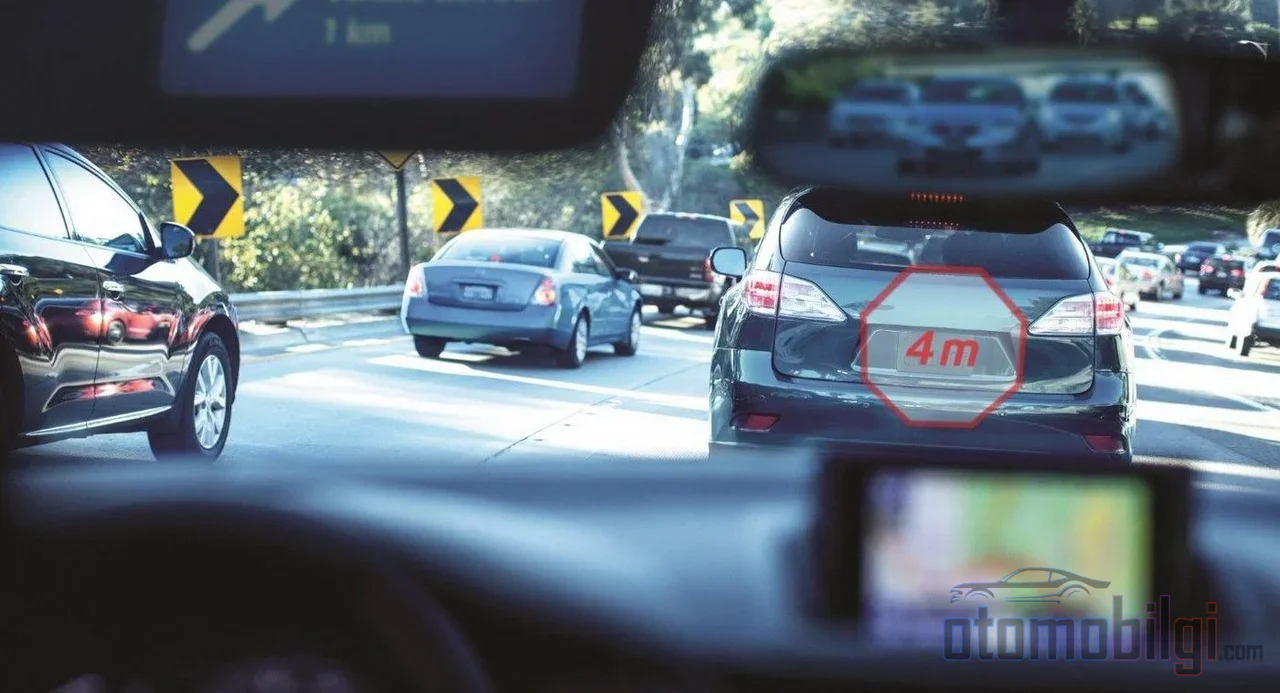
Dozens of megabytes of data flow from the lidar, radar and cameras every second. You need a brain that turns it into decisions in a thousandth of a second. So who makes these brains, and who pays the price of this silicon war?
What are autonomous driving chips and why are they so important?
Think of the chip inside an autonomous car - or rather, the computer housing that chip - as the car's brain. It is exactly this computer that turns the raw data collected by your eyes (cameras), ears (radar) and laser rangefinders (lidar) into commands that steer the wheel and press the brakes. One robotaxi company, while introducing its own driving hardware, likens the computer to a driver's brain: an organ that converts raw sensor data into real-time driving commands.
The scale here is mind-boggling. According to estimates, a car's cameras generate 20 to 60 MB of data per second, lidar 10 to 70 MB, while radar is more modest, at about 10 KB per second. Don't think of this as video streaming over your home internet; the data flowing here is the raw image and distance information that will decide where the car goes in its next half second. Milliseconds of delay mean an accident. That's why chipmakers are investing billions of dollars in the competition they have entered.
But the question you're probably most curious about is this: who is winning this processor war? There are three big players, and all three have very different paths.
Nvidia DRIVE: A platform giant that resembles a game console rather than a game
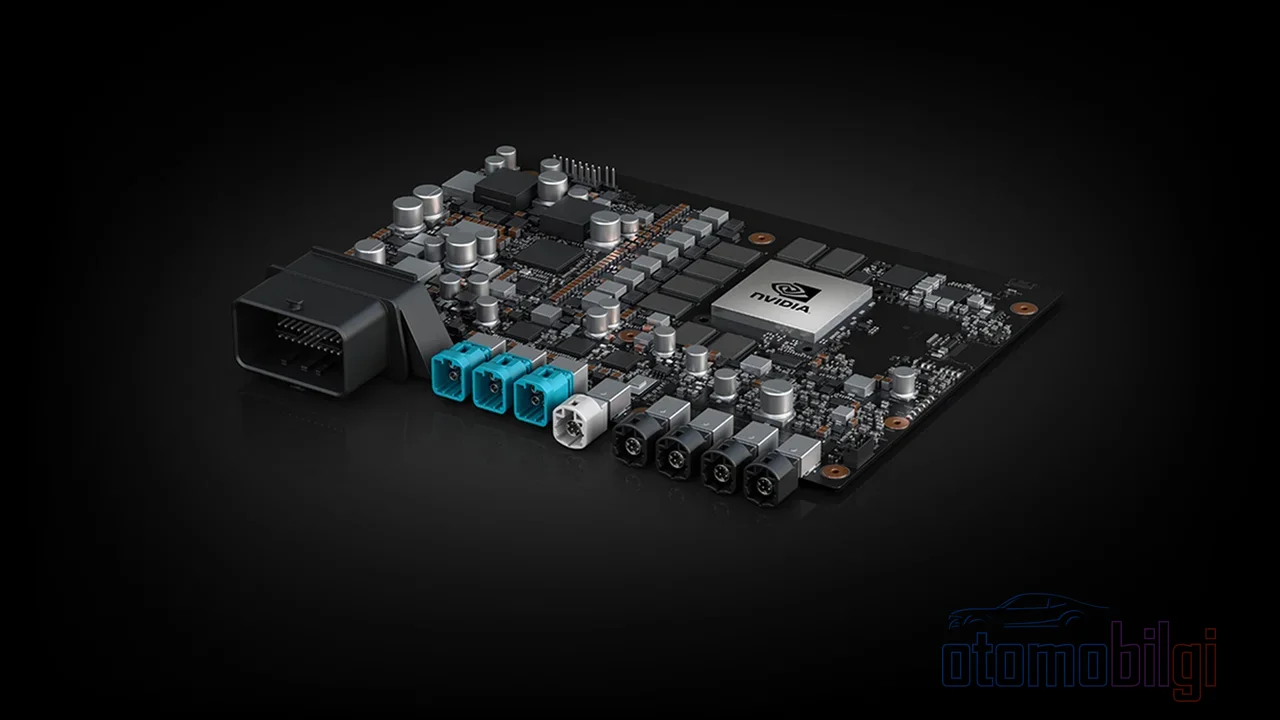
The star of Nvidia's automotive side is a SoC called DRIVE Orin - a complete computer built on a single chip. SoC stands for system-on-chip; you can think of it as the vehicle version of the processor in your phone. Software is loaded onto it, sensors are connected, and the car can now think.
The new-generation DRIVE AGX Thor, made available to developers in August 2025, is the current hero of this story. According to Nvidia, Thor offers up to 7.5 times more AI computing power than AGX Orin. Even more importantly, it is designed to meet the automotive industry's strict functional safety (ISO 26262) and cybersecurity (ISO 21434) requirements. Because a chip that runs in a car is subject to far different rules than a chip that runs in your computer; if a game crashes, you restart it - if a driving chip crashes, it's too late.
Nvidia's strategy is not just to sell chips, but to control an entire platform. The DRIVE AGX Hyperion, unveiled at CES 2026, covers the entire stack from computing to sensor architecture, and it is said the company is tightening its control over the autonomous driving world. The most concrete example of this is the Mercedes-Benz collaboration: Mercedes' operating system MB.OS is combining with Nvidia's Hyperion architecture and a software called Alpamayo. In other words, the brain of a luxury German car will run on the platform of an American chip giant.
Highlights
- Vehicles exceeding 250 million were produced with Mobileye EyeQ technology (2nd quarter of 2026) quarter of 2026)
- Nvidia's DRIVE AGX Thor promises up to 7.5 times more AI computing power than the previous-generation Orin
- Tesla's FSD computer uses a dual SoC architecture and contains 12 ARM Cortex-A72 CPUs
- The autonomous vehicle chip market is expected to grow from 14.48 billion dollars (2026) to 35.49 billion dollars (2034)
- According to Intel's estimates, cameras generate 20-60 MB and lidar 10-70 MB of data per second in the vehicle
Mobileye EyeQ: The silent giant inside 250 million vehicles
Now a much less publicized player, but one with the most real-world evidence, takes the stage: Mobileye. This company was acquired by Intel in 2017 and built the invisible infrastructure of ADAS, or advanced driver assistance systems, with its custom-designed chip called EyeQ. As of the end of 2025, more than 230 million vehicles worldwide have been produced with EyeQ technology; in the second quarter of 2026, this figure surpassed 250 million. Think of a five-seat car; this number corresponds to a substantial portion of all the cars in the world. Moreover, more than 27 automakers use these chips.
One of Mobileye's ambitious products is SuperVision: an integrated computer featuring 11 cameras and dual EyeQ 5 High chips. The company's highest-performance SoC announced for consumer autonomous vehicles is the EyeQ Ultra. The fifth-generation EyeQ family is being introduced as capable of supporting Level 5, fully autonomous vehicles. A next-generation "Surround ADAS" platform based on EyeQ6H has also been selected by an American manufacturer, promising a 360-degree ring of cameras and radar, software-defined capabilities, and hands-free driving on some highways.
What will Mobileye's position be in the face of Nvidia's open-source approach? The company's CEO Amnon Shashua predicts that 2026-2027 will be a major turning point for the company, making statements implying that they believe Nvidia's model is not something that will change market positions. The point Shashua persistently emphasizes is this: part of the wave of announcements and excitement in the industry is noise; the real issue is a product proven in the field. To whom this sentence should be extended is debatable - but 250 million vehicles is a strong argument to defend.
Why did Tesla design its own chip?
Tesla's story is the most rebellious of the three. The company first used Nvidia-based processors, then switched entirely to its own design, the FSD Chip. This chip contains 12 ARM Cortex-A72 CPUs and was defined by Tesla as a neural network computer. The striking detail is that the FSD computer has a dual SoC architecture: meaning two processors are active at the same time for critical computations.
So why? Why go to the trouble of designing your own chip instead of using an off-the-shelf platform? The reason given on Tesla's side is that general-purpose Nvidia chips are not customized enough for Tesla's needs. When you design your own silicon, you get a piece that is optimized exactly for your AI model and lets you control power consumption. Think of it like a recipe book: you can cook with someone else's recipe book, but in your own recipe book you write exactly the recipe you want. Of course, there is a price to pay - chip design is an incredibly expensive and risky business. On the manufacturing side, giant fabs like TSMC are also in the picture.
A numerical note: There are claims circulating that Nvidia's own chip delivers 320 TOPS, i.e. trillion operations per second, while Tesla's dual-chip system does 144 TOPS. But caution is needed here; these numbers come from different definitions and time periods, and TOPS alone proves neither system's superiority over the other. In the end, computing power only gains meaning alongside the quality of the software running on it.
Three platforms side by side: Nvidia, Mobileye and Tesla
| Feature | Nvidia DRIVE | Mobileye EyeQ | Tesla FSD Chip |
|---|---|---|---|
| Approach | Open platform, sold to manufacturers | Turnkey hardware-software solution | Entirely in-house, exclusive to its own vehicles |
| Current star product | DRIVE AGX Thor | EyeQ 5 / EyeQ Ultra | FSD Chip (dual SoC) |
| Scale | Partnerships with manufacturers like Mercedes-Benz | 250 million+ vehicles, more than 27 manufacturers | Tesla vehicles only |
| Newest generation | DRIVE AGX Hyperion (CES 2026) | Surround ADAS based on EyeQ6H | 12 ARM Cortex-A72 CPUs |
| Ecosystem strength | CUDA and broad developer support | Broad fleet proven in the field | Vertical integration, vehicle-software alignment |
These three paths also represent three business models. Nvidia sells its platform to everyone, Mobileye scales with its packaged solution, and Tesla does everything itself. Which one wins? Most likely all of them will live on in the market for a while longer; because every manufacturer has different needs and risk appetites.
Is the software-defined vehicle revolution pushing manufacturers to make their own chips?
In recent years, one of the most talked-about concepts in the automotive world has been the software-defined vehicle, or SDV. The idea is simple but revolutionary: you differentiate the car no longer with engine power but with software. New features arrive via wireless updates, and the vehicle's intelligence is consolidated in a central computing platform. This means that the dozens of small control units in the classic vehicle architecture are replaced by powerful, central brains.
And this is exactly where things get complicated. If a car's competitiveness lies in its software and the software requires a powerful chip, manufacturers face a critical question: who will you get the brain from? A manufacturer using a ready-made platform becomes dependent on its supplier for the differentiating technology. It is precisely for this reason that Nvidia tightening its control over its stack makes some manufacturers uneasy. A manufacturer designing its own chip, on the other hand, has to shoulder billions of dollars in development costs. Imagine an industry oscillating between two bad options - a bit tense, isn't it?
What's more, this technology dependency also has a cost dimension. Every new ADAS feature adds calibration complexity and repair cost, which puts pressure on manufacturers' margins and makes it harder for these systems to spread to entry-segment vehicles. Then there's the supply side: the appetite of AI data centers for chip components (especially DRAM memories) is squeezing automotive chip supply. So who will chip factories produce for first? The AI app on your phone, or the brake assistant in your car? The debate over priority order is 2026's real supply problem.
The gap between promise and reality: computing power isn't free
Everything so far has been exciting. But there is a point that deserves scrutiny: all this computing power has a price, and not just a monetary one. A university analysis calculated that 1 billion autonomous vehicles driving one hour a day with computers consuming 840 watts would create a significant emissions burden. In other words, while we keep praising autonomous vehicles as environmentally friendly, we also need to factor in the energy their brains consume. When cars are electric, the exhaust is zero, but the brain of a plugged-in vehicle still burns electricity.
Another realistic point: market projections are big, but for now there is no definitive formula for "this many TOPS are needed." How much computing power Level 5 full autonomy will require is still an open engineering problem. Mobileye's fifth-generation chips are being introduced with Level 5 capability, but the distance between capability and proven reality stands right in the middle of what Shashua calls noise.
So who will win this silicon war?
The honest answer: it's not clear yet, and there probably won't be a single winner. Nvidia is solidifying its position as the most influential supplier of the software-defined vehicle era with its platform power and partnerships like Mercedes. Mobileye, with its proven fleet of 250 million vehicles and its scale advantage, is the most mature player in the field. Tesla, meanwhile, is an exception, bearing alone both the cost and the returns of making its own silicon. The three do not replace one another; they produce three different answers to three different questions.
Perhaps the smartest question is this: when the brains of cars are concentrated in the hands of a few companies, what do drivers and manufacturers gain, and what do they lose? The gain: the technology maturing rapidly. The loss: dependency - and the bill for that dependency will come not when these chips are first proven on the road, but the first time something goes wrong. So stay tuned.
Sources
- The Evolution of EyeQ - Mobileye
- Mobileye Releases Second Quarter 2026 Results
- New Mobileye EyeQ Ultra - Intel Press Release
- Mobileye SuperVision Put to the Test - Mobileye Blog
- Nvidia launches Drive AGX Thor developer kit
- Nvidia: How It Is Tightening Its Grip on the Autonomous Vehicle Stack
- Mercedes-Benz and NVIDIA Expand Partnership - Nvidia Newsroom
- Tesla Autopilot hardware - Wikipedia
- AI Chips in the Autonomous Vehicle Space - Lux Research
- A look under our trunk: Waymo compute - Waymo Blog
- Autonomous Vehicle Data Computer - Premio
- Computers that power self-driving cars could be a huge carbon emissions source - MIT News
- How Similar are the Safety Systems of Mobileye and Nvidia?
- AV Chips Market - Fortune Business Insights
- Automotive ADAS Chip Market - Dataintelo
- The DRAM Squeeze - Area51ESG
- Software Defined Vehicle - Valeo