Mercedes Drive Pilot Delivers on Its Level 3 Promise
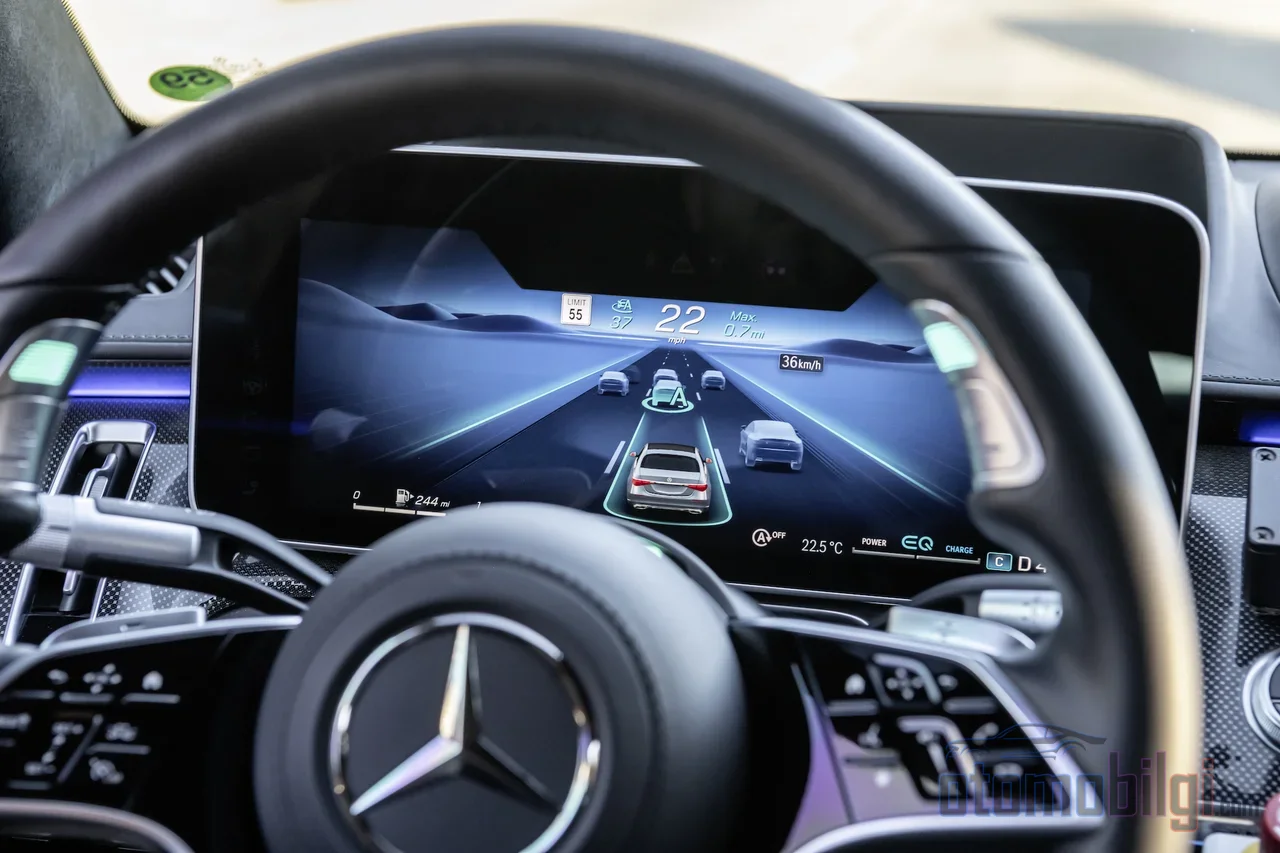
Just imagine: you're on the highway, your hands aren't on the wheel, you're watching a movie on a screen, and if there's an accident involving the vehicle ahead, the legal responsibility isn't yours - it's the company that makes the car. Does it sound like science fiction? Mercedes-Benz actually did it, becoming the first manufacturer in the world to receive globally valid system approval with Drive Pilot. But there's another side to the coin: this promise actually applies to a much narrower area than we might think. So how far does Level 3 automation's promise of 'the car drives for you' actually go in real life? Come on, let's sift through it together.
What Happens When Drive Pilot Actually Takes Over From the Driver?
First, let's clarify the basics. SAE Level 3, or conditional driving automation, is the 'hands-off / eyes-off' level. The system manages all aspects of driving within the defined conditions; while the driver waits ready to take over. The critical difference here is this: while the system is active, the driver has no obligation to monitor the vehicle. This is the fundamental threshold where responsibility passes from the person to the manufacturer. And Mercedes has explicitly accepted this: while Drive Pilot is active, the brand takes on full legal responsibility for the vehicle. While Level 1-2 systems say 'the car isn't driving, it's helping you,' here, since Mercedes writes the book, the bill goes to Mercedes too. In my opinion, this is one of the boldest commitments in automotive history.
Drive Pilot was the first Level 3 system approved in the US; first Nevada, then the California certificate came. It was offered on properly equipped S-Class and EQS Sedan models, and launched in the US with an annual $2,500 subscription. In Germany, the system was approved on highways up to 95 km/h. So different rules, different speeds in every country. And this is precisely the most crucial feature of Level 3: less a technical product, more a legal and regulatory negotiation product.
Highlights
- Drive Pilot is the first Level 3 system to receive globally valid system approval.
- In the US, the old system was limited to 40 mph (~60 km/h) speed, daytime, and only mapped highways in California and Nevada.
- In Germany, approval extended up to 95 km/h.
- While the system is active, Mercedes assumes legal responsibility.
- In February 2026, Mercedes abandoned its US Level 3 plan for the 2026 S-Class and turned to Level 2++ MB.Drive Assist Pro.
Operational Design Domain: The World That Fits in the Promise's Pocket
Now we come to the most important term in the matter: operational design domain, or ODD. Let me make a simple analogy: Think of a Level 3 system like a babysitter who has made you a promise. 'You enjoy yourself, I'll look after the child,' they say, but this promise is only valid in the afternoon, in the living room, with the TV showing cartoons. If there's a bedroom, if evening comes, or if the child gets sick, they call you immediately. Drive Pilot's ODD is exactly such a promise: very clear, very narrow boundaries.
- In the US, the old system operates at a maximum speed of 40 mph (~60 km/h).
- Only on pre-mapped, approved highways and within virtual boundaries called geofences.
- This geofence covers only the states of California and Nevada.
- Limited to daytime conditions; night, heavy rain and similar conditions are outside the area.
So what does this mean? Not in the city. Not on the night drive back. Not when the windshield wipers are on. In short, there is a huge gap between the perception of 'the car drives for you' and the service actually offered. The system operates in a very small corner of the world, one it has predefined as safe for itself. Moreover, that slow, irritating but actually most predictable highway rhythm of traffic congestion fits precisely into this narrow space. Mercedes did not choose this by chance: constant speeds, mapped roads, good weather, the environment where sensors perform at their best.
What Is Expected From the Driver If the System Decides to Hand Over?
This is where the most intricate question of Level 3 begins. When the system is about to leave the ODD, when there is a sensor failure, or when an emergency vehicle is clearly nearby, it has to hand control over to you. At that moment, you need to be an awake driver, ready to take direction and following the alerts. No coffee in your hand, no dozing off in your vision; when the bell rings and the system calls for you, you need to step onto the stage immediately.
But what if the handover is not always smooth? Academic studies discuss that handover procedures require a certain lead time, and that this lead time can create a serious safety problem in traffic. Also, a 'universal handover time' cannot be assumed; not every driver returns to the task at the same speed under every condition. That is why manufacturers like Mercedes are investing in in-cabin eye-tracking and driver monitoring systems: they constantly check whether you are really ready. In my view, the real test of Level 3 is not how well the system drives, but how well it manages the moment of handover.
Who Is Responsible If There Is an Accident? Here Comes the Legal Threshold
The issue of liability is the line that separates Drive Pilot from Tesla FSD. Mercedes has clearly stated that it assumes legal responsibility for the vehicle in accidents that occur while Drive Pilot is active. This is a position rarely seen in the automotive industry; in Level 1-2 support systems, the party responsible for an accident is almost always the driver, because the system is merely an assistant.
But note: this commitment is not unlimited either. Everything after the system disengages, that is, after you take over control, is once again your responsibility. The concrete conditions at the moment of the accident are also decisive; was Drive Pilot really active, were we within the ODD, did you intervene in time when the handover alert came? All these questions shape the legal situation. So Level 3 does not mean 'Mercedes pays for every accident'; it means 'the responsibility is on us while the system is operating and active within its own limits'. A subtle but very important distinction.
Tesla FSD and Waymo Comparison: Three Different Paths to the Same Goal
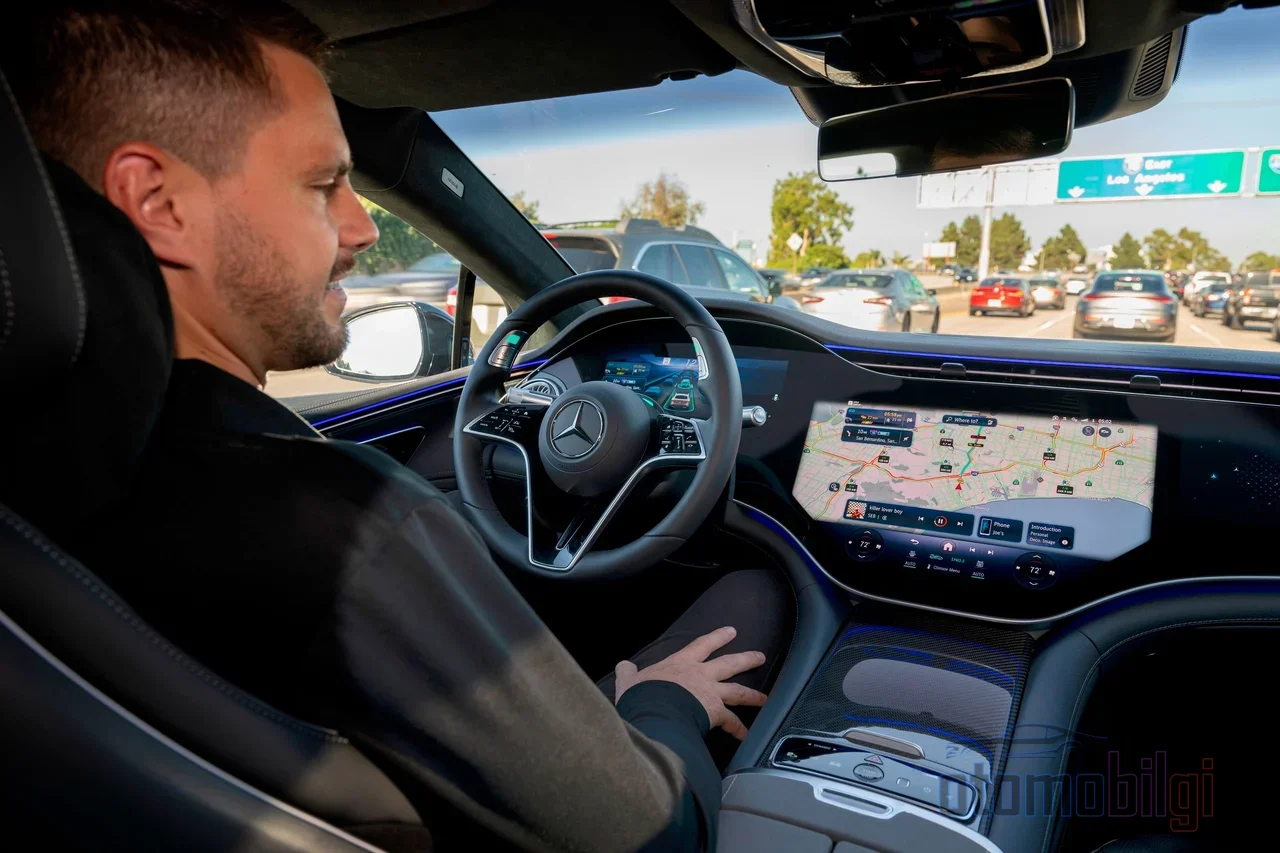
To better understand Mercedes' approach, let's take a brief look at the other two major players. Tesla Full Self-Driving, despite its name, is 'Supervised', meaning Level 2: the driver must monitor at all times and be ready to intervene, and the responsibility lies with them. Waymo, on the other hand, is at the completely opposite pole: it operates a LiDAR-based, truly driverless Level 4 robotaxi, but only in certain cities and mapped areas. Mercedes drew a third path: taking full responsibility in a narrow domain. Let me summarize these three approaches in a table:
| System | Level | Driver's Role | Responsibility |
|---|---|---|---|
| Mercedes Drive Pilot | Level 3 | No monitoring required while the system is active, ready to take over | Mercedes' when active |
| Tesla FSD (Supervised) | Level 2 | Continuous monitoring mandatory | Driver's |
| Waymo robotaxi | Level 4 | No driver | The company's, in mapped areas |
Sensor philosophy is also one of the dividing lines. Mercedes considers LiDAR indispensable for safe conditional automated driving; in Drive Pilot, alongside LiDAR, it has added a rear window camera, microphones that hear emergency vehicles, and sensors that detect the wetness of the road. Tesla, on the other hand, advocates an approach based entirely on cameras, i.e. vision only. Which one is right? For now, both camps are progressing along their own path, and I suppose this debate will continue for a while longer.
The 2026 Reversal: Why Did Mercedes Pull Back from Level 3?
Here is the most striking part of the story. In February 2026, Mercedes-Benz announced that it was abandoning its plan to offer the updated Level 3 Drive Pilot for the 2026 facelifted S-Class in the US. In its place comes the Level 2++ MB.Drive Assist Pro; this system is being launched in the US this year with the 2026 S-Class and the third-generation CLA, having started first in China. The three-year price is 3,950 dollars. It can handle complex city traffic and automatic lane changes, but it lacks the fail-operational architecture that defines Level 3/4, which keeps working even in the event of a fault.
Why such a reversal? The rationale is a reassessment of the US regulatory environment and the customer value proposition. Level 3 certification is a complex process that must be resolved state by state; a separate desk and separate rules in each state. Instead, Mercedes is redirecting its engineering resources toward a new Level 3 system capable of operating up to 81 mph (~130 km/h) and toward Level 4 development with an S-Class-based robotaxi prototype; public road testing has already begun in Abu Dhabi. So it has not abandoned Level 3; it has changed its strategy. Industry-wide observers note that the plan has evolved into 'widely available driver support now, big leap later'. Mercedes also has a core computing collaboration with NVIDIA for Level 3/4 and a robotaxi exploration with Uber. We shall see; this chess game is only just heating up.
So, Did the Promise Live Up to Reality? Conclusion
Drive Pilot's greatest achievement is not technical, but legal: under certain conditions, with the car active and genuinely assuming driving responsibility, it crossed for the first time, with a mass-produced car, the threshold where responsibility shifts from human to manufacturer. Its value cannot be understated; It was the first to establish the legal framework that Level 3 requires by definition. At the same time, it gave the driver a taste of what this level truly promises: a limited window of comfort without monitoring duty.
But the measure of the promise is also plain to see. Daytime, 40 mph, two states, mapped highways: The area actually covered by the phrase 'the car drives for you' is much narrower than marketing suggests. And the return to Level 2++ in February 2026 showed doubts about the commercial and regulatory feasibility of Level 3 with a narrow geofence. In my view, the real answer is this: Drive Pilot kept its promise, but the promise itself was smaller than we thought. Knowing the limits is the first condition of trusting the technology. If it were you, would you pay $2,500 for full responsibility on a narrow stretch of highway? I think I would have thought about it a lot.
Sources
- The front runner in automated driving and safety technologies - Mercedes-Benz Group
- DRIVE PILOT 95 km/h - Mercedes-Benz Group
- Automated Driving. Legal Framework - Mercedes-Benz Group
- DRIVE PILOT - MBUSA Legal Notices
- Mercedes-Benz shifts autonomous driving tech in 2026 S-Class - WardsAuto
- Level 3 (Conditional driving automation) - SAE International
- Mercedes Drive Pilot Beats Tesla Autopilot By Taking Legal Responsibility - Road & Track
- Mercedes Drive Pilot certified for Nevada - Autonomous Vehicle International
- We Sample Mercedes-Benz's MB.Drive Assist Pro - Car and Driver
- Control Transitions in Level 3 Automation - MDPI