Why Did Honda Quietly Recall the Legend Level 3?
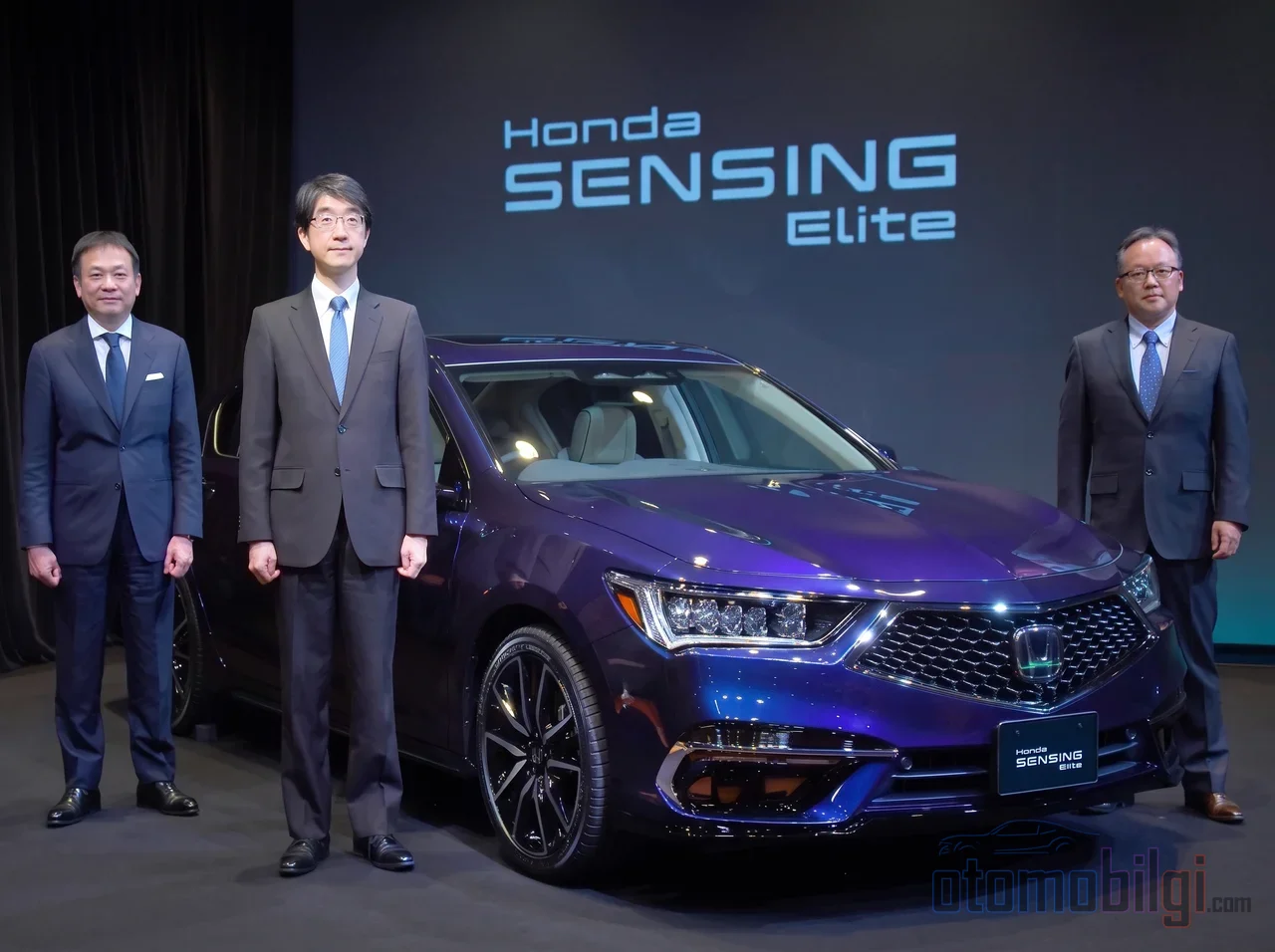
Say you're writing history. For the first time in the world, a state-approved, truly driverless-capable mass-production car is being put on the road. The press lines up, everyone says Honda. Then two years later you look: no car, no system, it has vanished without a trace. Why? Well, this story is exactly the answer to that question. The Honda Legend and its Traffic Jam Pilot had a short but much-talked-about career; come along, let's dissect every stage of that career together.
What Is Level 3, and Why Is It So Important?
First, let's map out the field, otherwise the scale of the story won't be understood. According to the SAE J3016 standard, Level 3 means "conditional driving automation": under certain conditions - say, in congested highway traffic - the system is driving the car, and you can let go of the wheel and even watch a movie on the navigation screen. But with one condition: you must take over when conditions deteriorate. This is exactly where it differs from adaptive systems at Level 2; there your eyes are always on the road, here they're not. Responsibility also changes accordingly: in Japan, at Levels 1-2 all responsibility rests with the driver, while at Level 3 things get complicated when the system is in charge.
Honda's government definition in Japan also uses the five-level scheme. So this is not a marketing gimmick, but a serious engineering effort with a legal framework, type approval and state oversight. Audi had floated the idea of a Traffic Jam Pilot of the same name in the A8 years earlier but shelved it. Honda, however, had actually done it. So how?
November 11, 2020: A Historic Type Approval
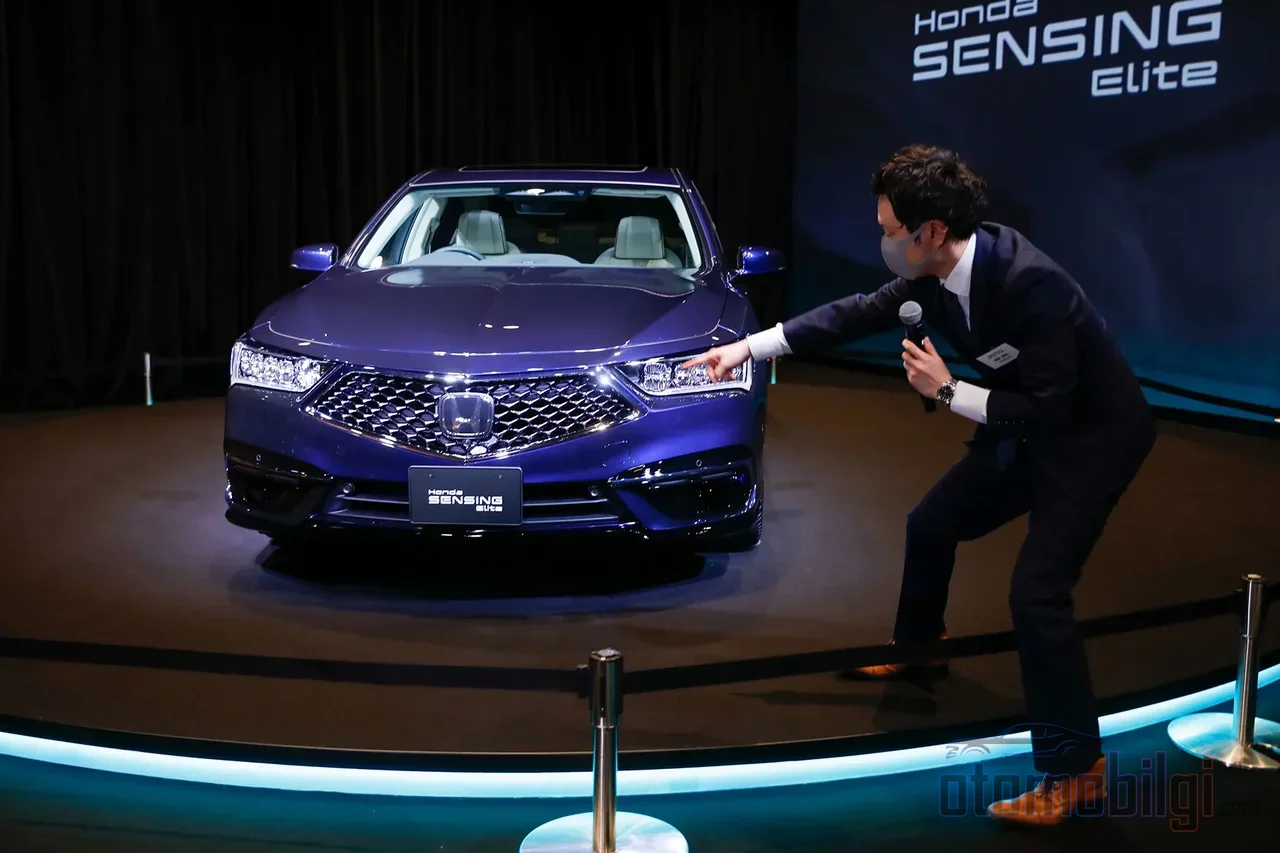
On that day, Japan's Ministry of Land, Infrastructure, Transport and Tourism (MLIT) granted Honda's Traffic Jam Pilot the world's first type approval as an "automatic operation device". This is a much weightier thing than a launch speech; an official document in which the state sealed the system's safety. The groundwork was also in place: legal changes that came into force in April 2020 had opened the door for Level 3.
The Highlights
- November 11, 2020: the world's first Level 3 type approval for the Traffic Jam Pilot
- March 5, 2021: the Legend went on sale in Japan through leasing only
- Only 100 units were produced, priced at 11,000,000 yen including tax (roughly 102,000 USD)
- Honda's verification: 10 million simulation scenarios and 1.3 million km of highway testing
- Legend production ended with the closure of the Sayama plant at the end of 2021
Honda had made a serious investment in this system: three-dimensional high-definition maps, GNSS, 360-degree surround sensors, an in-cabin driver monitoring camera, and a redundant system architecture. According to the company's own verification data, around 10 million simulation scenarios and 1.3 million km of highway test drives had been carried out. So this was not a "let's show off a prototype" project.
The System's Rules: It Was Like a Small Cage
The MLIT approval was not broad freedom; on the contrary, it drew narrow and clear lines:
- National and urban highways only (excluding junctions, sharp curves, rest areas and toll booths)
- No use in heavy rain, snow, dense fog or strong oncoming light
- In heavy or near-heavy traffic; speeds of roughly under 30 km/h before activation, and roughly 50 km/h or below while active
- High-definition map and GNSS data must be available, and the driver must wear the seat belt
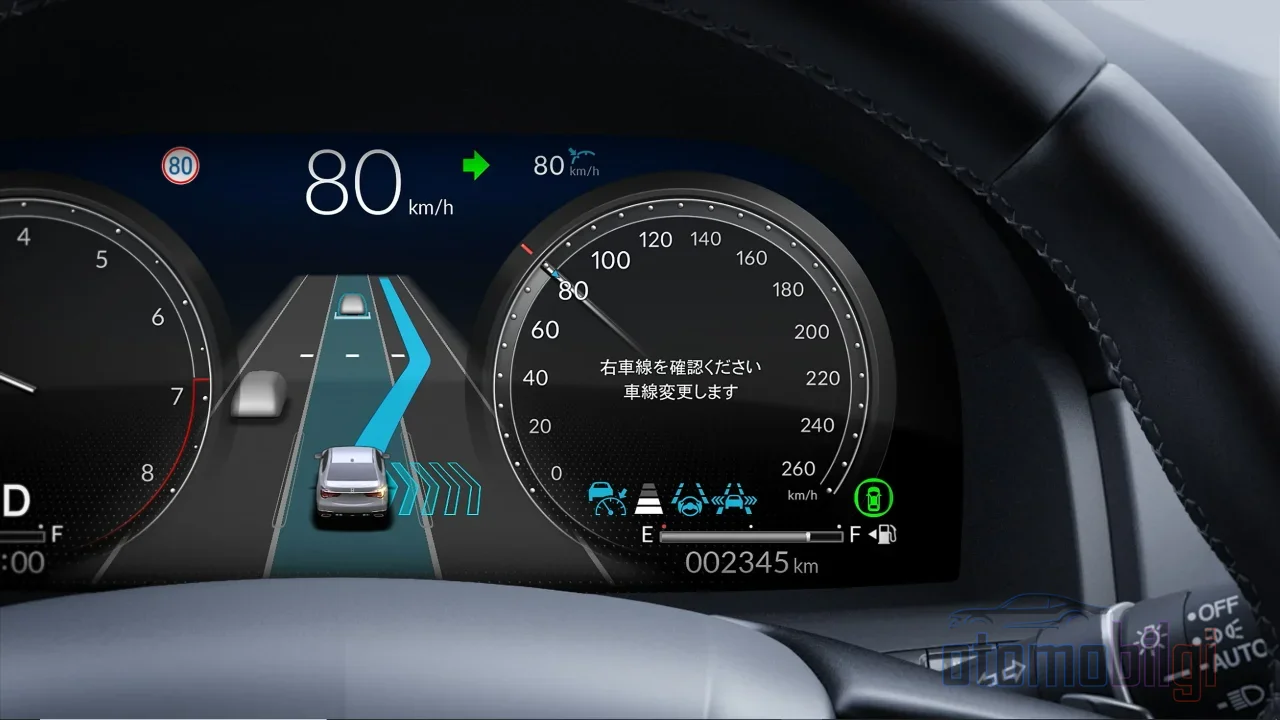
And an interesting detail: if conditions deteriorated and the driver did not respond, the vehicle would slow down with its hazard lights and horn and bring itself to a stop. MLIT also required a special label to be affixed to the rear of the vehicle; the car had blue accessory lamps and special wheels. In other words, in traffic you were saying "careful, this car is different."
Launch: A 100-Vehicle Experiment
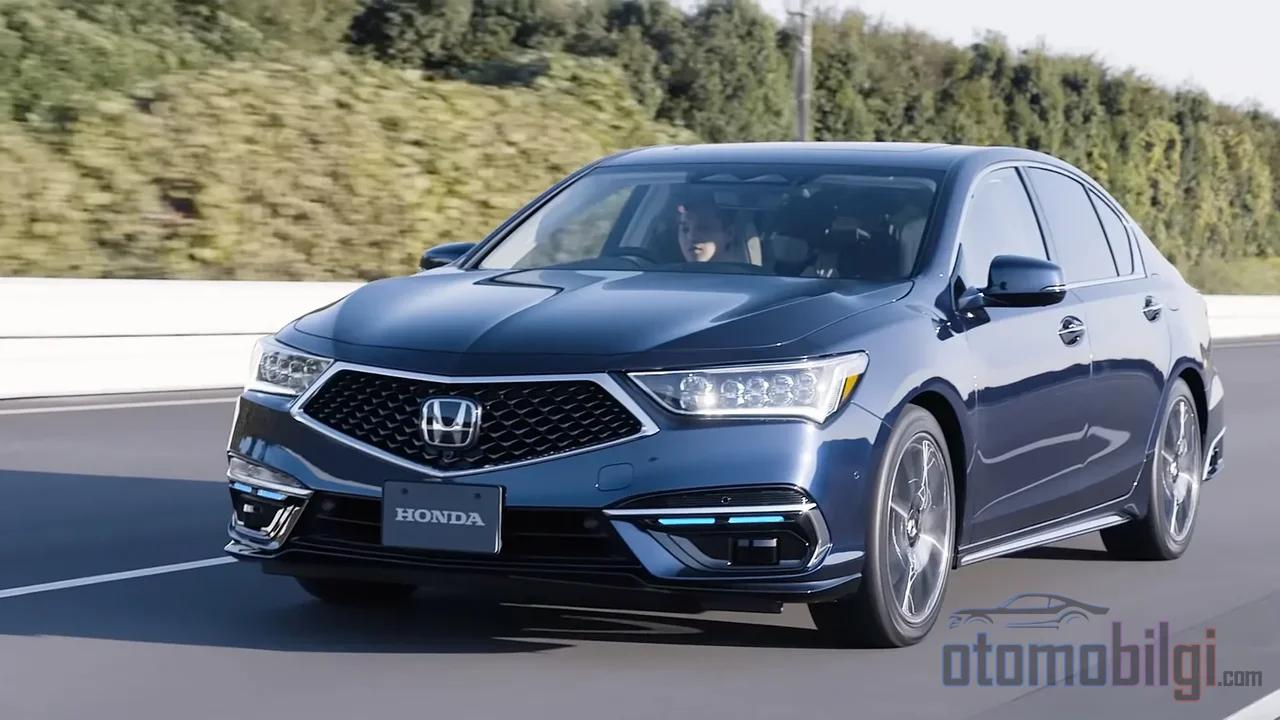
On March 4, 2021, Honda announced the new Legend, and it went on sale in Japan on March 5, 2021. But as you can tell from the word "sale," this was not a classic sale: it was limited to Japan only, to leasing only, and to only 100 vehicles. The price? 11,000,000 yen including tax, which is roughly 102,000 USD. Not a cheap school project, but not mass production either; it was a large-scale field experiment.
Let us also honestly clarify the scope of the "first" claim: the official statement was that it was the world's first type approval granted to a vehicle carrying an automatic driving device. The social visibility of a 100-vehicle leasing program was of course limited; the real significance was that a type-approved production car from which the driver could legally take his eyes off the road, albeit conditionally, actually entered traffic. There was no plan to bring the system to the US; the Legend was Japan's counterpart to the Acura RLX in the US, and the RLX was already being withdrawn there due to low sales. There was no similar goal on the European side either; regulatory differences kept the car in Japan.
Meanwhile, a note for the technically curious: the engine power and torque figures of the Level 3-equipped 2021 Legend Hybrid EX were not included in these published sources. The previous-generation Legend 3.5 V6 has known figures like 3,471 cc, 295 PS, 351 Nm, but transferring them to the hybrid 2021 car would be misleading; so we are not writing them.
A Quiet Finale: The Factory Closed, the Legend Went
Now we come to the story's turning point. Did the system fail, or was there an accident? No. The truth is far more procedural, but in the end just as impactful: Honda's Sayama factory was closing. At the end of March 2021, Honda notified dealers that, as part of factory consolidation (a policy announced in 2017), production of three models including the Legend would stop within 2021. In other words, the world's first mass-produced Level 3 car vanished into history as a side effect of a factory arrangement in its own home.
During the launch period, Honda officials had also stated that there was no plan for now to increase production or sales of the Level 3-equipped Legend. So the company wrapped up this venture with 100 vehicles; it did not continue. Afterwards, Honda turned from Level 3 in individual cars toward driverless mobility services: In October 2023, a joint venture agreement with GM and Cruise for a driverless passenger transport service in Tokyo in early 2026 was announced. But that plan was shaken too; In December 2024, GM announced it would no longer fund Cruise's robotaxi development.
As of November 2026, the situation is clear: The Honda Legend's Level 3 system is no longer offered. Current assessments summarizing the overall picture on the subject also confirm that Honda and Mercedes have discontinued these systems.
Mercedes and BMW: The End of the Same Road?
So is this just Honda's story? Unfortunately no, and that's exactly where the most striking part begins. Mercedes-Benz received system approval in Germany in December 2021 and started taking orders in May 2022; in other words, it came after the Legend in the ranking of "world firsts". It raised Drive Pilot's maximum speed to 95 km/h, turning it into the fastest certified Level 3 system in a production vehicle; it was optional on the S-Class and EQS.
But in 2026, the wind turned. Mercedes abandoned its plan for an updated Level 3 Drive Pilot for the facelifted 2026 S-Class; the system is not on the options list for the 2027 S-Class either. Instead, the company announced it plans a new Level 3 system based on Drive Assist Pro. BMW moved in the same direction: Personal Pilot L3, introduced in 2024, was removed as part of the 7 Series facelift at the end of April 2026. So in the same year, two giant brands both withdrew from Level 3.
Today, no vehicle sold to consumers drives itself everywhere. The closest options are systems that keep the driver's eyes on the road, such as Tesla's supervised Full Self-Driving, GM Super Cruise, and Ford BlueCruise. While we're at it, let me ask you: if it were you, would you go for a system that costs 102,000 dollars and only works in congested traffic below 50 km/h? This is exactly how the manufacturers calculated it.
Regulation and Liability: Blurry but Open
On the legal side, the picture is as follows: the countries that legally permit Level 3 today are Germany, France, and Japan. Germany has allowed the activation of conditional automated driving functions since 2017, and type-approved Level 3 vehicles are free in normal traffic; driverless Level 4 operation is only possible with type approval and an individually approved operating area. A study conducted in Japan in 2018 concluded that during the transition period, operator liability should be maintained within the existing insurance framework. MLIT also repeatedly emphasized that drivers must not place excessive trust in the system and must be ready to take over driving at any moment.
So technically there is groundwork, and legally the door is ajar. But manufacturers still don't walk through the door.
So Why Did Honda Withdraw? The Answer Is Here
Let's sum it up, because this question deserves a one-sentence answer: The Honda Legend's Level 3 stopped not because of a technical failure, but because of a commercial equation. The 100-vehicle leasing program, the 11 million yen price tag, narrow usage conditions, and the closure of the Sayama plant combined to bring the system to the end of the road before it could become a profitable product. Honda never planned a large-scale sale; as of 2026, the Legend and Traffic Jam Pilot are no longer offered.
The broader picture tells the same lesson: Mercedes' Drive Pilot was the fastest certified Level 3 system in series production, but it abandoned its 2026 update plan, and BMW also removed Personal Pilot L3. Level 3's promise was big, but its area of use was like a narrow cage; when cost, liability and the narrowness of the cage came together, this level appears to have been suspended in consumer cars. Honda's great contribution was showing this truth before anyone else and in the most honest way, with a quiet experiment of 100 vehicles. Sometimes being a pioneer is not about opening the way; it is about being the first to prove how narrow the road is.
Sources
- Honda to Begin Sales of Legend with New Honda SENSING Elite (Honda Global Newsroom)
- Honda Receives Type Designation for Level 3 Automated Driving in Japan (Honda Global Newsroom)
- Level 3 Self-Driving: Honda Legend of 2021 (IT & AI History)
- Honda unveils its new level 3 technology, but how does it work? (Reuters)
- Honda Launching World's First Production Car With 'Eyes-Off' Self-Driving Tech by Mid-2021 (The Drive)
- Mercedes-Benz increases top speed of its Level 3 automated driving system to 95 km/h (Mercedes-Benz Group)
- Mercedes temporarily scraps its Level 3 'eyes-off' driving feature (The Verge)
- Following Mercedes, BMW also abandons Level 3 automated driving (electrive)
- State of Self-Driving in 2026 and Beyond (GreenCars)