Anthoine Hubert: The Unforgettable Name in F2 History
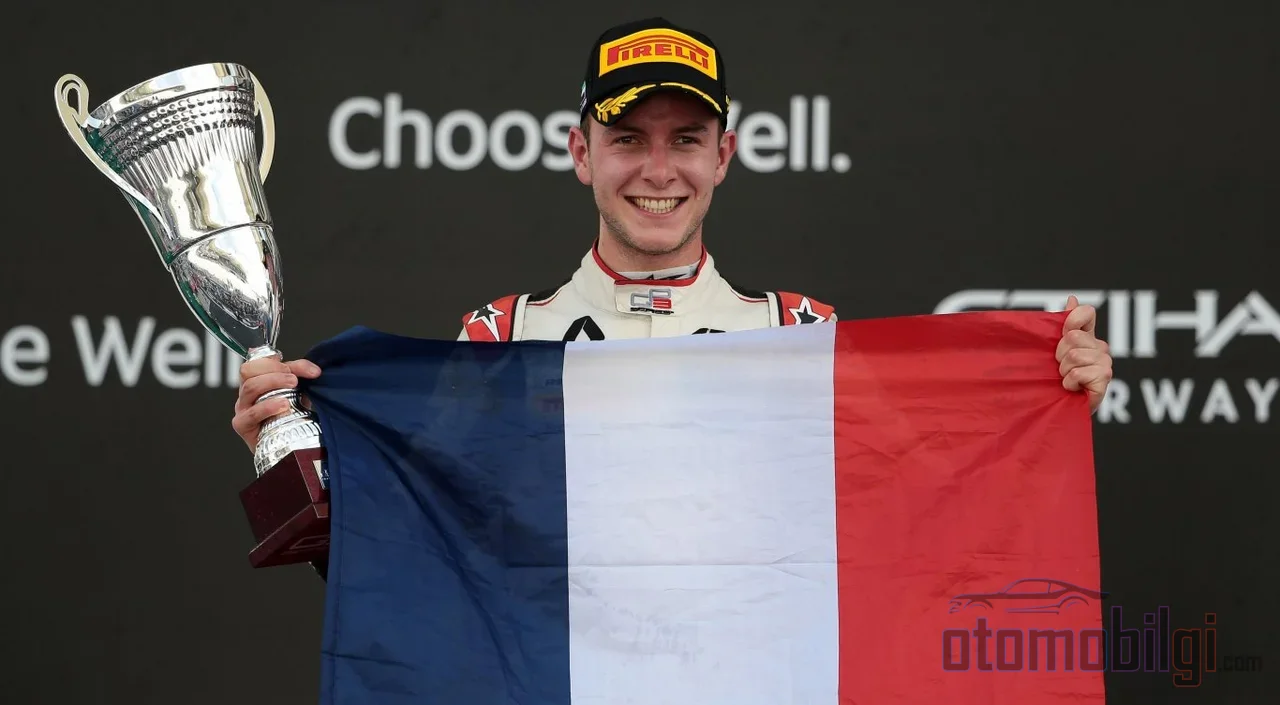
On a Sunday, on the legendary Eau Rouge-Raidillon climb at Spa-Francorchamps... Only the second lap of the race. Thirty seconds later, one of the brightest young talents of French motorsport was gone. So who was Anthoine Hubert, why did an entire paddock collapse when he said farewell at just 22, and why is his name still spoken with such respect today? On this page, we tell the full story of Hubert's journey from karting to the GP3 championship, his rise in 2019 Formula 2, and the lasting legacy he left in the series after the tragedy at Spa.
From Lyon to the Track: The Karting Years and First Championships
Anthoine Gérard Pol Hubert was born on September 22, 1996, in the city of Lyon, France. Like many F1 travelers, he too took to the wheel through karting; in 2004, when he was only eight years old. And he made a difference right away: He became the Coupe de France Mini Kart champion in 2005 and won the Trophée de France Cadet title in 2009.
In the following years, he also made a name for himself on the international stage. In 2010, he finished second in the CIK-FIA Karting Academy Trophy, and third in the CIK-FIA U18 World Karting Championship in 2011 and 2012. In other words, from a very young age, he was among the fastest karting drivers in Europe. This was no coincidence; drivers whose karting careers are this solidly built usually do not struggle when they move to single-seaters.
A Dream-Like Start in Single-Seaters
He stepped up to the French F4 Championship in 2013, and that was the moment everyone took note of his name: he became champion in his very first attempt. He completed the season with 11 wins, 10 pole positions, and 365 points. In other words, in the season he burst onto the scene, he was at the top in almost every race.
He then raced in the Eurocup Formula Renault 2.0 with Tech 1 Racing in 2014 and 2015; he closed 2015 in fifth place in the championship and celebrated victories at Silverstone and Le Mans. In 2016, he moved to the FIA Formula 3 European Championship with Van Amersfoort Racing and took his first F3 win at the Norisring. Eighth place in the overall standings seemed like a stall compared to his brilliant karting past; but in Hubert's story, the real rise was only just beginning.
The GP3 Championship: The Power of Consistency
In 2017, he moved to the GP3 Series with ART Grand Prix and finished his first season fourth with 123 points. Good, but was it ordinary? Actually, no; that season, he was preparing himself for the following year. 2018 became one of the peak seasons of his career: with 2 wins, 11 podiums, and 214 points in 18 races, he was crowned GP3 champion.
The interesting part is this: his teammate Nikita Mazepin took 4 wins that year, meaning he won more races than Hubert. So why did the championship go to Hubert? Because motorsport is not a sprint, it's a marathon. Hubert claimed the championship not only on the Sundays he won, but by collecting points on the bad weekends too. Let's be honest, this is a pure motorsport lesson: the fastest doesn't win, the most consistent does.
This championship also carries a historical value: the GP3 Series had been running since 2010 and handed its place to the FIA Formula 3 Championship in 2019. So Hubert went down in history as the series' final champion. In May of the same year, he joined the Renault Sport Academy as a affiliated driver and rose to a fully supported academy driver in 2019. The Academy saw his consistency and composure as decisive in this promotion. In short, doors were opening, and the ladder led up to F1.
Highlights
- 2013: French F4 champion at his first attempt (11 wins, 10 poles)
- 2018: GP3 Series champion; the series' final champion
- 2019: The only F2 rookie of the season to take 2 wins
- August 31, 2019: Lost his life at the age of 22 in the crash at Spa
- Car number 19 in F2 was permanently retired in his memory
2019 Formula 2 Season: That's What Being a Rookie Looks Like
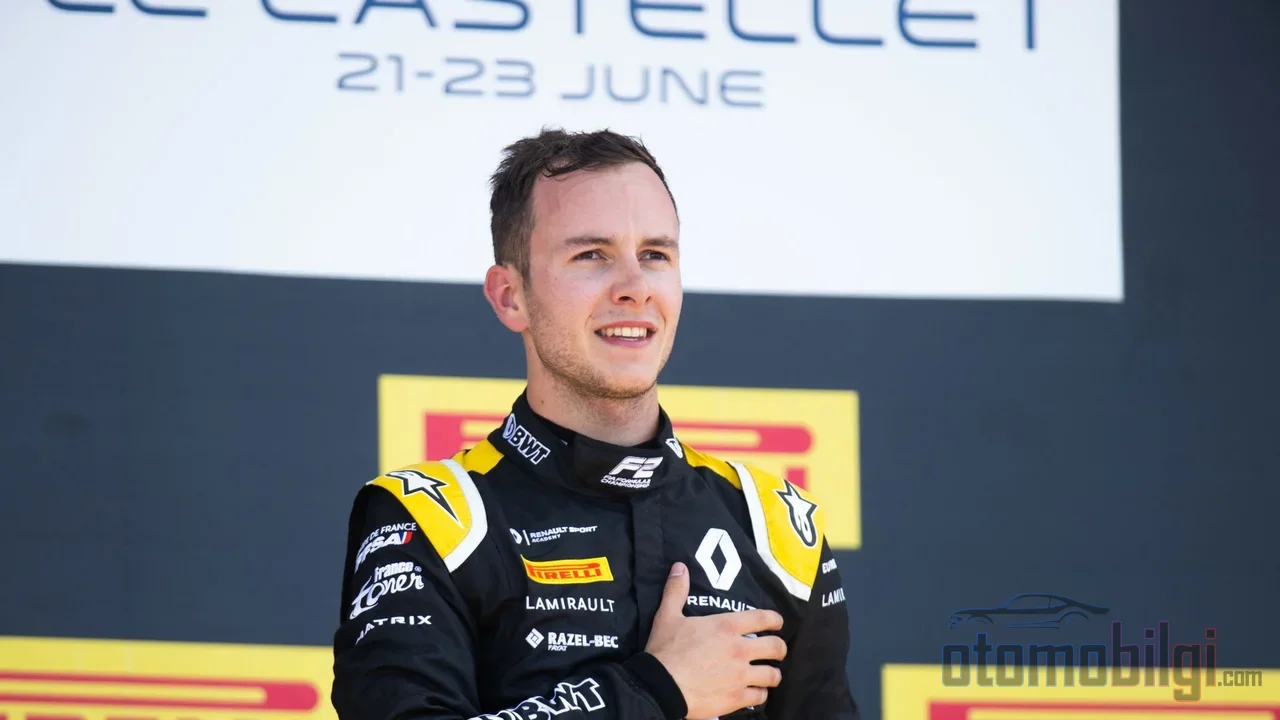
In 2019, he signed a full-season Formula 2 deal with BWT Arden; his teammate was Tatiana Calderón, whom we knew from GP3. F2 is the rung directly below F1; races are held on the same weekends, on the same circuits. In this environment, a rookie has to adapt quickly, and Hubert did so extremely fast. He even started his first race day in Bahrain with a pair of eye-catching overtakes.
A career table summarizes the story most clearly:
| Season | Series | Team | Result |
|---|---|---|---|
| 2013 | French F4 | Auto Sport Academy | Champion (first year) |
| 2015 | Eurocup FR2.0 | Tech 1 Racing | 5th place |
| 2016 | FIA F3 Europe | Van Amersfoort Racing | 8th place, 1 win |
| 2017 | GP3 Series | ART Grand Prix | 4th place, 123 points |
| 2018 | GP3 Series | ART Grand Prix | Champion, 214 points |
| 2019 | Formula 2 | BWT Arden | 10th place, 2 wins, 77 points |
Tenth place in the championship may look ordinary at first glance; but the details tell a different story. He took his first F2 win at Monaco, with victory declared just 0.059 seconds ahead of Louis Delétraz. Just do the math: even faster than a photo finish! Then in France, at Paul Ricard, he started from pole position and took his second win, becoming the only rookie of the season with 2 wins. In his homeland, he stood at the top of an all-rookie podium. Before the crash, he was 7th in the championship; in other words, the graph was trending upward.
August 31, 2019: Final Lap at Spa
The Spa-Francorchamps circuit in Belgium is one of motorsport's most beloved and most brutal places. On August 31, 2019, on lap 2 of the F2 feature race, everything changed at the exit of Raidillon. Trident driver Giuliano Alesi lost control after a tire blowout he had experienced earlier, hit the wall on the left, and debris spread across the track. Ralph Boschung slowed down and made an avoidance maneuver; Hubert swerved right, struck Boschung's rear wheel with his front wing, hit the tire barrier at a narrow angle, and was flung sideways. At that exact moment, Juan Manuel Correa, coming from behind at 218 km/h, struck Hubert's car.
The data is enough to convey the scale of the crash: Hubert's car was subjected to a force of 82 g, while Correa's car experienced 65 g. It was announced approximately 90 minutes after the crash that Hubert had passed away at the paddock medical center; he was 22 years old. The feature race was not completed, and the sprint race was cancelled out of respect. Correa was airlifted to Liège with both legs broken and a mild spinal injury, and was placed into an induced coma a week later.
What Did the FIA Investigation Say?
The FIA investigation, completed in February 2020, focused on four cars: Hubert's car number 19, Correa's car number 12, and the cars of Alesi and Boschung. The conclusion was clear: there was no evidence that any driver had reacted inappropriately to the yellow flags or the conditions; in other words, all drivers were cleared. The cause of death was recorded as unsurvivable trauma. To summarize the investigation's main conclusion in our own words: the energy involved in the crash was far beyond the limit that existing safety solutions could withstand, and there was no driver error.
In May 2020, the FIA Safety Department published comprehensive recommendations: extending component tethering to cover front and rear wings, increasing the frontal and lateral strength of the cockpit (survival cell), improving car-to-car compatibility, controlled failure points in front wings, a redesigned headrest, rapid crash notification, and a tire pressure monitoring system. In October 2020, it was announced that the run-off area at Raidillon would be widened; the improvements were completed in early 2022. In other words, that tragic day at Spa also became the starting point for steps that permanently advanced safety in motorsport.
Number One Retires: Hubert's Lasting Legacy
Motorsport rarely commemorates the drivers it loses in this way; but for Anthoine Hubert, an ordinary tribute was not enough. In the first year after his death, in August 2020, Formula 2 announced that the number 19 would be permanently retired. The fact that a number was sent off this way in the series' history shows just how special he was.
An emotional moment also took place on the F1 side that same weekend: on lap 19 of the 2019 Belgian Grand Prix, spectators stood and applauded in tribute. F1 cars took to the track in a star formation carrying the number 19 and a message dedicated to Hubert; safety cars did a tribute lap before the race. Charles Leclerc won his first F1 victory one day after Hubert's death and dedicated it to him. His funeral was held at Chartres Cathedral on September 10, 2019; the motorsport world said farewell, with Jean Todt, Alain Prost, Leclerc, Gasly, Ocon, and Russell among those present.
Anthoine Hubert Award: A Name Remembered Every Year
Perhaps the most lasting gesture was the Anthoine Hubert Award, introduced at the 2019 FIA F2 awards ceremony. The award is given to the rookie who achieves the highest finish among drivers without prior F2 experience; in other words, every new talent following in Hubert's path announces his name once again. Its first recipient was Zhou Guanyu, and the trophy was presented by Hubert's brother Victhor. Hubert was also included in the F1 2020 video game as a selectable driver; generations to come will see his name on screen.
And the tributes never stopped. His close friend Pierre Gasly used a memorial helmet at the 2020 Belgian GP; every year on the anniversary, the paddock pays its respects at the tire barrier at Raidillon. In 2024, Gasly led the entire F1, F2 and F3 paddock on a run up to Raidillon. Few examples exist of a driver being honored so warmly, for so long, by such a wide community.
Why Is Anthoine Hubert Still Important Today?
Anthoine Hubert was an F2 driver who never competed in an F1 race; portraying him as an F1 driver would distort not his story, but his memory. Yet he became unforgettable through something rarely seen on F1's lower ladder: an F4 champion in his first attempt, a driver who won GP3 through consistency and went down in history as the series' final champion, and a rookie in F2 already playing for the top. His legacy can be summed up in three words: consistency, fair racing, and a safety legacy. The tethering, cockpit strength and Raidillon changes implemented after Spa are protecting every driver who takes to the track today. The Anthoine Hubert Award, meanwhile, brings his name together with new talent every year. Can a 22-year life go on living for years like this? Hubert's story shows that the answer is yes.
Sources
- Anthoine Hubert - Wikipedia
- Anthoine Hubert promoted to Renault Sport Academy
- GP3 champion Hubert among six-strong 2019 Renault Sport Academy line-up - Formula1.com
- Anthoine Hubert and Victor Martins members of the 2019 Renault Sport Academy - Alpine media
- Racing for Anthoine - FIA Formula 2
- FIA statement regarding the crash in Spa-Francorchamps - FIA Formula 2
- FIA concludes investigation into fatal Formula 2 accident in Belgium - Formula1.com
- Formula 2 introduces the Anthoine Hubert Award - FIA Formula 2
- Formula 2 retires number 19 in memory of Anthoine Hubert - Motorsport.com
- Crash in Formula 2: 22-year-old racer Anthoine Hubert - BBC Turkish