Are Camera-Based Side Mirrors Better Than Traditional Mirrors?
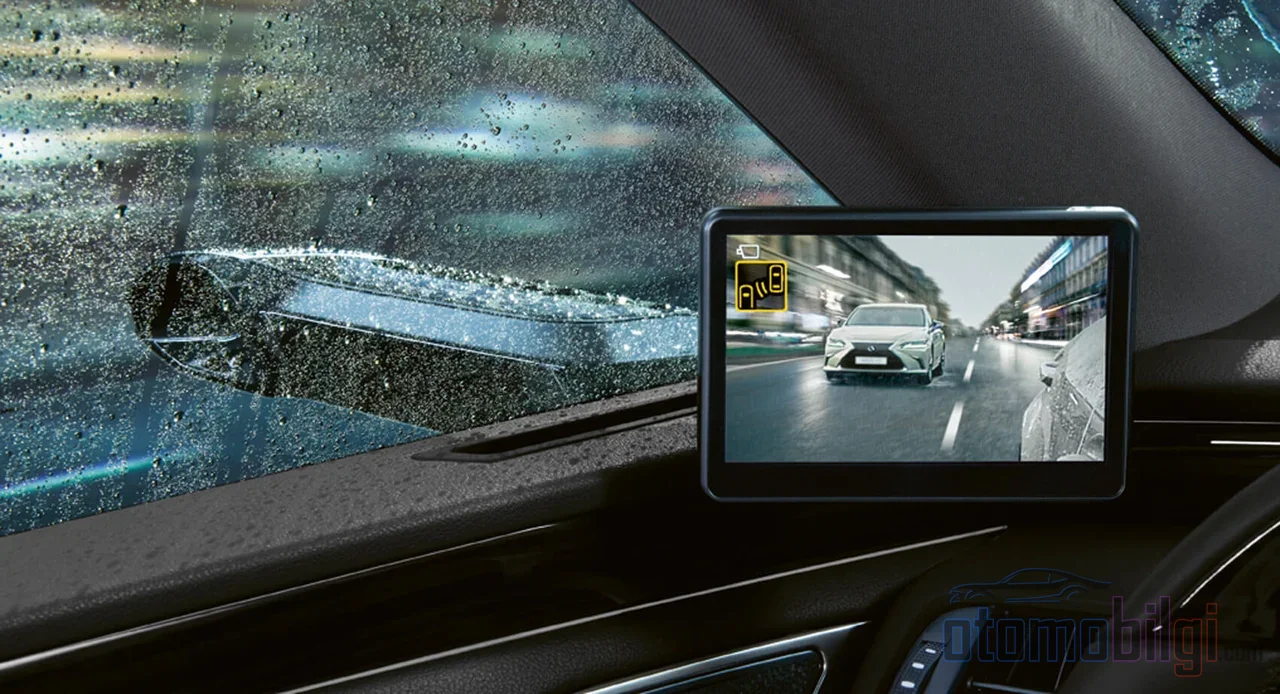
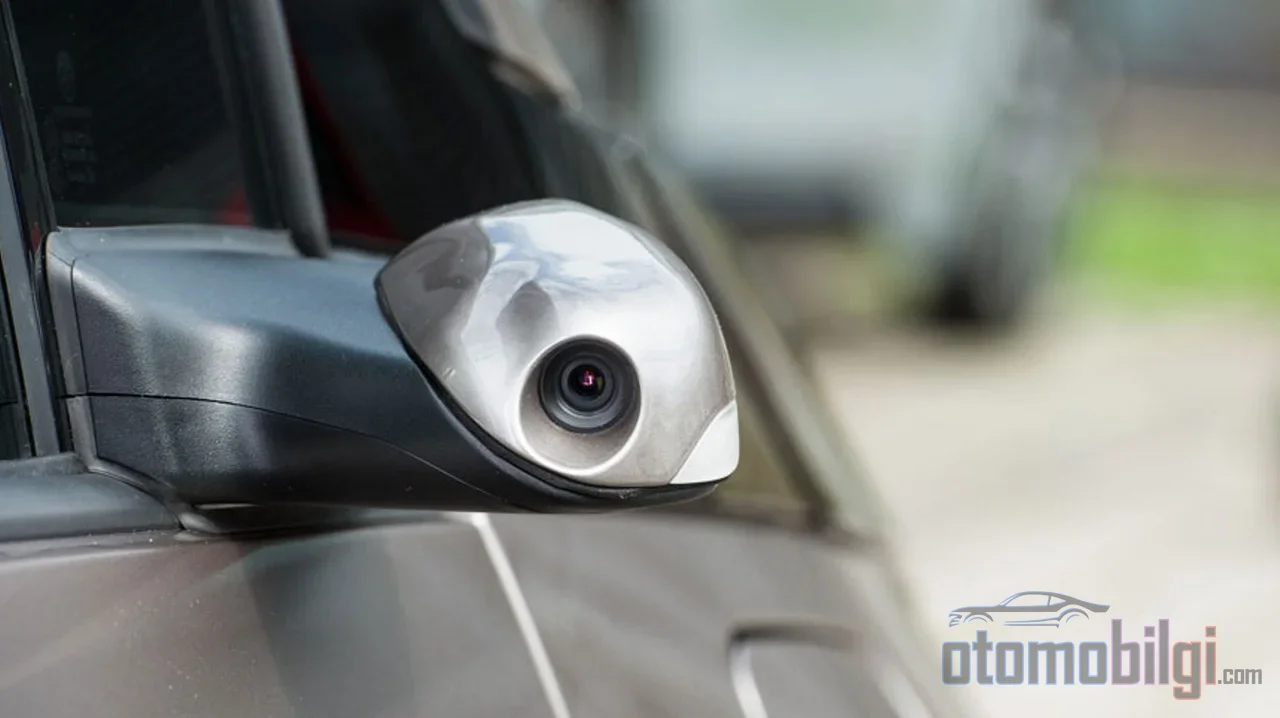
This morning on your way to school in the car, you glanced at your right mirror, didn't you? That little piece of glass has been doing almost the same job for over 100 years: showing you the traffic behind you, that's all. Now someone comes along and says, let's remove that glass and put a tiny camera in its place, with a sleek screen inside. Audi e-tron has been doing this for years in some markets, and Genesis says its digital side mirrors offer an 11-degree wider viewing angle than conventional mirrors. Sounds great, doesn't it? But hold on a second: the camera's night image, the lens covered in raindrops, that millisecond delay on the screen, and our brain's distance estimation... That's the real question. Can camera-based side mirrors truly replace the classic glass mirror, or is the technology still on its way?
How Does the Camera Mirror System (CMS) Work?
First, let's clarify the physics, because when most people hear "digital mirror," they think it's just a camera and a screen. In fact, there's an entire processing chain in between. The camera mounted on the outside of the vehicle captures the image; this data first goes to an image signal processing unit (ISP). There, a series of operations are performed, such as high dynamic range merging, defective pixel correction, lens shading compensation, and brightness and contrast enhancement. Since the camera is far from the screen, the data is transmitted over a link such as FPD-Link, which is common in automotive applications. A typical setup consists of three parts: a camera, a processor, a screen. At the end of the chain, the live image lands on the screen on the driver's door panel or in the corner.
My favorite detail is this: the LDC block that corrects the distortion produced by the fisheye lens can also digitally mimic the effect of an aspheric side mirror. In other words, the trick of compressing the wide view horizontally to fit it on a narrow screen is the digital version of the aspheric glass in a physical mirror. The camera can also detect nearby vehicles and pedestrians and issue warnings.
Highlights
- In the CMS chain, glass-to-glass latency measurements are at the level of about 60 ms.
- Genesis reports that its digital side mirrors offer a viewing angle 11 degrees wider than a conventional mirror.
- The aerodynamic gain from removing the mirrors is estimated to be between 2% and 7%.
- UNECE R46 permits CMS in dozens of countries; in the USA, however, side mirrors are still mandatory.
Why Do Milliseconds Matter So Much?
Now, here's a question for you: how many milliseconds is the delay of a glass mirror? The answer is zero, of course. The moment light hits the glass, it reaches your eye. In a camera-based system, however, the image passes through a chain, and the total duration of this chain is called glass-to-glass latency. The smaller this number, the closer the world on the screen is to reality.
So what is the actual figure? According to one technical analysis, in a chain processing 60 frames per second with a 2.1-megapixel sensor, each processing block takes about 8 milliseconds; with deep learning also in play, the total latency is about 65 ms, and without deep learning, 57 ms. An actual measurement made with a digital stopwatch also showed around 60 ms. In short, the predictions are consistent. With techniques like on-the-fly processing, it is possible to process without waiting for a full frame and save 8 ms, and removing the scaling block gains another 8 ms.
So is 60 ms bad? No, it is perfectly manageable. But this should not be forgotten: on the highway you are covering tens of meters per second, and everything changes fast in traffic. That is why there are requirements on the safety side such as frozen frame detection; the system must check whether the display has frozen using data such as the frame number and timestamp. There is also the matter of habit: experts recommend checking the three mirrors 12 times per minute while driving. Your rhythm of looking at the mirror is a 100-year-old muscle memory, not looking at a screen.
What Happens at Night and in Bad Weather?
This is where the technology faces its toughest exam. It has been found that in darkness, the headlights of approaching vehicles spread as excessive glare, that is, blooming, in camera-based systems and degrade the image. In rain, droplets accumulating on the lens can blur the image and block it. This is a serious engineering problem that every camera-based mirror system has to solve.
Manufacturers know this too. Hyundai's 2026 model DSM (Digital Side Mirror) user manual explicitly states that the monitor may blur when facing strong light sources such as direct sunlight, that light spots may form, or that it may be temporarily shut down due to the headlights of oncoming traffic. In other words, these scenarios are not surprises, they are known limits. On the other hand, for the full-screen digital interior mirror of the 2026 Santa Fe, performance is generally reported to be better than a glass mirror in rain and snow; a bright and wide rear view setting is also available for low light. On the commercial vehicle side, there are also claims of a wide field of view, enhanced night vision sensitivity, and adaptability to harsh weather conditions. The balance is this: good engineering wins in most conditions, but in extreme scenarios the glass mirror still has a measurable advantage.
Does Screen Distance Mislead: The Distance Perception Issue
I think this is the most interesting part of the matter. Because the problem is no longer in the technology, but in our brain. No matter how perfect a camera's image is, the screen is two-dimensional and lacks the eye's natural depth cues. That is why real research is being done on how drivers perceive the distance of the vehicle behind in camera-based vision systems: some examine the effect of camera viewing angle on distance perception, some the camera height, and some whether augmented reality graphics help. In one study, it was observed that drivers generally overestimated the distance of motorcycles and underestimated their speed. In other words, our brain tends to perceive the motorcycle on the screen as farther away and slower than it actually is.
In a bus study, 28 drivers were tested with a camera-assisted system; positive results were obtained in distance and depth perception and lane-changing maneuvers, and drivers were able to adapt to the system. But the same study also recorded a freezing point: sensors missing objects, not providing continuous feedback, and a high rate of false alarms. User experiences paint a similar picture; many drivers still prefer the classic mirror for distance judgment. Among Audi e-tron users, there are also those who complain that at intersections muscle memory still directs their gaze outward, to where the old mirror used to be. Getting used to it takes time, which is a very human situation.
Aerodynamics and Field of View: The Camera Mirror's Real Weak Spot
So why do we even bother? Because the classic mirror has a cost. Those wing-shaped protrusions create serious drag alongside the vehicle, and removing the mirrors offers an estimated aerodynamic improvement potential of between 2% and 7%. This is a figure that can be directly converted into gains, especially in electric vehicles where range is worth gold. And that's not all: better aerodynamics means lower fuel consumption and reduced wind noise.
The visibility side is even clearer. Cameras have a much smaller profile than mirrors; Genesis's reported 11 degrees of extra field of view and reduced blind spot theoretically improve safety. A camera-based system also offers capabilities such as a wide field of view, image enhancement, and pedestrian alerts that the classic mirror physically cannot provide. In the production version of the Audi e-tron, the side mirrors were replaced with camera-based digital units; some users say they liked the viewing angles and the camera interior mirror.
Why the Rules Are Different: The US vs Other Markets
The regulatory side of the matter is an integral part of the story. In the US, exterior mirrors are regulated by FMVSS No. 111, and NHTSA has not yet granted camera-based systems permission to replace mirrors. In 2019, NHTSA requested comments on the subject and collected 650 comments in two months; Tesla's and manufacturer associations' requests in this direction date back to 2014. There is one obvious condition NHTSA has set: the system must provide at least the same level of safety as existing mirrors. For this reason, camera-based systems in the US can currently only be used in addition to traditional mirrors, that is, as hybrids; if the electronic part fails, the classic mirror kicks in.
UNECE Regulation No. 46, on the other hand, allows CMS as an alternative to mirrors in dozens of countries; it was updated in 2016, but since that date only a few fully camera-based vehicles have been able to be offered commercially. It is not yet clear whether consumer preference, the difficulty of meeting ISO standards, or manufacturer timidity determines this. New standards such as UNECE R151, which regulates blind spot information systems for bicycle detection, have also joined the list of requirements that future systems must meet.
So the Conclusion: Can It Pass?
The essence of the matter is this: camera-based side mirrors can technically replace the classic glass mirror, but conditionally. Latency is now considered a solved problem; a glass-to-glass time of around 60 ms is practically sufficient. The field of view and aerodynamic advantage are clear and measurable. But night glare, lens dirt in the rain, and especially distance perception are still areas where the glass mirror keeps the advantage. Regulations in the US do not allow it yet, either. So in today's picture, the digital mirror is better in most situations with the right engineering, but not better in every condition.
A note from my reading list: if you come across a model with digital mirrors when buying your next car, try it on a night drive first. Your hand will still reach for the old mirror at intersections, so be ready for that. But once you get used to the wide field of view after a few weeks, going back may be hard. The glass mirror has been doing its job for 100 years; the camera is only in its first decades. The race is heating up, and I think it is worth watching. What do you say - if it were you, which one would you choose?
Sources
- Camera Mirror Systems on AM62A
- Use of Camera Monitoring Systems to Satisfy Regulatory Mirror Requirements
- Digital Side Mirror (DSM) - Hyundai Owners Manual
- Taking Safety to New Heights with Optical Technology - Genesis Newsroom
- Check your mirrors before they're gone - Ambarella
- 2020 Audi E-Tron EV: virtual side mirrors
- Audi e-tron will use cameras in place of side mirrors, but not in US
- The Potential of Side Camera Systems to Reduce Bus Side Collisions - US DOT
- Assessing the Impact of Mirror Technology on Driver Perception & Safety (SAE 2025-01-8664)
- The Full-Display Digital Rearview Mirror on the 2026 Hyundai Santa Fe