What Does the Driver Monitoring Camera in Your Car Track?
Share This Page
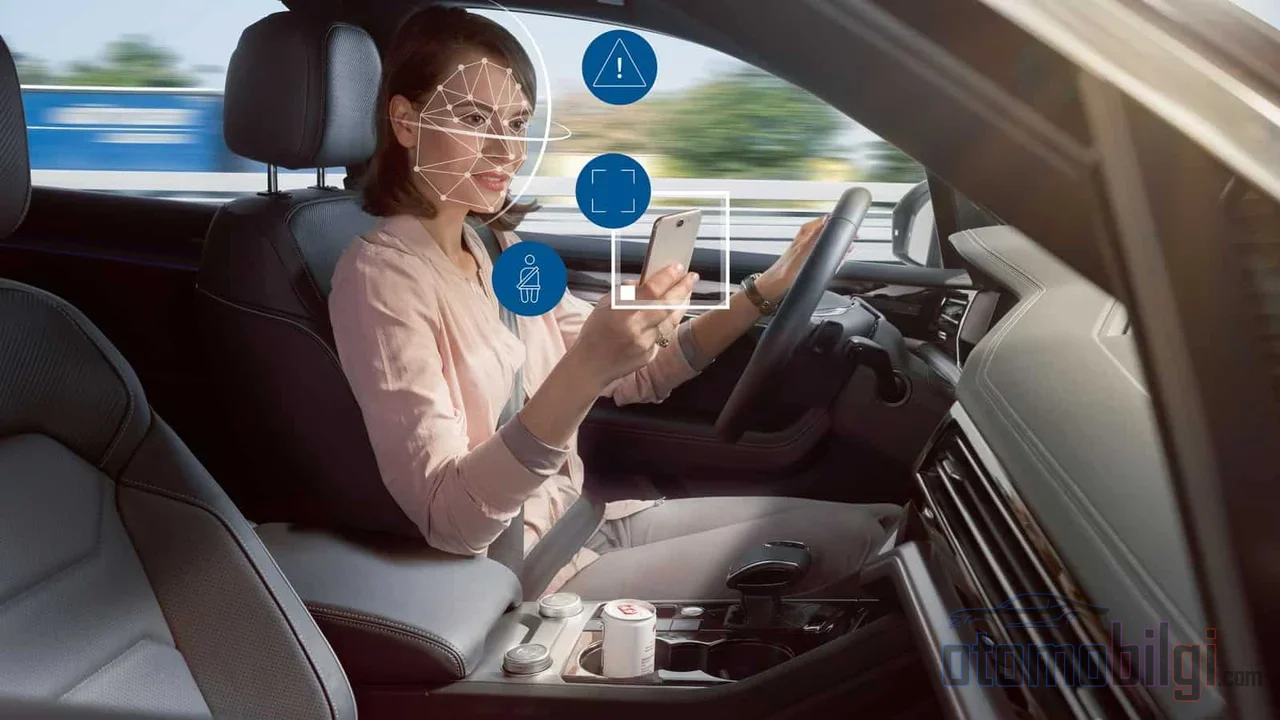
Eyes closed at the wheel, while the car speeds along at full throttle. And a second later, a voice from inside: "Take a break." Who said that? The answer is the driver monitoring camera - that little sensor watching your eyes, recognizing you, and even waiting to brake on your behalf. Washed in non-glaring infrared light shining directly into your eyes, this camera is now hidden behind the gauge cluster, and explaining what it does is genuinely fascinating.
Many of us feel something is off inside: Are they there for my safety, or is it silent surveillance of my privacy? The real question is this: What exactly does the driver monitoring camera watch, what is done with those images, and is it really being recorded? In this article, we break it all down one by one.
How Does a Driver Monitoring Camera Work?
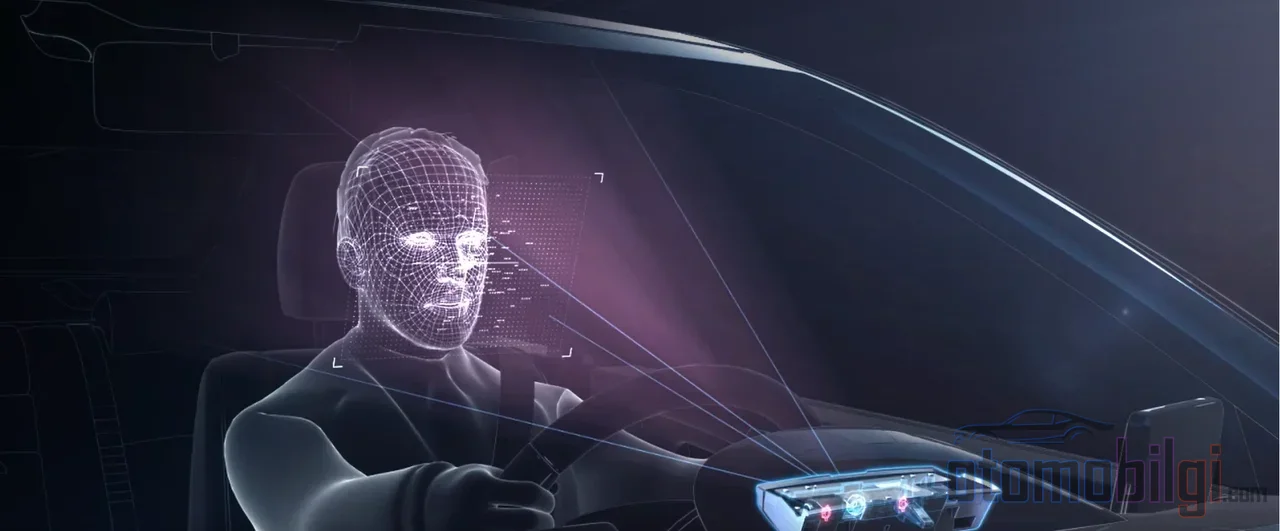
Known by its technical name as the driver monitoring system, or DMS (Driver Monitoring System), it consists of two main parts: a camera facing the driver's face and infrared LEDs usually placed near the camera. These LEDs illuminate the driver's face in a way you'll never notice - the light is invisible, you just sit upright at the wheel like a mule. Then artificial intelligence kicks in and draws a map of your face: your eyelids, your pupils, your head angle, and your gaze direction.
Here's the best part: The system doesn't look at a single frame. As if your friend told you to step on the gas... In other words, it monitors in a continuous stream. Glancing briefly at the gauges is normal, and the system knows this; such moments are not taken seriously. However, if your gaze stays away from the road for a long time, the time your eyelids stay closed lengthens, you yawn frequently, or your head starts dropping forward, the threshold is exceeded and a warning comes.
This camera doesn't like light, it doesn't need light. Thanks to infrared illumination, it works with the same clarity both night and day. The sun has set, your eyes are half-closed, the cabin is dark - it doesn't matter at all, the system keeps watching your eyes.
What Can It Detect?
- Your blinking pattern and eyelid closure time
- Your gaze direction: Are you on the road, on your phone, or looking out the window?
- Your head position and repeated head nodding (a sign of dozing off)
- Fatigue signs like yawning
- Your facial expressions and overall attention state
In one study, an AI-based system was able to detect fatigue with 94.1% accuracy and distraction with 89% accuracy - both day and night. These figures are impressive and explain why this technology is spreading so fast.
What's the Difference from a Dashcam? Which Camera Watches What?
Let me explain this with a simple analogy: Vehicle cameras are like different members of a family. The ADAS camera looks ahead through the windshield, seeing vehicles and lanes on the road. The blind spot camera looks behind your shoulders. The dashcam keeps a record, capturing footage of the road. The driver monitoring camera, on the other hand, looks only at you - your behavior, your eyes, and your attention are its world.
| Camera | What Does It Look At? |
|---|---|
| ADAS camera | Road, lane markings, other vehicles |
| Blind spot (BSD) camera | Blind spots on the sides and rear |
| Dashcam | Recording the road (some also record the cabin) |
| Driver monitoring (DMS) | Only the driver's eyes, face and head |
There are also systems that don't use a camera at all. Some vehicles look at steering input patterns and the vehicle's motion data to predict inattention - if steering corrections decrease or the way the vehicle tracks the road deteriorates, the system becomes suspicious. This approach is simpler than a camera, but it cannot directly see your eyes or your fatigue.
Fatigue and Phone Distraction Detection: When Do the Warnings Start?
The system's decision threshold is actually set quite intelligently. Turning your eyes to the instrument cluster for 2 seconds is normal driver behavior and the system accepts it. But the following are taken seriously:
- If your eye closures become prolonged (risk of falling asleep)
- If your head is dropping forward or nodding up and down repeatedly
- If you haven't been looking at the road for a while, for example because you're using your phone
- If fatigue signs like yawning are accumulating
When the threshold is exceeded, the system usually warns you with a beep, a chime, a voice command or a visual cue. Some systems can also send a short event clip to the cloud at the same time - this is especially common in fleet vehicles (taxis, truck fleets) and ensures that the moment of the event remains as evidence in the hands of both the employer and the driver.
Highlights
- Driver monitoring cameras work day and night with infrared light
- Fatigue detection can be performed with 94.1% accuracy and distraction detection with 89% accuracy
- Mandatory in all new vehicles in the EU from July 7, 2026
- In most manufacturers' systems, data is processed inside the vehicle and is not uploaded to the cloud
- Warnings can be beeps, voice commands, visual cues, or steering/seat vibration
Which Systems Use This Camera and When Does It Kick In?
These cameras don't work on their own; they usually engage together with a semi-autonomous system. In Tesla, the cabin camera monitors the driver from above the rearview mirror while Autopilot/FSD is in use. If the driver loses attention, visual and audible warnings are issued; if there is no response, Autopilot temporarily shuts down. GM's Super Cruise system works only on pre-mapped highways, and if the driver remains disengaged, the vehicle slows down and comes to a safe stop; in addition, the OnStar emergency services connection is activated. Ford's BlueCruise system works on certain divided highways and issues increasingly frequent visual/audible warnings.
The warning methods even vary by brand: Tesla generally uses haptic warnings in the steering wheel, GM uses seat vibration, while Ford works with visual and audible alerts. So two different drivers experiencing the same problem can have completely different warning experiences.
Euro NCAP's New Rules
According to Euro NCAP's 2026 requirements, fatigue detection must be performed at speeds of 50 km/h and above and must work with a metric corresponding to a fatigue level of KSS 7 and above. So even when the vehicle is moving slowly, the system has its eye on you, but the warning threshold should also be effective as speed increases.
Where Are the Images Processed, and Are They Recorded?
This is the question drivers ask most, and the answer is more reassuring than you might think. In manufacturer systems (Tesla, GM, Ford, and the like), data is generally processed locally, inside the vehicle. The infrared camera only tracks the eyes; it cannot be used for identity recognition and normally does not record video. Images are only sent out with the driver's explicit consent, usually for diagnostic purposes. Some systems never record data at all; Subaru's DriverFocus system has also stated that it does not store data.
However, the situation is different in fleet vehicles: These systems record continuously and overwrite the footage unless a "harsh event" is triggered; some also record short clips at the moment of a trigger. So the "truck company's camera" is not the same as the camera in your family car.
Under the European Union's General Safety Regulation (GSR), these systems are required to operate in a closed loop and never share data with third parties. According to industry sources, in the future we may see scenarios with both cloud and local storage, especially for cases where the vehicle has no connectivity. So the answer to "is there a video of me in the cloud?" depends on the vehicle you drive and the country you are in.
Can I Turn It Off and Skip It?
The short answer: No. In a Tesla, if the driver fails to respond to a warning, the system shuts itself down anyway. In the EU, as of July 7, 2026, all new vehicles sold must have a camera facing the driver's face, and it must continuously monitor eye, face, and head position as well as gaze direction. So after 2026, there is no option left to skip it in Europe. The industry expects this camera market, with a volume of $1.83 billion in 2025, to reach $4.76 billion by 2032 - this topic is not closing, it is growing.
Is This Surveillance, or Safety? What Should Drivers Realistically Expect?
So if this camera is watching our eyes, is it surveillance, or quite the opposite, a life-saving safety feature? Both sides have a voice. Some drivers see the monitoring of their eye movements as an invasion of personal space and get bothered enough to give up buying a new car altogether. On the other hand, it is a fact that distraction and drowsy driving are among the biggest causes of road accidents, and a study shows that DMS warnings are among the interventions most positively received by drivers and genuinely reduce the impact of distraction on driving.
There are also the system's limits: Camera-based monitoring is reactive by nature. It detects fatigue only after visible symptoms appear; it cannot know how many hours you slept last night. That is why experts recommend that this technology be used together with predictive fatigue management tools. Forbes writes that the EU's mandatory cameras will fundamentally reshape in-car privacy; the tension between privacy advocates and safety justifications continues.
So with this much debate going on, what is a driver monitoring camera actually watching? Here is the real answer to this question:
A driver monitoring camera tracks your eyes, blinking rate, head angle, and gaze direction to detect fatigue and distraction; it processes data via infrared, issues alerts, and normally does not record any footage. As you can see, it is not a "hidden camera" but technically a safety assistant focused on you. In factory systems, footage is usually processed inside the vehicle and not sent to the cloud; in fleet cameras, however, a clip of the moment of an incident can be recorded. You have no chance of turning it off, but in most scenarios your footage is not being stockpiled somewhere either.
In my view, the rightest position is this: Know what the system does and does not do, learn your automaker's data policy, and then relax. In a world where you are not supposed to take your eyes off the road anyway, a camera that reminds you with "Are you tired?" is not so bad, right?
Sources
- In-Cab Monitoring: What Fleets Should Know About Driver Monitoring
- Driver Monitoring 2.0: How Euro NCAP is Raising the Bar
- 2026 Deadline: Strategic Implications of the EU Driver Monitoring Mandate
- All Cars Sold in the EU Now Require a Camera Aimed at You
- How Driver Monitoring Cameras Improve Safety
- AI-Based Driver Drowsiness and Distraction Detection
- Distraction Mitigation Through Driver Monitoring Systems
- How Driver Monitoring Systems Can Protect Drivers and Privacy
- Driver Monitoring Systems in Electric Vehicles
- Data Privacy in the World of DMS
- Driver Monitoring Raises Complexity, Adds Privacy Concerns
- Indirect Driver Monitoring System
- Driver Drowsiness Detection System Market