How Does V2X Enable Vehicle-to-Everything Communication?
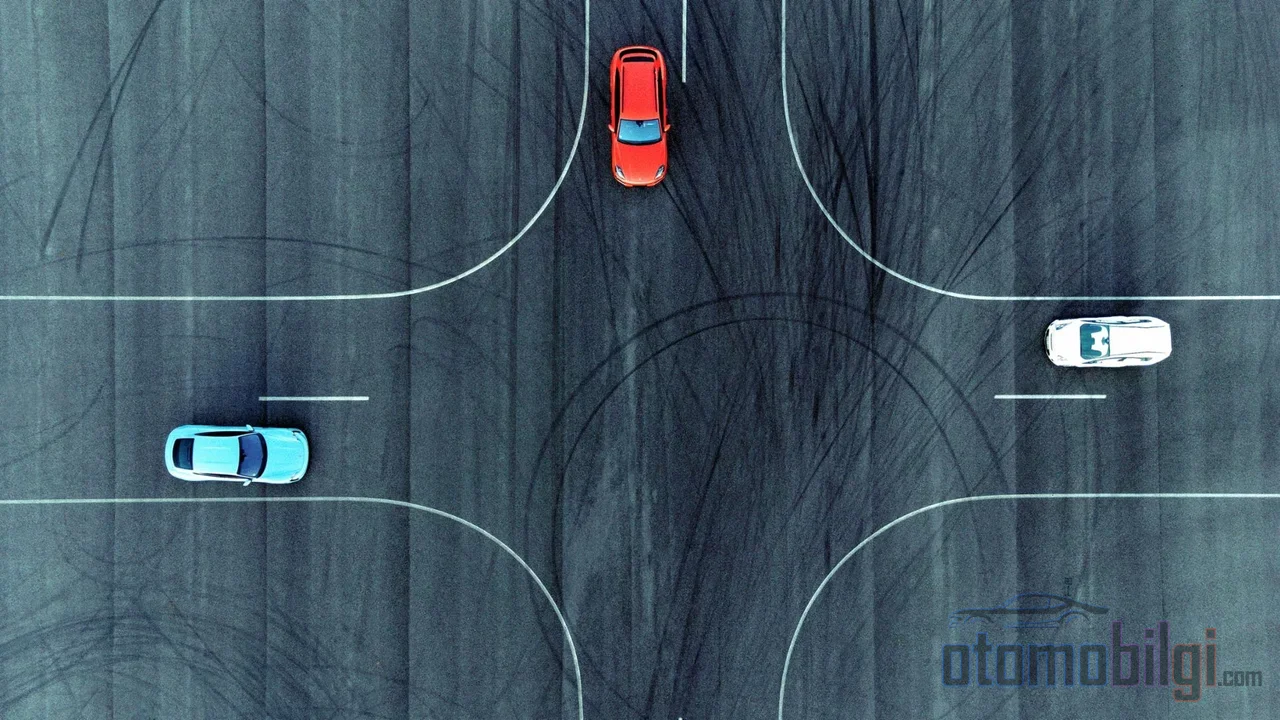
Say you've just turned into a bend, no mirror can save you from the truck ahead, and there's a car parked at the corner. No radar, no camera, from your angle it's a complete unknown. But that parked car is actually dying to shout: I'm here, watch out! That's exactly what V2X is, the technology that does this. Vehicle-to-vehicle and vehicle-to-infrastructure communication, or V2X, enables cars to send messages to each other, to pedestrians' phones, to traffic lights and to the cloud in fractions of a second. So how does this conversation technically work, why have two rival standards been competing for years, and in which cars does it actually work today? Let's break it down layer by layer.
How Does V2X Communication Work Technically?
V2X is an umbrella concept whose full name is Vehicle-to-Everything: the vehicle talks to every entity. This conversation has four main counterparts. Vehicle-to-vehicle communication (V2V), vehicle-to-roadside infrastructure communication (V2I), communication with vulnerable road users such as pedestrians and cyclists (V2P), and vehicle-to-network communication extending to the cloud over the cellular network (V2N).
The standard actually in effect today is C-V2X. Standardized by 3GPP, this system uses two complementary transmission modes, and their characters are very different from each other. In direct communication (PC5) mode, vehicles connect to each other without needing the cellular network at all, like talking on a walkie-talkie. The surprising detail is this: in this mode not even a SIM card is needed, it works even if there's no network coverage, and it takes time synchronization from GNSS satellites. In network communication (Uu) mode, the classic mobile network comes into play; the vehicle pulls real-time information such as road conditions and traffic density from the cloud.
The timeline matters too. The first LTE-based V2X standard was completed in 2017, and the 5G-based NR-V2X in 2020. NR-V2X, introduced with Release 16, added capabilities such as groupcast, unicast and sidelink HARQ feedback; thanks to this, autonomous driving use cases can meet the requirements of latency below 3 milliseconds and 99.999% reliability.
Highlights
- C-V2X's PC5 mode works directly from vehicle to vehicle, without a SIM card or network.
- 5G NR-V2X has a latency of 1-5 ms and a range of around 1000-2000 m.
- The safety message BSM is broadcast on the 100 ms cycle specified in the standards.
- Volkswagen has produced more than 2 million vehicles equipped with Car2X in Europe.
- In the USA, the world's first production-level C-V2X tolling system is in operation on NC-540.
The DSRC and C-V2X Rivalry: Two Standards, One Goal
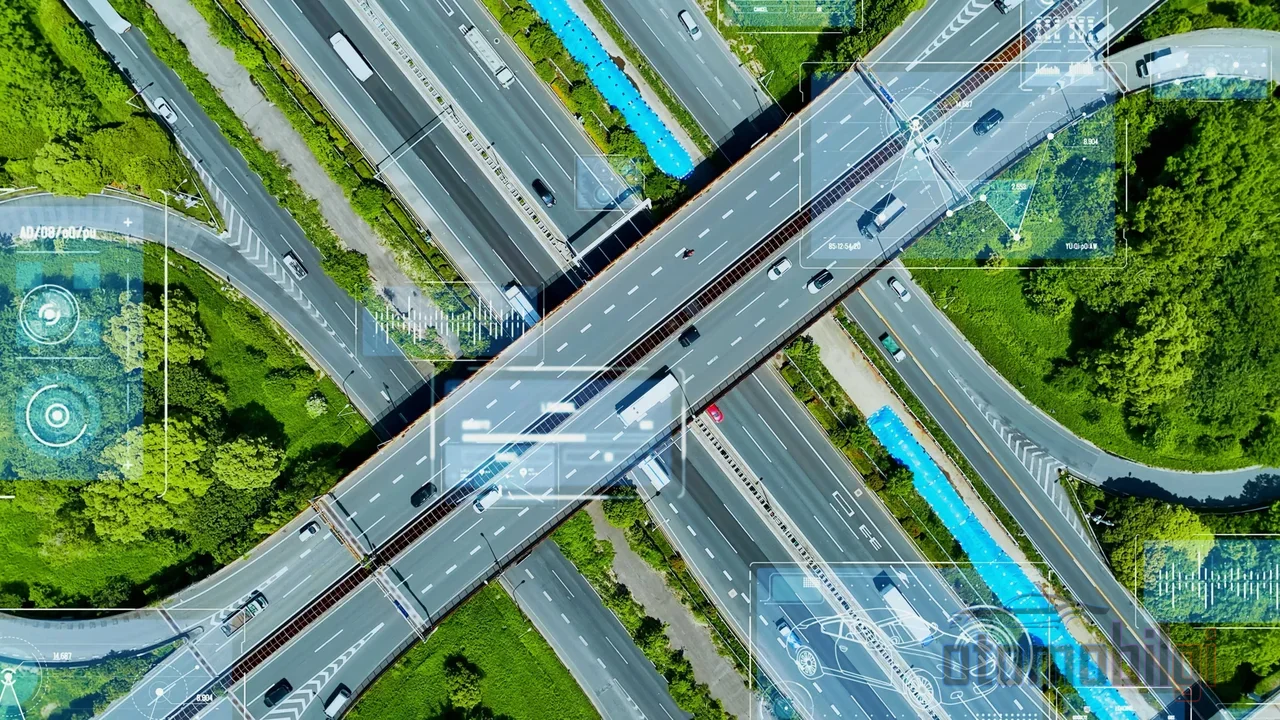
V2X doesn't have a single origin story; two sibling standards have been solving the same problem with different methods for years. DSRC (Dedicated Short Range Communication) is a Wi-Fi-like short-range radio technology: it broadcasts ad-hoc, is independent of infrastructure, and is strong at low latency. C-V2X, on the other hand, entered the scene coming from the cellular world; scalability in high vehicle density, cloud coordination and 5G integration stand out.
Let's look at the numbers, because that's where the heart of the competition beats. Although the figures vary somewhat depending on the measurement method and scenario, the overall picture is clear:
| Standard | Typical latency | Range |
|---|---|---|
| DSRC | 5-10 ms | 300-1000 m |
| LTE-V2X | 10-20 ms | 500-1500 m |
| 5G NR-V2X | 1-5 ms | 1000-2000 m |
Let's put these figures into context: the latency window foreseen for vehicle-to-vehicle safety communication is around 1-5 milliseconds, because two vehicles traveling at 100 km/h approach each other by roughly 30 meters per second. Milliseconds are genuinely measured in lives. Another important finding of the comparison is this: in real field tests, both C-V2X and DSRC managed to meet the basic safety requirements while achieving a packet delivery rate above 90 percent. So even though the competition continues in technical details, both are doing their job.
What Messages Do Vehicles Send to Each Other?
So what is being said in this radio conversation? The standards define specific message types and how quickly they need to be sent. The most basic message is BSM (Basic Safety Message): a broadcast, like an identity card, containing each vehicle's location, speed and direction, and the cycle foreseen in the SAE and ETSI standards is exactly 100 milliseconds, meaning each vehicle introduces itself 10 times per second.
- DENM (Event Notification): Event-triggered hazard warnings; target latency below 10 ms.
- SPaT (Signal Phase and Timing): Information on which second the traffic light will turn red; broadcast 10 times per second, target latency below 100 ms.
- MAP (Map Data): The road geometry of the intersection; updated once per second.
Broadcasting SPaT messages is the job of units (RSUs) mounted at the roadside; they connect to the signal controller at the intersection and announce the light information to all surrounding vehicles. This way, your car knows how many seconds the green light will last 50 meters before reaching it. The next step also makes sense: with this data, it adjusts its speed so precisely that it no longer has to stop at a red light.
Tangible Benefit for the Driver: Blind Spot, Sudden Braking and Intersection Scenarios
However complex the technical stack, the rule is this: the benefit must be felt behind the wheel. V2X's most striking feature is that it sees dangers that vehicle sensors physically cannot. Both radar and cameras require a line of sight; V2X messages, on the other hand, work in all directions and warn of hidden dangers behind corners in advance.
Let's think through a few real scenarios. A vehicle stopped in the blind spot: the sensors can't see it, but that vehicle keeps broadcasting its BSM and your car receives it. Sudden braking behind vehicles ahead: two vehicles ahead, a truck brakes hard - you can't see its brake lights, but the warning message sent before the emergency braking reaches you. An invisible vehicle rapidly approaching the intersection: when the signaling information and the other party's BSM are combined, the system says the maneuver is not safe. Scenarios such as red light violation warning, emergency vehicle priority, and approaching fire truck notification are also being added to these.
Intersections are a special case, because they are the classic center of accident statistics. In smart intersection applications, vehicle and pedestrian detection, approaching emergency vehicles, and traffic light timing that adapts to traffic all run on the same V2X infrastructure.
Which Vehicles Actually Have V2X Active Today?
Good question, because the litmus test is here: the technology is proven on the road, not in the article. Volkswagen is the most concrete example in this field: More than 2 million vehicles with Car2X hardware have been produced for the European market so far. The Golf, T-Roc, Tiguan and Tayron carry this hardware, while it is offered as standard on the ID.3, ID.4 and ID.7. On the DSRC side, the Honda Civic Tourer and CR-V, the BMW iX, and some models from Nissan and Renault stand out among the fleets that have integrated this technology.
The picture is not limited to manufacturers alone. China has prepared a draft standard requiring commercial vehicles to be equipped with an LTE-V2X-based embedded information interaction system; experts from the Chinese Academy of Engineering expect the first vehicle-road-cloud functions to appear in production vehicles by the end of 2026 and to be more tightly integrated with driver assistance systems in 2027. In Hong Kong, four double-decker buses have already started carrying passengers on specific routes with a C-V2X system. In the USA, in early 2026, the world's first production-level C-V2X tolling system was activated on the NC-540 highway in North Carolina, and a nationwide V2X deployment plan was announced across the country. In short, the pilot project period is closing, and the real traffic period is opening.
Its Relationship with 5G Embedded Modem and eSIM Connectivity
Do you think V2X floats in the air? No; it lives in the embedded modem and eSIM inside the car. At the heart of connected vehicles are embedded modems and SIM cards that connect to the internet without requiring an external device. The transition to 5G is the keystone of this picture, because V2I and V2N services, the connectivity requirements of different traffic services over 5G and C-V2X, and spectrum needs form a whole that must be considered together. Vehicle manufacturers are also tying C-V2X compliance tests to their integration processes carried out via the eSIM and secure element.
It is useful to distinguish the two modes as follows: the network-independent PC5 line for safety messages, and the Uu line built on the 5G network for broadband information flow. One saves the moment of collision, the other does pre-trip planning. Embedded connectivity is the key to bringing the two lines together in the same vehicle; advanced scenarios such as already-expanded sensor sharing and remote driving can only come to life with a 5G-based V2X ecosystem.
Short Answer: How Is Vehicle-to-Vehicle Communication Achieved?
Here is the summary of the summary: V2X enables vehicles to broadcast standard messages carrying location, speed, and hazard information (BSM, DENM, SPaT) directly over DSRC or C-V2X radio technology, usually in under 10 milliseconds and without a SIM card; in safety scenarios, the target latency is 1-5 ms. While C-V2X brings all of this together under one roof and combines it with 5G, DSRC remains simple and independent.
So what does this leave you with as a driver? If the car you buy today has V2X, even without you noticing: the vehicle around the bend, the emergency service rushing to the intersection, the light about to turn red... all of them send small messages to your car. Tomorrow's traffic is a traffic where everyone notifies everyone else. And right now, for the first time, that future is standing in the showrooms.