5G Technology in Cars: What Does an Embedded Modem Do?
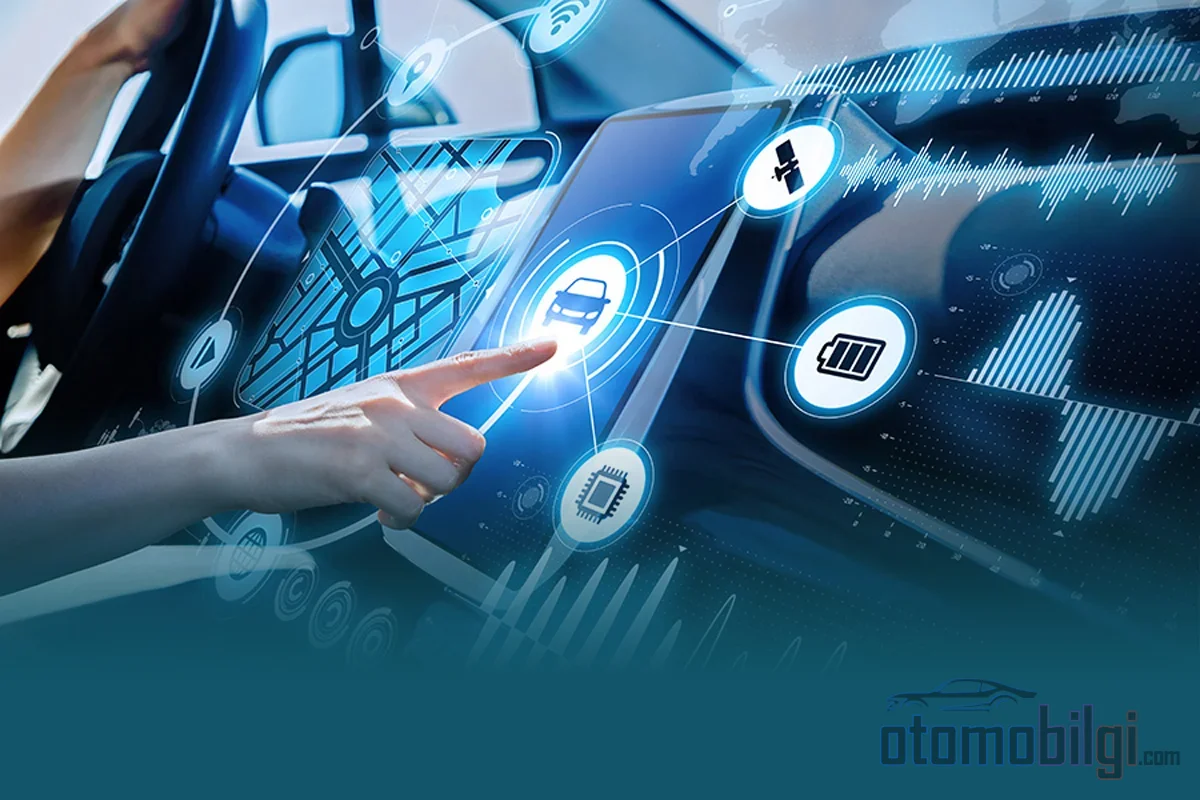
Imagine getting into your car in the morning, turning on your music, and the song starts playing within the very first second. And in the evening on your way home, your car's software update was quietly completed while you were enjoying the ride along the way. Is this a coincidence? Absolutely not. Behind both of these, there is usually a 5G modem embedded in the car at the factory. So how much does this small piece really change an entire multimedia system? The answer is not as simple as you think - and there are surprising details involved, such as subscriptions, update speed, and even a connection that works while the car is off.
What Does an Embedded 5G Modem Actually Do?
Let's first clarify the concept, because the phrase "embedded modem" sounds more technical than it really is. An embedded modem is the cellular connectivity component integrated into the car at the factory; meaning, without ever thinking about your phone, the car itself is connected to the internet. Thanks to this modem, the car can receive remote commands, share its location, and transmit health data.
My favorite part is this: even when the car is off, the modem is in an "always on" state. You can start the car before leaving the house, lock and unlock the doors. It's like your phone continuing to listen to you even while charging - this connection is the car's nervous system, and it never sleeps.
This modem usually connects to the cellular network via an eSIM or a classic SIM card and creates a Wi-Fi hotspot inside the car. So the embedded modem actually does three jobs at once: a single connection point for the car's own services, passengers' internet, and OTA updates. In versions with 5G, all three of these tasks get faster. By how much? That's where things get interesting.
What Is the Real Difference Between 5G and 4G?
Let's be honest: most of us think of nothing but "faster downloads" when we hear 5G. But what really changes the multimedia experience is not just speed, but latency. That is, the time between the moment you give a command and the moment the response arrives.
Highlights
- While typical 4G latency is 30-50 ms, 5G can reduce it to as low as 1 ms
- Typical download speed of 4G LTE is in the 20-50 Mbps range
- The number of connected vehicles with embedded telematics is expected to reach 580 million by 2030
- The embedded modem stays active even when the car is off
- 5G also powers OTA updates, remote diagnostics, and cloud-based artificial intelligence services
Let's look at the numbers. On 4G networks, latency typically hovers around 30-50 milliseconds; depending on the measurement method, more optimistic figures like 20-30 ms are also seen. 5G, on the other hand, can bring this down to as low as 1 millisecond under ideal conditions. What does this mean in practice? The time it takes for a song to start when you tap a music app, how quickly the reloaded section arrives when you drag the map - they all feed off these milliseconds.
On the speed side, the picture is clear too: On 4G LTE, typical download speed is in the 20-50 Mbps range. 5G was designed to offer not only higher speeds, but also lower latency and greater network capacity. And there's this: 5G is positioned as a capability that can solve the problem of consistent internet access even at speeds above 250 km/h. In other words, 5G keeps going where 4G on the highway says "I'm tired."
| Feature | 4G (LTE) | 5G |
|---|---|---|
| Typical latency | 30-50 ms | Down to 1 ms |
| Typical download speed | 20-50 Mbps | Higher speed + greater capacity |
| Consistency at high speed | Limited | Target above 250 km/h |
But wait, don't look at the table and say "4G is trash." Most multimedia tasks - streaming music, podcasts, basic traffic data - work comfortably at 4G speeds too. The real difference emerges when the workload increases. And nowhere does the workload increase as much as with OTA updates.
OTA Updates: 5G's Real Stage
The modern car is now a computer on wheels; the software-defined vehicle concept describes exactly this. An increasingly large share of vehicle functions is implemented in software, and this software can be updated over the air (OTA) over time. Vehicles receive new features, security patches, and performance optimizations without a visit to a service center.
This is where 5G's advantage in large OTA packages becomes inevitable. When vehicle software reaches several gigabytes in size, the difference between a 20-50 Mbps 4G connection and a faster 5G line ranges from hours to minutes. In addition, 5G's ultra-low latency and reliability strengthen OTA processes, remote diagnostics, and cloud-based AI services as a whole.
An anecdote from the real world also shows how serious this is: Some drivers report that downloads get stuck around the 90 percent mark when trying to update their vehicles over Wi-Fi. In other words, the connection channel and speed are everything in the update experience. Considering that manufacturers need to update large software sections frequently and securely for staged rollout of driving capabilities, this load puts serious strain on both the network and cloud infrastructure.
Why Does Live Traffic and Map Data Bite Into the Connection?
Navigation is the most constant user of embedded connectivity. Traffic patterns, speed limits, street layouts - all are continuously updated data, and there's an interesting detail here: While phone apps collect traffic data from moving phones, built-in navigation systems collect this data from the vehicle itself. That means a richness that goes far beyond GPS.
This data stream needs to be continuous and latency-free; exactly what 5G promises. The joint refinement of 5G and location data is even being used for applications like collision prevention. So map data is not just the answer to the question "which road is congested" - over time, it is turning into a safety layer.
Of course, it's not perfect: Even in 2026, there are periods when Google Maps traffic data is partially disrupted in Android Auto. No matter how good the connection is, glitches on the service side can affect the experience. But in systems where data is collected from the vehicle and flows over a fast connection, these kinds of disruptions are both less frequent and shorter-lived.
How Do You Experience These Features in Vehicles Without 5G?
If your vehicle doesn't have embedded 5G, don't worry; the game isn't over, the rules have just changed. Your options are:
- Phone tethering: You can open a hotspot from your phone and connect the vehicle and passengers to the internet. This is also possible with an eSIM-capable phone. The advantage is that no extra hardware is required; the disadvantage is that it quickly drains the phone's battery and data package.
- Mobile hotspot device: It offers longer battery life than phones and the ability to connect more devices at the same time; hotspots generally provide a more stable connection than tethering.
- In-vehicle Wi-Fi router installation: Alternative solutions exist especially for older vehicles; devices built for this purpose often provide better antenna and signal strength than a phone.
- Personal eSIM plans in compatible vehicles: Some operators offer plans that connect vehicles with personal eSIM hardware to 5G networks; of course, provided you have a compatible device and coverage.
In short, music streaming and the hotspot experience are possible even without 5G; but for major OTA updates and continuous telematics services, the embedded modem is in a league of its own in terms of independence and stability. This is also the most hotly debated topic on forums: embedded modem or phone hotspot? While the phone side says "I'm enough," the embedded modem answers with antenna range, signal strength, stability, and the vehicle's own connection independence.
Where Does the Subscription Fit In?
Now for the other side of the coin: money. Embedded connectivity doesn't come free, and manufacturers are turning it into a revenue stream through subscription or on-demand service models. For example, one manufacturer's premium connectivity package includes music, podcasts, audiobooks, news, and in-vehicle games for $15 a month. It's also known that in 2026 a brand will be tying its 5G connectivity to a subscription, aiming to deliver faster software distribution and more responsive driver support.
The scale isn't tiny either: the number of connected vehicles with embedded OEM telematics systems is expected to reach 580 million by 2030. Forecasts for the connected vehicle market vary depending on methodology - one report points to $81 billion by 2035 with a 9.9% compound annual growth rate, while another framework talks about much higher absolute figures. So the market will definitely grow; how much it will grow depends on the definitions.
On the user experience side, the tension is real: Some owners report that basic features like vehicle location stop working once the subscription ends; features being locked at the end of trial periods is sparking debate. So while discussing the speed advantage of the embedded 5G modem, you also have to factor the subscription bill into the equation.
So, The Verdict: Is Multimedia Really Changing?
Short and clear answer: yes, but not everywhere. A 5G modem embedded in the vehicle reduces 4G's 30-50 millisecond latency down to as low as 1 millisecond, making stream start-up times, live maps, and traffic flow smoother, and carries the potential to cut massive OTA updates from hours to minutes. On the streaming and live data side, the difference is noticeable; with large updates, it becomes decisive.
But even in vehicles without 5G, a phone hotspot or a mobile device can handle most of the multimedia. The real distinction lies in the stability and independence that the embedded modem offers for updates and telematics services - as long as you keep paying your subscription, of course. So the next time everything on your multimedia screen responds instantly at a tap, think of that little modem quietly working in the background. A century ago, we started cars with fire; now they negotiate in milliseconds. If you ask me, that's not bad progress.
Sources
- 5G connected cars changing automotive experiences - Ericsson
- From Infotainment Systems to 5G Vehicle Integration - Geekub
- Connected vehicles: how is 5G transforming the mobility of the future? - Orange 5G Lab
- 5G vs. 4G: Speed Comparison Explained - T-Mobile
- The Hidden 5G Technology Behind Tomorrow's Connected Cars - BluWireless
- 5G cars and the mobility technology ecosystem - McKinsey
- The era of phone-based navigation is ending - HERE
- What are connected services? - Smartcar
- What can the modem in my vehicle do? - Ford
- Embedded Modem or Smartphone - Abalta Technologies