Car Radio: The Transition from FM to DAB and the Internet
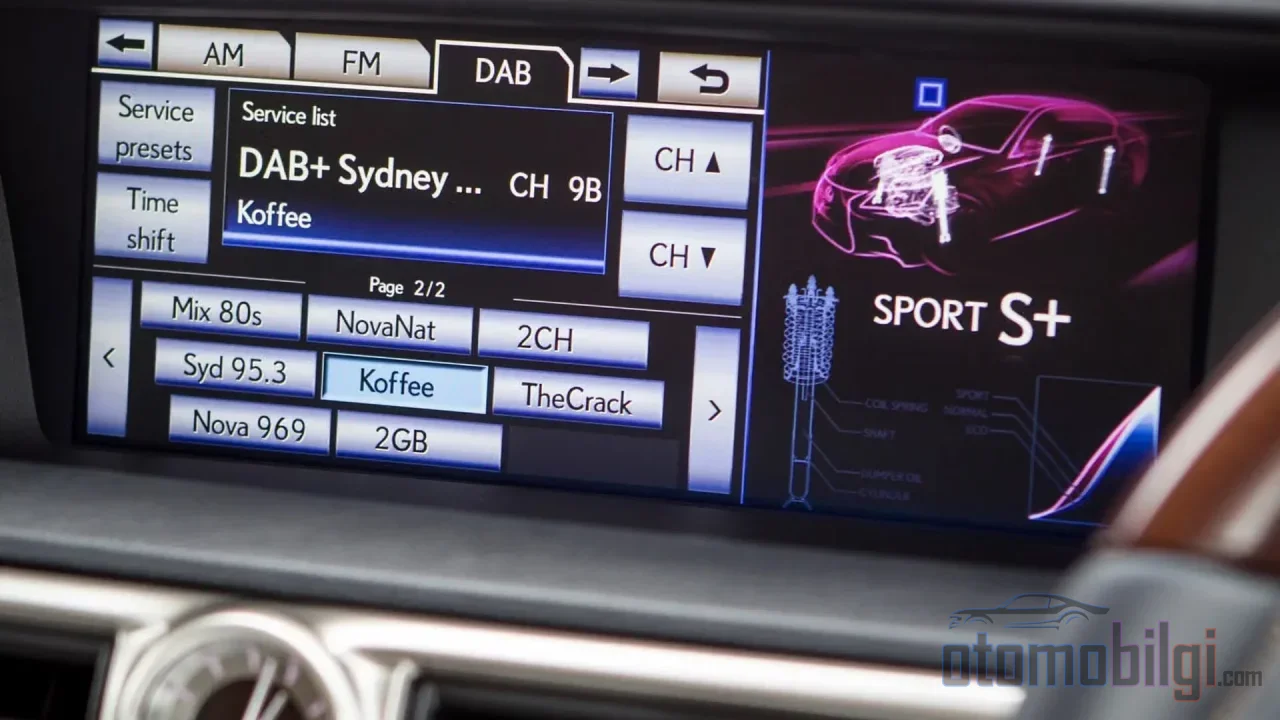
Say you're on a long journey, your favorite station is playing, and the moment you change cities, the signal fizzles out and disappears. You search for the frequency over and over, but in vain. This is the classic drama of analog FM radio. So why is it that a phone in the bag on the back seat can play uninterrupted music at the same time, while our car's radio still operates by rules left over from the 1980s? The short answer: it doesn't. The radio world is quietly going through a revolution: a transition from FM to DAB+ and internet radio. On this page, we'll talk about how these three technologies work, what they actually offer in a vehicle, and how to figure out which car supports which one. If you're ready, let's turn the dial.
How Does FM Radio Work, and What Are Its Limits?
FM, or frequency modulation, is actually an elegant idea: the broadcaster sends a carrier wave and encodes the sound by slightly varying the frequency of that wave. The receiver's job is to extract the original sound from these variations. Since it's an analog system, the sound travels embedded in the wave itself; there is no data packet, compression, or intermediate layer in between.
This simplicity has a price. In FM, each station sits on a specific frequency; and as you move from city to city, you have to manually search for that frequency again. There's also a limit on the number of stations: once the available frequencies in a region are used up, there is no room to open new channels. So FM is essentially a small parking lot; when the space runs out, no new vehicles can enter.
But let's not bury FM just yet, because it has two serious advantages. The first is interference resistance: FM is surprisingly resilient against interference and widespread disturbances. Second, when the signal weakens, the sound degrades gradually and gracefully. The hissing increases, but the broadcast continues. It also delivers a sound quality that is more than sufficient for the in-car experience, and "pretty good" by most people's standards. That is exactly the grace of the analog world: it never gives up suddenly.
What Are DAB and DAB+, and How Do They Differ from FM?
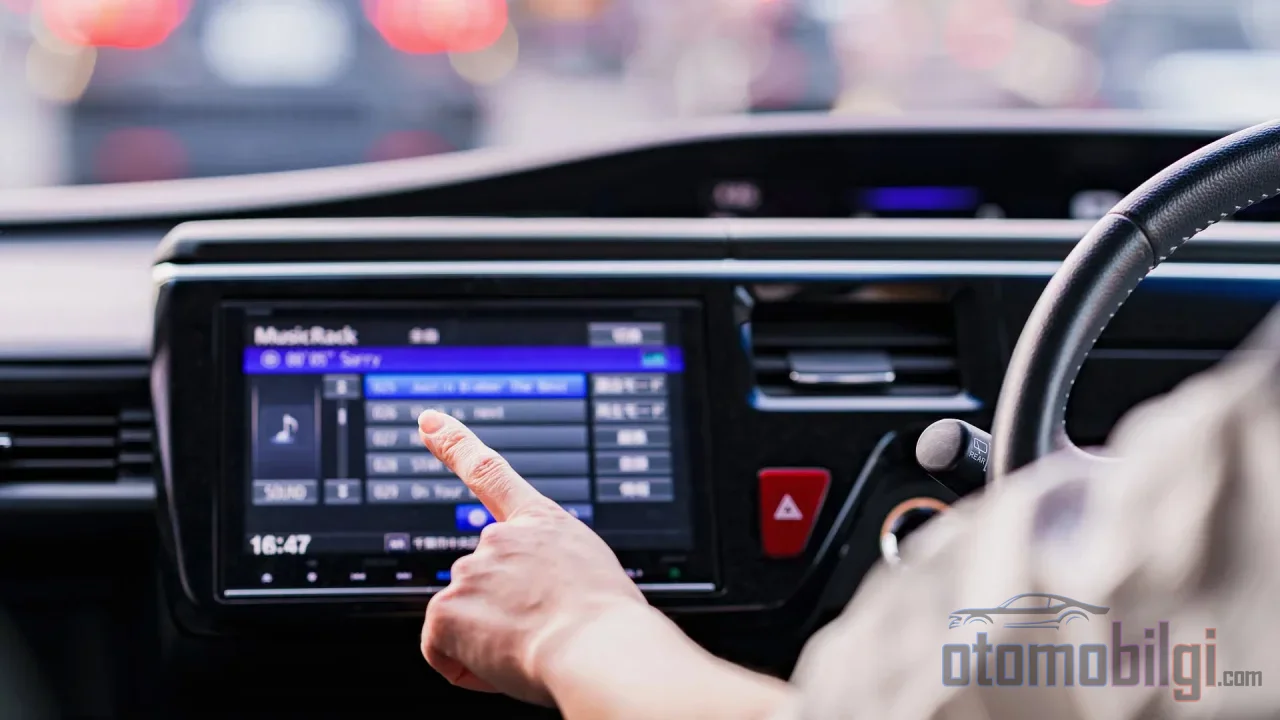
DAB (Digital Audio Broadcasting) is a broadcast system that sends audio as digital data packets instead of an analog wave. The idea was born in the 1980s as a European research project; the work that began as a collaboration between Germany's IRT and France's CCETT took the name Eureka-147 in 1987, and the first public broadcasts were made in 1995. The first DAB channel opened in Norway on June 1, 1995; the BBC and Swedish Radio also began broadcasting in September of the same year.
At the heart of the system is a trick called multiplexing: numerous audio streams and data services are compressed, combined into a single package in a relatively narrow radio band, and sent together. The receiver then opens this package and extracts the channel you want. Let's make an analogy: In FM, each station carries one letter with a separate courier; in DAB, they are all stacked into the same truck and separated by an address label. That's why far more channels fit in the same band on DAB than on FM. On the technical side, it is the first standard to use OFDM (orthogonal frequency-division multiplexing) modulation, and this structure makes it more resilient than FM against noise and multipath signal reflections in vehicles.
Highlights
- DAB carries many stations in a single digital multiplex package and eliminates frequency searching.
- The first DAB broadcast was made in 1995; Norway became the first country to shut down its national FM broadcast in 2017.
- From the end of 2020, all radios in new vehicles sold in the EU are required to receive digital terrestrial broadcasts.
- When DAB+ falls below the signal threshold, it exhibits "cliff-edge" behavior: the audio cuts out quickly.
- Internet radio streams over a cellular data connection; coverage and network congestion determine the interruption.
The Critical Difference Between DAB and DAB+
Here is where many people get stuck: DAB and DAB+ are not the same thing. The original DAB uses an old audio codec called MP2 (MPEG-1 Audio Layer II). DAB+, developed in 2006, switches to the HE-AAC v2 codec, MPEG Surround support, and stronger Reed-Solomon error correction coding. Although it may sound like a minor update on paper, in practice it is not: DAB is not forward-compatible with DAB+. In other words, an old DAB radio cannot receive DAB+ broadcasts in any way. From July 2007 onward, devices capable of receiving DAB+ via software updates went on sale, but receivers made before that are no good for this. If you are looking at a DAB radio on the second-hand market, pay attention to the plus sign on the label.
Is DAB+ Sound Quality Really Better?
The honest answer: it depends on the conditions. In a DAB+ broadcast, the broadcaster chooses the audio quality; you can set up a high-bitrate hi-fi music channel or a low-bitrate speech channel. And the critical point is this: the audio quality of a low-bitrate DAB+ broadcast can fall noticeably below that of analog FM. So the "digital" label alone is not a guarantee of superior sound. On the other hand, high-bitrate broadcasts deliver clean, noise-free audio, and resilience against multipath fading is a serious advantage for in-car listening. In summary: digital is potentially better; but it varies channel by channel.
Cliff-Edge Behavior: DAB's Flaw?
The digital equivalent of FM's graceful degradation is not graceful at all. When the DAB+ signal is strong enough, the audio is smooth; but when the signal drops below a certain critical threshold, reception quality collapses rapidly. This is technically called cliff-edge behavior. This is why the hissing interruptions experienced at tunnel entrances occur. On the other hand, while you chase frequencies for 100 kilometers on FM, DAB+ in the vehicle requires no retuning along the way; it stays with the station name and plays uninterrupted as long as there is a signal. This is precisely DAB's most beloved feature in the eyes of the vehicle user.
How Does Internet Radio Work in a Car?
The third player, which needs no antenna at all: internet radio. The basic logic is simple: The station's audio stream is carried as data between nearby cell towers and your device over the cellular data connection using technologies like LTE or 5G, and plays in the car. So you're not listening to a radio wave, but an internet packet.
There are several ways to connect your car to the internet. The most common is to turn your phone into a hotspot over mobile data and connect it to the head unit in the car. You can think of the magnetic field like a modern grandmother's grandchild: one source, many devices. Android-based car music systems usually work exactly like this. On the more integrated side, there are built-in in-dash apps: many new cars broadcast internet radio directly via an embedded cellular connection; also, car routers installed in the vehicle can bring the devices connected to them online with a 3G/4G connection.
So how does outage behavior work? Two things determine the streaming quality of internet radio: the strength of coverage and the congestion of the network. If the signal is weak or the network is crowded, the stream stutters, stops, buffers. You get not a cliff-edge broadcast like DAB+, but more of a crawl-along stream. Naturally, station selection is almost limitless; you can even listen to a channel from the other side of the world. In return, you consume your mobile data, and not every plan views this usage the same way.
Which Car Supports Which Radio, and How Do You Find Out?
First, the big news: In the European Union, from the end of 2020 onwards, all radios in newly sold cars are required to receive digital terrestrial broadcasting (i.e. DAB+). So a new car you buy after 2021 in the EU market supports DAB+ from the factory; buses and trucks are exempt from this requirement. By 2016, DAB was already standard in most cars sold in the United Kingdom, Norway and Switzerland. If we look at the rest of the world, the picture gets complicated: as of 2018, 55 countries were running regular or trial DAB(+) broadcasts and more than 68 million DAB devices had been sold; but Canada, for example, has switched to another digital system called HD Radio. DAB+ is not a universal standard; you need to look at the broadcasting infrastructure of the country you're in.
Practical ways to check your own vehicle:
- Go to the Media or Radio section in the multimedia menu; if there is a DAB or DAB+ option, the car supports it. In some manufacturers' media systems, the FM/DAB switch is directly in the main menu.
- You can run a query with your chassis number on the manufacturer's own support or vehicle compatibility pages.
- If it's a new car sold in the EU after 2021, digital terrestrial radio support is already a legal requirement.
So can DAB+ be retrofitted to your older car? Yes, it's possible: with an external DAB+ receiver and a suitable installation, you can transfer the broadcast to your existing music system. Installation quality is critical here; if the antenna is not mounted with the correct ground plane, even the best receiver gives poor results.
Is FM Really Being Switched Off?
Here's the least technical but most interesting part of the story. Norway was the first country to shut down its national FM broadcasting in 2017; local stations can stay on FM until at least 2031. But the rest of the picture shakes up the narrative that "digital migration is undoubtedly the future." Switzerland decided to shut down FM in 2022 and closed the major broadcaster's infrastructure early; however, after the shutdown the affected stations lost a significant portion of their listeners, and in December 2025 parliament indefinitely postponed the full shutdown over private broadcasters' concerns. Moreover, the major broadcaster plans to restart FM broadcasts in the fall of 2026. So even as FM dies, FM is coming back; one of the most ironic chapters in radio history.
Other examples are also mixed: Ireland shut down DAB broadcasts in 2021 but decided to restart its national DAB+ multiplexes in 2025. Finland, Portugal, Hungary, Romania, New Zealand and Hong Kong abandoned DAB entirely. In Germany, while heavy investment in DAB+ infrastructure continues, simulcasting with FM goes on; in the Netherlands, FM shutdown is expected between 2027 and 2032, while in Italy a proposal for full shutdown by 2030 is on the table. This means the following: over the next decade we will watch a transition flowing at different speeds in different corners of the world, sometimes even in reverse.
Let's Put the Three Technologies Side by Side
So which of these three systems is right for you? The short and clear answer is this: DAB+ is the technology that most comfortably replaces FM inside the car; it eliminates station searching, delivers uninterrupted and clean audio as long as signal strength holds, and makes room for dozens of channels on a single band. But if the signal drops below a critical threshold, the broadcast can cut off abruptly, and the audio of low-bitrate channels cannot match FM. Internet radio, on the other hand, knows no limits of options or geography; the price is mobile data consumption and dependence on coverage. FM, meanwhile, still stands firm as the reliable fallback offering the widest effective coverage, the strongest interference resistance and the most graceful degradation characteristics. In 2026, what the smart driver does is carry all three in their pocket at once: DAB+ as the main broadcast, internet radio for niche stations, and FM as the safety net. The future of radio is not a single technology, but a dial where all of them stand side by side.
Sources
- Digital Audio Broadcasting
- Everything You Need to Know about DAB Radio
- How Does Digital Audio Broadcast (DAB) Work?
- What Is DAB+ Radio? Understanding Digital Radio in Your Car
- How Does an Android Car Stereo Connect to the Internet?
- How can you use in-car internet?
- How to use Radio Plus in your Porsche
- How does DAB+ radio work?