What Is a Multi-Zone Audio System and How Does It Work?
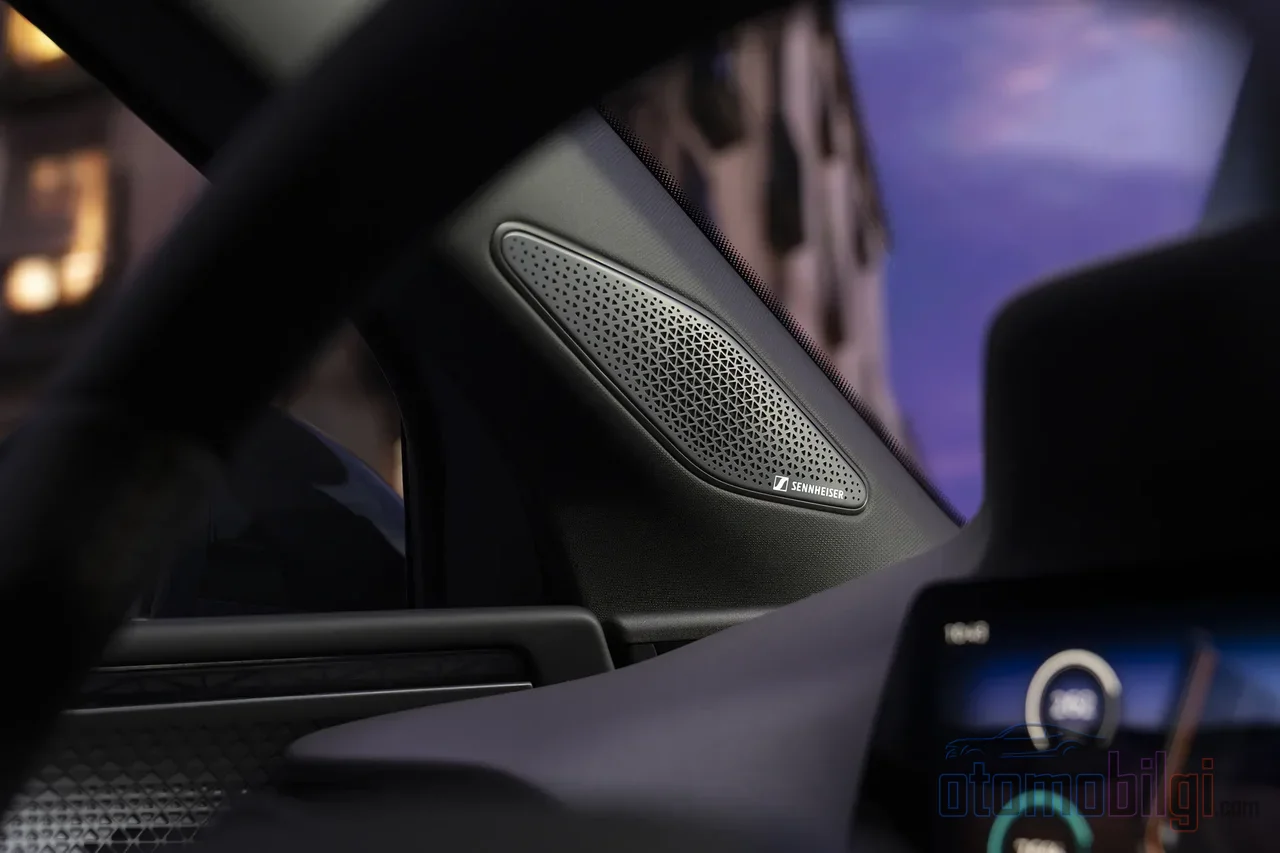
Imagine a scene like this: the driver is listening to a podcast at the wheel, the sibling in the back seat has turned on a cartoon, and the friend in the passenger seat wants to connect to their own playlist. Everyone wants their own sound, but there is only one cabin, one sound system. So is this really possible? The answer is not as simple as you might think, because in the automotive world, "multi-zone sound system" can mean completely different things. Some manufacturers mean sound balancing between zones, some mean a rear-seat entertainment solution handled with headphones, and some mean headphone-free personal sound zones that are only just emerging from the labs.
This page is here to untangle that confusion: we explain, one by one, how a multi-zone sound system works, whether the driver and passengers can choose different sources at the same time, and which vehicles actually offer this as promised.
What Does Multi-Zone Sound System Mean? The Difference Between a Control Zone and a Real Zone
Let's first make the most critical distinction, because this is exactly where the difference between marketing language and real technology begins. What is offered under the name "multi-zone audio" in many vehicles is actually a control zone: that is, passengers in the back seat can adjust the volume or balance on their side, but the music playing itself fills the entire cabin. If the driver turns on the radio, those in the back are also listening to the radio; they can only turn the volume down a bit.
By contrast, a true multi-zone system means that different areas of the cabin have completely independent sound sources: radio in the front, a different track over Bluetooth in the back, at the same time, from the same set of speakers. Second-zone outputs, which are kept outside the main sound setup and carry a separate source with a separate volume level, also fall into this logic. Both are sold with the word "zone," but the freedom one provides is very different from the other. If you see multi-zone audio on a vehicle's feature list, the first question to ask is: do the zones only adjust levels, or do they select sources?
Highlights
- There is a big difference between a control zone and true multi-zone audio: adjusting only the volume does not mean an independent source.
- Headphone-free personal sound zones are an active research topic in academic literature; the University of Southampton's approach uses door and header speakers together.
- The 2026 GMC Yukon rear-seat media system supports Bluetooth headphone pairing, with dual-channel GM headphones.
- Hyundai and Honda are among the manufacturers that have officially announced features promising separate sound zones.
- On the phone side, Samsung can send audio to two Bluetooth devices at the same time with Dual Audio; in Android Auto, the audio output selection option is limited.
How Does a Headphone-Free Personal Sound Zone Work?
The scientific side of this is actually very exciting. Let me explain with a simple analogy: think of a regular sound system as a pool: you throw a stone (you turn on the music) and the waves spread everywhere. A personal sound zone is like making waves in only one corner of the pool while keeping the other corner calm. To do this, you calculate the sounds the speakers will produce one by one and plan in advance which waves need to cancel out where.
The approach developed by acoustic engineers from the University of Southampton and presented at an international acoustics congress in 2013 does exactly this: standard door speakers are used for low frequencies, small speakers mounted in the headrests handle high frequencies, and the signals driving each speaker are optimized to create independent listening areas between the front and rear seats. No headphones, everyone hears their own program. Interesting detail: the amount of isolation required changes according to the content. If a news anchor is speaking up front while pop music plays in the back, much stronger separation is needed than in a situation where both sides are listening to pop, because speech easily gets lost within music.
This "personal sound zone" concept (known in the literature as PAZ, that is, personal audio zone) is still being actively researched in academic circles today. So fully independent zones without headphones are scientifically possible and proven; the problem is carrying this into a mass-production car both cheaply and with adequate performance.
The Aftermarket Side: Multi-Amp Setups
Sound enthusiasts have their own solution too. In the multi-amp setups seen in competition and demo vehicles, a separate amplifier for each side is used for the front stage, another amp for rear fill, and a monoblock amplifier for the subwoofer. This way, separate tuning can be done for each listening position. In a typical two-amp setup, an amp in the 25-100W RMS power range is preferred for high frequencies, while a Class D amp with RMS power of 200-1000W and above is chosen for bass; active crossover filters typically operate in the 80Hz to 3kHz range. So yes, with money and expertise, creating separate sound worlds for the driver and passenger is technically possible, but this scenario is so rare that even in forum discussions it would be described as "quite unusual."
What Do Manufacturers Offer? How Much Freedom Goes Into Which Vehicle?
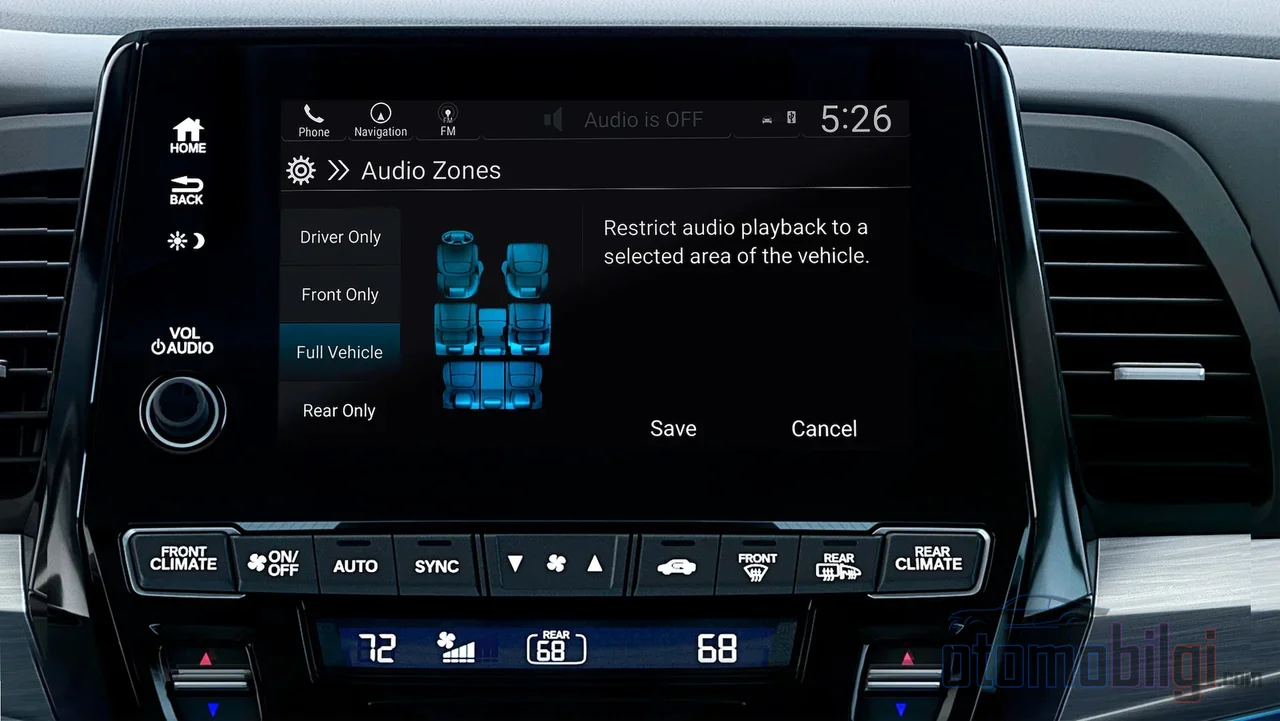
So what is the situation on the factory-installed side? Well, here the picture is a bit more complicated. Honda offers a feature called "Multi-Zone Audio" on the Odyssey Elite and the 2026 Pilot; this feature gives you the option to choose where in the cabin the sound will play. Hyundai, meanwhile, announced that with its "Separated Sound Zone" work, it aims to enable each person in the vehicle to listen to whatever they want through the speakers. On the Google side, a feature developed for Android Automotive offers the front passenger high-quality, localized audio aimed at their own zone.
But to be honest, as of 2026 there is no manufacturer-sourced, clear comparison showing in which segment and in which models fully independent sound zones are offered as standard. The available list shows the following: rear seat entertainment systems are concentrated mainly in luxury and premium vehicles; the Range Rover, Cadillac Escalade, Jeep Grand Wagoneer, Kia Carnival and BMW models are counted among the vehicles offering rear seat entertainment systems in 2026. This gives us a hint: the true multi-zone experience is, for now, mostly a comfort of the upper segments.
Rear Seat Media Systems: The Peace Provided by Bluetooth Headphones
The classic solution for family vehicles takes a completely different route: headphones. The 2026 GMC Yukon and Yukon XL come with a rear seat media system with Bluetooth headphone support; a wired connection via HDMI is also possible if desired. When headphones are paired in the rear seat, the passengers in the back can hear the movie through their own headphones while the driver can listen to navigation instructions or their own music up front without clashing sound. GM's original wireless headphones, compatible with the 2021-2026 Yukon, are dual-channel and also feature volume control on them. Cadillac's rear seat entertainment system likewise supports Bluetooth headphone pairing.
So the promise of "everyone in their own sound" between the driver and the rear seat is fulfilled today most commonly and most reliably with headphones. Speaker-level independent zones, on the other hand, remain an area that only a few manufacturers are trying and that is still maturing as a technology.
Can Sound and Navigation Coexist?
One of the practical questions people wonder about is this: does the music go silent when the navigation speaks? According to Lexus and Toyota's official support pages, music can be listened to or a phone call answered while navigation information is being received, and during this neither the music nor the call volume is lowered. This is a nice example of how modern multimedia architectures manage different sound types on top of one another even without a multi-zone system: even without zone separation, audio stream separation has become standard.
Bluetooth, Phones and Passengers: What Can You Do in Practice?
On the phone side, things can be both more flexible and sometimes frustrating. On Samsung Galaxy phones, music can be played to two Bluetooth devices at the same time with the Dual Audio feature; it is activated with the option in the Settings, Connections, Bluetooth, Advanced menu. On the Apple side, with SharePlay a passenger can control the music playing in the vehicle, and the driver can invite other passengers to listen while focusing on the road; in other words, control is shared, but the sound remains one.
A single phone can actually also be used in a multitasking way: while calls, contacts and navigation instructions flow through the vehicle's Bluetooth, the same phone can also connect to wireless headphones. In practice, it is possible for a passenger to listen to their own content on headphones while the driver uses the vehicle's navigation, depending on the phone routing audio correctly. On phones supporting Bluetooth 5.0, connecting to multiple speakers is theoretically possible too; with certain apps it can even be tried on older versions.
Of course, there are limits. When using Android Auto, routing audio to a separate Bluetooth device is not always an option; users report problems getting no sound in this scenario. Likewise, when multiple phones are connected to the vehicle, you need to switch audio between devices; Genesis makes this easier with a dedicated switching feature. So your phone ecosystem can either expand or restrict the freedom your car offers.
So What Is the Real Answer? Can the Driver and Passenger Listen to Different Things at the Same Time?
Let's give the clear answer we promised. Yes, the driver and passengers can listen to different sources at the same time, but today the most reliable way to do this is Bluetooth headphones paired to the rear-seat entertainment system; via the speakers, headphone-free and fully independent zones remain an emerging technology announced by only a small number of manufacturers. In most vehicles, the "multi-zone" label actually means volume and balance control, not source independence.
Looking at it with a buyer's eye, we can draw three practical rules. One: ask what the "multi-zone" phrase in the feature list covers, control or source. Two: if you want a film-music split in the back seat, a rear-seat media system with Bluetooth headphone support is the most solid solution. Three: flexibilities on the phone side (Dual Audio, SharePlay, multiple connections) can partially complement the freedom the car itself does not offer, but you also need to take into account the audio output limitations of systems like Android Auto.
In short: everyone listening to their own music is not as far away as imagined. It exists today with headphones, and will become broader tomorrow with speakers. The next time an audio crisis breaks out in the cabin on a long trip, you now know both the technical name of the problem and the address of the solution.
Sources
- New speaker system for cars creates separate audio zones for front and rear
- How to Use Multi-Zone Audio - Honda Info Center
- 2026 Honda Pilot - Honda Official
- Hyundai Introduces Separate Sound Zones
- Rear-Seat Media System Benefits on the 2026 GMC Yukon XL
- Can I listen to music or answer a phone call while receiving navigation information - Lexus Support
- Play music together in the car using SharePlay - Apple Support
- Play music on two Bluetooth devices from your Galaxy phone - Samsung Support
- Adaptive optimization of the trade-off parameter in acoustic personal audio zones - Nature Scientific Reports
- Multi-Amplifier Car Audio Systems Guide