What Is Android Automotive and How Does It Work?
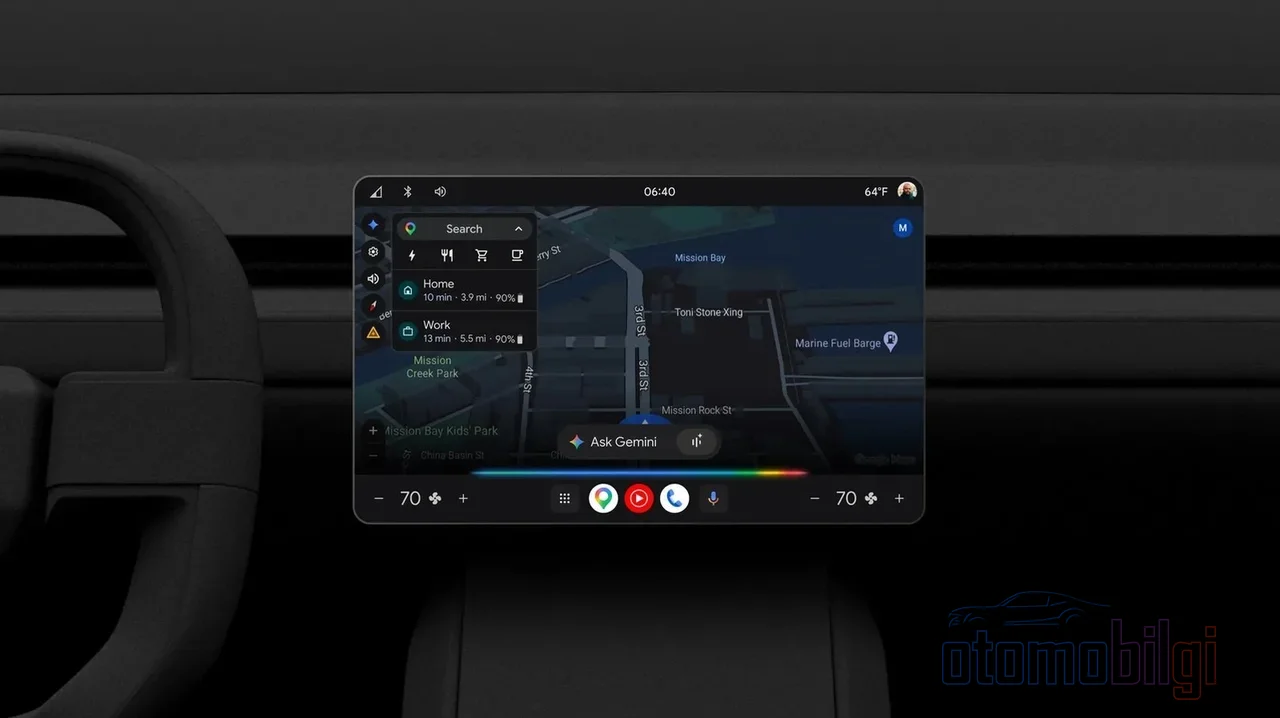
You connect to the screen in the car via Android Auto, and the moment you unplug your phone, everything evaporates. But what if the entire system inside the screen wasn't your phone, but the car itself? We're talking about an Android that runs completely independent of the phone, embedded in the hardware with its own maps, voice assistant, and app store: Android Automotive. Its name sounds a lot like Android Auto, but they are two different worlds that merely resemble each other. How does each one work, what exactly is the package called Google Built-in, why are manufacturers flocking to it, and what does it give us while also restricting? Let's break it down one by one.
What Is the Difference Between Android Auto and Android Automotive?
Let me explain this with an analogy: Android Auto is the mirroring of an app on your phone onto the car's screen. The phone connects via cable or wirelessly, the interface appears on the screen, but the brain is still in the phone in your pocket. If you unplug the phone, the screen can't find anything to do; for the system, an Android phone running Android 9 or higher is required.
Android Automotive works in reverse: the operating system is installed directly on the car's computer and never needs a phone. It is an Android-based, open-source system developed by Google; its first version arrived in March 2017, and this platform, which Google developed together with Intel and manufacturers such as Volvo and Audi, released its latest version, Android Automotive 25Q4, on January 22, 2026. On the market, it usually appears as Cars with Google built-in, that is, under the name Google Built-in.
On the technical side, there is a layer that bridges the work: the Vehicle Hardware Abstraction Layer, or VHAL for short. This layer acts as an interpreter between the software and the car's internal network (such as the in-vehicle communication network called the CAN bus). So the system doesn't just play music; it can also control the climate system, the cameras, the lighting, even the seat adjustments and the instrument panel. Brands like Rivian use AAOS-based systems even without ever using Google's name. This shows that the infrastructure is one thing, and the coat layered on top varies from brand to brand.
Highlights
- Android Automotive is a full-fledged vehicle operating system that works without a phone; the first model with a built-in vehicle system was the Polestar 2, which went on sale in 2020.
- The Google Built-in package includes Google Maps, Google Assistant, and Google Play.
- AAOS can also be used without a GAS license: Lucid Air, BMW OS 9, and Stellantis's Uconnect 5 do it this way.
- While driving, apps are limited by Google's distraction rules: a maximum of 2-3 taps per action.
- GM has switched to Google Built-in instead of Android Auto in its new models since 2023.
What Does Google Built-in Actually Do in the Car?
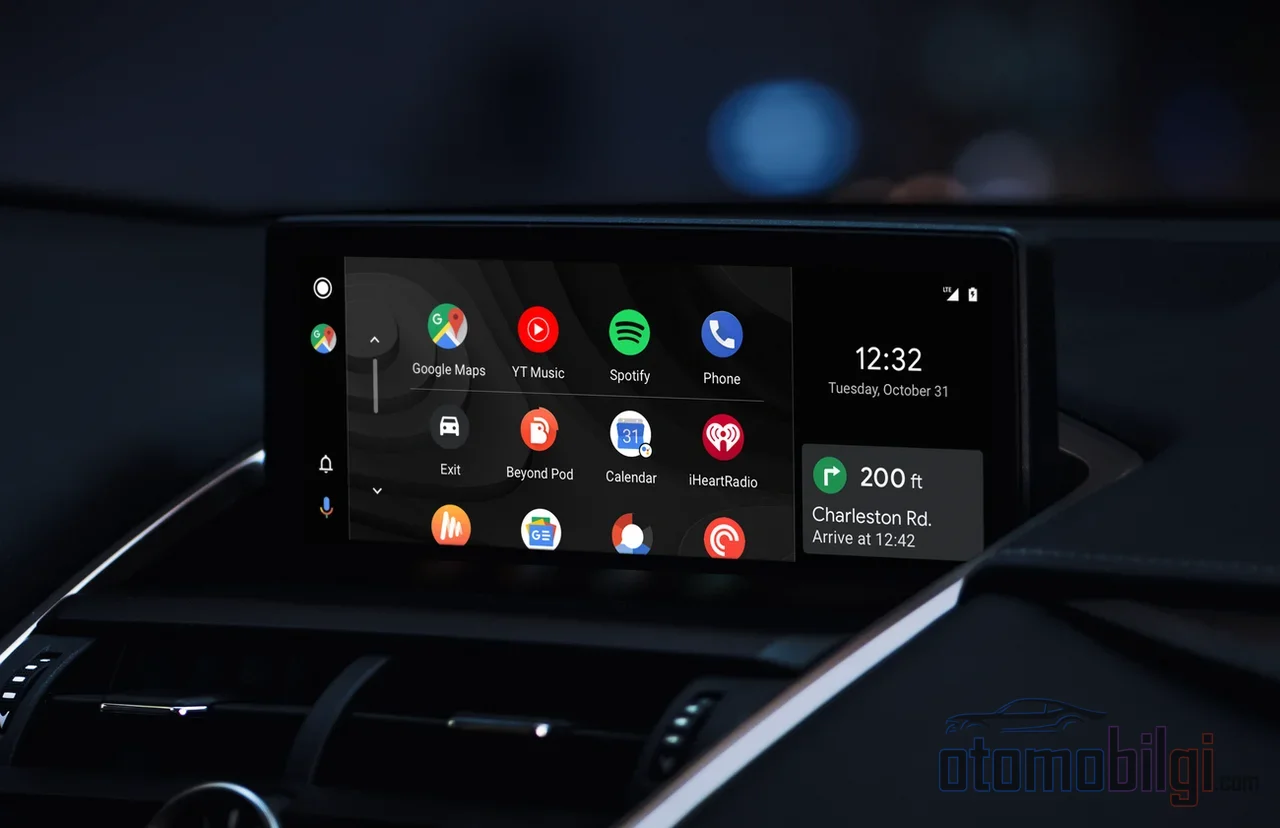
The essence of Google Built-in is the package called Google Automotive Services (GAS). This is the vehicle equivalent of the Google services on your phone: Google Maps, Google Assistant, and Google Play all together. You sign in to the car with your Google account, and from that point on, the system lives independently of your phone. Apps are also installed directly on the vehicle, not on the phone.
Navigation: Maps Live in the Car Itself
Google Maps runs from the vehicle's main screen; it offers real-time traffic information, lane-by-lane navigation and estimated arrival time. Just say "Ok Google, start navigation home." Even better, with Android Automotive 14 (from May 2023 onward), navigation could also be moved to the digital instrument cluster; meaning turn-by-turn instructions are on the panel directly in front of the steering wheel. With multi-screen support, the map can also flow on both the center console and the other displays.
Voice Assistant and Apps
You can reach the assistant in three ways: by saying "Hey Google," by tapping the Assistant icon in the app drawer, or by pressing the Push to Talk button on the steering wheel. Voice commands are active during navigation as well. The app side runs through the Play Store; dozens of mobile apps compatible with the car have begun being offered for parked vehicles. And there is the assistant's future: On October 20, 2026, Gemini came to Android Auto and is expected to reach Google Built-in vehicles in sequence as well. Even GM is rolling out Gemini to millions of vehicles across its 2022 and later Chevrolet, Cadillac, GMC and Buick models. If the system wants, it can also control the entire vehicle, from the radio to the climate control, from the camera to the seats; it is literally the car's operating system.
Why Are Manufacturers Giving Up Phone Dependence?
Now let's get to the interesting part. Android Auto and CarPlay are very well loved; so why are manufacturers dropping them in favor of a Google system embedded in their own vehicles? The first reason is a smoother connection between the driver and the vehicle. In a phone mirroring system, the manufacturer cannot access most of the data generated while driving; if the system lives directly in the vehicle, the software and hardware live in the same house, and updates and improvements come much faster. Industry reports show that AAOS tightens the collaboration between the manufacturer and the software company and speeds up development cycles. Google's platform for software-defined vehicles promises a structure that continuously refreshes the car like a smartphone with wireless OTA updates.
But this transition does not make everyone happy. Some customers react to the abandonment of Android Auto with confusion and unease; according to critics, the real motivation is not a better driving experience, but new revenue streams such as subscription models and driver data. Forums are debating that GM's reason for dropping Android Auto was Google taking most of the driving data. So there is another side to the coin.
Who Uses It? A Brief History
This journey is accelerating:
- February 2018: the Polestar 2 was announced; it went on sale in July 2020 as the first vehicle with embedded Android Automotive.
- 2018-2021: the Renault-Nissan-Mitsubishi alliance and GM (from 2021 onward) announced their partnerships.
- 2021-2023: Ford/Lincoln and Honda joined in sequence; It integrated it into BMW OS 8 and OS 9 but did not license Google services, using Aptoide as its app store.
- 2023-2024: Volkswagen announced AOSP-based One.Infotainment; Porsche signed a partnership with GAS, and Hyundai Motor Group adopted AAOS.
- 2025-2026: Mazda introduced its first model with Google built-in, the 2026 CX-5, and BYD added it to some international models; Geely Holding, meanwhile, announced GAS integration for Geely, Lynk & Co, Proton, Smart and other brands, and XPeng is also planning Google Play for early 2027.
Volvo, Polestar, Renault, Ford, GM, Honda, BMW, Volkswagen, Audi, Nissan, Mitsubishi... The list goes on and on. It seems the transition from the phone mirroring era to the embedded operating system era is one of the fastest changes in the automotive world.
What Does It Bring Us, and What Does It Limit?
The tangible gains: A consistent system that works independently of your phone and behaves the same way every time. With OTA updates, infotainment, navigation and driver assistance systems are refreshed over the air, wirelessly; having the vehicle's software updated without taking it to a dealership is a genuinely big convenience. Instrument cluster and multi-screen integration offer a cohesion that is impossible with phone mirroring. What's more, since the app is installed, your phone's battery, data or compatibility are never an issue; you don't even need an Android phone for the system to work - an iPhone will do just fine.
Limitations and Points of Controversy
On the other hand, the system is quite strict about protecting the driver's attention. Google's user experience restriction guidelines require that a task be completed in no more than 2-3 taps while driving; notifications also behave differently depending on whether you are parked or driving. It makes sense, but it can sometimes test your patience. The number of vehicle-compatible apps in the Play Store is also still limited; compared to the millions of apps in the phone world, the vehicle store offers a narrower selection.
Then there is the competition law front: In 2024, an opinion emerged that Google's refusal to grant Android Auto access to an e-mobility app could violate European Union competition rules, and this decision is considered an important precedent regarding access refusals on digital platforms. In other words, the question of "who can access a vehicle's operating system" is not just a technical debate but a legal one too. In terms of real-world usage, the picture is mixed: Owners of vehicles with Google Built-in, such as the 2026 Honda Passport, maintain overall satisfaction while complaining about some navigation errors. The system is not perfect, but it is open to improvement, and thanks to OTA, every bug can be fixed with the next update.
| Feature | Android Auto | Android Automotive (Google Built-in) |
|---|---|---|
| Where it runs | On the phone, projected to the screen | Directly on the vehicle's hardware |
| Phone requirement | Requires an Android 9+ phone | No phone required |
| App installation | Installed on the phone | Installed directly on the vehicle |
| Google services | The phone's services are used | Maps, Assistant and Play are embedded |
| OTA updates | Via the phone | The car is updated wirelessly |
| Extended scope | Infotainment only | Including climate control, cameras and instrument cluster |
How Does Android Automotive Work Without a Phone? The Short Answer
Let's get to the heart of the question. Android Automotive, as a vehicle-specific version of Android, runs on the car's own computer; maps, voice assistant and apps are part of the operating system and are used directly from the car, signed in with your Google account. The VHAL layer between the vehicle and the software allows the system to communicate with in-vehicle networks like the CAN bus; thus navigation, the assistant and the Play Store work completely independently of the phone. Even if you forget your phone at home, everything in the car keeps working.
If you use CarPlay or Android Auto, you might think "my system is already good, why would I need this"; you have full control and your phone is always with you. But the embedded system offers an integrity that mirroring can never achieve, with navigation extending all the way to the instrument cluster, vehicle updates arriving over the air, and everything working consistently from a single source. If you want to try something unlike anything else, this is the new car era you need to know about.
Sources
- Android Automotive - Wikipedia
- What is Android Automotive? - source.android.com
- Android for Cars overview - developer.android.com
- Car User Experience Restrictions rules - source.android.com
- OTA updates - source.android.com
- What's the difference between Android Automotive and Google Built-In? - Engadget
- Car Manufacturers Are Ditching Android Auto In 2026 - Engadget
- Google limits on Android Auto access may breach EU rules - Reuters
- GM to Update 4 Million Vehicles with Advanced Google - TopSpeed
- Automotive Operating System Market Size Report 2026-2033 - Grand View Research