Why Isn't the Multimedia System in Cars as Smooth as a Phone?
Share This Page
A car's multimedia system isn't as fluid as a phone, because car chips are designed not for speed but for a 15-20 year and 200,000 km lifespan ; they have to withstand temperatures from -40°C to 150°C, vibration, and electrical noise. Moreover, this hardware is locked in years before the car ever hits the road. If you're looking for that silky smoothness of a phone on your car's screen, the culprit usually isn't a single thing: the chip itself, the memory and storage choices around it, the software layer built on top, and the vehicle's development schedule. Come on, let's break it all down one by one.
Highlights
- Automotive chips are designed for temperatures from -40°C to 150°C and a lifespan of 200,000 km ; the typical lifespan of phone chips is 3-5 years.
- Multimedia hardware is chosen years before you ever see the car; by the time the vehicle is on the road, the technology may be less than halfway through its lifecycle.
- Multimedia systems account for roughly 25% of all problems reported in new vehicles.
- OTA updates can rescue software but cannot overcome old processor, memory, or storage limits.
- On the phone side, ARM-based SoC families like Snapdragon run; on the car side, automotive-grade processors are at work.
What exactly is the difference between a car chip and a phone chip?
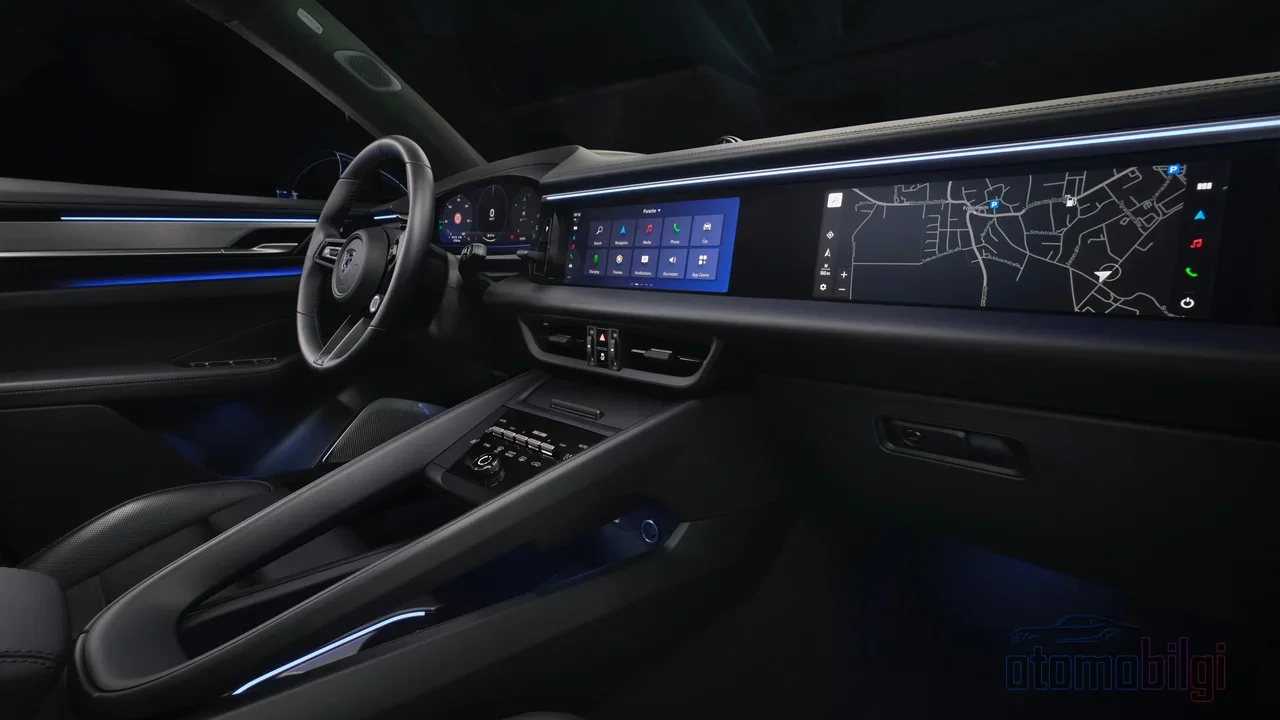
Think of it this way: your phone is like a house cat. It lives in a comfortable environment, likes room temperature, and retires after three or four years. A car's processor, on the other hand, is a mountain ranger. In summer the dashboard can exceed 70°C in the sun, in winter the car sits in freezing cold at midnight, and there's constant vibration and electrical noise in the engine bay. A chip that must work under these conditions is optimized for survival far more than raw speed.
That's why automotive-grade chips are produced with a completely different design goal than consumer electronics chips. While phone processors are typically designed for a 3-5 year lifespan, automotive chips are validated for periods like 15-20 years or 200,000 km . Temperature tolerance extends from -40°C to 150°C ; an ordinary PC chip couldn't even work next to a hot engine. Advanced thermal features like exposed pads also come into play for heat management.
So assuming "they installed cheap hardware" because the multimedia on your screen is slow is often a wrong assumption. Part of the lag is the result of a deliberate design choice: the chip is selected not to set speed records but to guarantee uninterrupted operation for fifteen years. Reliability here is a feature, not a deficiency.
| Feature | Phone chip | Automotive chip |
|---|---|---|
| Design lifespan | 3-5 years | 15-20 years / 200,000 km |
| Temperature tolerance | Range close to room temperature | -40°C to 150°C |
| Optimization priority | Raw speed, efficiency | Longevity, reliability |
| Operating environment | Your pocket, a warm room | Vibration, humidity, electrical noise |
| Refresh frequency | New generation every year | Fixed for the vehicle's lifetime |
Why is a car's hardware locked in years in advance?
Here's the truly frustrating part of the job. Your phone carries the most up-to-date chip from the day it left the factory. A car is not like that: multimedia components are selected long before the vehicle reaches the customer. Contracts are signed, the supply chain is established, all electronic systems are designed in parallel with each other, and testing cycles take years. The result? When the car hits the road, the technology inside it may be at less than halfway through its own life cycle.
This fixed nature means that factory multimedia hardware usually does not change for the life of the system. The phone is renewed every two years and constantly updated. The car's processor, memory and storage, however, are like a team left to its fate from day one: you can do training (software updates), but the roster (hardware) never changes.
So why does such a system work?
Because an automobile is a product that is not replaced as often as a phone and is full of safety and legal verifications. You can patch an error in a chip with a software update in the phone world; in the automotive world the same error means a recall, lawsuits and a safety risk. That's why the industry leans on proven, mature components. Of course, the price of this is that one-step-behind feeling you get on the screen of a car fresh out of the showroom.
How do memory and storage choices affect interface speed?
It's easy to look at processor specs and wonder, "this chip is powerful, why does the screen lag?" But the processor alone doesn't determine the perceived speed of the system. Chip generation, RAM amount, storage performance, firmware, thermal management and software optimization all work together; the total determines the speed. Even the best engine gets stuck in a bottleneck if the main road is blocked.
If storage is slow, the map stutters when it opens and menus arrive late. If RAM is low, navigation running in the background clashes with a music app. Add weak software tuning, more background apps than necessary and unstable firmware on top of that, and you get that familiar picture: slow startup, touch delay, occasional freezing or spontaneous restarts. As a rough formula: hardware draws the ceiling, software defines what is shown. Bad software trying to challenge that ceiling can feel painful even on good hardware.
Snapdragon and automotive chips: how does the phone world differ from the vehicle world?
You probably know the name of the processor running in your phone: Snapdragon. This name refers to a family of ARM-based System-on-Chip devices, meaning everything on a single chip, designed by Qualcomm for mobile computing, developed for smartphones and tablets. In the world of Android-based in-car head units, chip families like Snapdragon and UIS are also compared; these differences matter when choosing a CPU for Tesla-style screen models or framed head units.
But here's the key thing to keep in mind: the same phone can feel completely different in different cars. The CarPlay or Android Auto experience depends not only on your phone, but also on the software layer between the phone and the car. Boot speed, how the connection is established, and the capability of the software embedded in the car all affect performance. So if you say "CarPlay is slow," the culprit isn't always your phone or the app itself; that bridge in between is also part of the problem.
Software's share: how much of the lag comes from hardware, and how much from software?
There are two camps in this debate, and both have a point. One side says the lag stems from a reliability-first approach, not cheap hardware. The other side points out that the real problem lies in development cycles and proprietary software: in-car multimedia systems are largely closed-source, and not enough effort goes into usability and user experience design.
The realistic answer probably lies in the middle. The hardware limit is real: no update can turn an old processor or slow storage into a miracle. But well-optimized software running on the same hardware can make a serious difference. The industry is aware of this too; the software-defined vehicle concept is shifting the automotive world from hardware-centric thinking to software-focused innovation. Investment in middleware and hardware abstraction to shorten development cycles is also part of this shift. Even RISC-V, an open standard architecture, is seeking a place for itself in automotive silicon roadmaps as an alternative to proprietary chips.
Let's put the scale of the problem in numbers: multimedia systems account for roughly 25% of all reported issues in new vehicles. In 2025, the most frequently recurring symptoms were black screens, frozen screens, and unexpected resets. So you're not alone; this is a headache for the entire industry.
How much of the hardware can be salvaged with OTA updates?
Over-the-air, i.e. wireless updates, have become the superpower of the car world. New vehicles can now download software updates over the air that fix problems, improve performance, and even carry out safety recalls. There's even an example of Tesla improving acceleration and braking in some of its models through software updates. On the multimedia side, the most common gain is more mundane but useful: faster boot times and a more stable, smoother CarPlay/Android Auto experience.
So where's the limit? Right here: OTA updates the software, not the hardware. No update can overcome the ceiling drawn by an old processor, insufficient memory, or slow storage. The spread of new systems based on Android Automotive also helps, but that too runs on the car's own hardware, not on the phone. So think of OTA as a training program that rejuvenates your car: it gets you in shape but doesn't change your skeleton.
A practical note: replacing a working factory system just because "it's newer" means both a cost and an installation nightmare. Starting with the least invasive solution is the smartest path. If menus and maps are slow, the problem most likely lies in the processor or the software; if there's no CarPlay at all, a retrofit module can be discussed; if the wired connection works, a wireless adapter may be enough. If the display is sluggish, the issue is entirely with the screen itself.
What should you expect in real-world use?
The definition of a good multimedia system is actually very simple: it disappears while driving. It never distracts your attention, because it never keeps you waiting. Its tangible counterpart lies in these points:
- Touch inputs must register predictably and instantly; there should be no "I tapped but it lagged" moment on the screen.
- Menus and maps should open without long pauses.
- Frequently used functions should be accessible shortly after starting the vehicle.
- Bluetooth should pair on the first attempt, without making you struggle over and over.
One of the most annoying situations is voice command delay: watching the screen think after saying "Hey, add to route" makes nobody happy. Let me also remind you about the wireless CarPlay/Android Auto side: a wireless connection consumes more bandwidth than a wired one, and the phone runs both navigation and audio streaming at the same time. On long journeys, it's wise to keep a charging option for your phone nearby.
The coming period looks promising too: the automotive chip market is expected to grow from 64.60 billion USD in 2026 to 122.80 billion USD in 2035, with an annual growth of approximately 7.4% . Money is flowing, meaning the industry is taking this problem seriously. In models like the 2026 RAM 1500, we see Uconnect 5 with 12 or 14.5-inch touchscreens, and in some versions even combined digital displays of over 50 inches. The hardware is improving; how quickly the gap with smartphones closes will be determined by the software culture.
Conclusion: is sluggishness a flaw, or the result of a choice?
Both, actually. A car's processor can't be as fluid as the one in your phone, because it's written for a much harsher life than your phone's: chosen to last fifteen-plus years, to endure cold enough to freeze and heat enough to scorch. Moreover, that choice was made years before you ever saw the vehicle. Software updates can make real differences below this ceiling, but they can't break through it. The next time the screen in your car freezes, you still have the right to get angry; but now you also know who to be angry at. Do you think this balance is worth it, or should manufacturers be a bit bolder when it comes to speed?
Sources
- A comprehensive analysis of the differences - EEWorld
- Automotive-Grade Chips: A Comprehensive Guide - SysPCB
- Automotive-Grade ICs: The Ultimate Guide - Jake Electronics
- Are the microchips in cars fundamentally different - Straight Dope
- Why Car Infotainment Systems Feel Outdated and When to Replace - Merge Screens
- Why High-End Car Infotainment Systems Still Lag - Klyde
- What is Snapdragon FAQ - Qualcomm
- What is Snapdragon Processor? - HP
- Android Head Unit Processors 2026: Snapdragon vs UIS - Smarty Trend
- What is Android Automotive - Android Open Source Project
- The advantages of Android within software-defined vehicles - Elektrobit
- Infotainment Software Solutions: A Complete Guide - Acasia Tech
- The rise of edge AI in automotive - McKinsey
- RISC-V Automotive Hub - RISC-V International
- OTA Car Software Updates: Are They Safe - Consumer Reports
- How to Fix Common Infotainment System Problems - Consumer Reports
- Over-the-Air Updates Can Make Your Car Quicker - Capital One
- Over The Air Software Updates - Matfoundry Group
- Automotive Chip Market Report 2035 - Market Research Future
- Did Automotive Infotainment Quality Get Better in 2026? - Profilence
- 2026 Ram 1500 Review - Car and Driver
- 2026 RAM 1500 Technology - Daytona Dodge
- Why Does CarPlay Feel Different Across Vehicles - Eonon
- ELI5: Why are many cars' screens slow and laggy - Reddit