AWD Loss of 5-8 Percent in WLTP: Even More on Real Roads
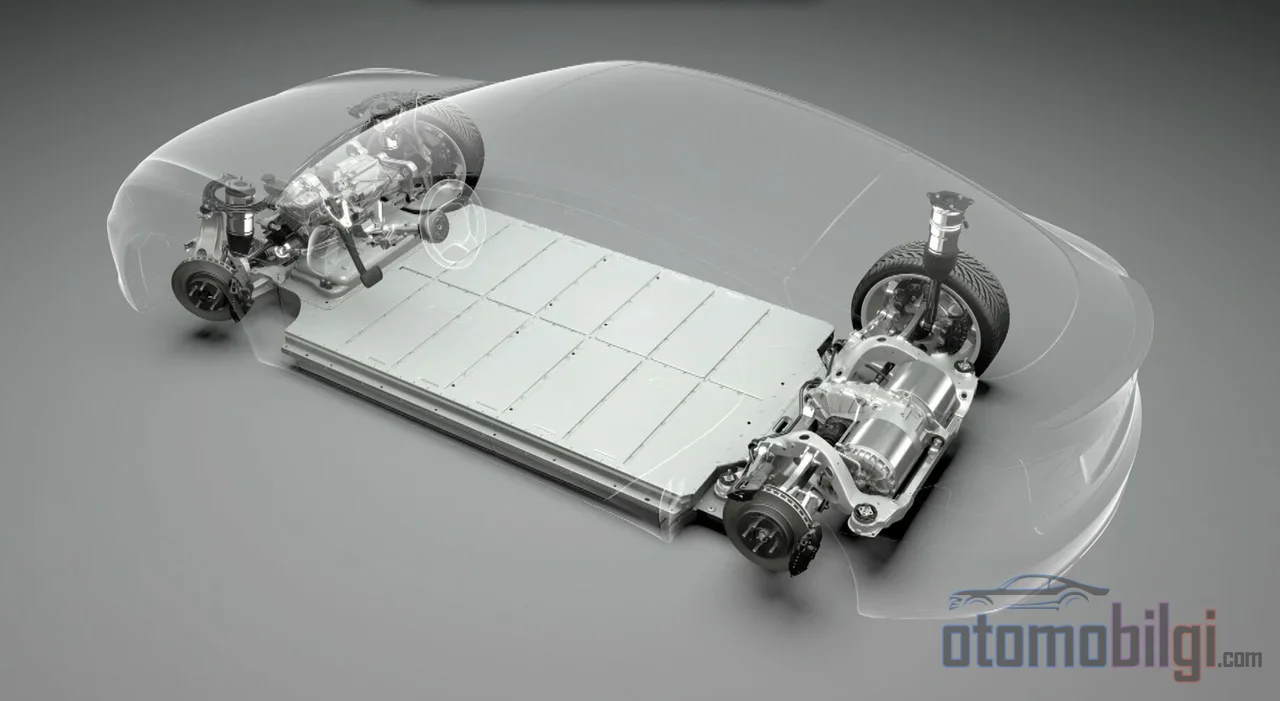
In an electric car's price list, you will see two versions: single motor and dual motor. Same battery, same body, same aerodynamics; only a second electric motor has been added, and the range figure drops not by a few hundred kilometers, but by tens of kilometers. This article deals with exactly this difference: it explains, on a numerical basis, how many kilometers AWD, i.e. the all-wheel-drive system, reduces the range, why it does so, and under which conditions this loss turns into an advantage. Most range guides cover speed, temperature, and tires, but the consumption cost of the second motor tied to the drivetrain is usually left as a gap. That is what we will fill in here.
What reduces the range is not speed, but the second motor itself
In electric vehicles, all-wheel drive is achieved not by a shaft and differential mass as in internal combustion engines, but usually by placing one electric motor on the front and rear axles. The effect of this architecture on range comes from two sources. The first is the mass increase that comes with the extra motor: every additional kilogram carried by the same battery raises consumption. Experimental studies show that an increase in vehicle weight on the same city route alone raises energy consumption by approximately 5.8%. The second is more insidious: a spinning motor produces a free loss consisting of friction and other mechanical losses even when power is cut. The idling second motor draws energy from the battery even in moments when it contributes nothing to traction.
Engineering literature knows this problem and offers a solution: a clutch placed between the motor and the shaft can completely disconnect the second motor when it is unnecessary. However, this hardware is not widespread in production. Instead, manufacturers rely on software management: many modern dual-motor vehicles reduce the load on the front or rear motor to zero and switch to single-motor mode when full traction is not needed. Tesla's dual-motor models can disconnect the rear motor at highway speeds to reduce losses; Kia's AWD versions have a speed threshold at which the front motor is automatically cut off in Eco and Normal drive modes. According to user observations on forums, this cutoff speed sits only 8 km/h above the average urban speed; meaning that in heavy city traffic the system mostly runs on a single motor.
Highlights
- AWD versions typically offer 5-8% less range than single-motor versions in the WLTP cycle, and 5-12% less in EPA measurement.
- In real-world use, the difference grows: in sustained cold exceeding -20°C, the loss can exceed 20%.
- On the MG S6 EV, the AWD version has a factory-stated range that is 45 km shorter (485 km instead of 530 km).
- In models like the Nissan Ariya, the difference is only around 2%; software management is the determining factor.
- The winter advantage of traction can be compensated at low cost with a good set of winter tires.
Same-model comparisons with factory data: how big is the difference?
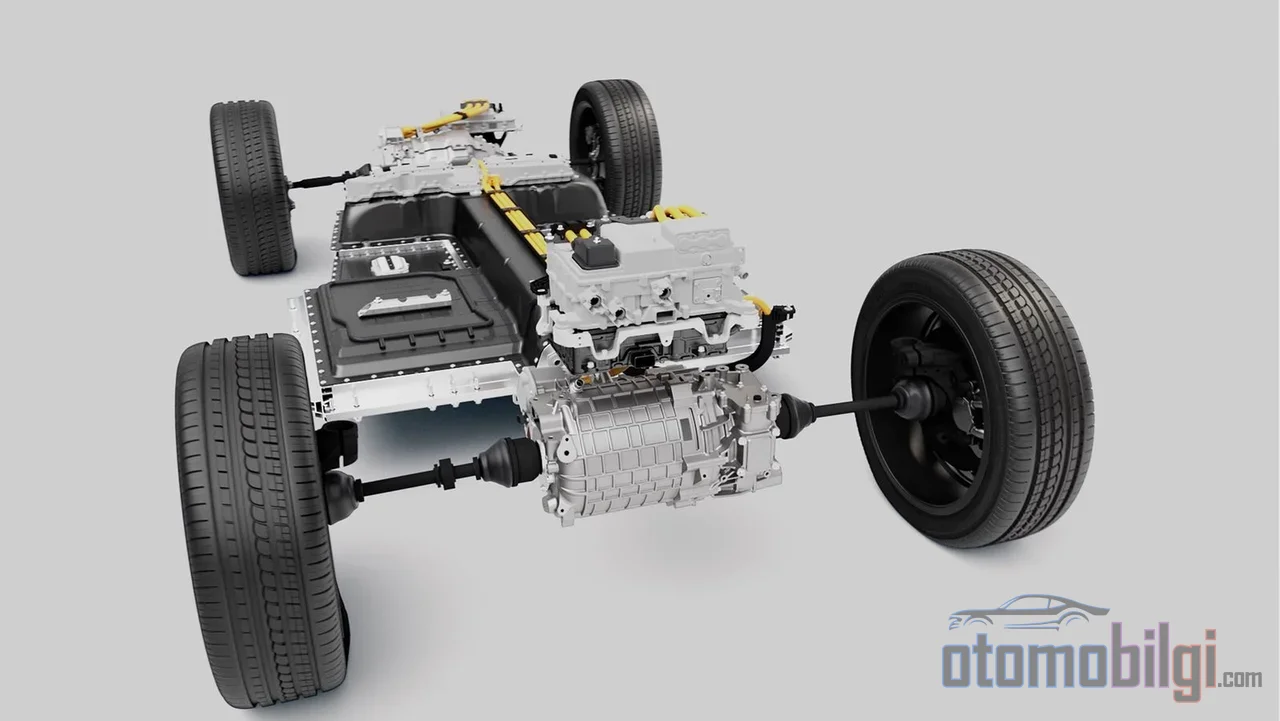
For a reliable comparison of the figures, the single-motor and dual-motor versions of the same vehicle must be placed side by side. In the WLTP cycle, the dual-motor version typically shows a range 5-8% lower than the single-motor version; evaluations based on EPA measurements put this loss in the 5-12% band. However, this average band deviates considerably from model to model.
MG S6 EV and MG4 EV: a clean factory-data comparison
In the MG S6 EV family, the Essence RWD version reports a WLTP range of 530 km, while the Essence AWD version reports 485 km. The difference is 45 km, or about 8.5%. In the same brand's MG4 EV series, the Urban Essence 43 battery offers 316 km of range, while the larger Essence 54 battery offers 405 km; the difference here comes from battery capacity, not from drivetrain. Distinguishing between these two examples prevents the most common mistake when reading range comparisons: which hardware item the difference between the figures belongs to should always be stated.
Nissan Ariya: the extreme where the difference is smallest
In the Nissan Ariya family, with 19-inch wheels, the Evolve+ AWD version reports an estimated range of 267 miles, while the front-wheel-drive version reports 272 miles; the difference is only 5 miles, or less than 2%. In the highest-range versions, the comparison gives 289 miles against 272 miles; a difference of 17 miles, roughly 6%. This is the result of the Ariya effectively disabling the second motor when its dual-motor system is not in use. On the Polestar 2 side, the AWD version reports 473 km in WLTP; the EPA figures of the single-motor versions, which vary by model year, range between 435 and 515 km, but since these figures come from different test cycles, they are not suitable for direct inference.
| Version | Drivetrain | Range (WLTP) | Difference |
|---|---|---|---|
| MG S6 EV Essence RWD | Rear-wheel drive | 530 km | Reference |
| MG S6 EV Essence AWD | All-wheel drive | 485 km | -45 km (8.5%) |
| Nissan Ariya Evolve+ FWD | Front-wheel drive | 272 miles (estimated) | Reference |
| Nissan Ariya Evolve+ AWD | All-wheel drive | 267 miles (estimated) | -5 miles (under 2%) |
| Polestar 2 AWD | All-wheel drive | 473 km | Single motor EPA: 435-515 km |
The engineering inference from the table is clear: The range cost of AWD is not a fixed value but a variable that depends on the vehicle's torque distribution software. The difference between the Ariya and MG shows that the same hardware can produce completely different consumption profiles with different software philosophies.
WLTP vs real-world use: drivetrain type alone is not destiny
WLTP is a standardized comparison cycle in a laboratory setting; it is not real roads, real weather, or real speed profiles. In a large-scale real-world evaluation in which 32 electric vehicles were tested in a highway scenario during the summer months, only 13 of the vehicles reached or exceeded their WLTP figure. What is interesting is that most of the vehicles at the top of the list are all-wheel drive: XPeng G9 (4WD) performed 13% above its WLTP figure with 587.8 km, XPeng P7 (4WD) 10.3% above with 557.0 km, and Tesla Model S Long Range (4WD) 6% above with 672.0 km. The lower ranks of the list were occupied by both front-wheel-drive and AWD models.
This result should be interpreted with caution: drivetrain type alone does not determine real-world range performance. Aerodynamic efficiency, battery chemistry, mass, and software management are much larger parts of the overall effect. In the same test, an independent real-world measurement showed that the RWD version of the Hyundai Ioniq 5 delivered 480 km in mixed conditions, and the AWD version 440 km; a classic difference of about 8%. However, when the air temperature dropped to 0°C, the gap widened to 12%, because the AWD system stayed engaged more often for stability at low temperatures.
Cold weather table: AWD's loss grows with temperature
Winter conditions predictably magnify the range cost of the drivetrain system. Cold weather test data breaks down the WLTP range losses of RWD and AWD electric vehicles by temperature as follows: At -10°C, RWD 83%, AWD 77% (a 6-point gap); at -15°C, 76% versus 69% (7 points); at -20°C, 67% versus 59% (8 points). Canadian assessments report that under continuous -20°C conditions, the range difference between AWD and the rear-wheel-drive version can exceed 20%. There are two mechanical reasons for this: in cold weather, cabin heating draws serious energy (unlike internal combustion engines, waste engine heat cannot be used) and the all-wheel-drive system engages both motors more often out of necessity for stability on slippery surfaces.
Nevertheless, winter is the season when AWD turns into an advantage. For drivers living in snowy regions, using gravel roads, or lacking confidence on slippery surfaces, all-wheel drive is a genuine safety gain. But there is a measured balancing: the biggest winter impact on range is not the drivetrain system itself, but tire choice. A good set of winter tires brings a rear-wheel-drive electric car close to AWD traction performance in snow at a low cost. Practical winter management also preserves range: keeping cabin temperature at 18-19°C and relying on seat and steering heating, limiting power usage in Eco mode, and benefiting from regenerative braking at low speeds with one-pedal driving.
Which drive mode should rely on which motor?
For the driver of a dual-motor vehicle, the practical rule is this: efficiency depends on how often the vehicle keeps its second motor engaged, and the drive mode largely determines this. In Eco and Normal modes, most modern systems automatically cut out the second motor at low speed and low power demand; in city driving, the vehicle effectively runs on a single motor. In Sport mode or high-speed highway overtakes, both motors are engaged and consumption increases noticeably. On snow and ice, however, the safety calculation follows the efficiency calculation: when you need full traction, accepting the range loss is the right engineering decision.
A note also falls to the price side: all-wheel-drive labels carry a price 6,000-10,000 dollars higher in Canada and 2,000-4,000 pounds higher in the UK than the single-motor version of popular electric models. What you get in return for paying this premium is not only traction, but also the potential range cost of the uninterrupted second motor; in a range-sensitive usage profile, this balance must be taken into account.
Short answer: how many km does all-wheel drive reduce range?
The dual-motor version of the same model typically offers 5-8% less range than the single-motor version on the WLTP cycle; in EPA-based assessments this rate falls within the 5-12% band. In real-world use the gap widens with cold: it can rise to 8-12% around 0°C and exceed 20% under continuous -20°C conditions. In kilometers, this means roughly 25-60 km of loss in a mild climate, and up to 100 km in harsh winter conditions, for a vehicle with 500 km of range. However, the Ariya example shows that this band can be narrowed with software management, with differences falling below 2%. In every usage profile other than snowy climates, gravel roads, or high safety needs, the single-motor version typically offers 5-10% more range and a lower purchase cost with the same battery; winter traction safety needs, meanwhile, can be met far more cheaply with a good set of winter tires.
Sources
- AWD EVs Guide 2025: Range, Performance & Best Models
- Winter EV Range: FWD vs RWD vs AWD Cold-Weather Comparison
- Real-world EV test: 13 out of 32 EVs meet or exceed WLTP range figures
- Electric Car Range Explained: WLTP, Real-world Driving And Road Trips
- Range of 4WD (Nissan Ariya)
- AWD EV Cars: How It Works and Whether You Need It
- Best AWD Electric Cars Canada 2026
- Single-Motor vs Dual-Motor EVs: What AWD Actually Adds
- Research on driving force optimal distribution for a dual-motor EV
- How to Prepare Your EV for Winter Driving