The Real Consumption of EV Users in Türkiye: What Do the Numbers Say?
Share This Page
In Türkiye, an electric vehicle on real roads typically consumes 14-21 kWh/100 km ; this means a range 20 to 30 percent below the WLTP value on average. This gap between the laboratory figure and the dashboard is not a malfunction, but a measurable physical outcome depending on speed, temperature, gradient and driving habits. In this article, we examine with figures what causes the difference, the values to expect in city and intercity use, and how you should plan your range under conditions in Türkiye.
Highlights
- Real consumption as of 2026 is typically in the 14-21 kWh/100 km band.
- In an independent road test in Italy, real range came out on average 28% lower than WLTP.
- In winter conditions in Türkiye, losses are generally 10-20%, and up to 25% in extreme cold.
- On the highway at 120-130 km/h, consumption can rise by more than 50% compared to city use.
- The number of electric vehicles in Türkiye reached 411,796 units as of March 2026.
What Does the WLTP Value Say, and What Really Happens?
The WLTP cycle is a laboratory measurement: the vehicle is run in a 23 °C
ambient temperature, with heating and air conditioning off, in a four-phase 30-minute profile with an average speed of 46.5 km/h. The three major variables of the real road fall outside this scenario: highway driving, extreme heat and cold, and a loaded vehicle. So the WLTP figure should be thought of as an upper limit; not the manufacturer's promise, but a measurement obtained under reference conditions. The second subtlety is the two different definitions of consumption. The WLTP consumption in the brochure also accounts for the energy drawn from the grid during charging; the value you see on the dashboard is measured from the battery only. The difference between them, typically 7-12%
, is charging loss, and it grows even larger in the cold. There is no reason to panic even if your dashboard does not show the same figure as the brochure; the two numbers are simply measured from different places. The magnitude of this difference is also confirmed by independent tests. In an independent test on Rome's ring motorway at an average speed of about 90 km/h with the air conditioning set to 22 °C, two models were driven one after the other until the charge ran out: Lancia Ypsilon consumed 15.9 kWh/100 km, while the smart #1 consumed 21.9 kWh/100 km, and the real range came out on average 28% lower than the WLTP value. In Norway's winter tests between 0 and -10 °C, losses were measured in the 10-23% band. In other words, planning with a budget drawn 20 to 30 percent below WLTP is not optimism, but realism.
How Many kWh/100 km Should Real Consumption Be?
For a concrete budget, a simple formula is enough: divide the battery capacity (kWh) by your consumption per 100 kilometers, and multiply the result by 100. For example, a 60 kWh battery and 17 kWh/100 km consumption gives you approximately 352 km of real range. The same vehicle's WLTP range will be noticeably higher than this value; the question is not "how many kilometers does the vehicle go", but "how many kilometers does it go in my usage profile".
| Usage Profile | Typical Consumption | Note |
|---|---|---|
| Efficient city driving | 12-14 kWh/100 km | Low speed and regenerative braking effect |
| Mixed usage | 14–21 kWh/100 km | General real-world range as of 2026 |
| Highway (120–130 km/h) | 20–25 kWh/100 km | May be more than 50% higher than city driving |
The practical answer to the question of how many kilometers one kWh provides also comes out of this table: depending on the consumption band, 5–7 km/kWh is a reasonable value to expect. Efficient models can drop below this band at 13–16 kWh/100 km; heavy and wide-bodied vehicles run close to the upper limit.
How Do Conditions in Türkiye Distort Consumption?
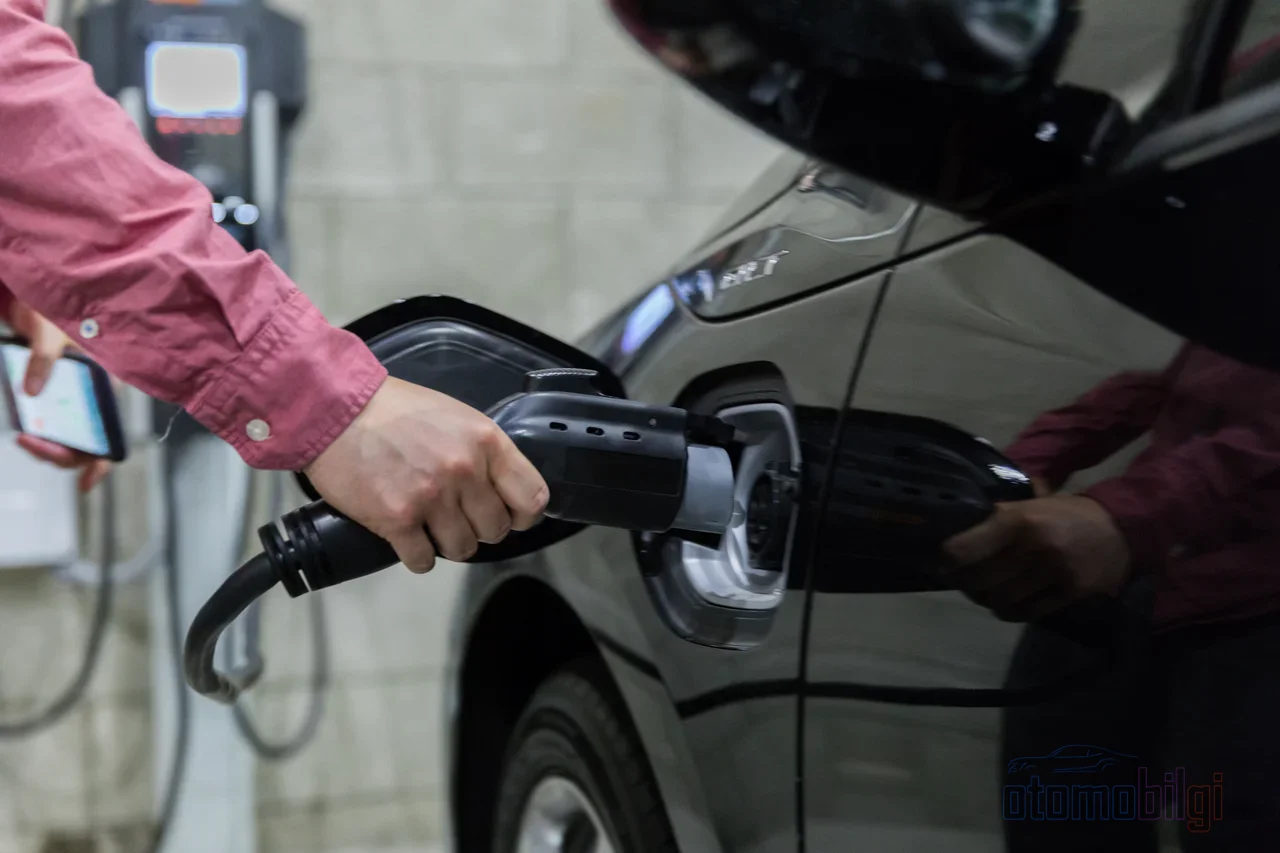
It helps to think of real-world usage in Türkiye in three driving profiles. On the city side, the picture is relatively good: while Istanbul's stop-and-go traffic is a punishment for gasoline vehicles, it turns into an advantage for electric vehicles because every slowdown carries energy back to the battery through regenerative braking. By lifting off the accelerator, it is possible to recover up to 15% of the energy; that is why urban consumption dropping to 12–14 kWh/100 km is an expected outcome.
On the intercity side, the equation reverses. On Anatolian highways, air resistance increases exponentially at speeds above 120 km/h and becomes the single biggest determinant of consumption. A constant 120 km/h increases consumption by 20–30% compared to city driving; in the 120–130 km/h band, values rise to 20–25 kWh/100 km. A vehicle that travels 500 km under WLTP can deliver a real range of 350–400 km in continuous highway use. And when you move from the mild climate along the shores of the Bosphorus to the continental climate of Central Anatolia, the third variable comes into play: cold. In winter, most of the loss comes not from the battery but from cabin heating; in an electric vehicle there is no "free heat" from the engine.
Road gradient is also part of the calculation: on descents, regenerative braking recovers energy, while on long climbs consumption rises rapidly. Detailed local measurement data for Türkiye-specific routes is still limited; therefore, the healthiest approach is to apply the following margin-of-safety rule to your own route:
- Plan your long-distance trip with a value 20% lower than the WLTP range.
- In winter with climate-controlled driving, subtract an additional 15–25% from that.
- On highway-heavy winter nights, assume you are setting out with 60–80% of the official range.
On Türkiye's mild coastal strips, winter loss generally stays in the 10–20% band, rising to up to 25% in extreme cold; a loss of 20–25% has been measured at 0 °C, and 30–40% at around -10 °C. In models with heat pumps, this effect is noticeably reduced.
Silent Factors That Touch the Range
Speed and temperature are the main items, but there are also factors that erode the budget in small increments. Every 100 kg of extra load reduces range by 1–3%; a vehicle setting off on a summer holiday with a loaded trunk consumes noticeably differently from empty city use. When tire pressure drops, consumption increases by up to 3%, and winter tires raise rolling resistance. On the battery side, modern cells lose roughly 2–3% degeneration is normal; encountering a 10-15% range drop after five years is an expected picture, not a sign of a faulty battery.
The air conditioning also works differently depending on the season. Cooling in summer is relatively cheap; the real loss is in cabin heating. Preconditioning the cabin while the charger is plugged in largely eliminates the range penalty because the heating is powered from the grid. Even this single habit is the most effective move for winter mornings.
How to Plan a Long Trip Against Range Anxiety?
The cure for range anxiety is budget discipline. In Türkiye there are now 411,796 electric vehicles on the roads (March 2026) and this volume is expanding the charging infrastructure every month; still, planning an intercity route is not at the density seen in Scandinavia. The classic and useful rule is this: plan with a range 20% below the WLTP figure, add the extra margin in winter, and start the day with a 90% charge. start.
- In fast charging, the charging speed drops rapidly after 80%; continuing on the road at 80% saves time.
- The battery charges faster at low and medium levels; place your stops accordingly.
- Identify a backup charging point for each main stop and monitor the SOC throughout the journey.
- Use travel apps that calculate energy based on speed, altitude, and weather conditions.
- Precondition the cabin while charging; park in the shade or under cover.
The cost side is also reasonable: the electricity cost of 100 kilometers with home AC charging is approximately, as of May 2026, 62 TL. Compared to a gasoline-powered vehicle covering the same distance, the budget stays on the electric side just as much as the range budget created by consumption differences. The Togg T10F, Türkiye's longest-range vehicle, RWD Long Range, with its 623 km WLTP and ~0.24 Cd values, is also a good example of how much highway efficiency depends on aerodynamics.
How Many kWh Are Gained With Efficient Driving?
The margin to be played on the driver's side is not to be underestimated. Using Eco mode and maximum regenerative braking together can increase efficiency on mixed roads by 10-15%; with complementary measures such as preheating, the total gain reaches up to 1 km/kWh. Regenerative braking uses the electric motor as a generator and stores the vehicle's kinetic energy in the battery; one-pedal driving is the most aggressive use of this system and is the habit that increases range the most in city driving.
In daily use, keeping the charge in the 20-80% range both preserves battery health and shortens fast charging times; saving the 100% charge for long trips where you will leave immediately is the most sensible strategy. Also remember that the range estimate on your display is an instantaneous estimate: it is a dynamic value updated according to the recent consumption average, and on a cold morning it drops on its own and recovers on its own.
In conclusion, read the WLTP figure as a reference point, track your own consumption profile on the dashboard during the first few weeks, and build your plans around real-world values. What the fleet of more than 400,000 electric vehicles in Türkiye demonstrates is clear: with the right budget, range anxiety is nothing more than a data problem.
Sources
- kWh/100km and Range - Electric Car Consumption 2026
- How many kilometers can an electric car travel on 1 kWh?
- WLTP Explained
- EV Consumption: How Much Energy Does an Electric Car Consume?
- How much range does an EV lose in cold weather?
- Best EV for Winter & Cold Weather Range
- EV Range by Temperature (2026): Hot and Cold Weather
- Cold Weather EV Range Loss - Real Data 2026 | EVRatio
- What Is the Actual Highway Range of EVs in Winter?
- 11 tips for a smooth EV road trip
- How to plan long routes in an electric car
- 6 tips for planning a road trip with an electric vehicle
- EV Range Anxiety: Practical Tips
- Fuel (Electricity) Consumption in Electric Vehicles
- How Much Do Electric Vehicles Consume in City Driving and on Long Roads?
- How much energy does an electric car consume?
- Number of Electric Vehicles in Türkiye Hits a Record
- Is Buying an Electric Vehicle a Good Idea? 2026
- Electric Vehicles with the Longest Range in Türkiye 2026
- Electric Vehicles with the Longest Range 2026
- How Much Does the Range of Electric Vehicles Shrink in Winter?
- 7 Practical Ways to Reduce Range Loss in Winter
- Why Does Electric Vehicle Range Drop in Winter?
- Long-Distance Trip Planning in Winter
- What Is Regenerative Braking?
- Regenerative Braking System in Electric Vehicles
- Real-world range calculation of EVs in Australia