Is Range Anxiety a Real Problem, or a Mindset?
Share This Page
Range anxiety is the fear of an electric vehicle's charge running out before reaching a destination; in daily use it is mostly a cognitive bias carried over from gasoline car habits rather than data. However, on long trips and in winter conditions it has a concrete basis. So the answer is not a dilemma choice but a matter of measurement: where is it justified, and where is it habit?
Highlights
- The gap between laboratory range and real-world range in measurements came out at 7-20% ranged between
- In winter conditions, range loss varies by source within a range of 15-40% range
- On the highway at 130 km/h, up to 30% of the range can be lost
- In Türkiye more than 7,843 charging stations, infrastructure available in all 81 provinces
- Average daily driving 32-72 km; the real-world range average of fully electric vehicles is 393 km
Where Does Range Anxiety Come From?
The anxiety has three layers, and it is impossible to produce solutions without separating them. The first is a historical trace: early electric vehicles genuinely had short ranges, and that trace has been overlaid on the data of today's vehicles. The second is distrust of infrastructure: the fear of not finding a charging point is fed by a mental map that cannot keep up with the pace of infrastructure growth. The third is the most insidious - the exact carrying over of gasoline car habits.
Psychological research clearly defines this last layer: range anxiety is a cognitive bias born from the combination of exaggerating range needs and underestimating charging options. Both coefficients are miscalibrated - needs inflate, options shrink. The bias corrects itself as one sees more charging stations; in other words, the problem is largely a calibration issue that resolves with exposure.
The habit side is also concrete: new electric vehicle drivers can maintain the reflex of frequently checking the gauge and planning the next charging point in advance for a long time. A driver who grew up in a world with a gas station on every corner wants that comfort back even when the car is not actually running out. This is not a flaw of the vehicle but a reflex of the transition period.
Why Doesn't the WLTP Value Hold Up in the Real World?
Factory range figures come from a standard laboratory test called WLTP. The purpose of the test is to make every vehicle comparable under the same conditions; for this, it is measured at a mild temperature of around 23 °C, with heating and air conditioning off, and high-speed sections covered by a short cycle. It is a perfect design for comparison; a deliberately optimistic design for estimating real-world use. Under similar conditions - that is, at city speeds in mild weather - reaching the WLTP value is possible. But nobody drives like a laboratory.
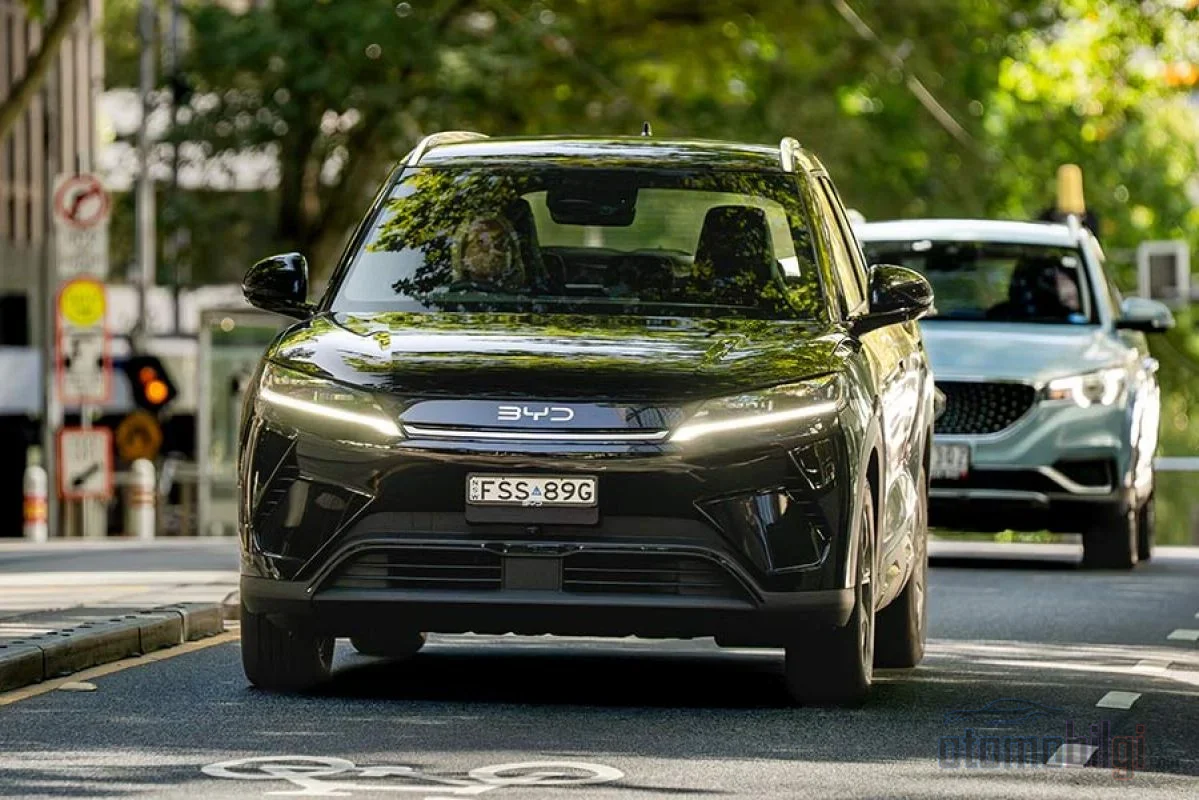
The size of the gap is not random. In real-world tests, none of the twenty electric vehicles measured to date achieved their stated range; shortfalls ranged between 7% and 20% . The closest model was Tesla Model Y Long Range (7% short), and those furthest behind were BYD Atto 3 Essential (20%) and BYD Dolphin Premium (%19). This gap is structural because the test cycle does not account for extreme temperatures, long highway trips, or passenger and luggage loads: a vehicle that shows 450 km under WLTP can drop to 300 km on a winter highway.
The EV's inverted equation
The intuition from gasoline vehicles is misleading here. The internal combustion engine is efficient on the highway and chokes up in the city; the electric motor is exactly the opposite - it recovers energy in the city through regenerative braking, while aerodynamic drag becomes dominant on the highway. Since drag grows with the square of speed, at 130 km/h up to 30% of range can be lost compared to the WLTP figure compared to the WLTP value. The anxiety about the highway leg has a genuine physical basis; the issue is not the vehicle's inadequacy but the speed-air drag relationship.
Do the Numbers Justify the Anxiety: A Daily Distance Comparison
The cleanest way to test the share of anxiety in daily use is to put two numbers side by side: how far do you drive, and how far does the vehicle go? According to driver behavior data, the average daily driving varies by region from roughly 32-72 km ; 80% of trips are 20 km or shorter. On the other hand, the real-world range average of fully electric vehicles is 393 km; the distance you can travel on a single charge ranges from 270 km to over 700 km depending on the model and conditions. In other words, the vehicle has five to ten times your daily need.
| Benchmark | Value | Comparison |
|---|---|---|
| Average daily driving | 32-72 km | Not even 10% of modern EV range |
| 80% of trips | ≤ 20 km | Lasts for weeks on a full charge |
| Real-world range average of full EVs | 393 km | About 5-12 times the daily need |
| Model range (on a single charge) | 270-700+ km | Sufficient on all but a few days of the year |
A historical yet widely accepted needs analysis paints a striking picture: only 9% of vehicles never travel over 100 miles (160 km) on any day; with just two days of travel adaptation per year, a 100-mile vehicle becomes sufficient for 17% of drivers. With today's 300-500 km ranges, that share is undeniably pushed even higher. In daily use, range anxiety is explained not by data but by reflex.
Two Scenarios Where Anxiety Is Justified: Long Trips and Winter
Not all of the anxiety is a mindset. In two situations, the concern rests on measurable data and must be taken seriously.
Winter: A real loss of 15-40%
Cold weather strikes from three directions at once: the lithium-ion battery becomes inefficient at low temperatures, cabin and steering wheel heating consumes energy, and in extreme cold, charging also slows down. In tests at a constant highway speed, cold weather consumed approximately 25% of range compared to mild weather. In winter tests conducted in cold countries, many models fell 15-30% below their WLTP figures; in mild winters the drop can reach 30%, and it grows even larger under harsh conditions. The figures reported by sources range from 15% to 40% because measurement conditions - temperature, speed, heating use - differ in every test; but the sign is the same in all of them.
Let's clear up one misconception: the range impact of air conditioning is smaller than expected, practically negligible. What really consumes energy is heating; because while a gasoline vehicle heats the cabin with engine waste heat, an electric vehicle pays for this energy from the battery. Since a heat pump uses significantly less energy for cabin heating than resistive heating, it improves winter range - a meaningful equipment item when choosing a vehicle.
Long distance: requires planning habits
The second scenario combines with the highway consumption increase described above: high speed + probably winter + loaded vehicle. Under these conditions, charging stops must be part of the plan. The good news is that planning is now not a burden but a matter of habit: route planners like ABRP and PlugShare suggest routes that account for range loss, and smart route planning systems can even shorten total travel time while saving energy. Solutions like vehicle-to-vehicle (V2V) charging are also on the list of technologies developed against anxiety.
The Situation in Türkiye: Does the Charging Network Eliminate Anxiety?
Insecurity about infrastructure often stems from looking at an old map. Today's picture: in Türkiye there are more than 7,843 charging stations and 26,000 charging sockets; approximately 8,500 of them are DC fast charging sockets. 31 charging operators are active and infrastructure is available in all 81 provinces. The market is growing fast: the number of electric vehicles has exceeded 450 thousand, and according to different datasets the number of sockets has surpassed the 42,000-45,000 band; nearly 1,400 sockets were added in a single month. The variation in figures from source to source stems from differences in counting methods and update frequency; directionally, they all point to the same conclusion. The notable deficiency is not on the operator side: home charging installation is still insufficient.
In terms of long-distance practice, the picture is especially reassuring on tourist routes. Aegean, Mediterranean and Cappadocia stand out as charging-friendly routes; for Cappadocia, DC fast stations in city centers along the Nevsehir-Goreme line from Ankara or Adana are sufficient. On the consumption side Trugo ranks first, while large networks like ZES lead in prevalence; Istanbul is in a leading position in intercity socket density.
How to Practically Cope with Anxiety?
The engineering approach is simple: reduce the unknown. Anxiety grows over unpredictable factors; planning and habit eliminate them. Applicable methods:
- Set off on a long journey with the battery charged close to 100%; in daily urban use stay within the 20-80% stay within the
- range
- Plan the route in advance with ABRP or PlugShare, schedule DC fast stops
- Pre-heat/pre-cool the cabin while charging before setting off
- Prefer seat and steering wheel heaters instead of cabin heating - much more efficient On the highway, aim for 110 km/h
- instead of 130, adopt a steady speed and gentle acceleration
- Recover kinetic energy with regenerative braking/one-pedal driving
The common denominator of this list is striking: almost all of the items are free of charge. Instead of waiting for a high-capacity battery or new stations, the actions drivers can take today reduce both range and anxiety at the same time. Because what truly feeds anxiety is not a lack of range but a feeling of loss of control - planning eliminates it directly.
Verdict: The Anxiety Is Real, Its Share Is Measurable
The question needs to be closed clearly, just as it was posed at the start. Range anxiety is a real phenomenon, but it consists of two different components. One of the components - daily use - is almost entirely mindset-driven: with average trips of 32-72 km, the chance of running out of a vehicle with a 393 km average is practically nonexistent, and this anxiety is calibrated with a few weeks of use. The other component - long distances and winter - rests on concrete data: there is a 15-40% winter loss, up to a 30% increase in consumption on the highway, and a 7-20% WLTP difference, and these should not be ignored but factored in.
Therefore, the right attitude is not to eliminate anxiety but to scale it correctly. There is no need for anxiety in daily life; on long trips taken a few times a year, a planning habit, DC fast charging stops, and efficient driving techniques make the problem manageable. When considered together with a charging network spread across all 81 provinces of Türkiye, it appears that the main source of anxiety is not the infrastructure but a mental map that has not yet been updated.
Sources
- Range of full electric vehicles cheatsheet
- Does your electric vehicle match its driving range claim?
- Real-world range calculation of EVs in Australia
- The real world EV range: how to optimise it
- How Temperature Affects Electric Vehicle Range
- Heatwaves and your electric car's range
- Does Climate Control Affect EV Range?
- EV driving range study by state
- Driving Distance
- Electric vehicles: How much range is required for a day's driving?
- How Far Can An Electric Car Go On One Charge
- Range anxiety: what is it and why it is an outdated fear
- More than just miles: range anxiety unplugged
- How electric vehicle drivers can escape range anxiety
- Intelligent trip planners can alleviate range anxiety
- Addressing the range anxiety of BEVs
- Range Anxiety in EV Charging
- How to Optimise the Range of Your Electric Car
- Mastering Efficiency
- Five tips for driving more efficiently
- Türkiye Charging Map 2026
- EV and Charging Market in Türkiye, First Half of 2026
- ChargeIQ Electric Vehicle Bulletin March 2026
- Comfortable and Safe Travel in an Electric Vehicle
- Route Planning in Electric Vehicles
- Charging-Friendly Holiday Routes
- Can You Use an Electric Car in Winter?
- 7 Practical Ways to Reduce Range Loss in Winter
- Are electric cars useless in winter?