Charging Planning and Efficient Driving for Electric Vehicles on Long Journeys
Share This Page
Driving long distances in an electric vehicle requires replacing the familiar gas-station "fill-up and go" habit with two simple calculations: your vehicle's real range under the actual trip conditions and the charging points along your route. A driver who clarifies both before setting off practically eliminates range anxiety altogether. This guide walks through the entire process step by step, from identifying charging stops to efficient driving techniques, from leaving a margin in winter conditions to a sample plan using Türkiye's fast-charging networks.
Highlights
- Real-world range can fall up to 30% below the WLTP value
- The most efficient band for DC fast charging: 20-80%; after 80%, charging speed drops noticeably
- Winter range loss is typically in the 10-25% range
- Driving style can affect range by 25-40% can affect fuel consumption by
- For each stop, identifying a backup charging point is the cheapest cure for range anxiety
Accounting for the difference between WLTP and real-world range
The range value you see in the catalog comes from the WLTP laboratory cycle, which replaced NEDC in 2017. It is clearly more realistic than the older protocol, but it is still measured at a constant temperature, without wind, and with a standardized profile. According to type-test results, real-world range can drop up to 30% below the WLTP value. In other words, a car with a catalog range of 500 km may not reach four hundred kilometers at highway speeds in cold weather.
The difference is not always in the same direction under all conditions. In the city, thanks to regenerative braking, it is possible to achieve range above the WLTP value; on the highway, however, the value typically drops because aerodynamic drag increases rapidly with speed. Elevation differences, headwinds, precipitation, and vehicle load are also variables that change the calculation. The practical takeaway: base your route plan not on the WLTP value, but on your own vehicle's on-board average and the estimated value you derive from the route's profile in your catalog. Better yet, use data from previous long trips made with the same car as a reference.
How are charging stops determined along a route?
The backbone of planning is a five-step cycle. In order: determine your real range under trip conditions, choose your main DC charging stop, assign a backup point for each stop, check the live status of the stations shortly before departure, and if you notice consumption running high on the road, move the stop forward. This cycle is not a one-off; repeat it throughout the journey by reading your on-board consumption data.
When choosing a stop, look at what your vehicle can actually draw rather than the station's power rating. The highest-kW DC unit at a station does not always mean the fastest charge: your vehicle's maximum DC acceptance rate, battery temperature, state of charge, and the charging curve limit the actual speed. For example, the BMW iX xDrive60, with 195 kW DC support, it goes from 10% to 80% in about 35 minutes; when you enter the route into the navigation, battery preheating kicks in automatically and recovers the charging curve at that station. The 150-350 kW band units mentioned in daily use are DC stations designed for travel; even if your vehicle cannot take all that power, they remain the fastest option on that route.
Why is a backup stop essential?
A station may be full, faulty, or inaccessible at that hour. On a route with no strong single alternative, noting the nearest second station on the route resets range stress in case of any mishap. Again, there is no fixed "stop every 150-200 km" rule: stops are planned according to your vehicle's real range and the charging density of the route. In cold weather and in regions with sparse alternatives, not arriving at the station with the lowest possible battery level is the most basic safety margin.
Cable and equipment check
- At some AC points, you may need your own Type 2 cable; check station-vehicle compatibility before setting off.
- A portable charger and compatible adapters are a valuable insurance, especially on rural routes.
- Knowing whether a technician is nearby before a long trip allows you to plan not only for charging but also for a possible problem.
Stop optimization with the 20-80% charging window
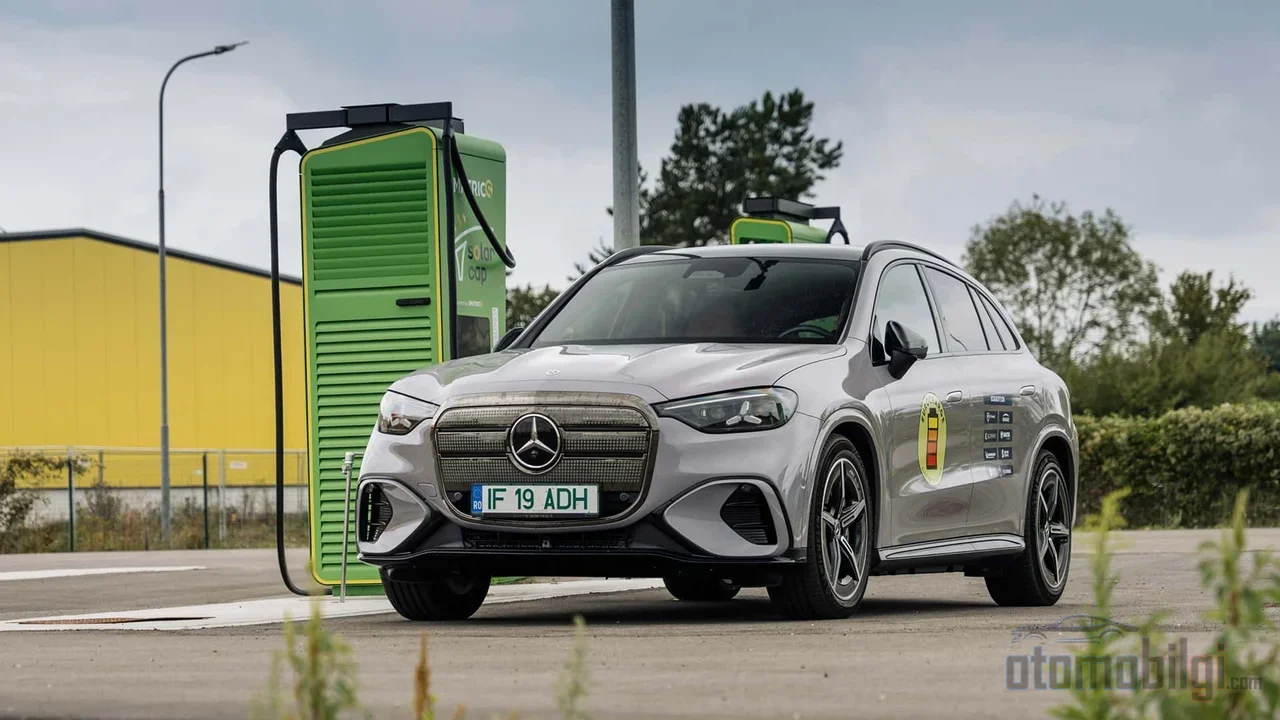
In fast charging, time is as valuable a resource as energy. The final 20% of the battery is spent with reduced charging power for cell protection; therefore, the charging curve slows down noticeably after 80%, extra heat is generated, and the stop time is disproportionately extended. Planning stops on a long journey through the 20-80% band is the strategy that recovers the most range per unit of time. 150-350 kW units at DC stations are designed to deliver high current in this band; the 10-80% range is usually the most efficient part of the charging curve.
For daily use, the view of not charging above 80% is widespread; charging to 100% before a long trip is normal and is not considered a problem for the battery. The important distinction is this: pushing to 100% on a long journey is a waste of time, because that last portion is the slowest to fill. When you combine stop breaks with coffee and rest, the healthiest mental framework is to consider the 25-35 minute 20-80% charge as a break already won for free.
Speed, air conditioning, and winter: three items that eat your range
There are three main items that determine your range on a long journey. The first is speed: since aerodynamic drag increases with speed at highway speeds, consumption rises. Switching from a city profile to a highway profile can reduce the range by 10-15% compared to WLTP. Keeping a constant speed and avoiding aggressive acceleration and sudden braking is directly reflected on the dashboard; driving habits can change the range across a wide 25-40% range. ECO mode and regenerative braking are standard tools of this calculation.
Second is climate control and heating. Turning on cabin heating is the fastest range drain because it draws power directly from the battery. Since seat and steering wheel heating provide comfort at much lower power, this should be the first choice in winter; cabin heating should only kick in when needed. Third is temperature: low temperatures slow down the battery's chemistry, reducing range. In winter, the loss typically falls within 10-25% but there are also user reports that go well beyond this range depending on the model, equipment, and conditions. To avoid encountering an unexpected figure in the cold, building extra margin into your planning is essential.
How to build extra margin into a winter route?
Winter planning is built on top of the summer plan with three additional practices. The first, and the one with the highest payoff: having the cabin heated and the battery preheated while the car is charging. Setting off with a warm battery and a warm cabin brings gains in both range and speed at the first charging stop. The second is using the heat pump equipment if available; it produces cabin comfort with less energy compared to resistive heating. The third is to increase somewhat the range margin you indicated between stops in winter: moving the safety margin forward rather than arriving at stations with a low battery level makes a real difference, especially on routes with few alternatives.
A practical route in Türkiye: a charging plan from Istanbul to Ankara
In Türkiye, there is no shortage of vehicles that now make route planning easier. AI-powered route planners and apps such as ABRP, ChargeIQ, and Voltla, along with the route planning features in the charging networks' own mobile apps, list the stations along your route with occupancy and power information. Fast charging stations can be found along the Northern Marmara Motorway on the Istanbul-Edirne corridor; ZES stands out nationwide with its widespread AC charging network across 81 provinces and points in shopping mall parking lots, while Togg's charging network Trugo also went live with 272 stations and reached 81 provinces.
Let's write out a concrete plan. Consider a BMW iX xDrive60 with a WLTP range of ~701 km: the realistic highway range drops to the 480-520 km band in cold weather. This is a distance that could be covered from Istanbul to Ankara on a single charge, but it is too narrow a margin to leave unattended. The rational plan is to make a single DC stop at the midpoint: arriving at the main station on the route with around 25-30% battery and charging to 80%, with a stop of about half an hour, comfortably finishes the remaining distance. In a vehicle with a smaller battery, the same route is split into two stops, both within the 20-80% window. A backup station is marked for each stop, and the live status of both points is checked before setting off. In the winter version, the margins are increased and preheating is done during charging.
Range anxiety is beaten with a planning habit
Much of range anxiety is not technical but a matter of habit. Because a vehicle with transparent road data shows consumption moment by moment on the gauge, it gives the driver a greater sense of control than gasoline does. As we approach 2026, user attitudes are shifting in this direction too: the search for "the longest-range vehicle" is giving way to choosing "a range suited to your own usage," and even while electric sedans promising ~900-1000 km of range sit on the shelves today, the debate is no longer about how long the range is, but about the quality of planning.
A repeatable habit looks like this: Before setting off, derive the real range from your gauge average, map out the route with primary and backup stops, check station status just before departure, plan each stop within the 20-80% window, make the climate control and heating decision starting with seat and steering wheel heating, and if it's winter, enlarge the margin. After three long trips, this list becomes something you apply without thinking; range anxiety stops being a technical problem and remains merely an equation you have already solved.
Sources
- Electric Vehicle Route Planning | Charging Stops and Long Distance
- How to Plan Routes for Electric Vehicles?
- Charging Times and Range Optimization for Electric Vehicle Users
- Is Charging an Electric Car to 100% Risky?
- Best Practices to Extend Electric Vehicle Battery Life
- How to Reduce Electric Vehicle Charging Time?
- Why Your EV Will Never Hit Its WLTP Range
- How Much Do Electric Vehicle Ranges Shrink in Winter?
- Are electric vehicles useless in winter?
- Tips for Using Electric Vehicles in the Winter Months
- Why Does Electric Vehicle Range Drop in Winter?
- Togg Trugo: Fast and Reliable Charging Station Network
- Electric Vehicle Charging Stations - Zes
- AI Route - Lixhium
- ChargeIQ: Electric Vehicle Charging App and Route Planner
- Voltla
- What to Know for Those Considering Buying an Electric Car in 2026
- Electric Sedans with the Longest Range (2026)