Why Does the Range Indicator Lie? How Does the Estimation Algorithm Work
Share This Page
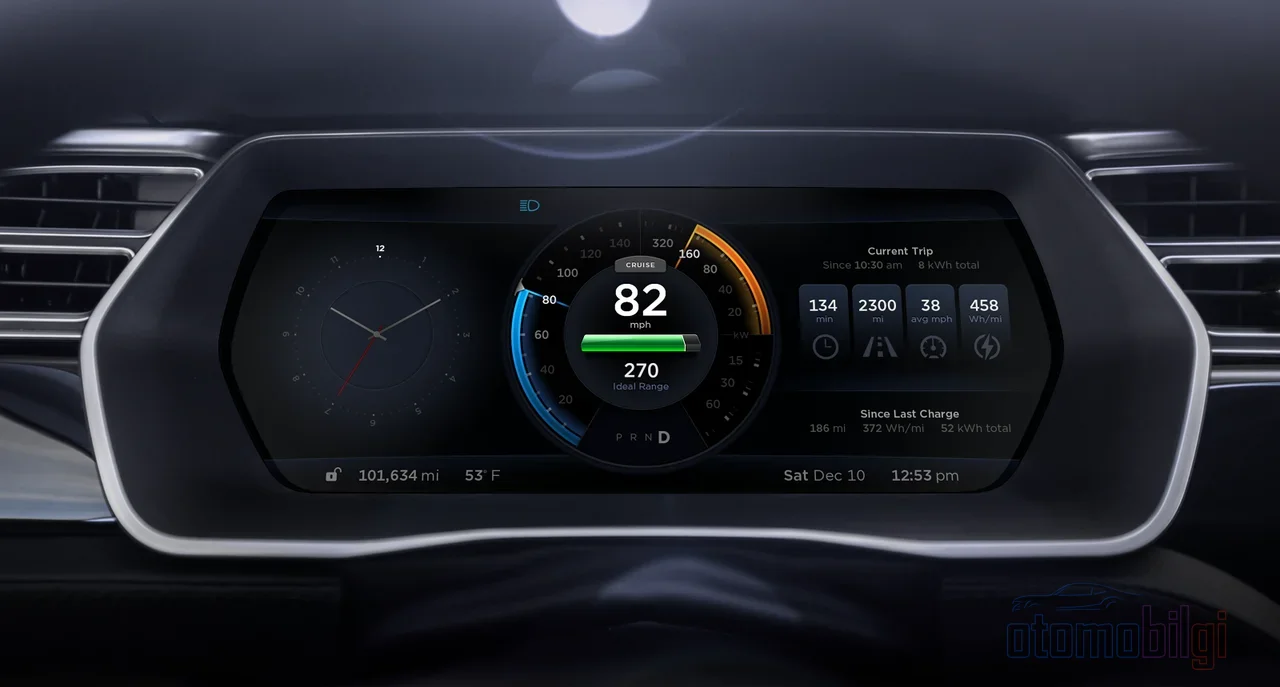
The range indicator in an electric vehicle is generated by dividing the battery percentage, or remaining energy, by the estimated consumption calculated from recent driving data; therefore, the displayed kilometers are not an exact measurement but a continuously updated estimate. The percentage is largely accurate, while the kilometers can deviate depending on driving conditions. In this article, we explain how the algorithm works, why it deviates on the highway and in winter, and how you should read the indicator correctly.
Highlights
- Basic formula: range = usable battery energy ÷ estimated consumption
- On the highway, range can drop 10-30% faster compared to city driving
- At around 0°C, most vehicles retain 78-80% of their range and at around -7°C, the rate drops to 70% drops
- Real-world range is typically 10-30% below the WLTP value
- As of March 2026, there are 41,938 charging points in Türkiye
How is the range indicator calculated?
The most basic range calculation is a simple division: you divide the battery capacity by the average consumption. A 60 kWh pack gives approximately 400 km in a vehicle consuming 0.15 kWh per kilometer. The indicator is a moving version of this formula; the only constant input is the remaining energy in the battery, while the estimated consumption changes continuously.
The vehicle tracks the state of charge (SoC) to determine the remaining energy. Battery current data recorded during driving is fed as input into the SoC estimation algorithm; all range estimation studies in the academic literature are based on this foundation. The remaining range is calculated by dividing the usable pack energy by the future consumption projected by the vehicle. A 2026 machine learning study quantitatively validated this equation: the main determinants of range estimation are remaining energy and instantaneous consumption; driving profile, route, and similar factors remain secondary.
The critical point is this: the vehicle estimates future consumption from past data. If you have driven efficiently in city traffic over the last 20-30 kilometers, the algorithm assumes that efficiency for the future as well. There is no equivalent of this in a gasoline car; imagine a diesel engine that does not burn the gasoline in the fuel tank - the indicator is still looking at your habits from the last three weeks and estimating how far you will go. So what you have is not a fuel gauge, but an estimation system based on your recent driving habits.
The difference between percentage and kilometers
The battery percentage and the displayed kilometers are fed from the same source but are not at the same level of reliability. The percentage almost directly reflects the remaining energy; the kilometers tie the distance that this energy will cover to an estimate. The first variable is a measurement, the second is a projection. The indicator reading 300 km does not mean the battery has enough energy for that distance; it means the algorithm assumes, based on your data so far, that it will be enough for that distance.
Why does the indicator drop quickly once you get on the highway?
The most common complaint is this: an indicator that works fine in the city starts melting away within minutes of entering the highway. The mechanism has two layers. The first is physical: as speed increases, aerodynamic drag grows with the square of speed, and the battery drains faster in every condition that increases resistance - including speed. An electric vehicle that operates efficiently in city driving becomes, quite the opposite, less efficient at highway speeds; high speed does not always mean good range. On the highway, range can drop 10-30% faster than in city driving.
The second is algorithmic: in the first few kilometers after you enter the highway, the indicator is still calculating with the city average. As new consumption data blends into the moving average, the estimate corrects itself from top to bottom. During this, the indicator first stays optimistic, then quickly settles to reality. The driver perceives this as a malfunction; in fact, you are seeing the system working. A similar drop can occur after the vehicle has been parked for a few hours: the energy spent to heat the battery and the recalculation based on outside temperature can pull the range value down while parked. Most sudden drops are normal behaviors stemming from temperature, software updates, or driving style.
How much range is really lost in winter?
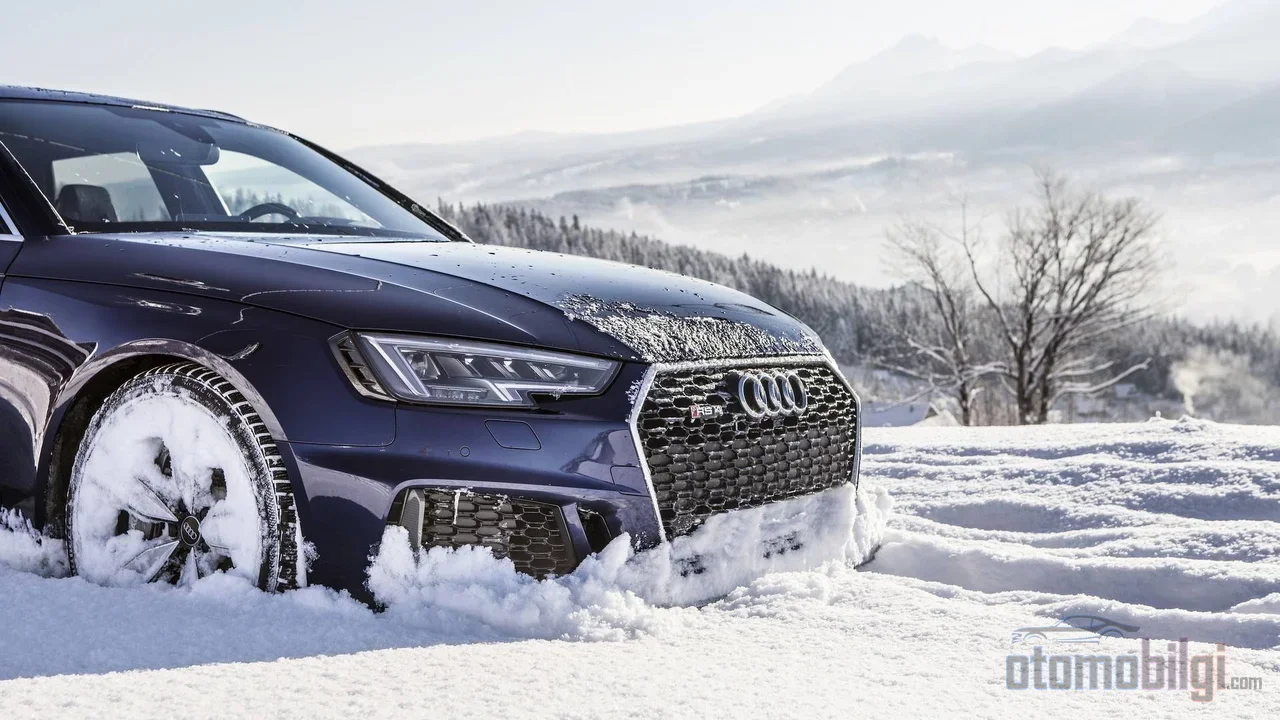
Winter means the estimation algorithm encounters its most unpredictable variable: temperature. Three mechanisms kick in simultaneously. Low temperature slows the battery chemistry and reduces the usable energy the pack can offer. Cabin heating opens a consumption item beyond propulsion energy - in winter, heating and air conditioning are the silent enemies of range. Add aggressive driving in the cold on top, and the loss multiplies.
There is no single correct answer for the loss rate; it varies according to the vehicle's heating architecture. Local test examples in Türkiye show this spread clearly: in one winter test, Tesla Model 3 lost 29.9% of its range (consumption rose to 18 kWh/100 km), while Hyundai Ioniq 6 kept its loss at 23.8% under the same conditions (16.8 kWh/100 km). As a general framework, it can be said that winter loss in modern electric vehicles ranges between 10% and 25%; at temperatures near freezing point, most vehicles retain 78-80% of their range, and around -7°C approximately 70%. While the best-equipped models reach 88% of maximum range at 0°C, the worst performers drop to 69% - vehicles equipped with a heat pump have a clear advantage in this picture.
| Condition | Effect on range |
|---|---|
| ~0°C ambient temperature | 78-80% of range is retained |
| ~-7°C ambient temperature | Approximately 70% retained |
| Heat pump-equipped vehicle, winter | Loss is noticeably reduced |
| Highway speed (compared to city driving) | 10-30% faster range decline |
| Real-world use versus WLTP value | Usually 10-30% below |
How realistic is the WLTP value?
The range in the brochure comes from the WLTP cycle. This standard replaced the NEDC, which was developed in the early 1990s and last updated in 1997; it is noticeably more realistic because it accounts for charging losses and tests a wider range of driving scenarios. It is also the only alternative for objectively comparing vehicles. However, it is still measured under idealized conditions: constant temperature, controlled speed profile, standard load.
In real life, none of those idealized conditions apply. Your driving style, traffic, road profile, the load you carry in the vehicle, and your use of air conditioning or heating each eat into the stated value. The total deviation falls in the 10-30% band in practice - remember that the difference between the factory consumption value and real consumption at the pump in gasoline vehicles arises through similar logic. Look at WLTP as a reference point, not a destination.
Read the percentage and consumption, not the indicator
We suggest a practical framework to avoid blindly trusting the indicator. Put the vehicle's three data sources into a hierarchy:
- Battery percentage: The most reliable value. It directly reflects the remaining energy and is independent of you when your driving style changes.
- Instantaneous and average consumption (kWh/100 km): The real input of the distance calculation. Knowing your average consumption, you can estimate the next leg yourself: multiply the remaining percentage by the usable capacity and divide by the consumption value.
- Indicator mileage: A rough travel companion. It is useful on long-term drives under similar conditions; when conditions change suddenly, it is the last number you should trust.
This framework is especially useful in long-distance planning. Before entering the highway, learn the vehicle's consumption in that speed band - under Türkiye conditions on long roads, the 90-110 km/s range stands out as the ideal efficiency band. Avoiding sudden acceleration and hard braking, driving at a constant speed, getting rid of unnecessary load, and correct tire pressure are the basic tactics that extend range at no cost. Also factor in weather conditions: below 10°C and above 30°C, battery efficiency drops, so the same percentage does not yield the same mileage in every season.
How much risk does indicator deviation carry in Türkiye?
The practical risk of range indicator deviation is inversely proportional to the density of the charging infrastructure. As of March 2026, the total number of charging points in Türkiye reached 41,938; roughly half of the infrastructure is AC and the other half DC. The number of sockets increased by 1,397 in one month. The number of electric vehicles is also growing at the same pace: according to July 2026 data, 464,873 electric vehicles are registered in Türkiye; this figure was 373,733 at the end of 2025. Mid-scenario projections show that the number of registered BEVs could exceed the two million mark by 2030.
This table does not change the algorithm - the indicator will continue to deviate. But it reduces the cost of the deviation. In the early days, range anxiety was the driver's concrete fear; when the next charging point was 150 kilometers away, the gauge trick was a real planning problem. As the charging network spreads across 81 provinces, a 30 km deviation inevitably stays within the range of a charging station in practice. The local user experience says the same thing: range varies in summer and winter months, under aggressive use and at excessive speeds; as you get used to the vehicle, you come to know how many kilometers you will go under which conditions without looking at the gauge.
On the industry side, prediction is also maturing. Cloud-based energy consumption prediction services are being offered for fleet operators, and current machine learning studies are improving the remaining range estimation by factoring in real-world operational data and battery degradation as well. In the coming years, the gauge itself will be more accurate; but the driver's reading of percentage and consumption will remain a skill that even the most accurate algorithm cannot substitute.
Conclusion: the gauge is an estimate, the percentage is reality
The range gauge does not lie; it does what is asked of it - it divides the remaining energy by your past driving data and produces a forecast. The forecast drops to get closer to reality when you hit the highway or in mid-winter. This is not an error, it is the design of the system. The practical advice is clear: take the battery percentage as the main reference, make your own calculation with the average consumption value, and use the gauge mileage only as guidance. As you get used to your vehicle, you will have already developed your own gauge algorithm - and you will not have to check as often as you do now.
Sources
- How to Calculate the Range of an Electric Vehicle - GAC Group
- Accurate range estimation for an electric vehicle - IET Science, Measurement & Technology
- A multi-mode electric vehicle range estimator - SAGE
- Machine Learning-Based Electric Vehicle Remaining Range Prediction - MDPI World Electric Vehicle Journal
- Data-driven remaining driving range estimation - Applied Energy
- Energy consumption prediction - Bosch Mobility
- What causes sudden range drops in an EV - Recurrent Auto
- EV Range by Temperature (2026) - The Charge Port
- Why Does My EV Range Drop So Quickly on the Freeway - Drive Electric
- WLTP range explained - Gowago
- Electric Vehicle Range Calculation - Uçar Filo
- How Many KM of Range Do Electric Vehicles Offer in Winter - econ.net.tr
- How Much Does the Range of Electric Vehicles Decrease in Winter - Skywell Türkiye
- Electric Vehicle Winter Use: Range and Maintenance Guide - Volti
- Number of Electric Vehicles in Türkiye Breaks a Record - Arabalar.com.tr
- ChargeIQ Electric Vehicle Bulletin - March 2026
- Türkiye's electric vehicle charging market - Strategy& (PwC)
- Why Does Electric Vehicle Range Drop in Cold Weather - TOGER