How Much Do Passengers, Luggage, and a Roof Box Reduce Your Range?
Share This Page
Passengers, luggage, and a roof box can reduce an electric vehicle's range by a total of 10% to 30%. The rule is simple: every 100 kg of extra load increases consumption by approximately 2-3%, while a roof box, especially at highway speeds, doubles the aerodynamic drag and significantly shortens the real range. In the city, weight is the determining factor, while on the highway it is air resistance; calculating the two separately determines whether your charging plan before a holiday trip is right or wrong.
Highlights
- Every 100 kg of extra load increases energy consumption by approximately 2-3%. increase.
- A fully loaded roof box typically reduces range at highway speed by 15-25%. reduces it.
- A rear box mounted on the tow hitch, remaining within the airflow trail, causes only a 3-7% loss.
- An EV with 400 km WLTP range can drop to 280-300 kmon the highway with a large roof box.
- The effect of a roof box becomes pronounced at speeds above 90 km/h. is more noticeable at speeds.
How Weight Affects Range: The Cost Per Kilogram
The energy cost of moving an electric vehicle is directly proportional to the total mass being carried. A 15% increasein vehicle weight translates into a 4-9% increase in consumption. As a rougher but practical rule of thumb, every 100 kg of extra load pushes consumption up by approximately 2-3%. An average EV already consumes energy in the 15-20 kWh/100 km band; the 150-200 kg extra load easily formed by a family of four's suitcases and stroller shifts this value by about 4-6%.
What seems like a small difference has a tangible payoff over long distances. For example, in a vehicle with a real range of 400 km, a 5% increase in consumption means roughly a 20 km loss of range. The difference grows somewhat larger in city driving, because in stop-and-go traffic you have to re-accelerate the mass at every acceleration; regenerative braking recovers some of the energy but, due to conversion losses, never brings all of it back.
The harshest example measured on record
The measurement that best demonstrates the effect of weight was conducted on an electric pickup loaded with heavy cargo: range dropped from 278 miles to 210 miles, meaning a 24.5% loss. This was a much larger load than a normal passenger car's trunk; but it shows that the relationship between load and range loss is not linear, and rising consumption makes the difference grow quickly. The loss per passenger, however, is far more modest: a shortening on the order of a mile on the highway and about two miles in the city is a reasonable rough estimate.
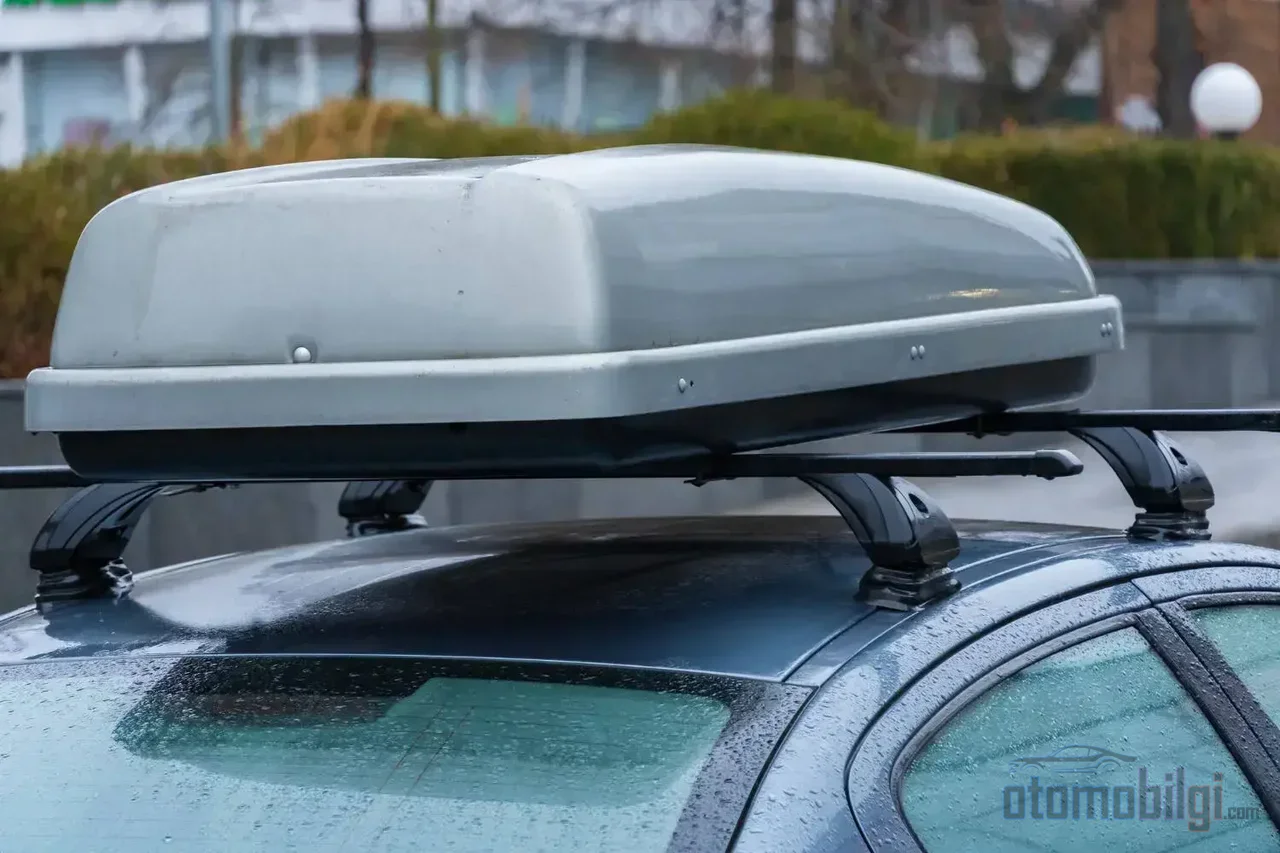
How Much Does a Roof Box Reduce Real Range?
A roof box is more of an aerodynamic problem than a weight problem. In real-world use it typically increases consumption by 10-15%; a fully loaded box pushes this loss into the 15-25% band. In the worst-case scenarios, especially with large boxes, drivers 30%reports range loss of up to. The common denominator is this: the ratio is not fixed; the shape of the box, its load, speed, wind, temperature and road gradient together determine the outcome. Exaggerated estimates also circulate, speaking of 30-40% consumption increases; these represent only the extreme scenario of a fully loaded box at high speed and in strong wind.
A concrete illustration: an EV with an empty roof travels roughly 480 km on the highway, while with only empty roof rails fitted that figure 460 km drops to around. Even the rails alone produce a loss of close to 5%; adding a box compounds the difference. The worst aerodynamic setup, such as upright bicycles, can cut the range by about one third at highway speeds.
Why do speed thresholds matter
Aerodynamic drag increases with the square of speed. 100 km/h At a speed of , air resistance makes up 75-80%of the total resistance the vehicle faces. That is why the effect of a roof box is below 90 km/h barely noticeable at , becomes moderate between 90-110 km/h, and grows above 120 km/h markedly at . The practical takeaway: covering the same highway at 130 km/h instead of 110 with a roof box costs you a completely different range table with the same box. For this reason, the recommended maximum speed for transport systems is generally limited to 120-130 km/h .
| Transport solution | Typical range loss | Note |
|---|---|---|
| Empty roof rails | ~5% | Leaving the rails on the vehicle produces loss even when the box is removed |
| Roof box (city, low speed) | 10-15% | As speed drops, the aerodynamic penalty shrinks |
| Fully loaded roof box, highway | 15-25% | Approaches the upper band at speeds above 120 km/h |
| Roof-mounted bike carrier | 20-30% | Upright profile load, the worst drag scenario |
| Rear box mounted on the tow bar | 3-7% | Much more efficient because it stays in the vehicle's airflow wake |
Roof Box or Rear Box?
In terms of range, the calculation is clear: the rear box wins. A roof-mounted box sits in the vehicle's most sensitive airflow zone, at the roof edge, creating a turbulent region that widens toward the rear. A box mounted on the tow bar, on the other hand, stays within the low-pressure airflow wake that already exists behind the vehicle; the extra drag allowance is very small. However, there is also a practical balance: rear boxes are generally limited to 450 L while roof boxes can reach 600 L. In addition, rear mounting requires a nose load limit of 75-100 kg that most EV SUVs can carry, and an aftermarket tow bar (€600-1,500 range).
On the warranty side, there is almost nothing to worry about: with the right product and proper installation, a roof box does not affect the electric vehicle's warranty; TÜV Rheinland certified systems are considered safe in this respect. Regenerative braking is not directly affected either; the box and load raise consumption only indirectly through the added weight and air resistance.
What Does a Fully Loaded Family Load Do on the Highway and in the City?

Let's take the vacation scenario: two adults, two children, luggage, a stroller and a roof box. The total additional load can easily reach 250-350 kg. The 5-8% consumption increase brought by this mass is compounded by the roof box's 15-25% aerodynamic penalty on the highway. The combined effect can translate into a real range close to half the WLTP figure: a vehicle with 400 km of WLTP range drops to 280-300 kmat highway cruising with a large box, and on a typical vacation trip from Istanbul to the Mediterranean or the Aegean you need to factor in 1-2 extra charging stops .
Within the city, the picture is much milder. Since air resistance is a secondary factor at low speeds, the box's penalty shrinks; the weight effect comes to the fore, but regenerative braking gives back some of it in stop-and-go traffic. Real-world range measurements in Türkiye also support this picture: while some models come close to the full official figure, most models perform in the 80-97% band of the official value in real use. So even your starting point is already below the official figure when you add load; starting the budget with this reality is a must. If you travel in winter, things get even harder, because cold weather alone can cause a 10-25% range loss.
Ways to Optimize Load and Aerodynamics Before Setting Off
The good news is that most of the losses can be recovered with planning. The engineering logic chain is short: less weight, less drag, moderate speed - each translates directly into energy savings.
- Fit the roof box only on trips where you truly need it; leaving an empty box on the vehicle means unnecessary energy loss and wind noise - it is the most common mistake.
- Distribute the load evenly inside the box and check the roof rack system's load limit; re-inspect the connections after the first 30-50 km .
- Keep your cruising speed in the 110-120 km/h band; the rapid exponential growth of aerodynamic savings works in your favor too.
- Drive at a constant speed, avoid sudden accelerations; remove every unnecessary item from the vehicle.
- Plan charging stops slightly earlier than usual; identify DC charging points along your route in advance with apps like PlugShare, Trugo and ZES.
- If the volume is sufficient, consider a rear box: the 3-7%loss is less than half that of a roof installation and it doesn't create garage height problems either.
One final engineering note: the choice of box also makes a difference. A streamlined-profile roof box can reduce drag by 34% compared to a classic box shape, and this translates into measurable savings. When buying, looking at how the box tapers toward the rear as much as its volume means an investment that pays back on every vacation for years.
The summary calculation is this: target the weight, manage the speed, and remove the box when it's not needed. These three moves are the most realistic way to keep range loss in single-digit percentages even with a fully loaded family setup.
Sources
- How Much Does a Roof Box Affect Electric Car Range?
- Electric Vehicle Travel: Rear Box Beats Roof Box
- AAA Study: EVs Lose Significant Range When Hauling Heavy Cargo
- Impact of lightweighting and driving conditions on electric vehicle energy consumption
- Fuel consumption impacts of auto roof racks
- Energy consumption effects of speed and acceleration
- Roof Box Shape Streamline Adaptation and the Impact towards Fuel Consumption
- Does a Roof Box Hurt Your EV's Range?
- Roof Boxes and Towing: Impact of Aerodynamics on EV Range
- Roof Box and Fuel Consumption
- How Roof Racks & Cargo Cut Your EV Range (2026 Guide)
- Optimize electric vehicle design to reduce energy use
- How Much Does EV Range Shrink in Winter?
- 2025 Real Range Results Report for Electric Models
- How Much Does an Electric Car "Consume"?
- What Is Fuel Consumption Like in Electric Vehicles?
- Charging-Friendly Vacation Routes for EV Owners
- Electric Vehicle Route Planning
- Does Towing Reduce EV Range?