Gasoline or Electric? A Door-to-Door Time Comparison on Long Journeys
Share This Page
On a 300-600 kilometer route, an electric vehicle typically takes door-to-door 10-15% longer than a gasoline car, depending on range and charging breaks; the right speed choice and a single well-planned charging stop can shrink this difference considerably in practice. This page calculates the difference in minutes.
Highlights
- None of the 20 electric vehicles tested on real roads managed to reach their WLTP range; the shortfall 7-20% was measured between.
- At a constant 130 km/h speed, range can drop 30-40% compared to the WLTP value.
- Charging is fast up to 80% battery; the last 20% can take as long as the first 80%.
- In winter conditions, range 20-40% can decrease by.
- Istanbul-Ankara ~450 km, Istanbul-Izmir ~590 km at most.
Why is door-to-door time determined not just by speed, but by the number of stops?
The long-distance math for a gasoline car is simple: with a full tank you drive 500-700 km, if needed you take a 5-minute fuel break, and the break time barely affects the total journey time. With an electric vehicle, the equation becomes two-variable: how many kilometers you can drive between charging stops, and how many minutes you wait at each stop. Door-to-door time is the sum of these.
As a practical reference point, experience shared by drivers who use electric vehicles on long routes generally points to roughly 15% extra time compared to gasoline in journey time. There is not yet a controlled official comparison test, so it is right to read this figure not as an exact coefficient but as a reasonable order of magnitude. Looking at it with an engineer's eye, the logic chain fits this too: driving between charging breaks is usually 2-3 hours, and charging up to 80% at each break typically takes 20-40 minutes at typical DC fast charging stations.
The critical point is this: the extra time does not increase linearly with the number of stops. With the right speed and the right battery management, you can eliminate a stop entirely, and that is a far bigger gain than shortening one of three charging breaks.
How much of the catalog range holds up on the road in reality?
Every electric vehicle's brochure range comes from a standardized laboratory test called WLTP. The test is conducted with heating and air conditioning off, at around 23°C temperature and with only brief high-speed sections. In other words, it is a measurement of optimum conditions. In the city, at speeds of 50-80 km/h and in mild weather, approaching these values is possible; on long routes, however, the reality is very different.
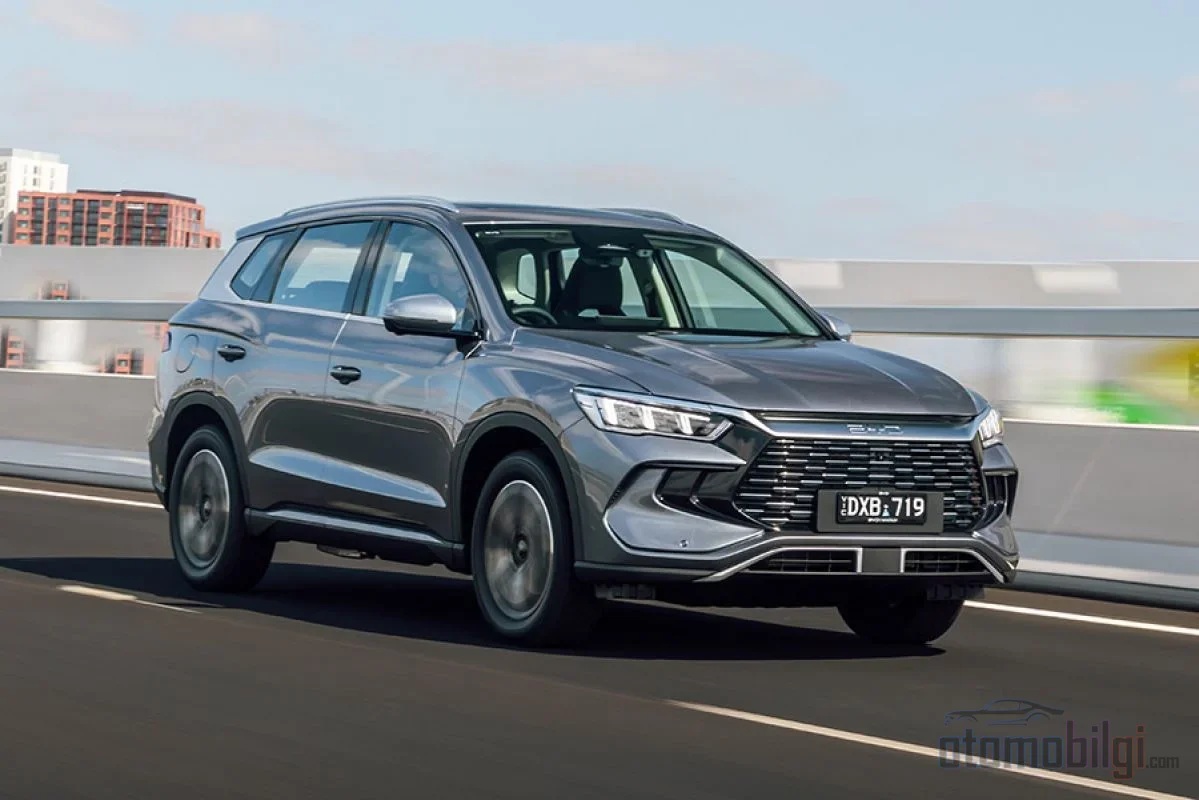
A systematic testing program conducted under real-world conditions in Australia paints a striking picture: of the 20 electric vehicles tested so far, none has managed to match its catalog range. The deviation is 7% at best (Tesla Model Y Long Range) and 20% at worst (BYD Atto 3 Essential) as measured. The interesting part is this: the difference on the consumption side is only around 2%. So the vehicle is not using more energy than expected; the problem is that the range claim was derived from a mild, low-speed test cycle. When planning, a sound engineering approach is to start from a real-world range of about 80-85% of the catalog value, not the catalog value itself.
How does speed affect range: 110 or 130?
The main cause of range loss on the highway is aerodynamic drag, and this drag increases with the square of speed. The result is clear: at a constant 130 km/h speed, the range of many electric vehicles drops by 30-40% compared to the catalog value; in highway use, the overall loss can reach up to 30%. High speed also increases consumption in a gasoline car, but the effect is felt more sharply in an EV because the electric vehicle's catalog range is measured at low speeds.
The practical takeaway is your driving choice. Driving in the 105-110 km/h band takes only about 7 minutes longer per 100 kilometers compared to 130 km/h; in return, energy consumption drops noticeably and extends the distance between charging stops. When a break is eliminated, the 20-40 minutes you gain far outweigh the few minutes saved by driving fast. This is the core of the classic trade-off debate between "slow down and keep going without stopping" and "drive fast and wait at the charger," and in most scenarios the numbers favor the slow side.
The charging break calculation: why does it slow down after 80%?
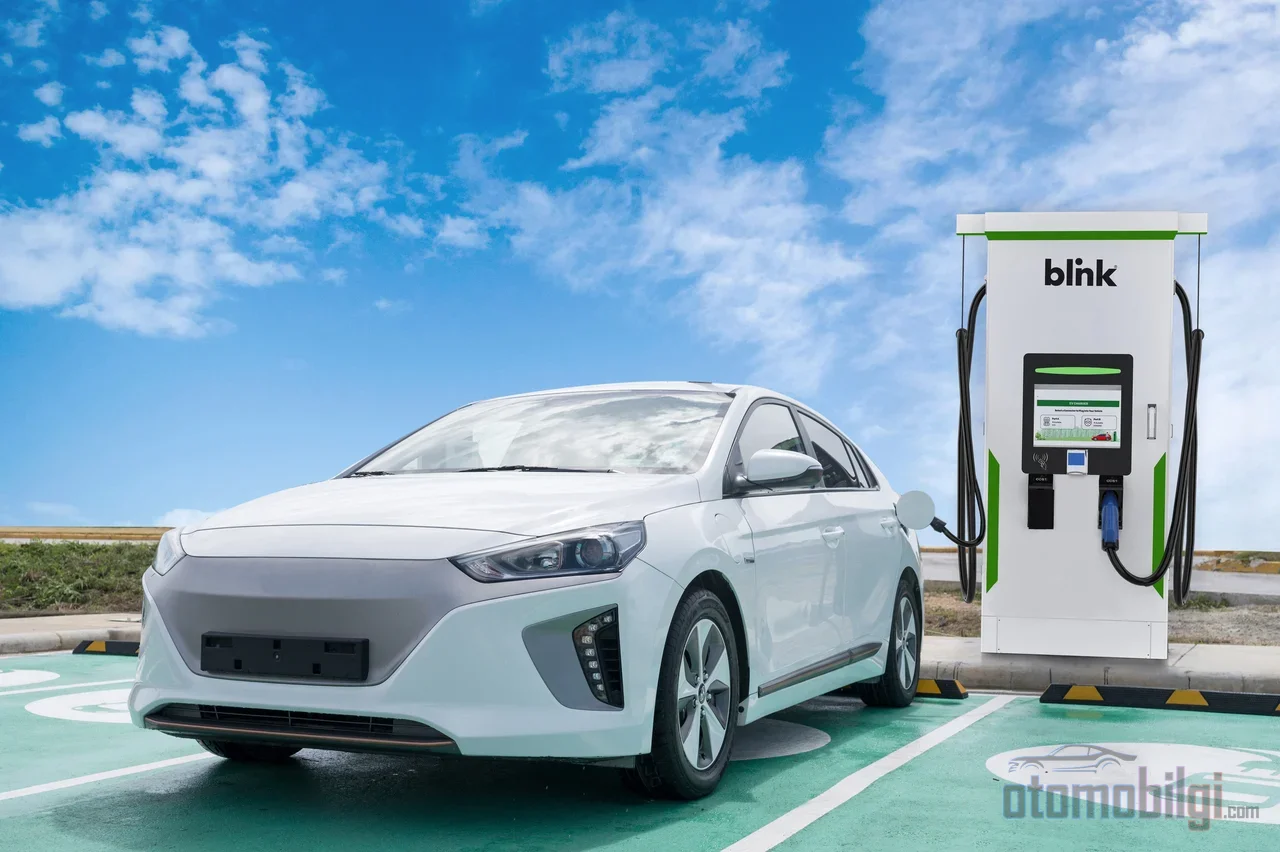
The second variable that determines travel time is the number of minutes you spend at each stop. The technical fact to understand here is the charging curve of the lithium-ion battery. The battery charges at very high power up to about 80%; after this point, voltage limits, increasing internal resistance, and thermal protection protocols kick in, and the current is gradually reduced. This is not a malfunction or an error; it is a deliberate battery protection mechanism called CC-CV (constant current - constant voltage). The practical result is striking: the last 20% can take as long as the first 80%.
The right strategy from the traveler's perspective follows from this: Charge up to 80% and hit the road. Instead of waiting at the station to fill the last 20%, you will still be in the fast-charging zone at the next stop. DC fast charging stations offer power in the 30-400 kW range, and most electric vehicles reach 80% in 20-40 minutes; stations in this power range have become widespread in Türkiye. Scheduling your break to coincide with restroom, coffee, and driver changes absorbs part of the extra time into time you already have to spend on a break.
To summarize the segment calculation in one sentence: the cost per stop is roughly 25-40 minutes, and the gain lies in reducing the number of stops.
Time comparison on sample routes in Türkiye
To make the numbers concrete, let's go through two classic routes. In average traffic, the Istanbul-Ankara journey takes 5-6 hours, while Istanbul-Izmir (all the way to Cesme) takes 5.5-7 hours and the distance can extend to roughly 590 km.
| Route | Distance | Gasoline (full tank) | Electric, high range |
|---|---|---|---|
| Istanbul - Ankara | ~450 km | 5-6 hours, without breaks | 0-1 stops in the 500 km range class |
| Istanbul - Izmir | ~590 km | 5.5-7 hours, 1 short break | 1 stop (e.g. on the Bursa/Gemlik route) |
| Charging/fuel break | - | ~5 minutes | 20-40 minutes (up to 80%) |
| Range item | - | catalog and real-world figures are similar | in reality 80-85% of the catalog figure |
Let's do the math. On the 450-kilometer Istanbul-Ankara route, an electric vehicle whose real range falls into the 400 km band needs a single charging stop even if its catalog value is 500 km; if the break is 30 minutes, the door-to-door difference compared to a gasoline car is roughly half an hour. On the 590 km Izmir route, two stops may be needed and the difference approaches 1 hour. In contrast, a driver traveling at 110-120 km/h, correctly reading their real range and proceeding with a single well-chosen stop can reduce the difference to a level of 15-20 minutes. There are also extreme cases between Izmir and Istanbul where total charging time reaches 4 hours and the driver stops 7 times; this situation is usually the result of slow AC charging preferences or short-range vehicles and can be prevented with planning.
A practical warning: significant queues are reported at charging stations on popular routes during holiday and vacation congestion. What actually widens the gap with gasoline cars is not the breaks themselves, but the risk of waiting during breaks. It is essential to plan routes with alternative stations during busy periods.
The second factor that increases range loss: air temperature
The biggest uncertainty in the time calculation is seasonal. In winter, range can drop by as much as 20-40%: in the cold, battery chemistry becomes inefficient, cabin heating consumes energy, and a cold battery charges more slowly. Even in mild conditions, a loss of about 20% has been measured in a vehicle that has just been unplugged and not warmed up. In summer the picture is milder: in extreme heat, energy use increases by 25-28% when moving from the 26-30°C band to the 46-50°C band. Electric vehicles operate most efficiently at around 20-25°C.
The solution is technically simple: heat the cabin and battery 10-15 minutes before setting off, and do this while the vehicle is still charging if possible. That way the heating energy comes from the grid, not the battery; range loss is significantly reduced and your long-distance calculation stays consistent in winter too.
Pre-long-trip checklist: minimizing the gap
- Plan with 80-85% of the catalog range; be even more conservative on highway-focused routes.
- On every charge, stop at up to 80%; don't wait at the station for the last 20%.
- Target the 110-120 km/h band on the highway; at 130 km/h range drops by 30-40%.
- In winter, preheat the vehicle while it's charging; avoid sudden acceleration and braking, use regenerative braking.
- Remove unnecessary load and the roof box; consumption increases going uphill and is recovered going downhill.
- Add alternative charging stations to your route during busy periods.
One more note on battery health: keeping the charge in the 20-80% range in daily use and limiting DC fast charging supports both range planning and the battery's lifespan. Test vehicles that used only DC fast charging were measured to show noticeably higher battery degradation; use fast charging as a long-distance tool, not as a habit.
Conclusion: the minute cost of range anxiety
When we asked about the concrete cost of range anxiety, the answer is transparent: a well-planned electric long journey takes roughly 15-30 minutes longer door to door than a gasoline one; a poorly planned journey can reach an hour. What determines the difference is not the vehicle, but the math. For a driver who reads the real range correctly, follows the 80% rule, and optimizes speed according to the number of stops, an electric vehicle is today a usable long-distance car on Türkiye's 450-590 km main corridors; the lost half hour coincides with a coffee break that most journeys would include anyway.
Sources
- Does your electric vehicle match its driving range claim?
- The real world EV range: how to optimise it
- Real-world range calculation of EVs in Australia
- Electric cars 2025: models with the most range on highways
- Understanding your Electric Vehicle's Range
- Why EV charging slows down after 80%
- Why does EV charging slow down after 80%?
- Extreme heat effects on electric vehicle energy use
- How Does Hot & Cold Weather Affect EV Range
- Does fast charging affect EV battery life?
- Fast Charging Station Guide
- Istanbul to Ankara Electric Vehicle Charging Cost and Consumption
- Istanbul to Izmir Electric Vehicle Charging Cost and Consumption
- Electric Vehicle Charging Fees 2026
- Istanbul - Izmir electric vehicle route
- Electric Vehicle Winter Use
- Factors Affecting the Range of Electric Vehicles
- Electric Car vs Petrol Car
- Road Trips - Gas vs Electric vs Time (user experience)