Does the Heat Pump Really Affect an Electric Vehicle's Range?
Share This Page
A heat pump provides an average gain of 7% to 10% to an electric vehicle's range in winter conditions; the gain peaks around 0°C and rapidly melts away below -10°C. So this is not a "doubles your range" promise, but a measurable and condition-dependent efficiency advantage. When making your decision, your climate, the option's price, and the vehicle's battery capacity should be evaluated together.
Highlights
- A heat pump produces 3-4 units of heat per 1 unit of electricity and is therefore 3-4 times more efficient than a resistive heater.
- In a laboratory test on two model years of the same vehicle, the heat pump's range advantage was measured in the 1%-15% range.
- The biggest difference appears around 0°C ; at -10°C the advantage can disappear.
- EVs without heat pumps can lose up to 35% of their range in winter.
- Under Türkiye's winter conditions, vehicles with heat pumps experience range loss than the resistive-heater version of the same model. experiences range loss.
How Does a Heat Pump Work, and Why Is a Resistive Heater Inefficient?
There are two basic methods for cabin heating, and the difference between them is, from an engineering standpoint, a simple matter of energy balance. Resistive heating (PTC) produces heat directly by passing electricity through a resistive element. The process is nearly 100% efficient - every watt in becomes heat - but this does not mean the energy is used efficiently: It draws a continuous load on the order of 4-8 kW from the battery, and all of that energy is subtracted from the range.
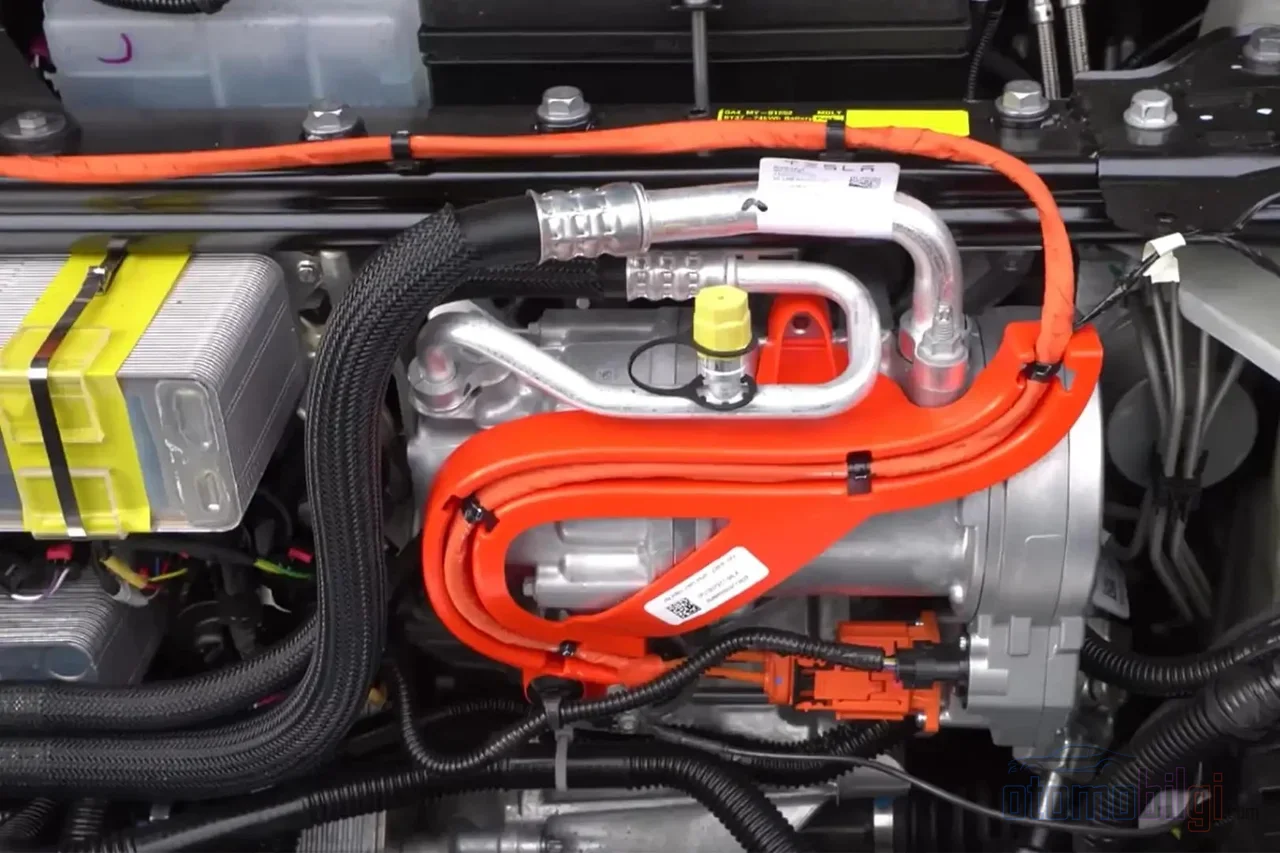
A heat pump, meanwhile, is essentially an air conditioner in reverse. It carries heat from the ambient air inside via refrigerant; even when the outside air is at 0°C, the heat energy stored there can be transferred to the cabin thanks to the evaporation cycle. The result: 3-4 units of heat per 1 unit of electricity. Three to four times less energy is drawn from the battery for the same heating comfort.
The origin of this difference is better understood when compared with internal combustion engine vehicles. In a gasoline vehicle, 75%-85% of the fuel's energy is already lost as heat, and this waste heat is used for cabin heating for free. In an electric vehicle, there is almost no motor waste heat; the battery is the only source for heating the cabin. The heat pump's job is to add the "free" heat outside to the process before touching that source.
How Many Kilometers Does a Heat Pump Really Add to Range?
The cleanest way to get a clear answer to the question is to test two versions of the same model - one with a resistive heater, one with a heat pump - under the same conditions. That is exactly what an evidence-based laboratory study presented at an EV symposium in 2025 did: Two Tesla Model 3 vehicles (2020 with PTC and 2022 with heat pump) were compared on a chassis dynamometer at 25°C, 0°C, -7°C and -10°C. The result: The heat pump's range-preservation advantage varied by condition between 1% and 15% ; averaging 7%in the urban cycle, 7%in the highway cycle, and 4%in the aggressive driving cycle.
Telemetry data paints a similar picture. Vehicles with heat pumps lose around 8%-10% of their winter range at -1°C shows improvement. In the field test, the consumption of the resistively heated Model 3 at ~30°F increased by 26% while in the heat pump Model Y the increase was only 8% measured.
How Much of the Range Loss Does It Recover?
Another perspective is this: what is the total magnitude of winter loss, and how much of it does the heat pump compensate for? According to NREL's study, the range loss with resistive heating ranges from 28.3–53.8% depending on temperature, while the heat pump recovers 1.1–12.8 percentage points of that loss. Another test conducted on the same model at -6.7°Cshowed that the total range loss with resistance was 42.8% (26.4 points of which came directly from heating), and the heat pump reduced energy consumption by 31% and increased range by 7.9% In an experimental study conducted at the same temperature, however, the increase reaches up to the 25–31% band.
Don't let the wide range of numbers confuse you: the difference between them stems from measurement conditions and vehicle type. In a light vehicle with a small battery, the heating load takes a large share of range; that is why the loss and gain percentages are large. In vehicles with large batteries, the same heating load corresponds to a smaller percentage. The common denominator is this: The heat pump does the most work in the mild-to-cold transition zone, i.e. around 0°C.
| Temperature | Heat pump advantage | Note |
|---|---|---|
| Around 0°C | Highest; in many cycles less than half the PTC's power | The zone where the advantage peaks |
| -1°C | ~8-10% range improvement | Large-scale telemetry average |
| -7°C | Noticeable but declining | The backup resistance may start to kick in |
| -10°C | May drop to zero, may reverse in cold starts | Evaporation efficiency and heating load are critical |
Critical Threshold: What Happens Below -10°C?
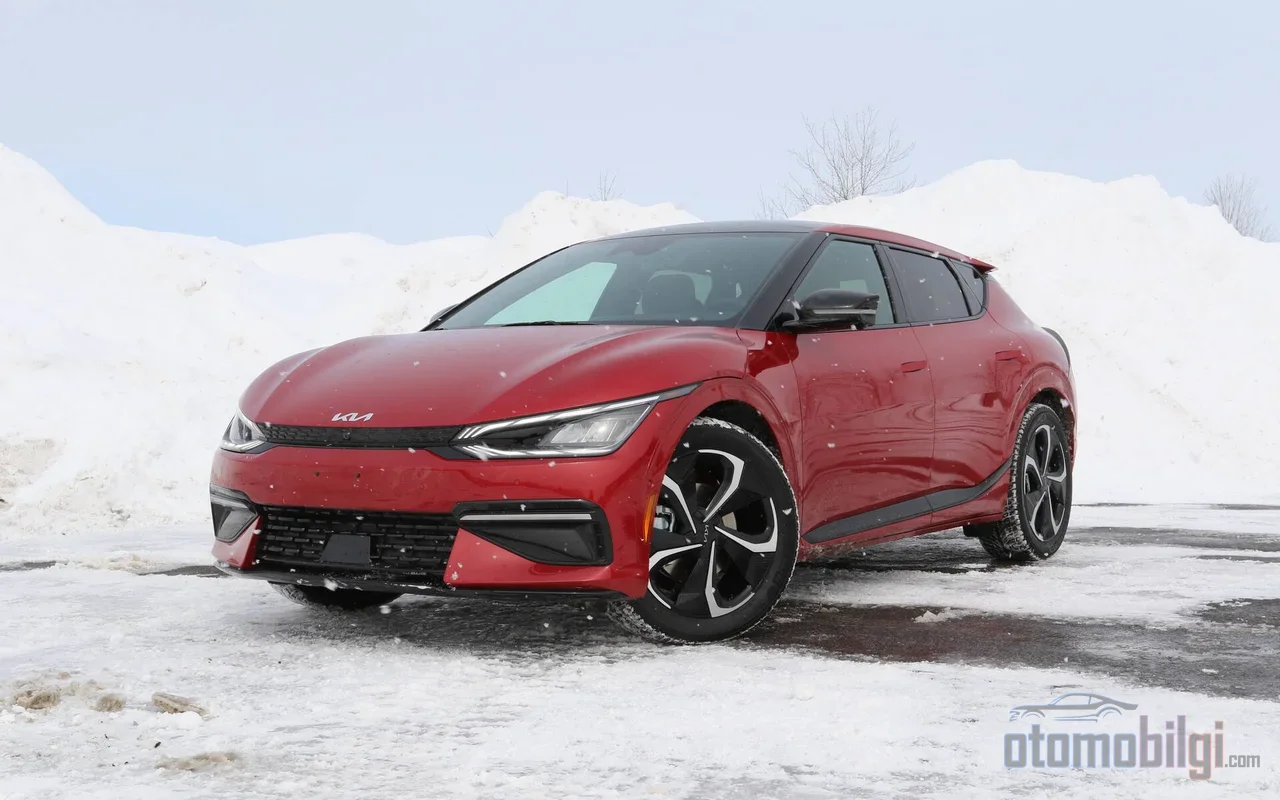
The heat pump's efficiency decreases as the outside temperature drops - because there is less heat to draw from the air and the compressor has to work harder. This is the most instructive finding of the laboratory test we mentioned: At -7°C and -10°C the heat pump's advantage declines, and in a cold start at -10°C it turns into a disadvantage compared to the resistively heated vehicle. The reason for this is that some systems switch to "loss mode" in extreme cold: the compressor tries to generate heat directly and may consume more energy than a simple resistive element.
That is why almost all heat pump vehicles sold in extremely cold regions have a backup resistive heater on board. The heat pump is the system's main actor until temperatures drop well below freezing; below that, control passes to the backup resistance. This is exactly why the range gap between the two technologies narrows as the air gets colder. Some manufacturers are working to push this limit further: under -20°C conditions, an average 57.7% improvement in heating capacity has been measured with enhanced vapor injection (EVI) technology. In some models, the joint operation of the heat pump and the resistive backup can reduce total heating and battery temperature energy draw at 20°F by 38% .
The Big Picture of Winter Loss: What Does a Vehicle Without a Heat Pump Lose?
To properly weigh the value of a heat pump, the overall scale of the loss must also be seen. When moving from mild conditions to -10°C, the typical winter loss in modern EVs with mixed driving 20-35%; in light commercial vans 40%reaches. In winter, the real range stays on average 25-35% below WLTP summer values. Throughout 2025, in measurements taken between -6°C and +8°C, the average vehicle remained 18% below its WLTP range.
Heating's share in this loss is clearly read from AAA's dynamometer tests. With the heating-cooling system off, the range loss in the cold is 20% , but when the system is turned on it soars to 50%- meaning heating alone accounts for roughly 53 km of additional loss. In a model with a larger battery, an additional 142 km loss was measured with the climate control on. At a constant speed of 105 km/h, a 33% drop in range with full-capacity heating is calculated to fall to a 10-14% level with a hypothetical heat pump. In AAA's 2026 test of six models, the average loss was measured at 39% ; different test protocols give different percentages, but the direction is always the same.
How Much Difference Does a Heat Pump Make in Türkiye?
Most of Türkiye lies in the temperature band where the heat pump works at its very most efficient. In winter, the -5 to 0°C range is common in the interior of Anatolia; and the common finding of independent winter tests corresponds to this region: At around 0°C, vehicles with heat pumps experience 10-20% less range loss than the resistive-heater version of the same model. In the Turkish market, vehicles with heat pumps are spreading rapidly; some manufacturers make this equipment standard, others sell it as an option. The system in some fully electric models is designed, according to manufacturer data, to operate between -30°C and +60°C .
One nuance must also be honestly added: On the Mediterranean and Aegean coasts, winter temperatures remain at a level where even heat-pump-free loss stays relatively mild; this is also reflected in user perception. For a driver living in a coastal region where temperatures drop below freezing only a few times a year, the gain will be noticeably smaller than for a driver in Central or Eastern Anatolia.
Is It Worth the Option Price? A Decision Framework
The most critical missing data in the purchase decision is the heat pump option price in the Turkish market: There is no clear and universally applicable figure for this cost; it varies from brand to brand and package to package. Still, the decision is made soundly if it is based on these four questions:
- Your climate: If you are in a region that regularly drops below 0°C in winter, the heat pump plays right in its home field; the measured advantage peaks in this band.
- Battery capacity: In vehicles with small batteries, heating takes a large share of the range, so the relative contribution of the heat pump is also greater.
- Usage profile: If your daily trip is well below the WLTP range, the loss makes practically no difference; but on long journeys and routes where charging infrastructure is sparse, every percentage matters.
- Second-hand value: If you are planning sales in a cold region, the heat pump version tends to be a sought-after feature.
A counterargument should also be noted: It is emphasized that a heat pump may not always increase range estimates, and in extreme cold especially, system transitions can degrade estimate accuracy. This does not mean the hardware is useless; it means expectations should be set as "conditional efficiency" rather than "guaranteed extra kilometers."
How Do You Reduce Winter Loss with a Vehicle Without a Heat Pump?
If you are using a vehicle without a heat pump, part of the loss can be managed on the driver's side. The most effective move is to eliminate the most expensive loss of the day: Pre-condition the cabin while the vehicle is plugged in, meaning heat it with grid energy instead of battery energy. In both laboratory and field data, the highest heating load appears in the first, cold-start cycle of the day - pre-heating takes exactly this load away from the battery.
- Prefer seat and steering wheel heating: It provides the same comfort feeling with far less energy than heating the cabin air.
- Use ECO mode: It limits heating power and total draw.
- Keep regenerative braking high: Energy recovery during deceleration reduces consumption, especially in urban cycles.
- Manage your speed: In the 120-130 km/h range, consumption can increase by 20%; a speed limit on the highway is the cheapest tool in range planning.
Conclusion: The Heat Pump as an Engineering Decision
To sum up the data: A heat pump contributes by 7-10% to winter range, depending on conditions; strongest around 0°C, weak or even negative below -10°C. In Türkiye's interior regions, this band is a routine winter operating condition, so the equipment's benefit is tangible; in a mild coastal climate, the line item is written smaller. If the option price is clearly known, the calculation is simple: Multiply the contribution's real kilometer value on your battery, your climate and your routes by your annual usage and compare it with the cost. If the numbers don't add up, it's also possible to manage a significant portion of the loss at near-zero cost through preheating habits, seat heating and speed management.
Sources
- A Comparison of Heat Pump and Resistive Heating Impacts on BEV Energy Consumption and Range in Cold Temperatures - EVS38 / Environment and Climate Change Canada
- Study: How Much Heat Pumps Boost EV Range - Recurrent
- Impact of Cold Ambient Temperatures on BEV Performance - U.S. Department of Energy
- What is a heat pump and how can it increase range? - Gridserve
- How Car Heating Works in EVs and Why Range Drops in Winter - Dace Motor Group
- How to get the most out of your EV in the winter - Canary Media
- Tested: Heat Pump in Cold Weather - EV Charger Reviews
- Best EV for Winter & Cold Weather Range - Recurrent
- Cold Weather EV Range Loss 2026: Real Tests - Energy-Solutions
- EV Winter Range 2026 - 12 Models Tested - Wheelstreet
- Winter Range by Model - Wise-EV
- Cold Weather EV Range Loss - Real Data 2026 - EVRatio
- Heat Pumps in Electric Vehicles: How Do They Save Winter Range? - Yeşil Tahrik
- Heating and Cooling Systems in Electric Vehicles - BYD Türkiye
- Heat pump electric vehicles are becoming widespread in Türkiye - elektrikliarac.com
- What is a Heat Pump in an Electric Vehicle? - Lena Cars
- Can heat pumps solve cold weather range loss for EVs? - Green Car Reports
- A Study on Electric Vehicle Heat Pump Systems in Cold Climates - ResearchGate
- Electric Vehicle Usage Recommendations for Winter Months - MG Türkiye
- Electric Vehicle Winter Usage - Volti
- Electric Vehicle Usage in Winter Months - e-aracsarj