How Much Does Tire Selection Affect an Electric Vehicle's Range?
Share This Page
Tire selection on an electric vehicle is a concrete factor that typically changes range by between 3% and 10% ; incorrect pressure, high rolling resistance, or a heavy-sized tire set will push you toward the upper end of this range, while the right choice wins back a few kWh from the battery every time. While tires account for 20-30% of fuel consumption in a gasoline car, this share becomes even more critical in an electric vehicle - because every gram of tire resistance is written directly onto the range page.
Highlights
- A Class A tire creates a approximately 7.5% per 100 km efficiency difference compared to a Class E tire
- A cold tire produces 13.6% higher rolling resistance than a warm tire
- Range loss with high-friction spare tires has been measured at between 5% and 25% Frequent monitoring of pressure loss increases average range by approximately
- 9 km 9 km increases
- In winter, electric vehicle range can drop by an average of 20-40% can drop
Why Does Rolling Resistance Cost More Money in an Electric Vehicle?
Rolling resistance is the force that arises from the tire deforming as it contacts the road and continuously slows the vehicle down. Part of the mechanical energy turns into heat and is lost. The physical mechanism behind this is hysteresis: when you compress a sponge and release it, the material returns to its original shape with a delay, not instantly. The tire undergoes this deformation thousands of times with each rotation, and each deformation leaves a portion of the energy you draw from the battery behind on the road as heat.
The subtle point here is this: not all rolling resistance is bad. Part of the friction creates grip, that is, braking and cornering safety. This balance between efficiency and safety is the fundamental engineering problem of tire development. Today, the rolling resistance coefficients of tires sold for electric passenger vehicles range between 0.007 and 0.014 - meaning there can be a nearly twofold efficiency difference between two tires of the same size.
There is a second factor that magnifies this difference in an electric vehicle: regenerative braking. As rolling resistance increases, the vehicle's natural deceleration strengthens but energy recuperation weakens. In a simulation study, the energy recovered on a 5% grade with low-resistance tires was 735 kJ while with high-resistance tires it dropped to 671 kJ- meaning a bad tire not only consumes more energy, it also reduces your recuperation capacity.
The Effect of Tires on Range in Numbers: How Realistic Is the Difference?
The clearest way to connect the theoretical framework to daily life is to look at measurements from two hands. In a simulation conducted on an urban driving cycle (UDDS), with a tire having a rolling resistance coefficient of 0.008, the battery state of charge at the end of the run was 87.1% ; with a tire having a coefficient of 0.012, it was 85.6%. Although the difference looks slightly above one percent, the picture becomes clearer in terms of battery energy consumption: with the low-resistance tire, the average was 4308 kJ, and with the high-resistance tire 4804 kJ - approximately 11.5% more energy.
An independent consumer test conducted on real roads paints a similar picture. Under the same conditions, the most efficient tire set consumed 18.28 kWh per 100 km, while the least efficient set consumed 20.82 kWh The difference between the tires is approximately 2.5 kWhper 100 km; in a vehicle with a 400 km range, this translates to a range loss of up to 40 km on its own.
| Measurement | Low rolling resistance | High rolling resistance |
|---|---|---|
| Drag coefficient | 0.008 | 0.012 |
| End-of-cycle charge level (UDDS) | 87.1% | 85.6% |
| Average battery energy consumption | 4308 kJ | 4804 kJ |
| Regenerative recovery at 5% grade | 735 kJ | 671 kJ |
| Real-road test consumption (100 km) | 18.28 kWh | 20.82 kWh |
What Does the EU Tire Label Say?
The fastest filter when buying tires is the rolling resistance class on the EU tire label. The label rates performance in five classes from A to E. An A-class tire saves about 0.5 liters of fuel per 100 km compared to an E-class tire - roughly a 7.5% efficiency improvement. In an electric vehicle, this ratio translates directly into range. As a practical note: since most tires on the market are found in B and C classes, the theoretical difference between the label extremes usually narrows to a one-class difference in actual shopping. Still, class is the fastest and most reliable indicator when choosing between two tires at the same price.
Does Tire Pressure Affect Range?
Yes, and its effect is greater than you might think. Every PSI below the recommended pressure means more deformation in the tire's body and therefore more energy loss. Low air pressure has been measured to increase consumption by 2-3% ; in a survey, it was found that in 93% of the vehicles included, at least one tire was inflated outside the recommended pressure. So the problem is not the exception, but the rule.
The benefit of pressure management in electric vehicles is also measurable: a study published under SAE shows that switching from a tire whose pressure loss exceeds 3% to one kept below 1.8% increases average driving range by about 9 km That's the free range a monthly air check will get you. Over-inflation, though tempting, is not recommended: it lowers rolling resistance but sacrifices comfort and grip - meaning you put efficiency ahead of safety.
Do Wide Tires and Large Wheels Really Increase Consumption?
This is where hearsay information gets the most muddled. The contact area and grip of a wide tire increase; however, width has no direct effect on rolling resistance. The summary "wide tires increase friction and send consumption through the roof" is therefore a technically incomplete explanation. The real mechanism of range loss with wide tires lies elsewhere: large wheels and tires are usually heavier, rotational inertia increases, and the tread pattern can stiffen. In addition, high-performance-oriented wide tires are often made with softer, grip-focused compounds - the compound change is more decisive than the width itself.
The most comprehensive measurement on the spare tire issue also confirms this. In a study conducted at a laboratory affiliated with the U.S. Department of Energy, switching to spare tires with higher rolling resistance than the vehicle's original tires resulted in a range loss between 5% and 25% being measured. Combined with a poor compound choice, the upper limit can become incredibly costly: on a vehicle with a 400 km range, a loss reaching 100 km means exactly that.
Do Electric Vehicles Need Special Tires? How Different Are OEM Tires?
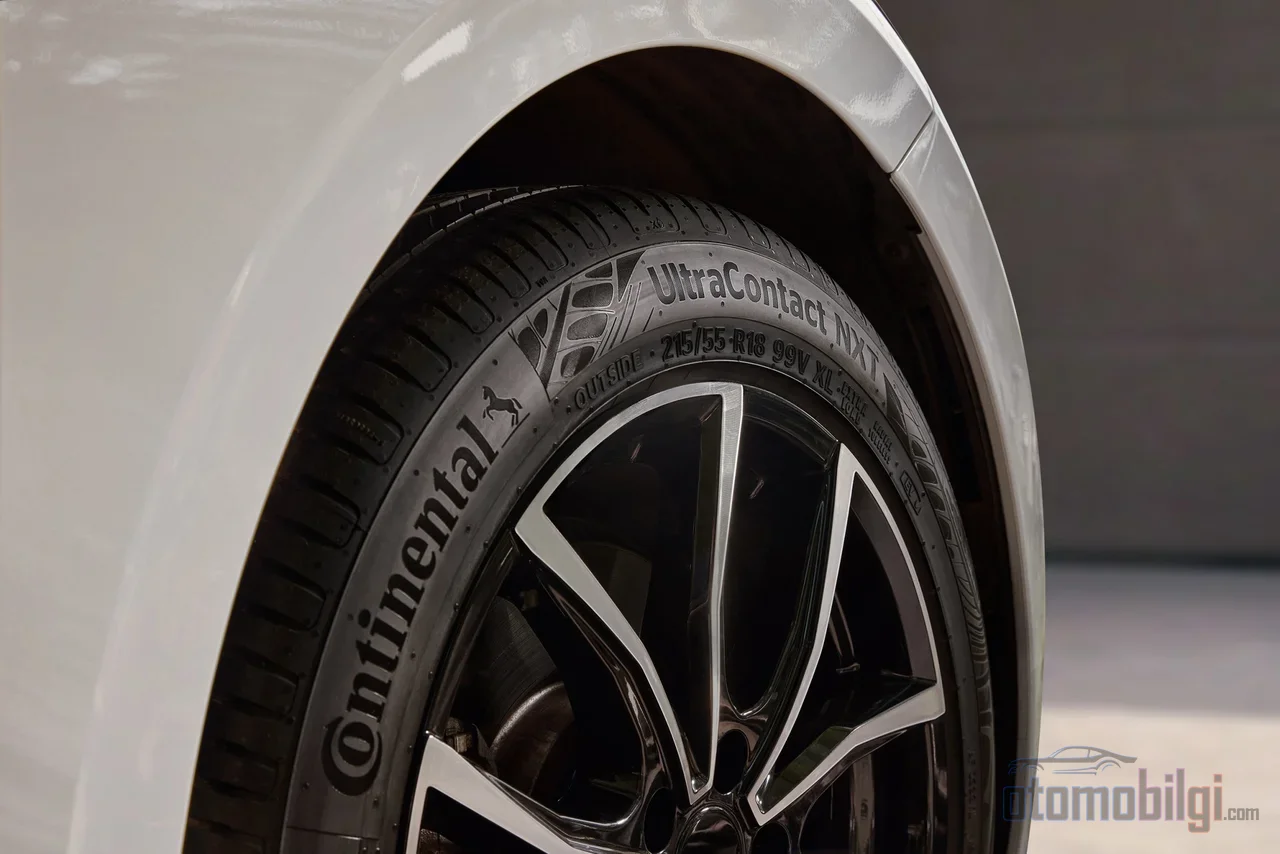
The fundamental physical factor distinguishing electric vehicle tires from ordinary tires is the mass introduced by the battery and the associated load. In 2021, a load standard called HL (High Load) was defined in Europe in response to this need. EV tires are also optimized to reduce road noise and manage wear under high torque; since regenerative braking changes the tire's wear pattern, regularly checking tread depth becomes more important than in ordinary vehicles.
So is it necessary to pay extra for factory-fitted (OEM) tires? The answer is twofold. OEM tires are optimized for a specific vehicle, and manufacturers aim to push rolling resistance a bit lower with each new generation - in one customer project, a version exceeding the A class on the label by approximately 17% was even developed. However, there is no absolute necessity in spare tire selection: as long as the size, load index, and speed index match the values on the registration certificate, a standard tire can be used. What matters is not the "EV tire" label itself, but the rolling resistance class on the label and the correct indexes.
Marketing in this area also needs to be filtered out. While manufacturers promise a 10-20% reduction in rolling resistance in EV-specific tires, according to independent environmental data the actual economy impact stays within a 5-7% band. The first kilometers of a new tire should also be taken into account: a new tire can have up to 20% higher rolling resistance than a worn one, and in an electric vehicle this temporarily turns into a 2-4% drop in efficiency. Make the purchasing decision not with the promised percentages, but with the tire's own label class.
How Much Does Range Drop When Switching to Winter Tires?
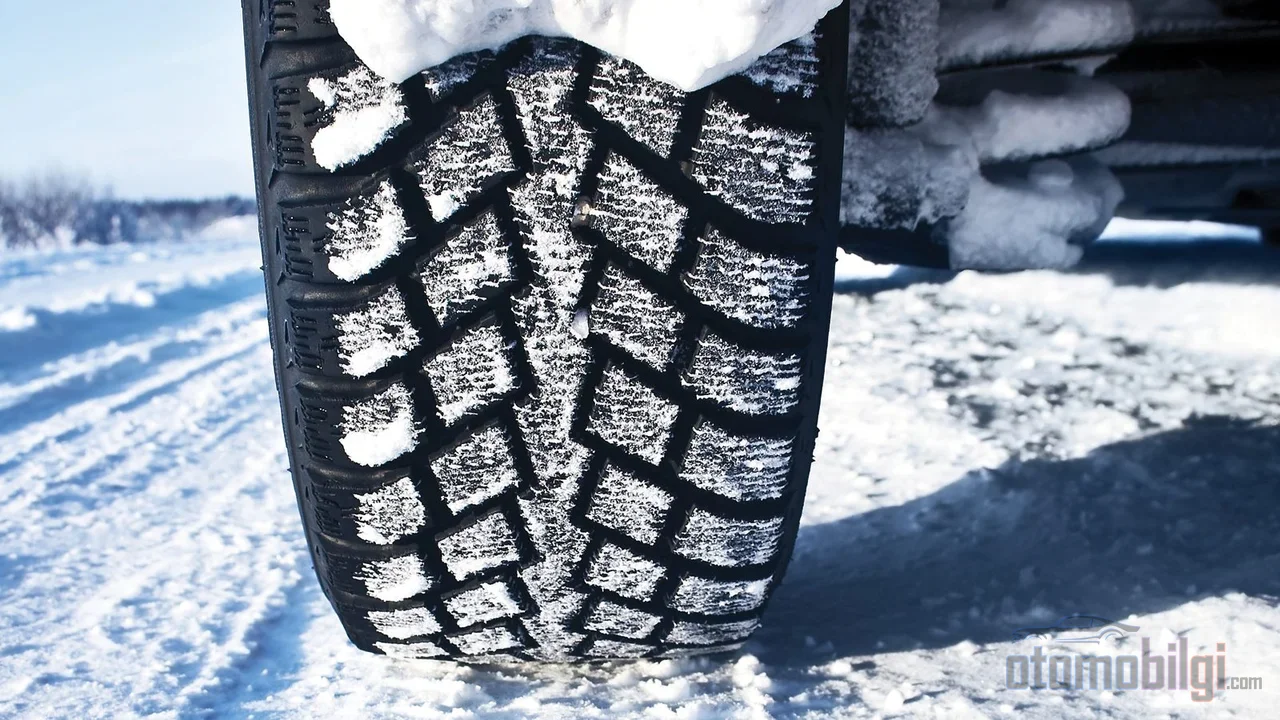
First, let's clarify the big picture: in winter, electric vehicle range can drop by an average of 20-40% and the main cause of this loss is not the tires, but the cold battery and cabin heating. The tire's share in this picture comes from two layers. The first is temperature: cold tires produce 13.6% higher rolling resistance than warm tires, and the effect of tire temperature is even greater than that of ambient temperature. The second is tread pattern: winter tires with deep and pronounced treads typically have higher rolling resistance than summer tires. Studded tires take range loss one step further.
The practical threshold for transition timing in Türkiye is 7°C: switching to winter tires during the period when the average air temperature drops below this value, and switching back when temperatures rise in summer, is the right move both for safety and efficiency. In regions with mandatory winter tire regulations, this is already an everyday necessity. When choosing a winter set, again check the rolling resistance class on the label to limit range loss; when weighing braking performance on snow and ice against rolling resistance, choosing the product that offers the best balance of both is the same logic in an electric vehicle. On the budget side, winter tires for small-class vehicles start at around €55, and in the mid-range at €140.
What Should You Look for When Changing Tires?
To reduce this whole picture to the moment of purchase, the checklist is short and clear:
- Rolling resistance class on the EU label: Class A or B is always the preferred option for range-focused use.
- Size, load index, and speed index: an exact match with the values on the vehicle registration certificate is not negotiable.
- If you drive a vehicle with a heavy battery, HL (High Load) marked models are designed to carry the mass load.
- If you want to increase the wheel size, price the weight increase as range loss: the loss can be in the 5-25% range.
- Monthly check after installation: keep the pressure at the manufacturer's value; losses exceeding 3% measurably eat into the range.
In conclusion, the tire is the least noticed but most easily corrected term in the range equation of an electric vehicle. The right label class, the right indices, and a monthly pressure check mean dozens of kilometers gained without touching the battery.
Sources
- Rolling Resistance of Car Tires
- Low Rolling Resistance, Optimal Grip
- Advisor Based Modelling of the Effect of Rolling Resistance on Regenerative Braking
- Evaluation of driving resistance and energy consumption
- Study of EV Range Loss Associated with Replacement Tires - ORNL
- How tires impact your electric vehicle's range
- Tire pressure impact on EV driving range - SAE
- Tyres - European Commission
- What Makes EV Tires Different
- Why EV tires are engineered differently
- Electric vehicle tires
- Do I need to put winter tires on my electric vehicle?
- Switching to summer tires
- EV Winter Tyres