Driving Against the Wind: How Does Bad Weather Affect Range?
Share This Page
Headwind is the weather condition that most harshly reduces an electric vehicle's range at highway speeds: because the vehicle's speed relative to the air it passes through increases, aerodynamic drag grows exponentially, and the motor expends noticeably more energy to make up this difference. Rain, meanwhile, shortens range by increasing rolling resistance over a wet surface. We still don't have a precise formula for wind's per-kilometer effect; however, speed-range tests and user experiences draw a clear framework for how much margin you should set aside in bad weather.
Key Takeaways
- At a constant speed of 130 km/h, many electric vehicles lose 30-40% of their WLTP range; headwind makes this loss even greater.
- Aerodynamic drag increases exponentially with speed; electric vehicles find their most efficient zone at around 80-97 km/h.
- On wet surfaces, rolling resistance and traction control losses can reduce range by an estimated up to 15-20%.
- Most electric vehicles on the market offer a range of 250-500 km on a full charge; on a windy winter day, planning should be done not with that figure but with a realistic buffer.
How Does Wind Affect Range? The Short Answer from Physics
The aerodynamic drag on a vehicle is proportional to the square of the air speed. Air speed here is the vector sum of the vehicle's road speed and the wind. If a 30 km/h wind blows head-on against a vehicle traveling at 100 km/h, the vehicle is effectively moving through an airflow of 130 km/h. At this point, drag increases roughly 1.7 times compared to calm air at 100 km/h, and the electric motor has to produce more power to balance this difference.
In vehicles with internal combustion engines, this penalty usually goes unnoticed; because the engine mostly operates outside its efficiency band, and a slight increase in load at speed doesn't noticeably slow the pump. In an electric vehicle, the situation is different: the consumption meter works in watt-hours, and every extra newton of drag is directly reflected in the current drawn from the battery. That's why wind's effect on range is far more visible in an electric vehicle.
Crosswind complicates the matter somewhat. A steady crosswind creates an additional drag component on the vehicle's body, and the driver has to constantly make small corrections to stay straight; this also increases energy consumption. But the real issue is the wind's direction: a direct headwind is the worst-case scenario, while a tailwind can conversely extend range. Manufacturer sources stating that strong wind reduces range and that headwind increases drag confirm the same point.
Why Can't We Give Wind Loss in Kilometers?
Honesty is required here: there is not yet a reliable, large-scale data set showing percentage-based range loss per wind speed. The information we have about exactly how many kilometers a headwind takes away is largely at the level of user anecdotes. For example, an IONIQ 5 owner reports that consumption increases noticeably at a constant speed of 130 km/h in a 20 km/h headwind; such posts point in the right direction but do not present a measurable picture.
It is healthier to look indirectly at concrete range losses. In a comparison where seven models were tested at speeds of 60, 90 and 130 km/h, the table is striking:
| Model | 60 km/h | 90 km/h | 130 km/h |
|---|---|---|---|
| Hyundai Ioniq 6 | 708 km | 564 km (13.3 kWh/100 km) | 336 km (22.3 kWh/100 km) |
| Tesla Model Y LR | 720 km (10.3 kWh/100 km) | 528 km | - |
| VW ID.4 GTX | 675 km | 507 km | 338 km (22.8 kWh/100 km) |
| Nissan Ariya | - | - | 337 km |
In this test, at a constant speed of 130 km/h, many models lose 30-40% of their WLTP range. Most of the figure comes from the speed itself; but when a wind component is added to this picture for a vehicle traveling on the highway on a windy day, encountering ranges that drop to half the official value is no surprise. As a general rule, an electric vehicle can lose up to 30% of its range on the highway compared to the WLTP cycle; WLTP figures are already about 20-30% more optimistic than real-world use.
Rain and Wet Roads: Rolling Resistance's Hidden Bill
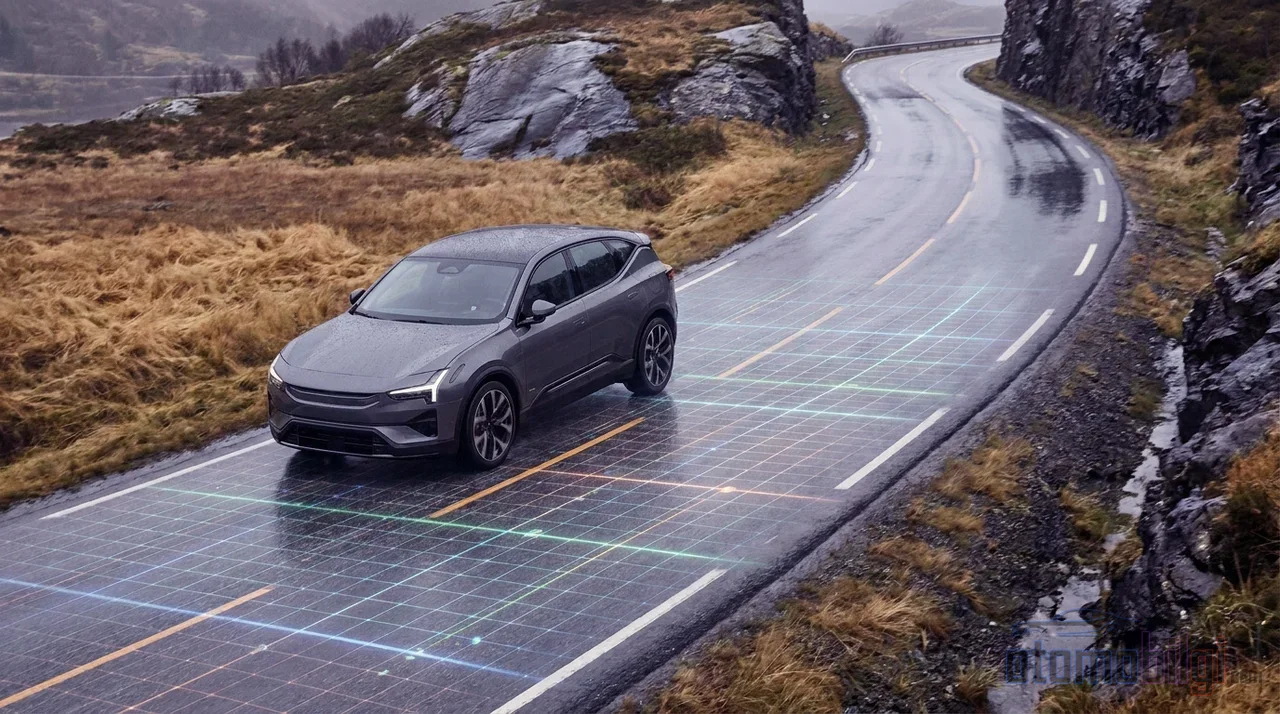
Wind affects the body, while rain changes the contact between the tire and the asphalt. On a wet surface, the layer of water increases the tire's rolling resistance; the tire deforms more to drain the water, and the traction control system expends extra energy to prevent slipping. This indirect effect of road surface conditions on battery efficiency is one of the quietest but most constant sources of range loss.
Figures regarding the rate of loss span a wide range: there are estimates that range decreases by 15-20% in heavy rain and on wet roads, as well as assessments that speak only of a slight drop. The difference mostly stems from intensity, speed and tire condition. Driving on a wet road with worn tires significantly reduces range; proper tire pressure, on the other hand, provides a measurable improvement in efficiency - the effect of tire pressure on range is a topic that is a separate research subject in the automotive engineering literature. Tire manufacturers also confirm that rolling resistance has a significant share in the energy losses of electric vehicles; it is precisely for this reason that low rolling resistance tires are part of manufacturers' efficiency toolbox.
It is useful to make a comparison with the temperature side: in cold weather, the range loss is about 12% with cabin heating off, while it can rise to 41% with heating on. The effect of rain is not of this magnitude, but when combined with wind on a wet highway, losses accumulate and make planning difficult.
Long Distance with Winter Wind in Türkiye: What Should the Realistic Expectation Be?
The vast majority of electric vehicles in traffic in Türkiye offer an average range of 250-500 km on a full charge; in the mid-range family car segment this figure rises to 350-500 km, and at the top of the long-range models, lists show Togg T10F reaching a WLTP value of 623 km. However, these values apply to ideal conditions. On a winter journey from Thrace to the Black Sea or eastward through Central Anatolia, headwinds, rain and cold weather all kick in at once; the combination of all three opens a serious gap between the WLTP value and the dashboard reading.
User experiences show the picture is not a nightmare: a driver traveling at a constant speed of 90-100 km/h in the summer months reports being able to cover 360 km starting from a 100% battery. Long journeys with an electric vehicle are possible in winter; it simply requires more comprehensive planning compared to summer. The majority of electric vehicle owners state that they are satisfied with winter performance and that range loss is not as bad as expected - provided that a safety buffer has been built in from the start.
A practical engineering rule suggestion: calculate the distance that can be covered on a windy winter day based on the vehicle's realistic highway range (around 70% of WLTP) with an additional 15-20% discount for weather conditions. When you build your charging plan according to this conservative figure, the dashboard will not mislead you.
Efficient Driving in Windy Weather: Speed and Lane Tactics
Your strongest lever when driving against the wind is speed; because the main component of aerodynamic loss is speed itself. It is calculated that driving at 120 km/h consumes 20-30% more energy compared to 90 km/h. The wind is added on top of that, so on a stormy day, dropping the speedometer one notch below recovers a significant portion of the range loss. A speed close to truck speed in the inner lane, around 90-97 km/h for example, is near the sweet spot for most electric vehicles - but it is also essential not to drive so slowly as to endanger traffic.
- Lane choice: On a windy highway, the inner lane generally offers both lower speeds and a more protected profile against crosswinds; reduce overtaking maneuvers that require excessive speed.
- Route: Prefer flatter routes instead of hilly and wind-exposed itineraries; use the energy-friendly route suggestion in navigation apps.
- Regenerative braking: Gentle acceleration, steady speed and early coasting; regen can recover approximately 20% of the distance on a long journey and is most effective in stop-and-go traffic.
- Cabin heating: Use seat and steering wheel heating instead of the air conditioning; preheat the cabin while charging.
- Tires: Keep the pressures at the manufacturer's specified values; in the combination of cold weather and wet surfaces, this is the cheapest efficiency measure.
- Load: Remove unnecessary luggage and the roof rack; every addition to the body profile is penalized twice as much on a windy day.
The aerodynamic benefit for wind is also measurable: reducing drag by 6 percent means a gain of roughly 3 percent in energy consumption. As a driver, this is what is under your control - without touching the body, you can turn the same mechanism in your favor through speed and route selection. In stormy conditions, you should also keep the battery at a high charge and be cautious when driving through puddles; charging in the rain is safe with IP-rated equipment.
Factoring Weather Conditions into Charging Planning
On a windy and rainy winter journey, the charging plan cannot be an exact copy of the summer plan. The basic rule of the plan is simple: put a buffer on top of the calculated range and choose charging stops based on this buffered value. If an average car offers a range of 250-500 km, the safe distance to cover at one stop on a windy day may fall near the lower half of this range. That means a route covered with a single stop in summer could mean two stops in winter.
The second rule is to prepare the battery for the journey: preheating the cabin and battery while charging before departure reduces the amount of heating energy that eats into the range in the first part of the trip. The third rule is flexibility - the wind direction is not constant along the route; when the route turns, the wind can shift from headwind to tailwind and the consumption estimate changes. Following the instant consumption graph on the display lets you understand whether the plan's buffer is sufficient within the first 50 kilometers of the journey.
Ultimately, bad weather is not an obstacle to traveling in an electric vehicle, but a variable that must be factored in. Today we can only see the per-kilometer trace of the wind through inferences from speed tests; but being cautious about speed, choosing the route wisely, and planning with a buffer recovers most of the loss within the very first kilometer.
Sources
- How to maximise range on your electric car by the way you drive
- Electric cars 2025: models with the most range on the highway
- 7 Factors That Affect Electric Vehicle Range
- The real world EV range: how to optimise it
- Sticker Shock: The Real-World Range Of Electric Vehicles
- Effect of Wind on Electric Vehicle Energy Consumption
- How Road Surface Conditions Impact EV Range
- Tire pressure impact on EV driving range
- What can affect electric car range?
- Optimize electric vehicle design to reduce energy use
- Tips for driving an electric car safely in strong winds
- What Is Electric Vehicle Range? How Many KM Does It Go and How Can It Be Increased?
- Tips for Maximizing Electric Vehicle Range
- Can Electric Cars Be Driven in Winter?
- Electric Vehicles with the Longest Range (2025 List)
- Can Electric Cars Be Charged in the Rain?