Division of Labor in the Robotaxi Era: Waymo Drives, Uber Manages
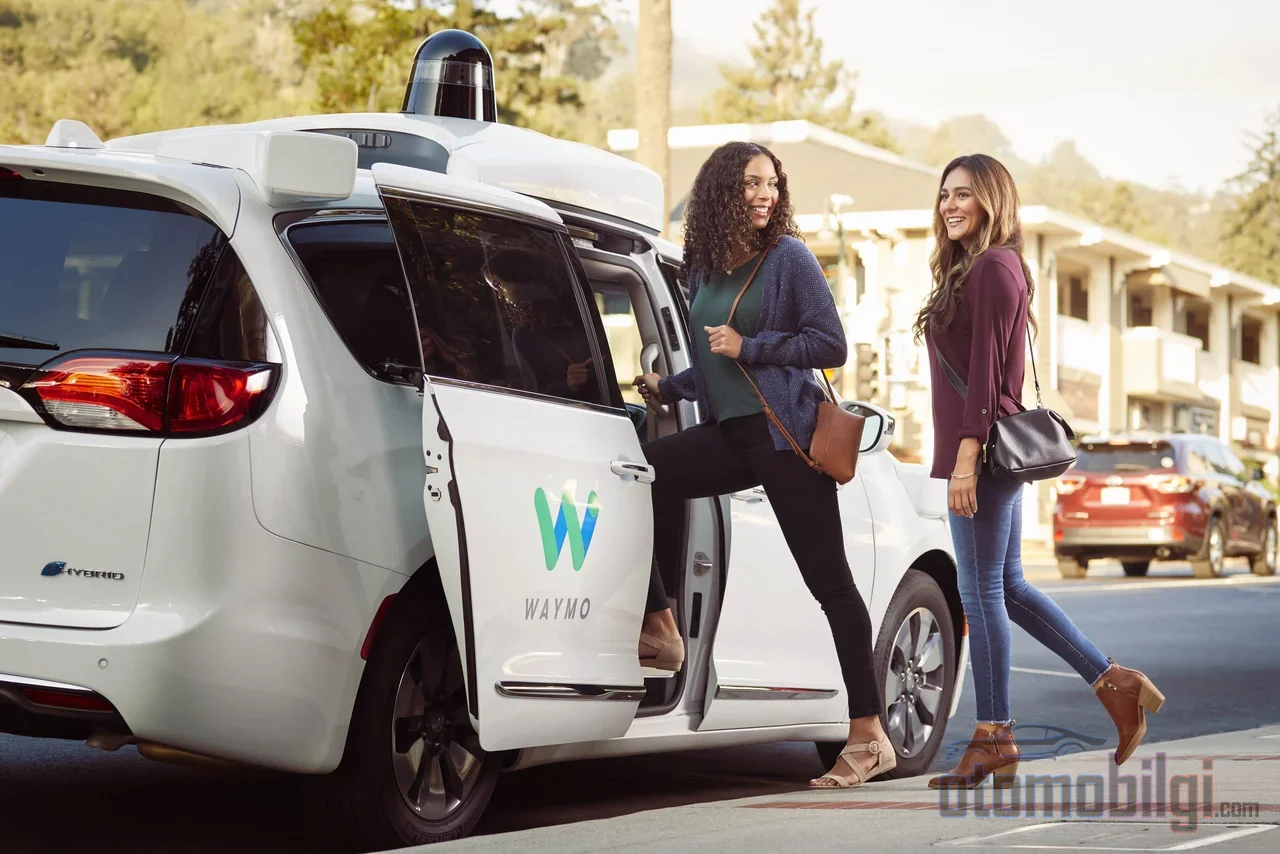
Just think about it: a super sports car delivers legendary performance on the racetrack, but another team handles its garage, maintenance and tire changes. That is exactly what is happening in the robotaxi world. You know that Waymo's driverless Jaguar I-PACEs roam around on their own; but who cleans that car you hail from the Uber app in Austin, who finds the passenger, and whose pocket does the money go into? Here is the question most people skip: how does the division of labor between a technology company and a ride-hailing platform work in the robotaxi era?
And in 2026, this question had never been asked so often; because one of the biggest partnerships in robotaxi history is starting to creak precisely because of this division of labor.
Who Does What in the Waymo-Uber Partnership?
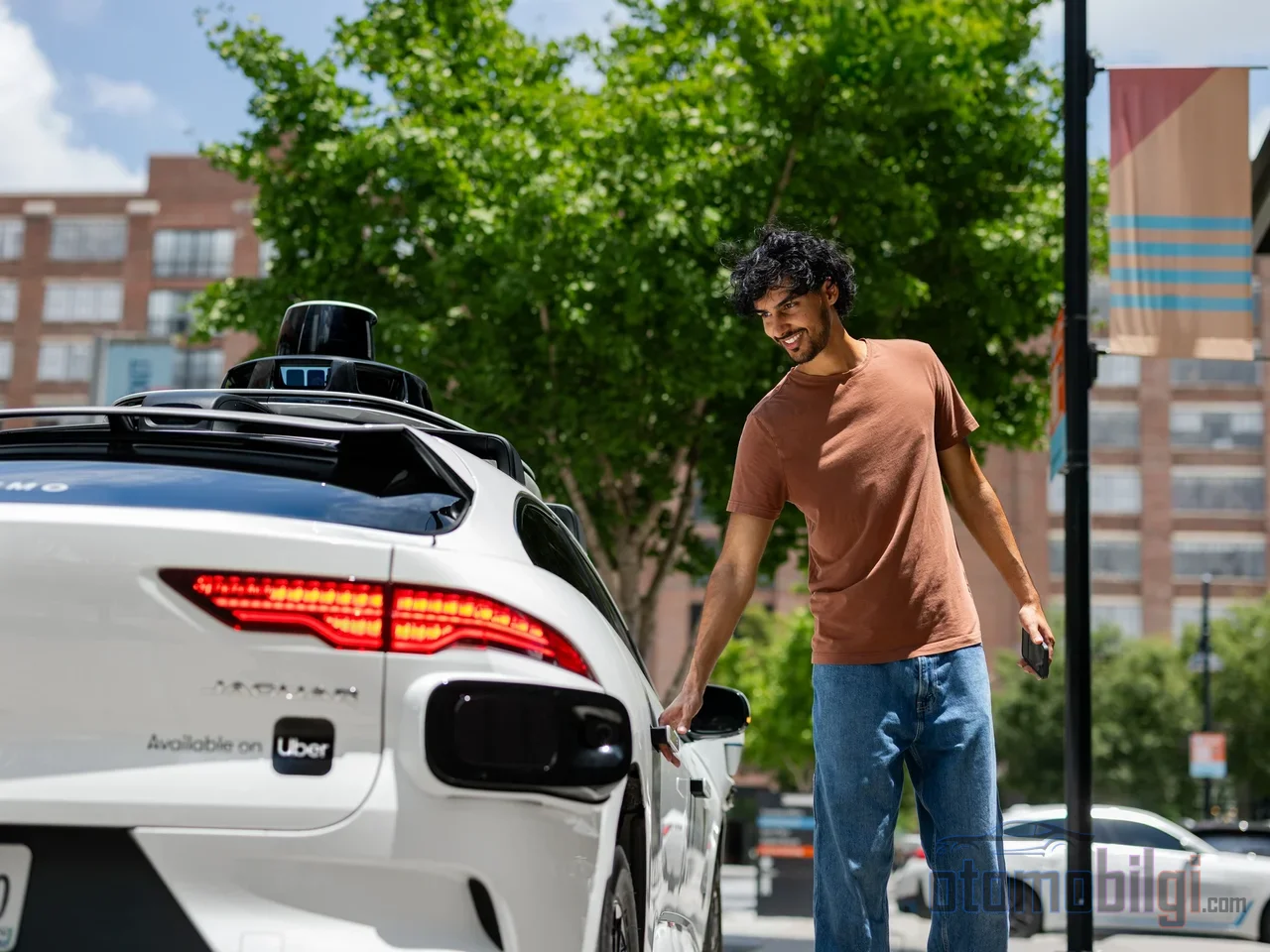
With the agreement signed in September 2024, Waymo robotaxis became hailable through the Uber app in Austin and Atlanta; the service started in early 2025. The vehicles were Jaguar I-PACEs, and the fleet was planned to grow to hundreds of vehicles over time. But what is truly interesting is the paperwork behind the seats.
So how exactly is the division of labor in this partnership structured? Roughly like this:
- Uber: vehicle cleaning, repairs, depot operations and dispatch. Uber offers this package under the name Uber Autonomous Solutions; it also includes demand generation, customer service, remote assistance, financing support and local operational know-how.
- Waymo: testing and operation of the Waymo Driver, roadside assistance service and certain passenger support functions. In other words, the actual driving work and the bulk of the safety responsibility it brings belong to Waymo.
And that is the general rule: the technology company carries the driving system and the safety responsibility, while the platform takes over the ride-hailing infrastructure, local fleet operations and customer support. But pay attention, here is the catch: outsourcing fleet ownership and maintenance does not eliminate costs, it merely shifts them from one partner to another. And no partner is doing this out of charity; each wants its own slice of the fare pie.
Key Highlights
- Waymo robotaxis in Austin and Atlanta can only be hailed through Uber; in the other 13 cities, Waymo's own app is in use.
- Revenue sharing, cost per trip and profit margin are not disclosed by either company.
- Waymo announced that it is making more than 500,000 fully autonomous paid trips per week; Uber's quarterly trip count is roughly 600 times that figure.
- The share of Uber-exclusive cities fell to about 13% of the entire robotaxi service.
- Uber confirmed in July 2026 that the tie with Waymo is coming to an end; the current contract expires in May 2028.
How Are Fleet Operations Divided Up?
Even in the cities where Waymo uses its own app, fleet operations are not run by a single hand; on the contrary, they are divided among specialists almost like a Formula 1 team. Moove has taken over vehicle operations, charging and facilities in Phoenix and Miami. Avis manages fleet management, vehicle preparation, maintenance and depots in Dallas. In Nashville, Lyft's Flexdrive division runs the fleet: In October 2026, an 80,000-square-meter warehouse opened featuring dozens of fast chargers and a high-voltage maintenance section, and it was announced that more than 70 full-time jobs were created this year.
Nashville is actually the template for this entire piece. Since September 2026, Lyft users can be matched with a Waymo vehicle on standard or comfort orders without paying an extra fee; if you prefer, you can decline the robotaxi and request a human driver. The same fleet is also selling through the Waymo app. So Waymo gains additional demand without granting exclusivity to any market. This model also explains the logic of Waymo adding its own app alongside Uber in Austin and Atlanta starting January 2028.
Fare Splitting: An Unknown Black Hole
Now let's come to the question nobody wants to answer: how is the fare divided between the partners? Unfortunately, the answer is not disclosed. Neither Waymo nor Uber has shared revenue splits, per-ride costs, or profit margins. For this reason, it is impossible to calculate the true economic appeal of the partnership from the outside; this is exactly where the biggest gap between promise and reality lies.
The picture on the passenger side is a bit clearer. In a comparison made in the Bay Area over the same 94,348 ride requests, the average Waymo fare came out to $19.69, versus $17.47 for Uber; the difference is roughly 12.7%. Months ago this difference was around 30-40%, meaning the robotaxi premium is eroding. On trips of 4.3-9.3 km, Waymo is only 2% more expensive per kilometer; the average vehicle arrival time is 5.74 minutes, and outside of afternoon rush, it often even beats Uber. According to Wolfe Research's model estimates, a Waymo vehicle in Austin makes about 28 trips per day, and 21-22 in San Francisco; Austin utilization is roughly 30% higher.
When you consider bargaining power, things become even clearer: In the second quarter of 2026, Uber had 208 million monthly active consumers and 3.867 billion trips (annual increases of 16% and 18%, respectively). Waymo's 500,000 weekly trips spread over three months comes to roughly 6.5 million; Uber's quarterly volume is about 600 times that. So on the demand side, when mass hits the scale, Uber's side weighs heavier. That said, Waymo doesn't struggle to find money either: In early 2026 it raised $16 billion in equity at a $126 billion valuation, and in October 2026 it closed a $5 billion credit package led by PIMCO, Blackstone, and Sixth Street.
Who Holds Insurance and Liability?
When a robotaxi has an accident, who gets the bill? No source draws a clear liability map, but when the pieces come together the picture becomes fairly understandable. The basic logic is this: Waymo carries the driving system and therefore the bulk of safety responsibility; Uber handles the ride-hailing infrastructure, local fleet operations, and customer support. Since both sides bear real costs, each has grounds to demand a large share of the fee; and that is exactly where the seeds of conflict lie.
The most striking example on the insurance side comes from WeRide. This company, which works with Uber, has adopted an asset-light model: Of the 1,200 robotaxi deployments planned in the Middle East, fleet operations are run by Uber or local third-party partners. WeRide, for its part, has established a global insurance partnership program; its founding partners are Allianz Insurance Singapore and Ping An P&C Insurance. In other words, the task of structuring the insurance risk stays on the technology company's side. On Lyft's side, the platform states that it verifies its robotaxi partners have regulatory compliance, real-time monitoring, incident response, and fleet maintenance programs; this can be read as a kind of operational safety verification by the platform.
Why Is the Partnership Creaking?
In July 2026, things went sour. According to media reports based on anonymous sources, Waymo complained about dirty vehicles and poor fleet dispatching; while Uber criticized Waymo vehicles that could not be used in bad weather and found the partnership's financial terms unsustainable. Shortly afterwards, Uber officially confirmed the end of its ties with Waymo; this also weakens the logic of the $10 billion autonomous strategy Uber committed to starting from 2025.
In a sense, both sides believe they hold the more valuable half of the table: Waymo wants control, while Uber wants to see robotaxis as a category in its marketplace. And the math has begun to turn in Waymo's favor; the share of cities dependent on Uber, which was 18% while the service was in 11 markets, fell to roughly 13% with the expansion to 15 cities. Las Vegas will be the 15th city in September 2026. city in September 2026, and it too operates through Waymo's own app. The old Uber partnership in Phoenix had already ended in early 2026, with the vehicles returning to Waymo's own fleet.
Uber is not sitting idle either: Zoox (federal exemption with a 2,500-vehicle-per-year limit), Pony.ai (more than 2,000 robotaxis in five European cities, starting with Zagreb), Rivian (10,000 autonomous R2s, up to 50,000 with options), investments exceeding $600 million in total in Lucid and Nuro, and a plan to purchase more than 20,000 vehicles... But the truth is that none of these has yet come close to Waymo's scale in the US.
How Does a Robotaxi-Platform Partnership Work: The Short Answer
So what is the clear answer that emerges from this whole story? In robotaxi partnerships, the technology company takes on the driving and most of the safety responsibility; while the ride-hailing platform brings the customer, trip management, the fleet's daily operations, and the human-driver backup. The fee split is not disclosed in any major partnership, and the exact boundaries of responsibilities remain unclear. The balance rests on something neither side can give up: Waymo's technology and Uber's demand density.
And Uber's hardest-to-copy trump card is perhaps its oldest one: the human-driver backup. When Waymo had to halt service in four cities due to flooding in May 2026, passengers on the Uber app continued to be matched with human-driven vehicles; users of the Waymo app, on the other hand, were left on their own. On a day like this, the answer to which half is more valuable weighs heavier than anything else at the negotiating table.
The result: Is the Marriage Ending, or Transforming?
The timeline is set: the current contract expires in May 2028, and Waymo plans to add its own app alongside Uber's in Austin and Atlanta starting from January 2028. The fleet targets that have leaked to the press are also ambitious: the fleet of roughly 4,000 vehicles is expected to grow to 8,000 by the end of 2026 and 20,000 by the end of 2027; Waymo has not officially confirmed these figures.
My reading is this: this is not a divorce, but a rebalancing of power. Waymo is no longer dependent on Uber's demand engine; it operates with its own app in 13 of 15 cities, has become independent by splitting its fleet operations into pieces, and its financing is complete. But Uber, with its 200 million active consumer base and a human-driver backup that functions like bad-weather insurance, still offers an unmatched mass. Over the two years until the contract expires, we will all watch together which half wins; the most expensive negotiating table of the robotaxi era has not yet broken up.
Sources
- Waymo and Uber expand partnership to bring autonomous ride-hailing to Austin and Atlanta
- Uber and Waymo Head for a Strategic Split as Global Robotaxi Race Accelerates
- Does Waymo still need Uber?
- Uber confirms end of tie-up with Waymo as rivalry heats up
- Uber and WeRide Expand Strategic Partnership to Bring Autonomous Vehicles to 15 More Cities
- WeRide Unveils Global Insurance Partnership Program
- May Mobility to deploy autonomous vehicles to the Lyft platform
- Lyft announces new round of autonomous partnerships
- What Flexdrive tells us about Lyft's AV strategy
- Why Uber's Business Model Gives it an Edge Against Robotaxis