Does Driving on an Empty Tank Damage the Fuel Pump?
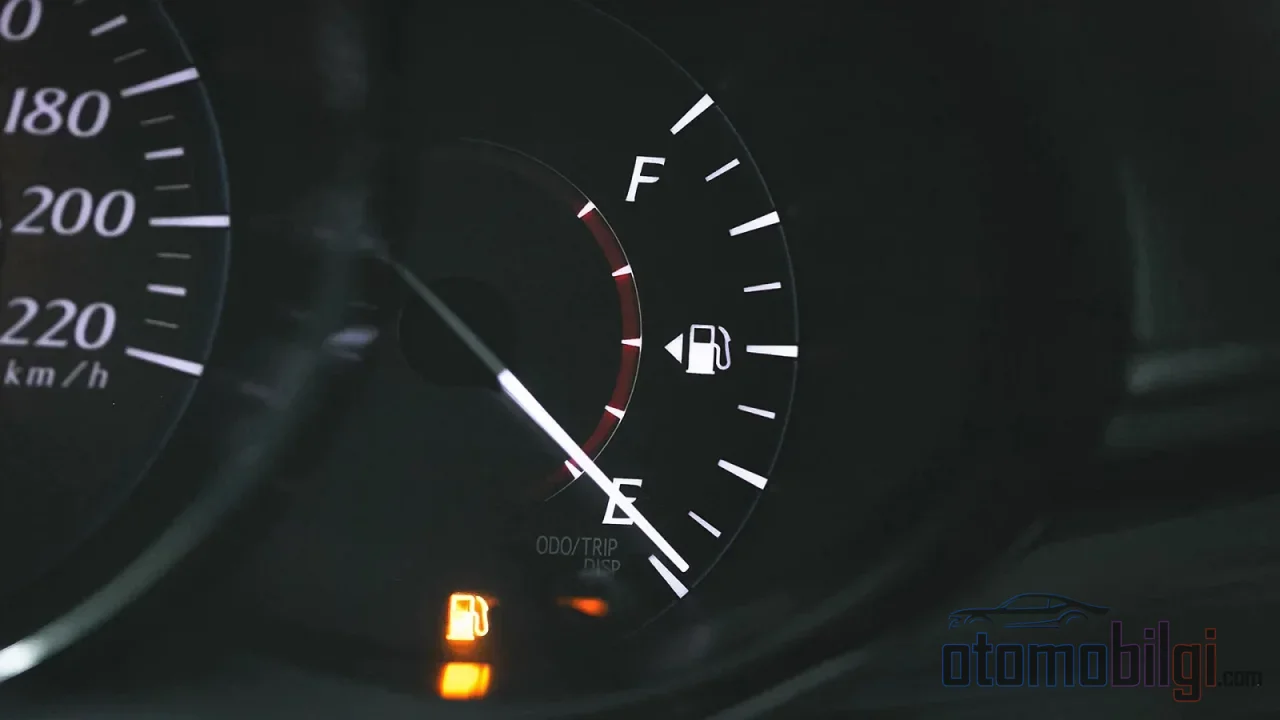
There is no small number of drivers who keep driving for a few more days instead of stopping at a gas station when the fuel gauge light comes on. Some think this saves money, and panic when they hear that the habit wears out the fuel pump. The opposing view is completely different: it argues that this claim is an urban legend, and that most vehicles are designed so that the pump stays submerged in fuel even when the tank is nearly empty. The truth lies somewhere between these two extremes - and when viewed through the lens of engineering logic, the answer becomes surprisingly clear.
What Does the Fuel Pump Do in the Tank and Why Is Overheating Discussed?
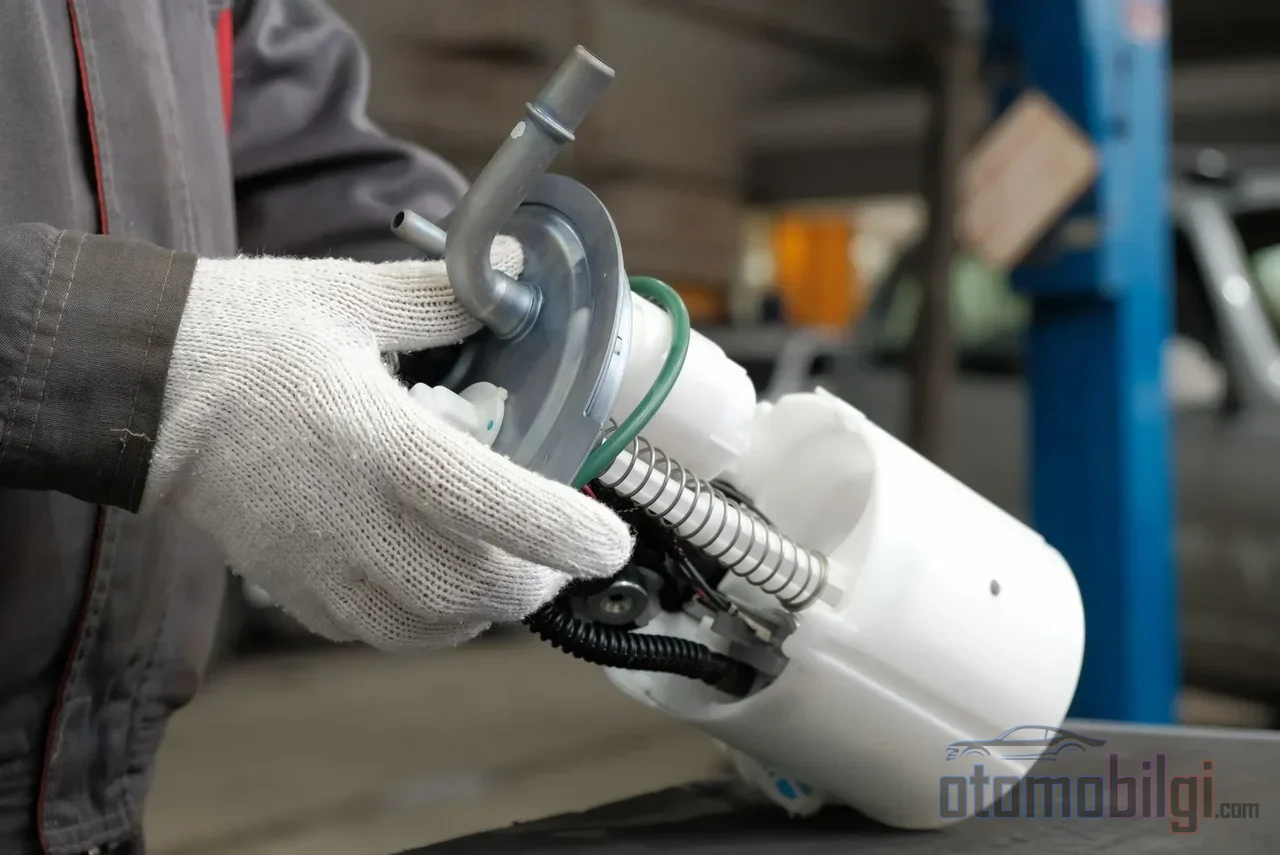
In most internal combustion cars, the electric fuel pump is placed directly inside the fuel tank and is submerged in fuel under normal operating conditions. Gasoline takes on a dual role here: it cools the pump motor and lubricates its moving parts. As the tank level drops, the thickness of fuel above the pump decreases; the volume of fuel available for heat transfer shrinks. For electric machines, heat is one of the most taxing factors that shorten insulation and bearing life. This is the physical basis of the saying "driving around with an empty tank burns out the pump."
However, the picture is not that simple. Most pumps operate inside a compartment with a baffle (anti-slosh baffle) structure where a small amount of fuel remains trapped even when the tank is close to completely empty. So the pump is actually in contact with a small amount of fuel even when the gauge reads "empty." Moreover, the pump's cooling does not depend solely on the fuel surrounding it; the fuel flowing through it also provides cooling and lubrication. The existence of vehicles with externally mounted pumps that travel hundreds of thousands of kilometers shows that being submerged is not, by itself, a vital requirement.
Key Takeaways
- The real cause of pump failure is not overheating, but wear and pressure line problems.
- Continuously driving with the warning light on is risky; an occasional low level alone does not kill the pump.
- The extra 45 kg load increases consumption by at most 2%; half-tank savings are marginal.
- In practice, refueling without letting the tank drop below the 1/4 to 1/3 level is a safe habit.
- A full tank reduces the risk of condensation and water accumulation thanks to the small amount of air inside.
What Really Damages the Pump: Heat or Sediment?
The limits of the heat claim
Although the overheating argument is theoretically correct, field failure statistics show a different order of priorities. Pumps mostly fail for mechanical reasons such as wear or a break in the pressure line; when fuel pressure is lost, the engine management system shuts the pump off. So the pump "burning out" is not a typical failure mode. Also, most modern fuel systems use a return-less design, and there is no continuous large-volume fuel circulation from the tank to the engine; this weakens the "tank as a cooling reservoir" logic. The point experts agree on is more specific: the pump only suffers permanent damage under truly dry-running conditions. Refueling while there are still a few liters left in the tank causes no problems; a one-time low-level episode does not kill the pump.
The real risk: sediment, filter and injectors
The more concrete side of the low-tank debate, beyond heat, is contamination. Over time, sediment and particles that settle at the bottom of the tank get closer to the intake as the level drops. The pump is forced to draw in this sediment; the result is first a clogged fuel filter, and if the filter is bypassed or becomes saturated, dirty fuel reaching the injectors. Dirty injectors cause symptoms such as weak acceleration, irregular idle and, in advanced cases, the engine stalling. Completely draining the tank also requires re-pressurizing the system when no fuel reaches the engine, and can pose additional risk for components such as the catalytic converter. In short, the problem is less about "the pump heating up" and more about "what the pump is sucking in."
Habit is the deciding factor: occasionally, or constantly?
The distinguishing variable here is the continuity of the behavior. It is a well-known service observation that early pump failures are seen in drivers who run the tank until the light comes on and put in only a few liters each time. On the other hand, there are plenty of users who fill up as soon as the indicator light comes on and go through 150,000-200,000 kilometers without ever experiencing a pump problem. From an engineering standpoint, the marginal difference reads like this: while a single low-level episode is negligible, chronic low-level operation loads the pump with both thermal and contamination risk continuously and simultaneously.
Does Driving With a Half Tank Really Save Money?
Physics is impartial here: a heavier vehicle means greater inertia and rolling resistance, which increases consumption. This mechanism is a measured fact. The question is how large the half-tank's share in this equation is in practice.
Numerical estimates in various sources cluster in the range of a 1-2% consumption increase per 45 kg of extra weight; there is also an assessment that reducing the vehicle's total mass by roughly 10% improves consumption by 6-8%. Let's adapt these figures to a 50-liter tank: with gasoline's density, a half tank means a load difference of roughly 18-19 kg. That is an effect on consumption at the level of a few tenths of a percent, too small to measure in everyday use. So the chain "less fuel = less weight = less consumption" is technically true, but the return is negligible. Moreover, the half-tank strategy requires twice as frequent trips to the gas station; the time cost of each stop and the detour kilometers on your route often erase the savings measured in grams.
On the other hand, the half-full level has no disadvantage compared to a full tank, and there is a separate benefit to keeping it full: as the air volume in the tank shrinks, the condensation that forms inside during day-night temperature swings, and therefore the likelihood of accumulation in the tank, decreases. For this reason, keeping the tank reasonably full is a sensible practice, especially in rarely used vehicles - but the reason is not savings, it is moisture control.
A Practical Tank Strategy for Pump Life and Consumption
The two approaches discussed - always a full tank versus a lightly half-full tank - are not mutually exclusive. Each has a rational core, and the correct practice lies at the intersection between them. The following recommendations are derived from that intersection:
- Refill the tank without letting it drop below the 1/4 to 1/3 level; do not wait for the light to come on.
- Never try to start the vehicle with a completely empty tank; the pump loses both cooling and lubrication in dry conditions.
- Prefer clean and reliable stations; buy fuel some time after, not at the exact moment a fuel tanker has filled the station.
- Replace the fuel filter at the intervals specified by the manufacturer; a clean filter directly extends the life of the pump and injectors.
- If the vehicle will sit for a long time, leave the tank full; empty air volume increases the risk of condensation and corrosion inside the tank.
The cost of this discipline is close to zero. The gain is measurable: filters and injectors staying clean, preventing a failure chain that leads to pump replacement, and avoiding a sudden loss of fuel pressure.
Clear Answers with Frequently Asked Questions
Does a half tank harm the fuel pump?
No. While there are still 15-20 liters in the tank, the cooling and lubrication function for the operating pump is effectively continuing. Almost nothing. it begins at very low levels, where sediment at the bottom of the tank is drawn in and the pump approaches dry running. What is harmful is not a half tank, but a tank that is constantly nearly empty.
Is the pump being cooled by fuel a myth?
The mechanism is real: gasoline both cools and lubricates the pump motor. The part that has become mythologized is the conclusion that "if you don't always keep the tank full, the pump will burn out." Pump failure modes are mostly due to wear and pressure line issues; under conditions other than complete dryness, thermal damage caused solely by low levels is not a prominent cause of failure.
How much does driving with a half tank save?
Almost none. A half tank means a difference of roughly 18-19 kg; in an equation where the effect of a 45 kg load is 1-2%, this is a gain below the measurement threshold. The extra kilometers and time from visiting the gas station twice as often usually eliminate the remaining savings.
What is the ideal minimum tank level?
According to the practical threshold, between 1/4 and 1/3 of the tank is a safe lower limit. Below this level, both the risk of drawing in sediment increases and the pump's thermal and lubrication margins narrow. Planning a refill when the light comes on is a sufficient and necessary measure for both pump life and filter-injector health.
The Engineer's Verdict
When the question marks are cleared up, the picture is this: driving with a half tank does not harm your pump, but it does not provide you with any meaningful savings either. What's harmful is the habit of constantly driving with the fuel light on and running the tank down to the bottom - both because it narrows the thermal margin and because settled sediment at the bottom gets drawn into the fuel line. Refilling before the tank drops below a quarter, choosing a clean station, and changing the filter on time; these three habits extend the life of the pump and fuel system without needing any urban legends.
Sources
- Running close to empty will ruin fuel pump? - Car Talk Community
- Why You Should Avoid Driving with Low Fuel Levels - Jeff's Automotive
- Auto$mart - Weight affects fuel consumption - Natural Resources Canada
- Does Driver Weight Affect Mileage? - Teletrac Navman
- How Vehicle Weight Affects Fuel Costs - Nalley Cars
- Don't Fall for These 7 Fuel Efficiency Myths - CBAC
- Tips To Maximize Fuel Pump Lifespan - GMB Blog
- Fuel Tank: Best Maintenance Tips and Tricks - Meineke
- 4 Symptoms of a Bad Fuel Filter - AAA Club Alliance
- What Increases Gas Mileage: Full or Half Empty Tank - Creditinfocenter