Does Injector Cleaning Reduce Fuel Consumption?
Share This Page
Yes, dirty injectors can increase fuel consumption - but there is a serious gap between the measurable reality and the 10-25% improvement promises you hear in marketing language. Independent and institutional data show that the consumption recovered by cleaning remains at around 1.5% on average. So injector cleaning is not a solution, but a repair procedure that holds true in the right thesis.
Highlights
- A dirty injector causes the ECU to enrich the mixture at idle, increasing consumption in a measurable way.
- While marketing sources promise 10-25% improvement; institutional data shows an average recovery of 1.5% with additive cleaning.
- If there are no symptoms, injector cleaning is usually a waste of money; it is not included in manufacturers' routine maintenance schedules.
- In modern, computer-controlled engines, a clogged air filter has very little effect on consumption; it reduces power.
How Exactly Does a Dirty Injector Increase Consumption?
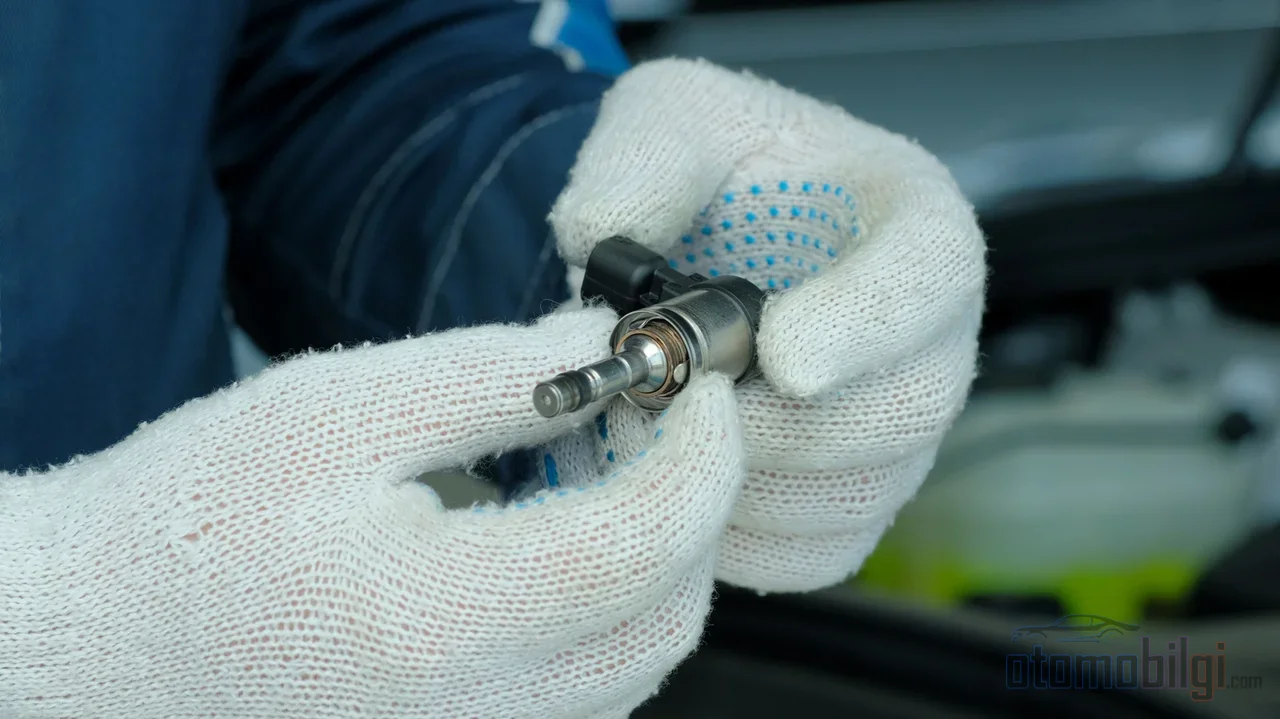
The injector is an electronic valve that opens and closes on the command of the ECU, the engine's brain. Doing its job correctly depends on three conditions: opening time, spray pattern, and flow rate. A healthy injector opens quickly, closes tightly, maintains a consistent spray pattern, and matches flow with the other injectors in the same engine. When one of these balances is disrupted, the problem is no longer that of a single part, but of the entire combustion process.
Deposits and fuel varnish accumulated at the injector tip restrict the amount of fuel delivered with each spray. The spray pattern deteriorates, and the fuel cannot mix well enough with the air - in engineering terms, atomization worsens. Incomplete combustion of the mixture means both performance and efficiency loss. Even a single weak injector can push one cylinder into a lean mixture, even if the overall air/fuel ratio appears acceptable; the engine feels it.
The mechanism that comes into play here is the real explanation for the increase in consumption: the ECU injects more fuel to compensate for the disrupted mixture. Since mixture formation becomes difficult especially at low revs, the mixture becomes richer than necessary in order to maintain idle quality. The result is an increase in idle consumption clearly visible on the dashboard. A dirty injector increasing consumption is not a fate, but a natural consequence of the ECU's compensation mechanism. The dirtier the injector, the greater the compensation and the more pronounced the measurable deviation.
How Many MPG Does Fuel Injector Cleaning Really Gain?
Two separate universes of figures circulate around this question. The first universe is the world of content sites and additive sellers: it is claimed that dirty injectors reduce fuel economy by 10-25%, cost drivers hundreds of dollars a year, and that professional cleaning recovers most of this loss. These claims are presented with an intense sales pitch and are not supported by independent measurements; they should not be taken as sole evidence.
The second universe is far more modest. According to assessments based on institutional data from the fuel sector, using fuel with detergent additives can recover on average only 1.5% of lost fuel economy. On the heavy-duty diesel side, citing US Department of Energy research, it has been reported that improvements in fuel quality provide efficiency gains of more than 4.5% compared to older engines; modern diesels are sensitive to even small variations in flow and spray pattern in injector performance. The reason for the gap between these two scenarios is not complicated: one describes the worst-case potential, the other the reality measured in an average fleet.
The practical translation is this: on a vehicle with a severely clogged injector, cleaning can restore consumption. Cleaning an already clean system yields no measurable gain. It is not the size of the promised figure that matters, but your vehicle's starting condition.
Additive Bottle, Ultrasonic, or Service Cleaning?
The three methods differ from each other in how they work, their scope, and their cost logic. The right choice depends on the density of the deposits and the mechanical condition of the injector.
| Method | What it does | Limitation |
|---|---|---|
| Tank additive (PEA/PIBA based) | Gradually dissolves light carbon deposits; PEA-based products are the most effective category against deposits | Cannot solve serious blockage, leakage, or internal wear |
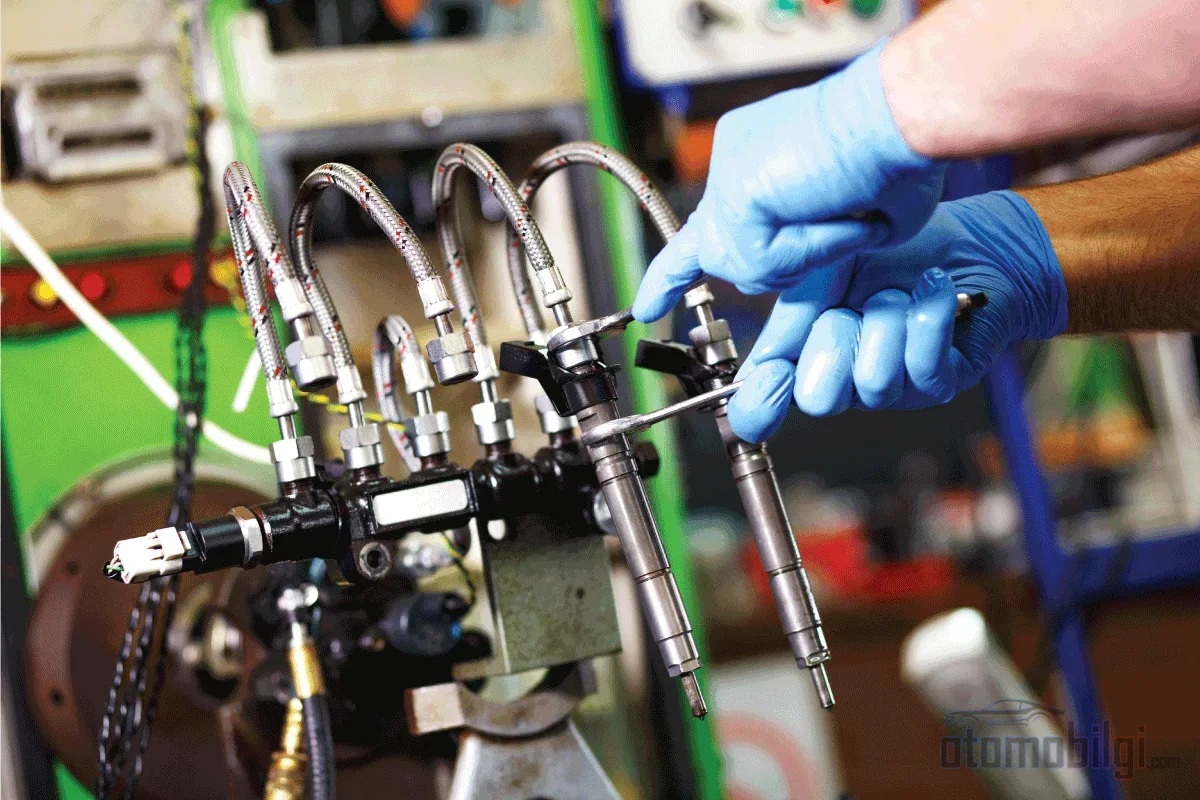
| Ultrasonic cleaning | The injector is removed and deep-cleaned in the bath; this is the most comprehensive result without harming the component | Equipment quality determines the outcome; powerful multi-transducer units make a difference |
| Service "fuel system cleaning" | Flushing the system via an additive or machine | If there is no operating problem, in most cases it makes no difference in driving |
Two details are decisive in choosing an additive: active ingredient concentration and engine type compatibility. The concentration differences on product labels are not marketing decoration; they directly affect cleaning capacity. There is also a common confusion that needs to be clarified: octane boosters and injector cleaners are different products. An octane booster does not clean a dirty injector; nor does a cleaner offer any solution to the knocking problem.
Although ultrasonic cleaning is technically the strongest option, field experience with additives is just as contradictory. While some users report remarkable improvements, there are also cases where consumption worsened after using an additive. The reading of this picture is simple: the result varies depending on the type and density of the deposits; an additive is not a certain solution but a tool that works in the right case. It is also essential, on the safety side, to stick to products with verified content and to avoid overdosing and mixing incompatible products.
When Is Injector Cleaning Necessary, and When Is It a Waste of Money?
The clearest answer is in this sentence: if it is not fixing an existing problem, injector cleaning is probably not necessary. Cleaning is typically not part of manufacturers' routine maintenance programs; periodic cleaning recommendations mostly come from service centers and dealers, and the 20,000-30,000 mile intervals are questioned by independent technicians. If your system is clean, paying to clean it is a waste of time and money.
So when does it earn the right to be cleaned? When the following symptoms come together, the possibility of a deposit-related flow restriction should be taken seriously:
- A drop of 2-3 MPG or equivalent in your usual consumption
- Rough, uneven idle
- Hesitation, unresponsiveness when accelerating
- Misfires, hard starting
- Black smoke or a noticeable fuel smell from the exhaust
If diagnostic data is added to these, the decision sharpens: if fuel trim values have moved outside the normal range, the ECU is constantly compensating and injector flow should be questioned.
Cleaning or replacement?
If the problem stems from deposits and the injector is mechanically and electrically sound, cleaning is a sensible repair. However, if there is an electrical fault, a serious leak, corrosion, physical damage, or flow cannot be restored with cleaning, part replacement is the only solution. A leaking injector is especially urgent: it wipes the oil off the cylinder wall, thins the engine oil, fouls the spark plugs, can damage the catalytic converter, and the excess fuel strains the exhaust aftertreatment system on the diesel side.
Related Maintenance Items: Do Air and Fuel Filters Affect Consumption?
The cause of increased consumption is not always the injectors. A clogged fuel filter restricts the supply flow; it shows itself with power loss, throttle hesitation, starting difficulty, rough idle and worsening fuel economy. Every element that upsets the mixture's balance - whether filter or injector - reduces efficiency through the same mechanism. Replacing the fuel filter at the interval specified by the manufacturer is a preventive move that also delays the need for injector cleaning.
The air filter topic, however, is full of myths, and a period distinction is necessary here. In old carbureted systems, a clogged air filter could cause a serious increase in consumption; the extreme figures in old measurement data are products of that era. In modern, computer-controlled, fuel-injected engines the picture is different: a dirty air filter restricts airflow, the ECU compensates for it, engine power drops somewhat, but the consumption impact is minimal. So replacing the air filter is a justified job in terms of performance and maintenance routine; but when done with the promise of rescuing consumption, expectations should be kept modest.
How Do You Know the Cleaning Worked?
The answer is one word: measurement. After cleaning, track consumption with the same method for at least 2-3 tanks - divide the liters on the pump receipt by the kilometers traveled and record your own reality. The expected improvement window shows itself within the first 300-500 miles. If no improvement is seen in that distance, the problem most likely is not the injectors; turn to other candidates such as spark plugs, the oxygen sensor, the fuel filter or your driving profile.
It is also important to put the role of premium or detergent-treated quality fuels in its right place: they help prevent new deposits, but do not effectively clean existing deposits. They belong to the preventive maintenance category, not the curative one.
Conclusion: The Right Diagnosis Is the Cheapest Saving
Does injector cleaning reduce fuel consumption? In a vehicle with a problem, yes - but not with the promised double-digit figures, rather with a modest and measurable correction. In a vehicle without a problem, the answer is clear: no. When you notice increased consumption, run the diagnostic checklist: trim values and error codes, fuel filter, driving data, then the injectors. See the additive not as a routine expense, but as a tool to be used when symptoms are confirmed. This is what the engineering approach amounts to in the consumption file: measure first, then intervene.
Sources
- What Happens When Fuel Injectors Go Bad? Complete Troubleshooting Guide
- Signs Your Fuel Injector Needs Cleaning or Replacement
- The Role of Fuel Additives in the Future of Liquid Fuels
- Effect of Intake Air Filter Condition on Vehicle Fuel Economy
- Do Fuel Injectors Need Periodic Cleaning?
- Why Ultrasonic Cleaning is the Best Way to Clean Fuel Injectors
- How to Clean Fuel Injectors for Better MPG
- Octane Booster vs. Fuel Injector Cleaner: Key Differences
- Bad Fuel Injector Symptoms
- How Often Should You Change Your Fuel Filter?
- Fuel Injection Service vs. A Bottle of Techron - Is It Worth It?