F1 Development Cap: What Did the Wind Tunnel Limit Change?
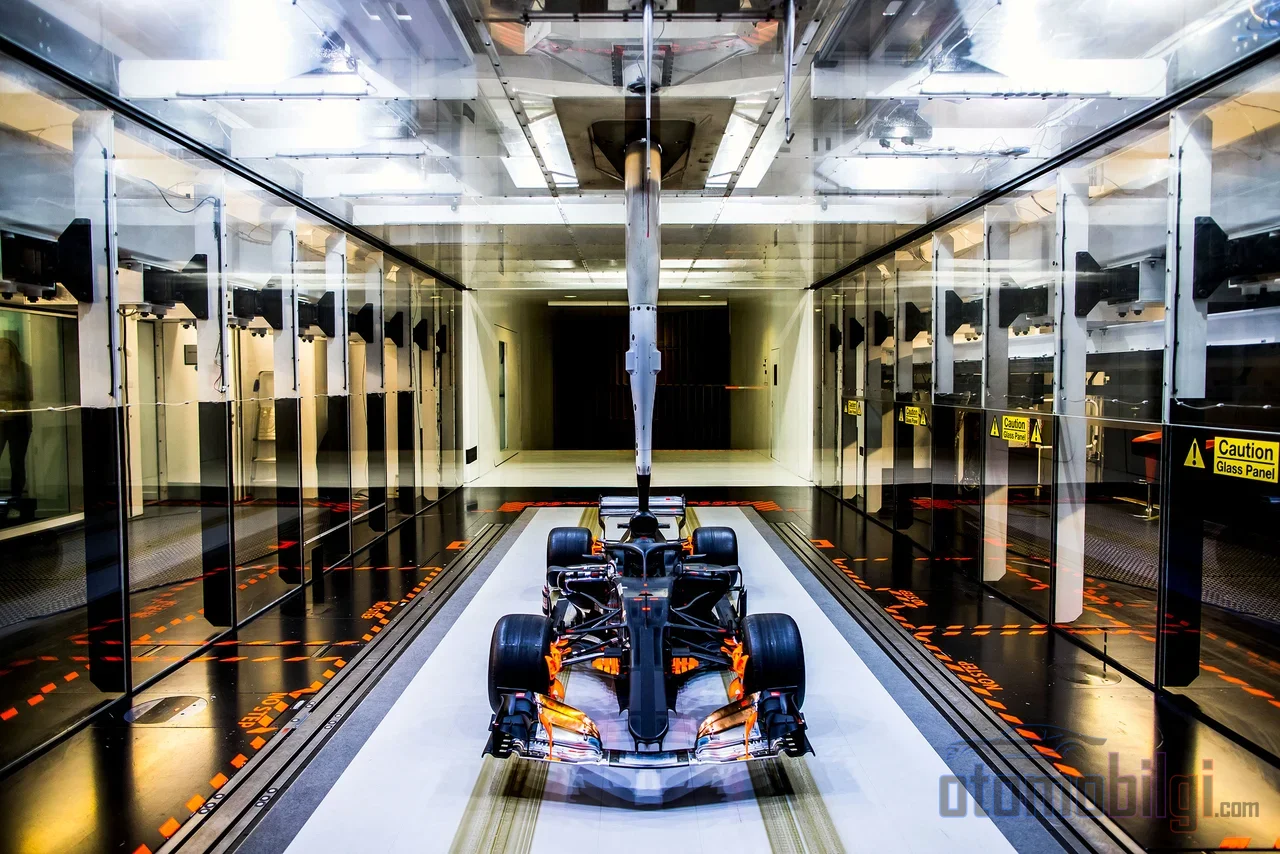
Engineers from two Formula 1 teams are working on the same part, sitting at the same computers, chasing the same goal. But while one breathes tunnel air for fifteen hours a week, the other has to stop at twelve. No one broke the rules; one team simply had priority in the championship. So how did a team's ranking become so decisive in what looks like a quiet rivalry between the mechanics in the garage?
What Is the Aerodynamic Testing Restriction, and How Does It Differ from the Budget Cap?
When money is discussed in F1, the first thing that comes to everyone's mind is the budget cap: the upper limit on what teams can spend in a season. But there is a second, less well-known barrier standing in front of aerodynamic development: the Aerodynamic Testing Regulations, or ATR. This rule set numerically limits the wind tunnel time and CFD resources - simulations carried out using computational fluid dynamics - that each team can use throughout the year.
You can think of it like a gaming quota: the family decides how many hours you can play at the screen, no matter how much you want more. Teams cannot develop as much as they want either; they have to stay within the quota set by the FIA. The quotas are divided within the year into six 8-week Aerodynamic Testing Periods. When one period ends, a new one begins, and teams use their allocations within these windows.
What is really interesting is the logic that determines who gets how much of this quota. Because here a classic sporting logic is reversed: the best one has the least right to work. Now let's take a look at how this seemingly strange system works.
The Sliding Scale: Why Does the Champion Get Less Tunnel Time?
The system is called the sliding scale, and the idea is simple: teams near the bottom of the constructors' championship are given a wider development quota with the aim of closing the gap. The champion receives only 70% of the base quota, while the last-placed team can work with 115%. The difference is not an empty number: the 115% share means 144 extra wind tunnel runs compared to the champion in the same period.
Which ranking the quota is calculated from is a strategic matter in itself. In the first half of the year, the previous season's championship is taken as the basis; in periods after 30 June, the current year's standings come into play. In other words, mid-season is an invisible threshold for the teams: how much development allocation you spent before that date determines how much ammunition you carry into the second half.
| Team position | Ratio to base quota | Meaning |
|---|---|---|
| Constructors' champion | 70% | The narrowest tunnel and CFD allocation |
| Midfield | Gradual increase | Scale shifting according to performance |
| 10th place (last) | 115% | 144 runs more than the champion |
The numbers speak even louder at team level. Running third in 2024, McLaren was entitled, in each 8-week period, to 256 tunnel runs, 64 hours of real airspeed at speeds above 15 m/s, 320 hours of tunnel occupancy time, and 1600 new geometries in CFD. In the same period, the table for leader Red Bull was 224 runs, 56 hours, 280 hours of occupancy, and 1400 geometries. The FIA's framework broadly allows for 200 to 320 hours of tunnel and CFD testing per year; it shifts depending on the team's position.
Highlights
- Sliding scale: the champion uses 70% of the base quota, while the last-placed team uses 115%
- Quotas are divided into 6 x 8-week periods each year and updated on June 30
- Until 2008, there was no limit on aerodynamic testing hours; some teams ran their tunnels non-stop
- Aerodynamics can account for up to 20% of an F1 team's budget
- F1 keeps the option of completely abandoning wind tunnels by 2030 on the table
The Strategy of Living on the Edge: The McLaren Example
The first question that comes to mind when quotas are mentioned is this: what do teams do within this limit? The answer is chess as much as engineering. McLaren gave the textbook example of this in 2024. In the first 14 races of the season, it deliberately brought only a small number of upgrade parts to the tracks; the reason was not laziness, but mathematics. The unspent development allowance opened up a wider working area for the team under the new quotas after June 30. The plan was to deploy the accumulated upgrades all at once in the second half of the season. Team principal Andrea Stella openly stated that Red Bull was ahead in physical parts delivery, but that McLaren was saving what it had accumulated for the second half.
This example shows that the development cap creates an unseen race off the track. While the two teams battle for the podium over the same weekend, behind the scenes a race of counting weeks continues in the engineering offices: how many runs were spent in which period, which geometry entered the CFD queue, how much was accumulated before June 30? Since even a single position in the championship directly affects the next year's development capacity, teams have to read the standings twice: once for points, once for the quota.
Tunnel, CFD, and Track: How Does the Data Triangle Work?
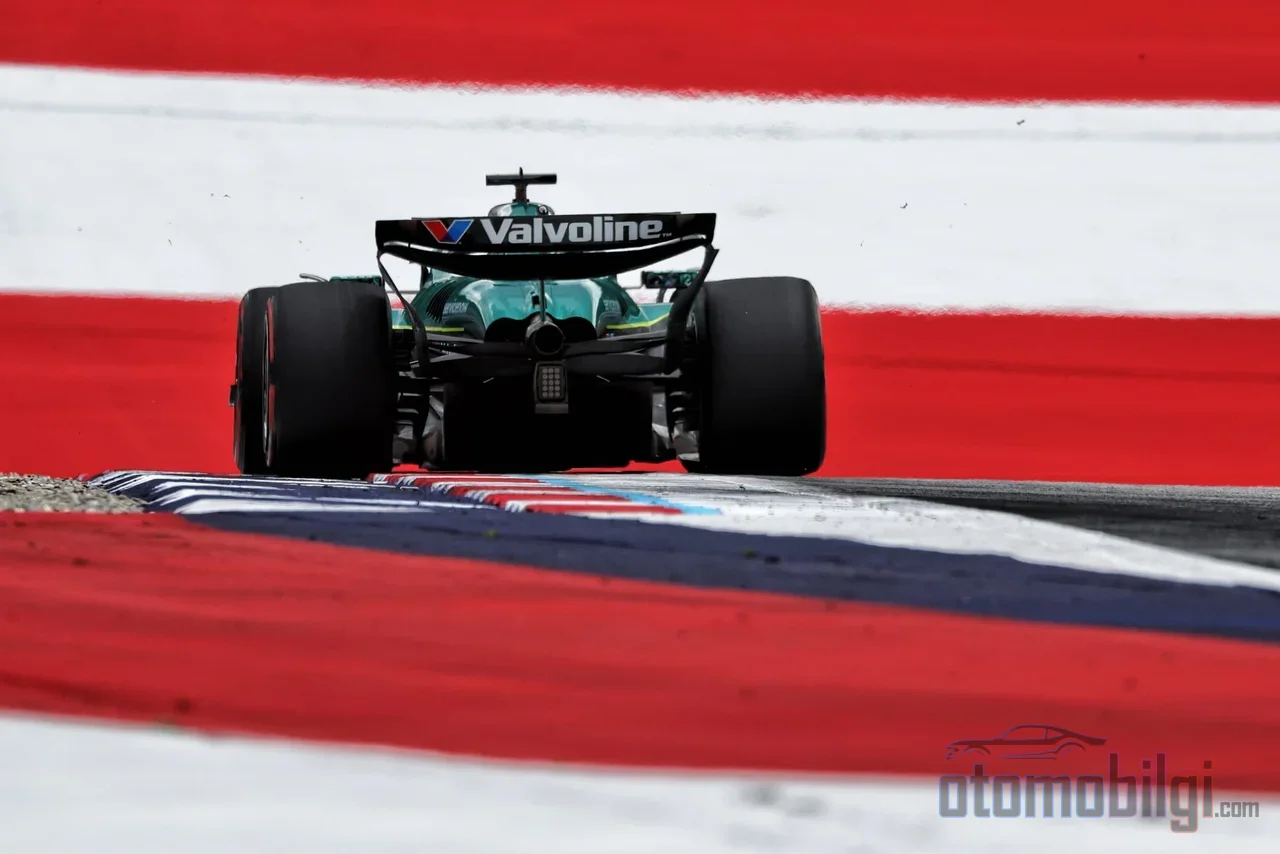
So how is the most efficient development done with limited resources? F1 aerodynamics actually runs on four different tools: track testing, a full-scale tunnel, a scale tunnel model, and CFD. Only one of them is real: the track. But track testing is both expensive and slow, and on top of that it can only be done in a limited way between race weekends. The remaining three are each approximations - and teams try to obtain the real picture by linking these three types of data together.
In the tunnels, generally 50-60% scale models are used, and the scale can never fully capture some things. The car accelerating, the tires rotating and deforming, the body flexing under aerodynamic load, track surface roughness... It is impossible to replicate these exactly in the tunnel. For instance, only CFD can fully model the tire's real geometry under rolling force. On the other hand, CFD comes at a heavy price too: A full-car simulation on a mesh with over 500 million cells takes tens of thousands of core-hours and runs for 8 to 24 hours. That is exactly why teams calibrate their simulations with correlation filters trained on tunnel and track data; and AI-backed surrogate models can reduce evaluation time from hours to milliseconds, delivering similar gains in an aerodynamic optimization with 12 iterations instead of 25.
The scale is also too fine to underestimate: the front wing alone contains more than 100 adjustment points, the diffuser produces roughly half of the total downforce, and a 1-millimeter change in ride height can seriously disrupt vortex structures. For an engineer working at this level of precision, the quota is not a number on paper; it is the answer to how many experiments each week is worth. Which do you think is more valuable for a team: three hours spent in the tunnel, or a three-hour full-car CFD run? These decisions teams make internally quietly reflect in the standings at the end of the season.
The Correlation Problem: The Tunnel Tells the Truth, But What Does the Track Say?
This is where the nastiest side of the development cap reveals itself: no matter how wide the quota is, it is of no use if the tunnel does not match the track. Wind tunnel correlation means that data taken from a scale model matches, one to one, the track performance of the full-size car. And achieving this match is far harder than it seems. Red Bull's aging tunnel's failure to correlate well with the track was cited as one of the reasons for the performance drop at the start of the season; Christian Horner described this situation as living in two separate time zones, like looking at different clocks. Think about it: you see a part look great in the tunnel, but on the track it is as if the same part never existed. You have spent your development, and gotten nothing in return.
Aston Martin's story, meanwhile, is a double-edged sword. The team invested in a new 200-million-pound wind tunnel ahead of 2026, and the tunnel now serves both 2025 and 2026 development at the same time; the elimination of travel needs sped up the work. While claims circulated that the new facility experienced correlation problems during its transition period, Adrian Newey also said that fixing a fundamental weakness in one of the team's major new investments could take two years. The lesson is clear: the tunnel is a tool, not magic. Making it speak the language of the track is an engineering battle of its own.
2026 Rules and a Future Without Tunnels
With the 2026 rules revolution, the quota system was also reshaped. The new ATR includes a sliding development allowance based on the mid-year and end-of-year championship standings; Aston Martin, joined by Newey, one of the most famous designers in the motorsport world, came out of this distribution with an extra advantage. The FIA also banned teams from working on 2026 concepts in the tunnel before the 2025 season ended - meaning everyone lined up at the starting line at the same time. Meanwhile, on the budget side, the picture is changing: the cap rises to about $215 million in 2026, while engine development is kept outside this cap.
What is even more striking is the future plan: The F1 organisation still keeps on the table the option of giving up wind tunnels entirely by 2030. If all development is one day moved into CFD, the concept of the development cap will take on an entirely new meaning - an hour quota will become a computing power quota. Teams racing with the power of computers will invest in data centres rather than tunnels.
Conclusion: The Invisible Race Behind the Podium
So let's wrap up the answer to the question. In F1, the development cap is a sliding system that limits each team's wind tunnel hours and CFD resources according to its ranking in the constructors' championship: the champion receives 70% of the base quota, the last-placed team 115%, and these quotas are updated mid-year on 30 June. But the real point is not the size of the quota, but how wisely you use it. McLaren planned a season by banking development, Red Bull paid the price of its ageing tunnel's correlation, and Aston Martin saw that even a 200 million pound tunnel throws itself into a two-year adjustment process. That is why the real race in F1, beyond the ten cars on track, is an invisible engineering race being waged in tunnels and data centres. Next time you look at the standings table, remember that behind each row lie the calculations of six 8-week periods.
Sources
- How F1's new sliding scale aero testing rules work
- McLaren aims to "cash in" on aero development, set for testing limit advantage
- Winners and losers from F1's 2026 aero testing limits
- 2026 FIA Formula One Technical Regulations
- 5 Steps to Optimize F1 Aerodynamics with CFD
- CFD versus tunnel versus track - part 1
- The beginner's guide to the 2026 regulations
- Aston Martin explain how wind tunnel 'opened our eyes'
- Newey exposes key Aston Martin weakness