What Do F1 Teams Test in the Simulator?
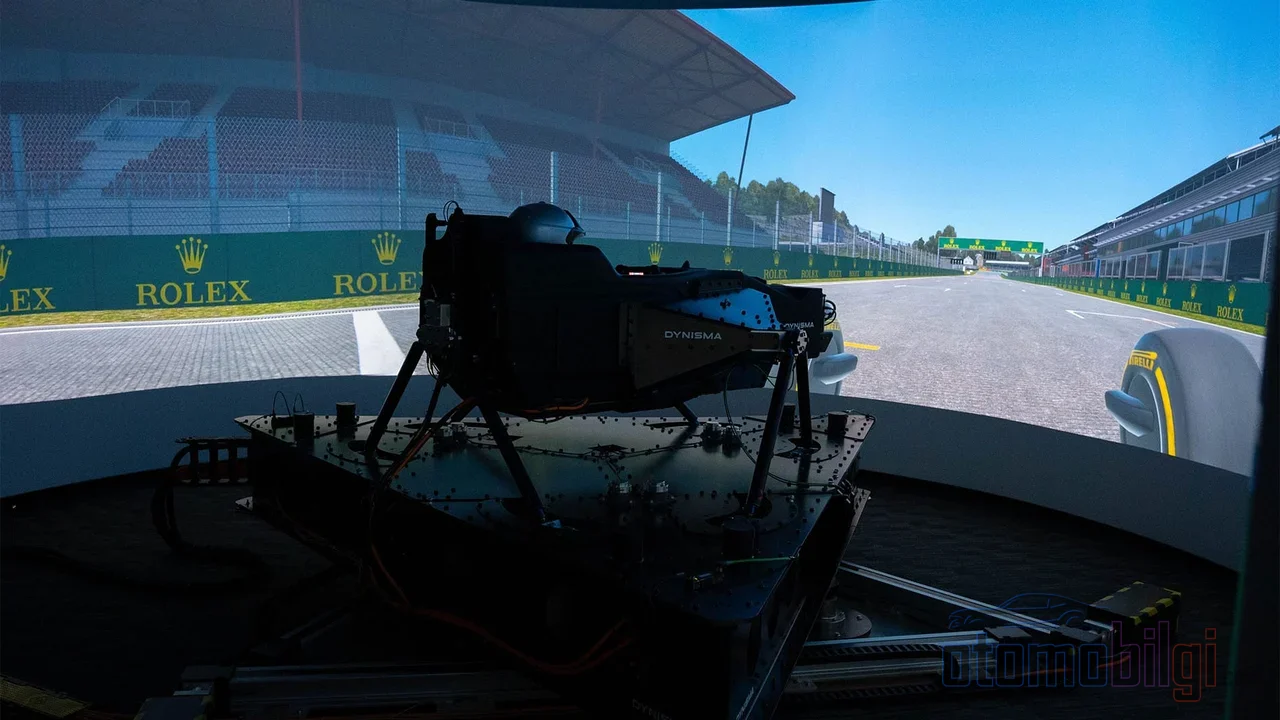
Whatever we see on screens during a race weekend, the car's real exam is largely passed at the factory, long before we ever see it. On a massive motion platform, the driver runs the same corner thousands of times for hours on end; in a virtual world where no tires wear out and nothing comes at a painful cost. So what exactly do these rigs test, and is the person in the seat a driver, or an extension of the engineers?
The Driver-in-the-Loop Cycle: Not a Game, an Engineering Laboratory
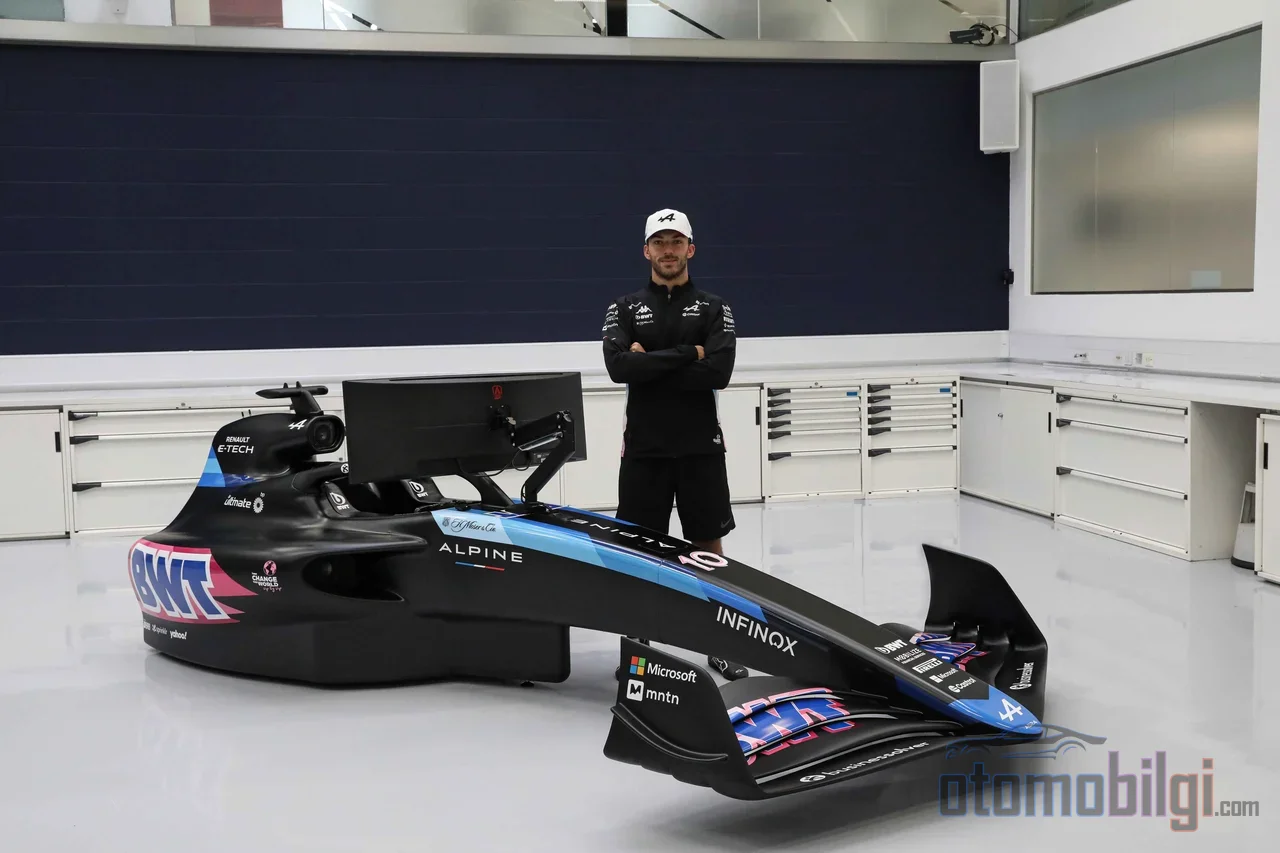
While the factory simulators of F1 teams belong to the same family as home racing setups, their price tags are in a completely different league. Professional driver-in-the-loop (DiL for short) simulators start at hundreds of thousands of dollars; some estimates run as high as 10 million dollars. The cockpit is built on a rigid spaceframe that replicates the driving position of the real race car exactly; the same seating position, the same race steering wheel, the same pedal assembly. Around it are an aircraft-grade motion platform and 360-degree projection or surround LED screens.
But the real issue is not the hardware - it is the software and data. Real vehicle data, aerodynamic maps, tire behavior and suspension characteristics are fed directly into the simulation; the virtual car responds as closely as possible to the real one. Teams use professional platforms such as rFpro while also developing their own proprietary software. The goal is not to make the simulator exciting: it is for the driver's feedback to be accurate enough to be useful to the engineers. If the motion platform turns into an amusement park ride, something is wrong somewhere; good motion should convey what the car is doing without unsettling the driver.
Key Highlights
- Professional DiL simulators can range from hundreds of thousands of dollars up to 10 million dollars
- A 7-post rig test records approximately 100 signals at 1000 Hz frequency
- Sim drivers can comfortably complete more than a full race distance in a single factory session
- On a 7-post rig, besides the four wheel actuators there are three separate aeroloaders
What Do F1 Teams Test in the Simulator?
The short answer: everything that would be expensive, dangerous or impossible to try out on track. Before a race weekend, drivers spend hours doing virtual laps; tire wear, different fuel loads and weather changes are all simulated. Simulation's biggest superpower is repetition: starts, overtaking scenarios, energy management, restarts after the safety car and race strategies are all rehearsed without spending a single gram of tire or drop of fuel. In a single factory session, different setup directions, energy management strategies and balance changes can be tried out; and engineers compare the driver's comments against the simulation data.
Making the track environment realistic is also critical, because the driver's brain works on visual cues. That is why teams work with external simulation software that models the tracks in detail. Learning a track for a new driver follows the same path: a driver who has completed hundreds of virtual laps before even setting foot on the track does not feel like a stranger on their first real outing.
What Is the Real Job of a Sim Driver?
Looking at the person sitting in the seat, you see a racing driver; yet the job description is much broader. The sim driver role spans before, during and after a race weekend; they work together with the driver, the two race drivers and the group of engineers. The reserve driver spends a significant part of a Grand Prix in the simulator, trying out different race strategies and car setups. Teams openly use this for car development, and year after year the program is being taken to ever more advanced levels in terms of analysis and setup work.
There is now also a concrete career path for this role: teams hire dedicated crews and staff to build world-leading simulation environments. So a driver whose name you never hear on screen, making their hundredth virtual start at the factory on Friday morning, may be contributing directly to the performance of the driver who gets in the car on Sunday.
How Does Simulation Data Match Up With Real Telemetry?
A modern F1 car is practically a data center on wheels; it produces a huge amount of real-time telemetry in every session. Speed, gears and dozens of different channels flow from the track to the factory. The simulation side has to speak the same language: the data generated in the simulator is compared with the real telemetry coming from the track, and if there is a deviation, the model is corrected. This way, the virtual car continuously calibrates itself to close the gap between it and the real car. Without this loop, the simulator would be nothing more than an expensive toy.
The 7-Post Rig: The Simulator's Physical Sibling
The digital world of simulation is not enough on its own; F1 teams widely use dynamic test rigs called 7-post rigs to optimize their suspension. The logic is simple but impressive: instead of wearing the car out on the track, you simulate what the track does to the car underneath it. Four wheel actuators apply vertical road vibrations, while three additional aeroloader actuators - two at the rear, one in the third position - deliberately subject the car to aerodynamic load. The goal is to improve grip and overall performance by optimizing damping, springs, tires and downforce.
The data volume of the test is an event in itself: a typical F1 7-post test records around 100 signals at 1000 Hz. It is also telling that road car manufacturers do not normally use these rigs - because road cars are not exposed to aerodynamic loads the way F1 cars are. This rig is a category-specific tool for a class where downforce determines everything.
Is the Simulator Realistic, or Just a Deception?
To be honest, no simulator can perfectly reproduce real G-forces, shifting wind, physical fatigue, or the grip on race day. And the hardest part is not speed, but the interface between the car and the road: the tires grip differently depending on the vibration they are subjected to, and the driver needs to feel this vibration in real time. That is why there are also names who approach sim work with suspicion; historically, some drivers kept their distance from sim racing on the grounds that a simulator could never fully replicate the real feel of F1. Debates over how well simulation translates to the track never end either - balance depends on how accurate each team's own model is, and the better the model, the more reliable the output.
From Academies to the Factory: Young Drivers Preparing with the Simulator
Another silent customer of the simulator is the drivers of the future. Teams' driver development programs cover physical conditioning, testing, and simulator sessions; academies offer a structured path aimed at placing the young racer into an F1 cockpit. For example, one team's academy delivers physical training, mentoring, media coaching, and simulator sessions in a single package. Even F1 Academy drivers do their pre-season track preparation in their teams' simulators. In short, the sim rig is now the first testing ground for both a new part and a new career.
Summary: Virtual Laps, Real Gains
F1 simulators and 7-post rigs are hidden laboratories that stay off the track but make the car faster on it. New parts, setups, strategies, and tracks are tried out in the simulator without taking risks; suspension and downforce behavior are physically examined on the rig; real telemetry connects these two worlds. And the main task falls to the sim drivers: they are the unsung heroes of the car's development whose names never appear on screen. The next time you see a driver shine on Friday with a miraculous setup, remember the thousands of virtual laps run behind the scenes.
Sources
- Explaining the Role of an F1 Sim Driver
- Inside the role of an F1 sim driver
- This isn't a game: We try out a professional driver-in-the-loop simulator
- What Simulator Do F1 Drivers Use for Training and Practice
- What Simulators Do F1 Drivers Use?
- 7-Post Test Rig
- Multi-Post Test Rig
- Inside the Role of an F1 Simulator Driver
- Aston Martin Aramco Driver Academy
- The Audi Revolut F1® Driver Development Programme