F1's Controversial Rain Tires Are Being Changed
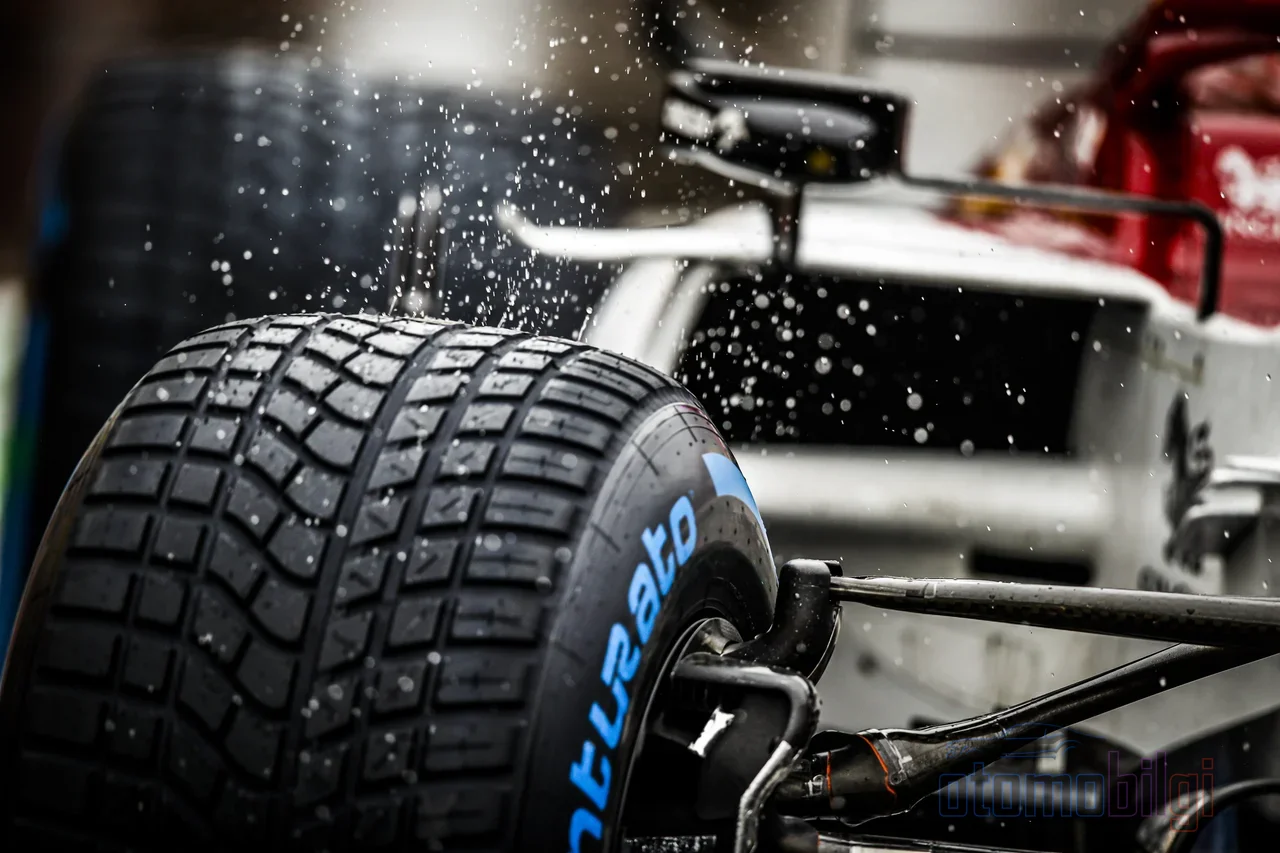
When the qualifying session of the São Paulo Grand Prix ended, the talk in the paddock was not only about lap times. Cars that skidded on top of the water for minutes on the wet surface, drivers lapping while expecting a red flag, and harsh criticism of the rain tires at the end of the session once again brought Formula 1's long-unsolved problem to the agenda. Now a concrete step has been taken regarding this problem: Pirelli is preparing revised rain tire specifications for the 2027 season, and at the center of the work are the points drivers complain about most. So why are the current tires criticized so heavily, what exactly will change in 2027, and how will this change affect the races?
Why Are the Current Rain Tires Criticized?
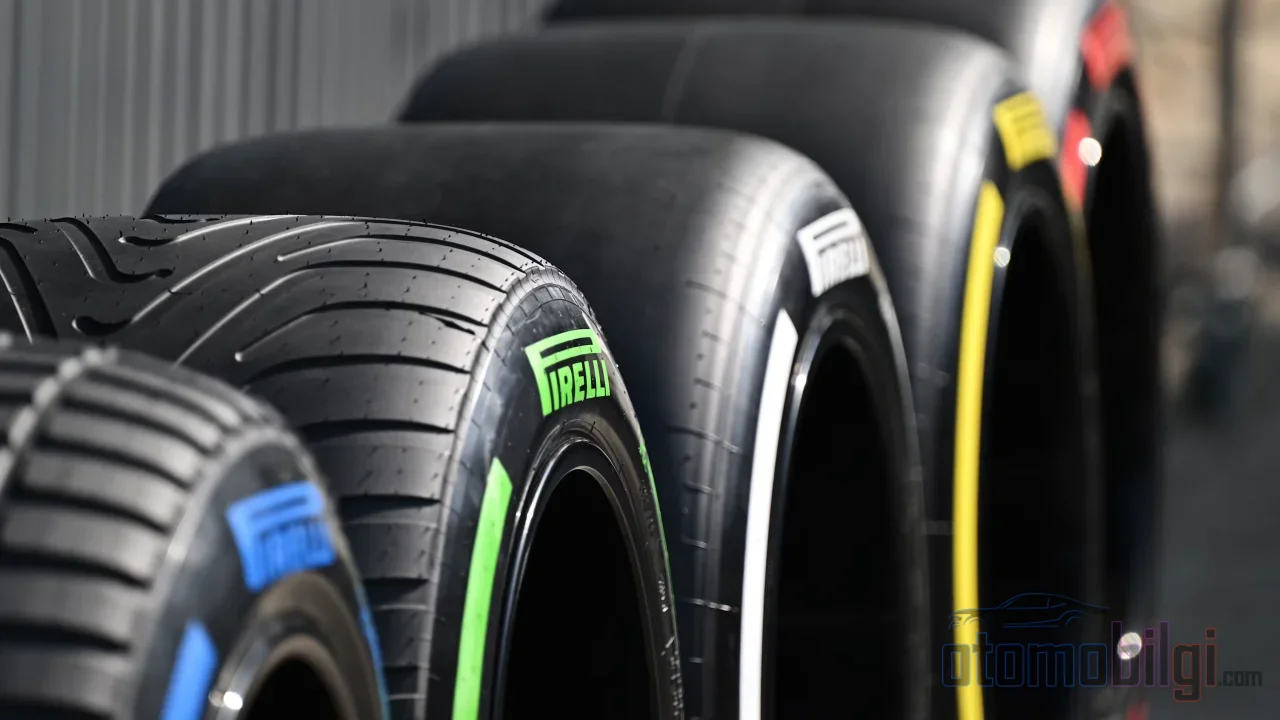
With Formula 1's new technical regulations that came into force in 2026, the tires were renewed from top to bottom. While the wheel diameter remained at 18 inches, tread width decreased by 25 mm at the front and 30 mm at the rear; total diameter shrank by 15 mm at the front and 10 mm at the rear. The range includes five dry-surface compounds from C1 to C5, the green-banded intermediate tire, and the blue-banded full rain tire. It was a comprehensive renewal on paper; but the debate over wet-surface performance continued.
The essence of the problem is summed up under two headings. The first is aquaplaning: Even the grooved tire begins to fail to grip the track surface in puddles and starts behaving like a water ski, pushing the car toward a loss of control. The second is spray: The heavier the rain, the more water the tire throws up, and the more the visibility of the driver behind narrows. According to Pirelli's own statement, in very heavy rain the real problem is visibility rather than grip; which is why conditions sometimes go as far as stopping the race.
The numbers clarify the framework. The blue-banded full rain tire can discharge approximately 85 liters per second of water at race speed. This is proof of the tire's technical capacity; but when every liter discharged turns backward as spray, the same capacity also magnifies the visibility problem. The target set for 2025 was for the usability threshold of the full rain tire to drop to approximately 115-116 percent of dry-surface lap times. In reality, this threshold remained around 118 percent; meaning the tire did not reach the targeted efficiency.
Highlights
- Pirelli is preparing a revised rain tire specification for the 2027 season and confirmed the work.
- The focus of the revision is to solve the intermediate tire's problem of reaching its operating temperature.
- The full rain tire discharges approximately 85 liters of water per second at race speed, but the spray blocks visibility.
- Ferrari and Racing Bulls completed a total of 400 laps with the 2027 prototypes at Imola.
- Wet testing with an artificial irrigation system is planned at Magny-Cours in mid-October.
The Debate That Exploded in Brazil and Driver Reactions
The qualifying session at Interlagos was the moment the criticism peaked. In one of the early runs of the session, a driver said the car experienced 60 percent aquaplaning along the entire straight, that everyone was expecting a red flag every lap, and that it was pure luck that nobody crashed. Red Bull-Ford's young driver Isack Hadjar said the tires were dangerous and there was room for development, sharing the view that the full wet tire allowed excessive aquaplaning depending on the amount of water on the track. Another driver, whose name was not disclosed, said there was serious aquaplaning on the full wet tire and a big lack of grip at the rear, and that both wet-weather tires lacked development.
Cold conditions were another side of the problem. Max Verstappen and Hadjar explained that before the cold Las Vegas race, the tire behaved like a rock at low temperatures, one had to wait a long time before switching to the intermediate, and that this tire only became usable once there was no standing water left on the track. In short, the problem is not only heavy rain; every scenario in which the tires fail to reach their operating temperature.
On the Pirelli front, the picture was more cautious. The company's motorsport manager Mario Isola said that all things considered, he thought both rain tires did the job required, but admitted they could definitely be improved. This admission sums up the difference between the drivers' experience on the track and the supplier's laboratory perspective. Voices in the paddock also included the warning that a very serious accident could occur if risks similar to those in Brazil were repeated; the session in question was described as the most comprehensive wet session to date.
Why Is the Full Wet Tire Almost Never Used?
There is a contradiction rarely seen in Formula 1: The full wet tire, the tire with the deepest tread grooves in the category, almost never sees racing. The reason is that modern Formula 1 conditions are practically never suitable for this tire. When the rain lightens, the intermediate is faster, and when it is heavy, the spray increases so much that conditions are suspended for safety reasons. The window in which the full wet tire makes sense, meaning the moments when the risk of serious standing water really exists, is extremely narrow.
George Russell's criticism also points to this: Rain tires are only needed when there is real standing water on the track. Within this structure, the tire allocation given to drivers over a weekend is striking: In a standard race weekend, 13 sets of dry tires are provided against only 5 sets of intermediates and 2 sets of full wet tires; only in Monaco are an additional 3 sets of rain tires added. Even the allocation tells the real usage rate of the tires.
What Will Change in the 2027 Revision?
The intermediate's warm-up problem has been placed at the center
The focus of Pirelli's revision prepared for 2027 is clear: the way the intermediate reaches its operating temperature will change. Marrafuschi, a company official, confirmed that a different specification is being worked on for next year. The full wet tire will also get its share of the revision; the goal is to bring this tire's performance closer to the intermediate, because the current full wet tends to overheat. As the gap between the two tires narrows, the crossover window will widen.
The super intermediate tire concept
An even more interesting idea is also on the table: Pirelli is advocating a kind of super intermediate tire concept, more rain-oriented and covering a wider window with a single tire. The aim is to fill the gap between the intermediate and the full wet with a single product. However, critics point to a more fundamental question here: If the problem is fundamentally one of spray and visibility, how much can improvements in tire compounds solve it?
The testing program continues
The program is not just on paper. After the Spanish Grand Prix, Ferrari (Lewis Hamilton, Charles Leclerc and Antonio Giovinazzi) and Racing Bulls (Liam Lawson and Arvid Lindblad) completed a total of 400 laps with the 2027 tires at Imola. Pirelli's chief engineer Simone Berra noted that this year they worked with real 2026 cars instead of the previous mule cars, and that this was much better for them; he added that the goal is not about car balance but about producing a higher level of degradation. A wet test using the track's artificial irrigation system was planned at Magny-Cours in mid-October; in addition, despite the desert climate, a wet tire test with artificial rain is on the agenda in Bahrain.
The Higher Degradation Target and Its Impact on Races
The 2027 wet tire revision is part of a broader tire strategy. Formula 1 deliberately wants tires with higher degradation, i.e. faster-wearing tires, in 2027. The reason is hidden in the statistics: 9 of the first 15 races of the 2026 season went mostly as one-stop races. Pirelli aims to create more heat generation and thermal degradation by working on the tire structure; this could mean the return of strategic diversity.
Another step specific to wet conditions also came from the FIA and Formula 1: It was confirmed that Boost Mode will be partially brought back on wet tracks for safety reasons for the remainder of the 2026 season. When evaluated together with the wet tire revision, the management of wet conditions will have been rethought from scratch in 2027.
Conclusion: How Will the 2027 Tires Affect the Races?
In summary, the answer to the question is this: Pirelli is preparing a revision for 2027 that both changes the warm-up character of the intermediate and brings the full wet tire's performance closer to the intermediate; at the same time, F1 wants tires with higher degradation. For drivers, this means a wider usability window on wet tracks and less aquaplaning. For spectators, the expected effect is fewer interruptions in wet sessions and a decrease in one-stop races, bringing strategy back into play.
Still, realism is required. As anyone who has been around this business long enough knows, no matter how much a tire improves on wet surfaces, it cannot completely eliminate the spray problem; because the issue is partly physics itself. Pirelli's super intermediate tire idea and the widening crossover window could solve the tire side of the problem. But as long as visibility in heavy rain concerns the water thrown up behind the car itself, beyond tire design, part of the debate will continue in 2027 too. And as long as what happened in Brazil is not forgotten, the paddock's memory on this subject will not be short either.
Sources
- The Race - F1's divisive wet weather tyres to change in 2027
- The Race - F1's plan for higher-degradation tyres in 2027
- The Race - Why F1 risks serious incident if Brazilian GP risks are repeated
- Pirelli Motorsport - Official Formula 1 page
- Formula1.com - The beginner's guide to F1 tyres
- GrandPrix.com - Pirelli targets intermediate warm-up in 2027 wet tire revision
- Motorsport.com - Why F1 drivers don't like Pirelli's wet tyres
- Autosport - Why Pirelli is pushing for a super intermediate F1 wet tyre
- Formula1.com - Palmer: The dilemma drivers, teams and Pirelli face