How Are F1 Equipment Transported Across Continents?
Share This Page
On Sunday the flag waves, the cars enter the garage, and we turn off the screen. But that night, as forklifts start working in the paddock, the real race is only just beginning. Behind every Formula 1 Grand Prix there are ships, cargo planes, and an army that puts thousands of parts in their proper place. Just imagine: a race car consists of roughly 5,000 parts, and over a 24-race season these parts travel to circuits on five continents. So how does it happen? Let's step backstage.
How Many Tons of Cargo Does Each Team Transport to a Race?
It may sound unbelievable, but each team transports an average of 50 tons of equipment to every Grand Prix. And it's not just the two cars; everything from the steering wheel to the smallest screw, from garage panels to hospitality equipment, from refrigerators to tire carriers, is included in this load. So every table, every chair, and every cable you see in the pit lane travels thousands of kilometers together with the team.
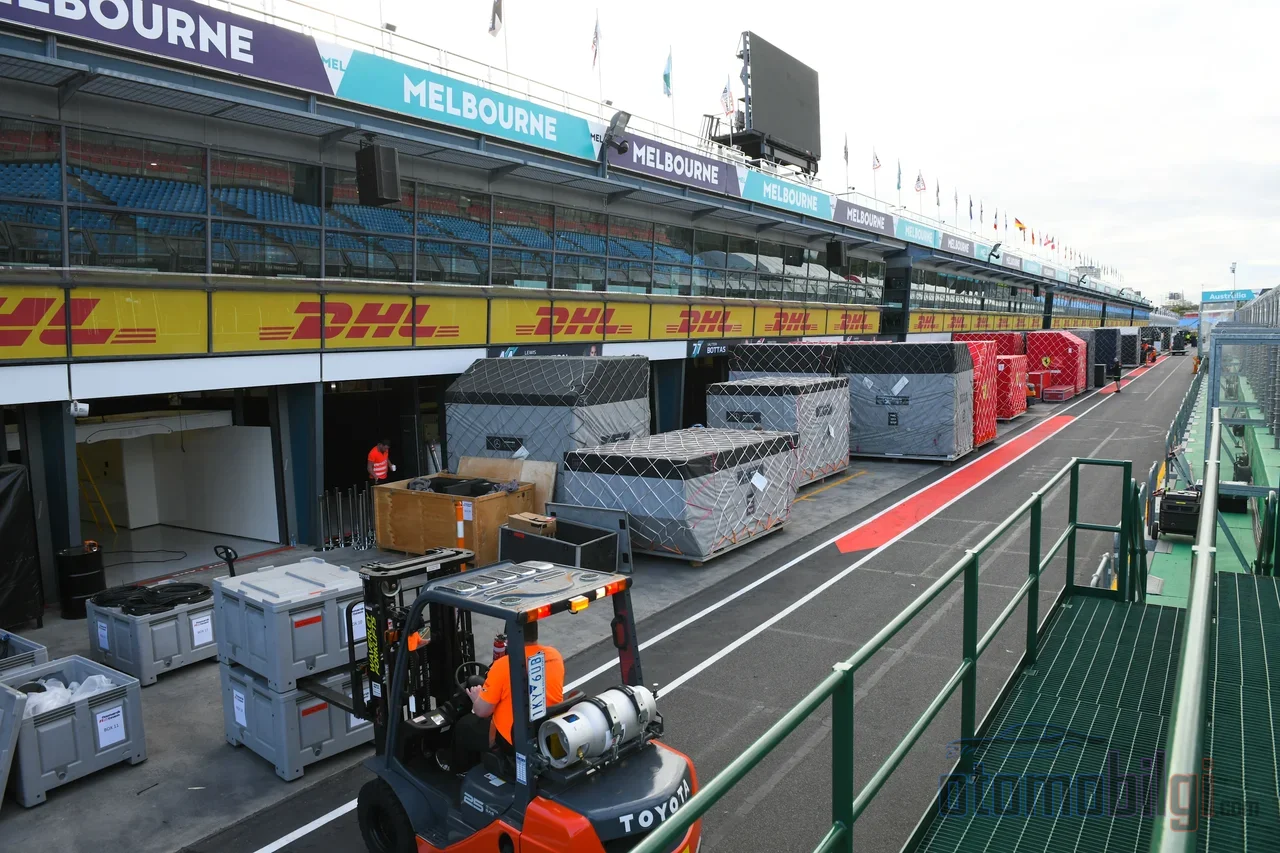
Would you like a concrete example? Let's take the load a team sends to Australia for the season opener: 34 tons by air, plus another 8 tons of equipment going by sea. Packing everything at the factory takes a full 3 days. The cargo is placed onto 12 aircraft pallets and taken to the airport by 4 trucks. The distance? A full 10,500 miles to Melbourne. Here's an interesting detail: the first version of this operation in 1998 was only 12 tons. It's clear how much the teams have grown.
Key Highlights
- Each team transports roughly 50 tons of cargo to every race.
- An F1 car consists of about 5,000 parts.
- For each overseas race, typically 6-7 Boeing 747 cargo planes are chartered.
- Teams can have up to 6 sea containers circulating around the world at the same time.
- If everything came by sea, an F1 season would last 63 weeks.
Are the Cars Shipped Assembled or Disassembled?
Contrary to what most people might guess, the cars do not travel assembled. They are completely disassembled: three chassis (two race cars plus a spare) are bolted onto custom-made frames, secured to pallets, and placed into special boxes that fit exactly into the cargo hold of a Boeing 747-400F freighter. Each part is placed in its own foam slot, and some are wrapped in bubble wrap. So when the car comes out of its box, it is reassembled like a jigsaw puzzle.
The journey of newly developed parts is quite different: spare parts to be tested usually arrive as extra baggage at the passenger terminal, together with team personnel. A story that ends at the circuit with an engineer's suitcase.
How Are Cargo Planes Used for Overseas Races?
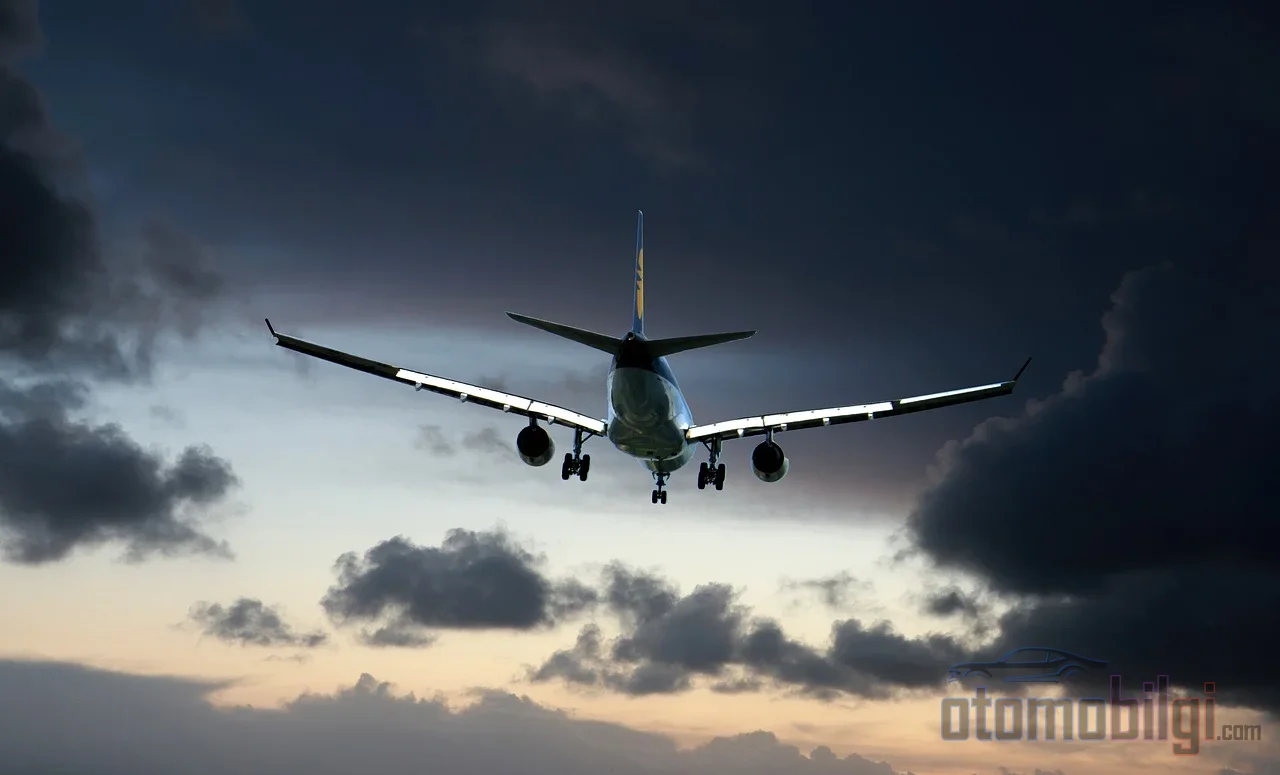
Races outside Europe are called "flyaway" races, meaning races reached by plane. For these races, the logistics partner, together with Formula One Management, typically has to charter 6-7 Boeing 747 cargo planes. A single team's air freight is around 35 tons per flyaway race. The tires are outside this picture and travel on a separate plane: Pirelli transports its tires using its own aircraft. The organization itself doesn't stay idle either; it carries 150 trackside cameras and the cables needed for TV broadcast on its own.
Sea freight works for everything that isn't in a hurry. Garage panels, hospitality equipment, refrigerators, furniture, tire carriers... These can set off by ship as early as January. Each team can have up to 6 containers circling the globe: cargo headed to Miami is transferred from Australia to Singapore, while another set makes its way from Southeast Asia to Canada. Think of it as a giant Extended Tetris: each block is placed so that it lines up with the next race.
Road Convoys on the European Leg
At European races the job is more "short-haul" but still massive: everything travels by road on dedicated transport trucks. Teams use specially equipped IVECO, DAF and MAN trucks for this job. Road transport usually delivers within 12-48 hours; air freight crosses continents in a few hours, while sea freight can take weeks. The fact that almost all team headquarters are located in Europe (mainly England and Germany) also explains why aircraft are indispensable at overseas races.
How Does the 2026 Calendar Change Logistics?
The new season calendar features 24 races, 21 countries and 5 continents; it includes 3 triple-headers (three race weeks in a row) and 5 double-headers (two races back to back). Racing back to back on two separate continents is seen as the biggest obstacle to logistics, and it is precisely for this reason that Formula 1 is reorganizing the 2026 calendar with a regional clustering logic: races in similar geographies are grouped together. A new race in Madrid, the return of Australia as the season opener, and the date swap between Monaco and Canada are some of the changes to the calendar. Malaysia's return to the calendar brings the challenge of new route planning for the logistics teams; with the 11th team joining the grid, the number of deliveries is also increasing.
The sustainability front is also on the move: the use of Sustainable Aviation Fuel (SAF) on overseas flights provides an estimated 80% reduction in carbon emissions per flight. In Europe, meanwhile, 51 biofuel-powered trucks operate with an average 83% emission reduction. Still, the carbon footprint of the 24-race global calendar remains a subject of criticism, and regional clustering is partly a response to that pressure.
The Hours After the Race: The Real-Time Pressure
As soon as the race ends, packing begins on Sunday afternoon. Forklifts dismantle everything in the pit lane, and each part goes into its box according to its next destination, which determines its fate. Since flight delays can directly affect the next race, time is critical. The secret to everything being ready at the track by 08:00 on Monday morning is nothing mysterious: the right paperwork. From customs to carnet tracking, every part must have complete documentation.
Mistakes do happen, and they usually stem from fatigue. A famous example: Two gearboxes packed in the rain in Malaysia corroded a week later in Bahrain's heat due to a team forgetting to spray WD40. And of course there is solidarity between teams: teams help each other out with equipment forgotten or left behind in the pit; except in risky situations that would cost a team the race, of course. It is like a schoolyard, but a competitive one.
How Much Does This Operation Cost?
The money table is impressive too, but full of estimates. While air freight alone is estimated to cost around 14 million dollars per team per season, more conservative estimates put the annual total at around 8 million dollars. The reason for the difference is simple: it depends on how the scope is defined. The shipping cost of a single F1 car ranges from 10,000-30,000 dollars per trip. There is also this calculation: if everything traveled by sea, it would take 63 weeks to complete the season. So a year would not be 52 weeks, but 63 weeks for F1. Without airplanes, this sport becomes undefined.
The Race Weekend Is the Tip of This Chain
Remember a typical race weekend: Friday two practice sessions, Saturday third practice and qualifying, Sunday the race. On sprint weekends the format works differently. Every stage of this familiar routine is actually the final link of a chain that began weeks earlier. When the race format the reader knows is viewed from a logistics perspective, the real story emerges: even though Sunday brings the victory celebration, a true victory is having everything ready in the new city on Monday morning.
In short: How Is F1 Equipment Transported?
Formula 1's equipment transport system is a three-layered chain: equipment that is not in a hurry sets off by sea weeks in advance, for races within Europe everything goes by road in special trucks within 12-48 hours, and for overseas races each team transports roughly 35 tons of cargo per flyaway on 6-7 Boeing 747 cargo planes. The cars travel fully dismantled in special boxes and foam cradles, and every piece of the 50-ton load is tracked with paperwork and planning discipline. Keep this in mind while watching the next race: every cable in the pit lane may have crossed a continent.
Sources
- How does an F1 team get two cars and 42 tonnes of freight to Australia? | Formula 1®
- The Logistics of Formula 1 - F1 Miami
- Inside the World of F1® Logistics - Delivered - Global
- The race behind the race in Formula 1 - DHL inmotion
- Formula 1 logistics - How do teams move equipment between races - Autosport
- The INSANE Operation Behind Every F1 Race - Kym Illman
- How to Transport Formula 1, 2 & 3 Cars via Cargo Charter Planes - SafeFly Aero
- How Does F1 Transport Their Cars? - SGT Auto Transport
- What It Actually Costs F1 Teams to Ship Their Cars - Yahoo Sports
- The Logistics of Formula 1 - GP Destinations
- F1® Confirms 2026 Season Calendar - F1 Experiences
- F1 Schedule 2026 - Formula1.com
- Getting to know Formula 1: Logistics - Motorsport.com TR
- How do F1 cars travel around the world throughout the entire season? - Webtekno
- Formula One race weekend - Wikipedia
- What Is the Format of a Race Weekend? - Mercedes AMG F1