How Does a Laminated Windshield Protect Passengers?
In a crash, which surfaces in the car can you truly lean your back against? The seat belt, the seat, the airbag... What about the windshield? For most people, the windshield is simply "the transparent sheet we look through"; yet at the moment of a rollover it is a structural beam that holds the roof up, and a laminated barrier that prevents ejection through the side windows. The laminated windshield, always overshadowed in airbag and seat belt narratives, is in fact the quietest hero of passive safety. So how can a thin plastic film sandwiched between two layers of glass keep a human body thrown at 70 km/h inside the car? The answer lies hidden in one of the most elegant sandwich structures in materials engineering.
The Layered Structure of Laminated Glass: The Glass-Plastic-Glass Sandwich
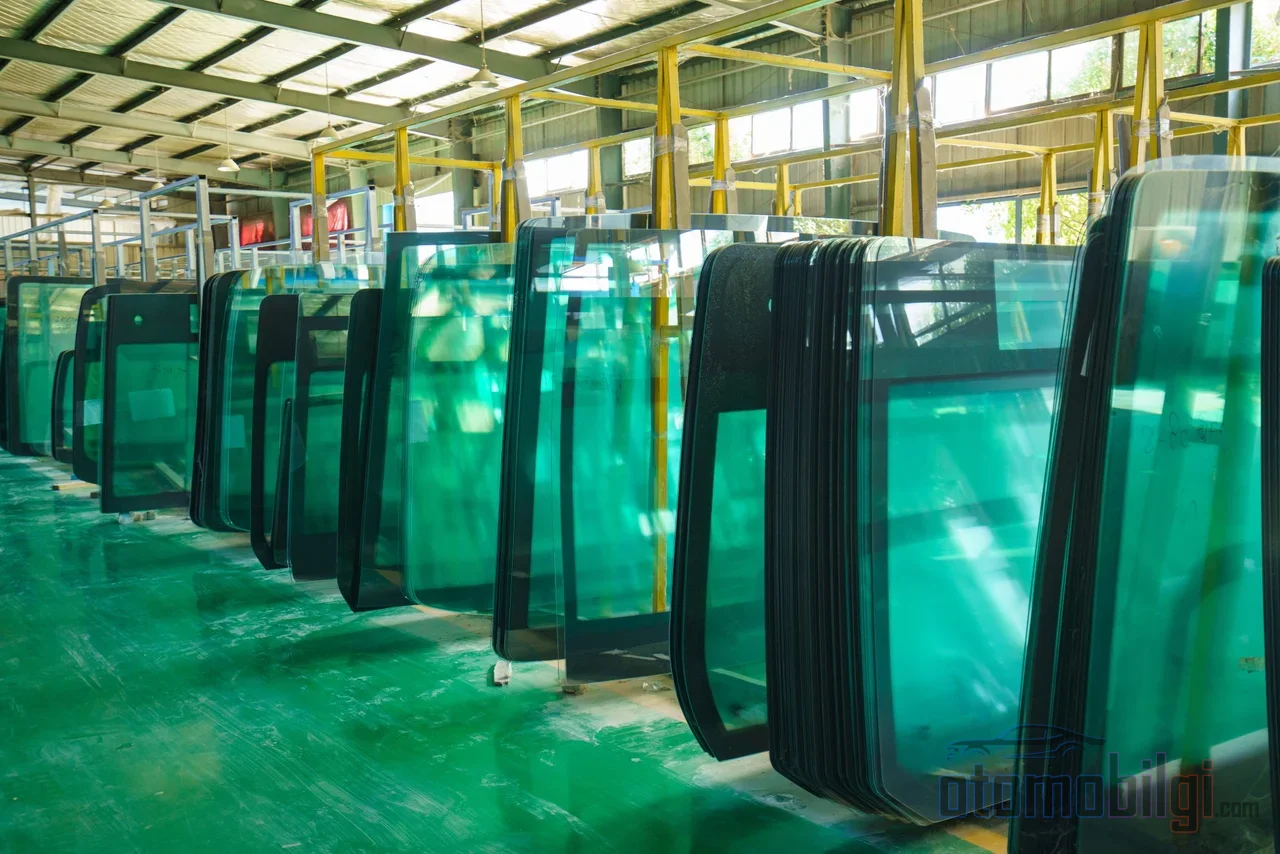
A laminated windshield is actually a three-layer sandwich: a plastic intermediate layer called PVB (polyvinyl butyral) is placed between two layers of annealed glass. After the layers are stacked under clean-room conditions and de-aired, they are fused in an industrial autoclave under 140°C temperature and 10-15 bar of pressure. This process is not a temporary adhesion; it creates a permanent bond at the molecular level between the glass and the plastic.
The key point of this architecture is the flexibility of PVB. Glass is a brittle material, but PVB is not. At the moment of impact, the glass layers break while PVB stretches, and this stretching absorbs the kinetic energy of the collision by converting it into mechanical deformation. In other words, the energy is not enough to shatter the glass; the structural cooperation between the layers preserves the integrity of the glass. Moreover, PVB blocks more than 99% of the sun's UV radiation without any additional coating; acoustic-grade PVB provides an additional 3-5 dB reduction in road and wind noise compared to standard laminated glass.
The origin of this idea is also interesting: In 1903, the French chemist Édouard Bénédictus noticed in his laboratory that a glass flask coated with cellulose nitrate cracked when it fell but did not shatter. This observation opened the path to the patent of laminated safety glass, which forms the basis of all modern windshields today. From that day to this, the same principle works: glass can break, but it does not scatter.
Key Takeaways
- A laminated windshield is a glass-PVB-glass sandwich fused under 140°C and 10-15 bar.
- Laminated windshields are mandatory in all passenger vehicles sold in the USA.
- When ejection is eliminated, the risk of serious injury decreases by 58% for drivers and 49% for front passengers.
- In 26% of rollovers, roof crush contributes to serious or fatal injuries.
- When tempered glass breaks, it separates into thousands of small blunt pieces; laminated glass, however, stays in one piece.
How Does It Prevent Ejection? Retention, Barrier and Energy Absorption
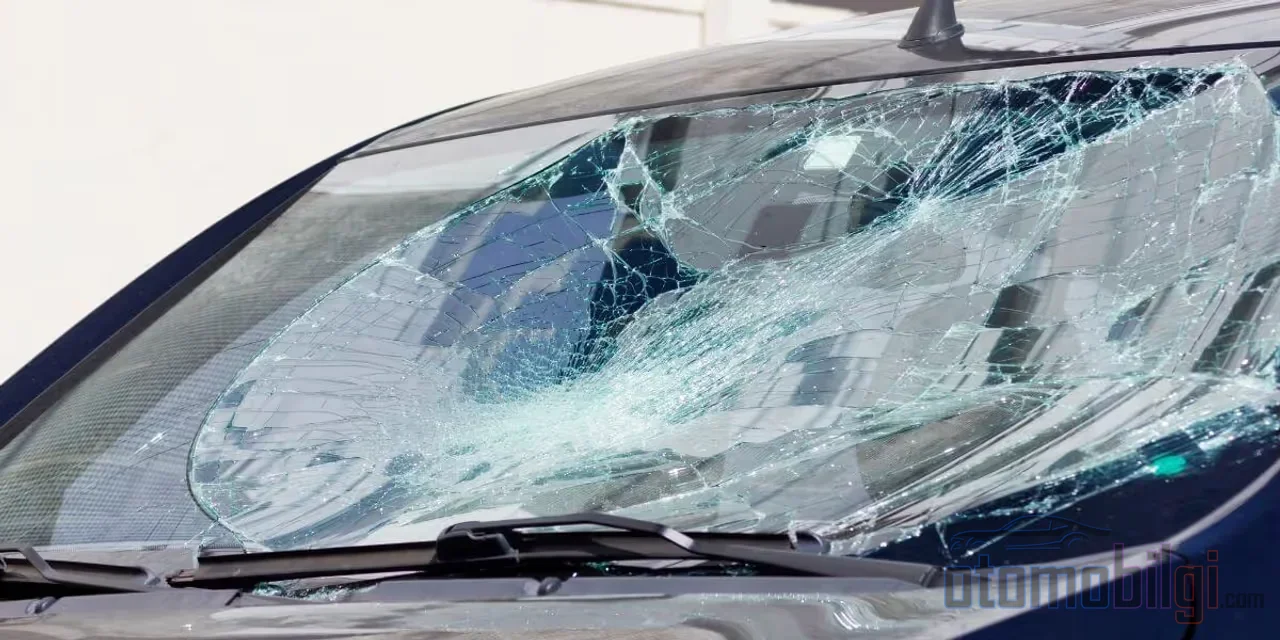
Ejection of the passenger from the vehicle is one of the most lethal outcomes in crash accidents. And it is exactly here that the role of laminated glass comes into play. Peer-reviewed medical literature shows that the plastic intermediate layer greatly reduces the danger by holding the glass pieces together even when it breaks. Laminated glass prevents injuries through three mechanisms: part retention, preservation of the structural barrier, and prevention of occupant ejection.
The numbers also support this picture: when ejection is eliminated, the relative risk of serious injury decreases by 58% for drivers and 49% for front-seat passengers. Read the other way around, it is striking - the risk of serious injury for an ejected driver is roughly two and a half times higher compared to one who stays in the vehicle.
FMVSS 226: Ejection Mitigation Standard
The engineering world has long since standardized this subject. On the US side, FMVSS 226 (Ejection Mitigation) is the federal standard aimed at preventing occupant ejection through side windows in a crash, and it has made laminated glass a key countermeasure for compliance with this standard. The logic of the test is simple but ruthless: an impactor, that is, the test impact body, must not move more than a specified distance inward or outward from the window plane. The PVB interlayer meets this threshold by keeping the glass panes in place during a rollover and making them resist sliding interaction. Experimental studies on laminated side glass reinforcement confirm the same result.
The Structural Role of the Windshield During a Rollover and Roof Strength
So far we have described the windshield as a barrier; now comes the truly surprising part. During a rollover, the windshield acts as a structural beam carrying the front edge of the cabin. Crash investigations show that if the windshield separates from its position during a rollover, roof crush resistance drops significantly. Roof crush occurs in 26% of rollovers and contributes to serious or fatal injuries; in this respect, the glazing staying in place on the roof is directly related to injury severity.
The test that measures roof strength is also interesting: under FMVSS 216, a controlled load is applied to one side of the roof with a rigid plate. In the US, this standard was updated with FMVSS 216a through a multi-year transition, and in June 2026 the outdated 216 standard was officially withdrawn - meaning the roof strength regime has fully moved over to the new rules.
So how much does the windshield contribute in this test? Caution is needed here, because the figure changes depending on the measurement method: while the widely cited industry narrative says the windshield contributes up to 60% of the total structural capacity, the same contribution is stated more cautiously as up to 30% in the comments the insurance institute submitted to the regulatory body. The difference stems from definitions and measurement methods; but both figures carry the same message: in a vehicle from which the windshield has separated from its frame, the roof does not have the strength it was designed for.
The Windshield Is Also Behind the Airbag
One more detail: the passenger-side airbag inflates with an explosion reaching approximately 320 km/h, and as it inflates it strikes the windshield and uses it as a backing point. What happens if the windshield's connection to the frame is weak? The airbag bursts out along with the glass and cannot protect the passenger. This failure mode has been documented repeatedly in real crash investigations. So the windshield is, quite literally, an invisible airbag support. For this reason, FMVSS 212 requires the windshield to remain attached to the vehicle frame in a collision, FMVSS 219 sets the limit for outside objects intruding through the glass, and FMVSS 205 regulates the strength, optical clarity and penetration resistance requirements for all glazing materials.
How It Differs from Tempered Glass: Why Do Side Windows Shatter While the Windshield Does Not?
Have you ever seen a vehicle with a broken side window? The glass seems to turn into thousands of tiny beads. That is no coincidence; it is deliberate engineering. The tempered glass used in side windows is a single layer, and during production the glass is heated to about 620°C and rapidly cooled with jets of cold air. This creates compressive stress on the surface and tensile stress in the core; the result is a panel 4-5 times stronger than untreated glass of the same thickness. When it breaks, the panel instantly separates into thousands of small, blunt pieces - a deliberate design decision that reduces the risk of cuts.
| Property | Laminated Glass | Tempered Glass |
|---|---|---|
| Structure | Two glass layers + PVB interlayer | Single layer, heat-stressed |
| Fracture behavior | Cracks but pieces stay held | Thousands of small blunt pieces |
| Ejection prevention | High | Low |
| Repair | Possible via resin injection | Impossible |
| Typical location | Windshield, increasingly side windows | Door and rear windows |
One justification for the complete shattering of tempered glass is emergencies: after an accident, rescue teams or those inside need to be able to clear the glass opening quickly. So neither glass type is "safer" than the other; the two are designed for different safety functions. While laminated glass provides ejection prevention and airbag support, tempered glass offers blunt fragmentation and rapid emergency exit.
This balance is currently being debated again: due to acoustic comfort and break-in resistance, laminated side glass is becoming standard in high-trim and luxury segments. Moreover, fitting tempered glass to a vehicle that came from the factory with laminated side glass means a loss in both acoustics and safety. You can find out which type of glass your vehicle has by verifying the original glazing specification via the VIN.
Repair Options Differ Too
Laminated glass can be repaired with resin injection if the chip is smaller than 25 cents, the crack is shorter than 15 cm, the damage is outside the driver's line of sight, at least 5 cm away from the edge, and the PVB has not been punctured. Tempered glass, however, cannot be repaired; moreover, it cannot be cut after the tempering process either.
What We Do Not Measure: Gaps in Test Protocols
So what do crash test stars tell us about this? The honest answer: very little. Among Euro NCAP's published protocols there is no specific assessment for ejection mitigation; the organization's test setup includes a rescue and extraction (removing the injured by dismantling the vehicle) protocol, but this protocol does not measure ejection mitigation. So the windshield's ejection-prevention contribution is not a visible line item in consumer-facing star ratings - that remains in the realm of standards and regulations.
In contrast, on the US side ejection is a direct regulatory matter: FMVSS 226 has made laminated glass the key to compliance in many vehicles. On the other hand, a three-state evaluation of glass-plastic windshields found no reduction in laceration injuries in these windshields - so the assumption that laminated construction is equally beneficial in every injury mode would be a generalization not supported by the data.
Short Answer: How Does a Laminated Windshield Hold the Passenger?
Let's sum up: a laminated windshield, thanks to the PVB film between its two glass layers, is a sandwich that does not scatter even if it breaks at the moment of impact, absorbs impact energy, and remains as a structural barrier. The PVB holds the broken glass pieces, maintains integrity, and prevents the passenger from being ejected through an open window or broken glass; in a rollover, as long as the windshield stays in its frame, it contributes to roof strength.
Next time you look at that small crack in your windshield, remember this: you are not looking at just a piece of glass, but at a transparent carrier of the vehicle's safety cage. The seatbelt and airbag may take the applause at the front of the stage; but behind the stage, quietly, layer by layer, stands the windshield.
Sources
- Your Car's Most Critical Safety Component - Windshield Advisor
- Laceration and Ejection Dangers of Automotive Glass, and the ...
- Tempered vs Laminated Auto Glass - What Is the ...
- How Laminated Glass Absorbs Impact Energy in Vehicle ...
- Automotive Laminated Side Glazing Rollover Performance ...
- Ejection Mitigation FMVSS 226 FR (NHTSA 2011)
- 49 CFR § 571.216 Roof crush resistance - Cornell LII
- FMVSS No. 216 final rule, June 2026 - Federal Register
- IIHS comments submitted to NHTSA - the windshield bond's contribution
- Ejection-Mitigating Glazing Benefit Estimate (Winnicki 1996) - ROSA/BTS