How Does Classic Car Maintenance Differ from Modern Cars?
Share This Page
Classic car maintenance differs from modern vehicles because for classics you go by the calendar, not the odometer: fluids, rubber parts, and the battery degrade over time even if the car is barely driven. That is why the oil is changed at least once a year, ideally twice, brake fluid is renewed every two years, and the car is regularly driven for real. The 10,000-15,000 km service rhythm of a modern car does not work for classics.
Highlights
- Oil changes on a classic car are usually done every 3,000 miles (approximately 4,800 km) or at least once a year, whichever comes first.
- Because brake fluid absorbs moisture, it should be changed every 2 years ; classic-focused mechanics prefer an annual change.
- Even if the tires are not moving, they age over 5-6 years ; batteries can be depleted in 3-5 years .
- An annual classic car maintenance budget can be considered in the range of 1,000-4,000 dollars on average.
- The biggest mistake: parking the car in the garage for months and only running it at idle once a week.
Why Is Classic Car Maintenance Done by the Calendar, Not by Mileage?
When you look after your modern car, you ask, "How many kilometers between oil changes?" For a classic car, the answer to this question is often short enough to upset you: 3,000 miles, or roughly 4,800 kilometers. But that is not the real story. The main issue with classics is that oil degrades with time, not with mileage. Even if the car sits in the garage, the additives in the oil reach the end of their life, and moisture and combustion byproducts accumulate. That is why the golden rule of the classic car world is this: even if the mileage is not reached, maintenance is done when the time is up.
Think of it this way: milk in the fridge. You did not open it, you did not drink it, but the expiration date has passed. The oil in a classic engine is just like that. It is even crueler than the milk analogy, because in a rarely driven car, water and acids can get into the oil. This is exactly the key point in long-term storage discussions: due to moisture, the oil cannot be properly pumped to the high points of the engine.
Balancing mileage and time on a component-by-component basis works well. Spark plugs and friction parts wear with more use; fluids, rubber, and the battery degrade over time depending on the component. The general consensus is to go by whichever comes first.
| Component | Time-based lifespan | Why it degrades over time |
|---|---|---|
| Brake fluid | Every 2 years | Absorbs moisture and reduces braking performance |
| Battery | 3-5 years | Inactivity accelerates self-discharge and sulfation |
| Air filter | 1-2 years | Even with light use, dust and moisture accumulate |
| Spark plugs | 3-5 years | Corrosion and deposits form in an engine that does not run regularly |
| Tires | 5-6 years | Inactivity hardens the rubber, cracks it, and distorts its shape |
Oil Changes: Why Classics Do Not Wait Until 3,000 Miles
Modern cars go 10,000-15,000 km on synthetic oil; for classics, that figure is not even a dream. The typical interval recommended for classic cars is between 3,000-5,000 miles, and it varies by engine and usage. For a classic you drive frequently, the practical rhythm is: 3,000 miles or once a year, whichever comes first. For a car just emerging from winter storage, the most sensible option is fresh oil at the start of the season; some experts even recommend changing it twice a year.
What about a garage queen that only does 300-500 miles a year? This is one of the most debated topics in the classic world. There is no clear consensus, but common practice is to change the oil every 6-12 months. An engine run on short trips and cold starts contaminates its oil faster than one driven long distances; in other words, even with low mileage, the oil doesn't get a rest.
The Synthetic Oil Question: Not Everything That Glitters Is Gold
One of the classic mistakes made by new owners is filling an old engine with synthetic oil because they are used to modern cars. Even on forums, mechanics frequently debate that synthetics should not be put into old vehicles. The long change intervals of synthetic oil (such as 5,000-7,500 miles) cannot be directly applied to classics; in fact, the 3,000-mile rhythm we described above gets shorter even with synthetic oil. The seals, friction surfaces, and tolerances of an old engine were designed with the oils of its own era in mind. The safest route is to choose oils produced for classic vehicles that are compatible with the car's era.
Brake Fluid and Cooling System: Two Invisible Critical Points
Brake fluid is the classic car owner's nightmare. Why? Because it is hygroscopic, meaning it attracts moisture. Hydraulic fluid that absorbs water over time lowers its boiling point and becomes corrosive; it can eat away at brake cylinders and lines from the inside. Manufacturer sources generally recommend changing it every 2 years or 40,000 km, while experts focused on classic vehicles advocate annual changes due to moisture exposure. The condition of the fluid can be read from its boiling point; fluid that has fallen below the 200°C reference value can no longer do its job. Between the two views, the safe choice is simple: when in doubt, change early.
The cooling system is also the silent enemy of classics. It is not a closed, high-pressure system like in a modern car; old engines struggle harder against heat. The pH of the coolant changes over time, and this can damage the cylinder head gasket. Renewing the antifreeze every 2 years is the cheapest insurance for preparing for both winter and summer heat. When dealing with drum-braked vehicles, think about brake maintenance in the same session: periodic inspection of the traditional ignition system is a must, along with points, distributor cap, rotor, and condenser.
Fuel System and Carburetor: An Old Engine Doesn't Like Modern Gasoline
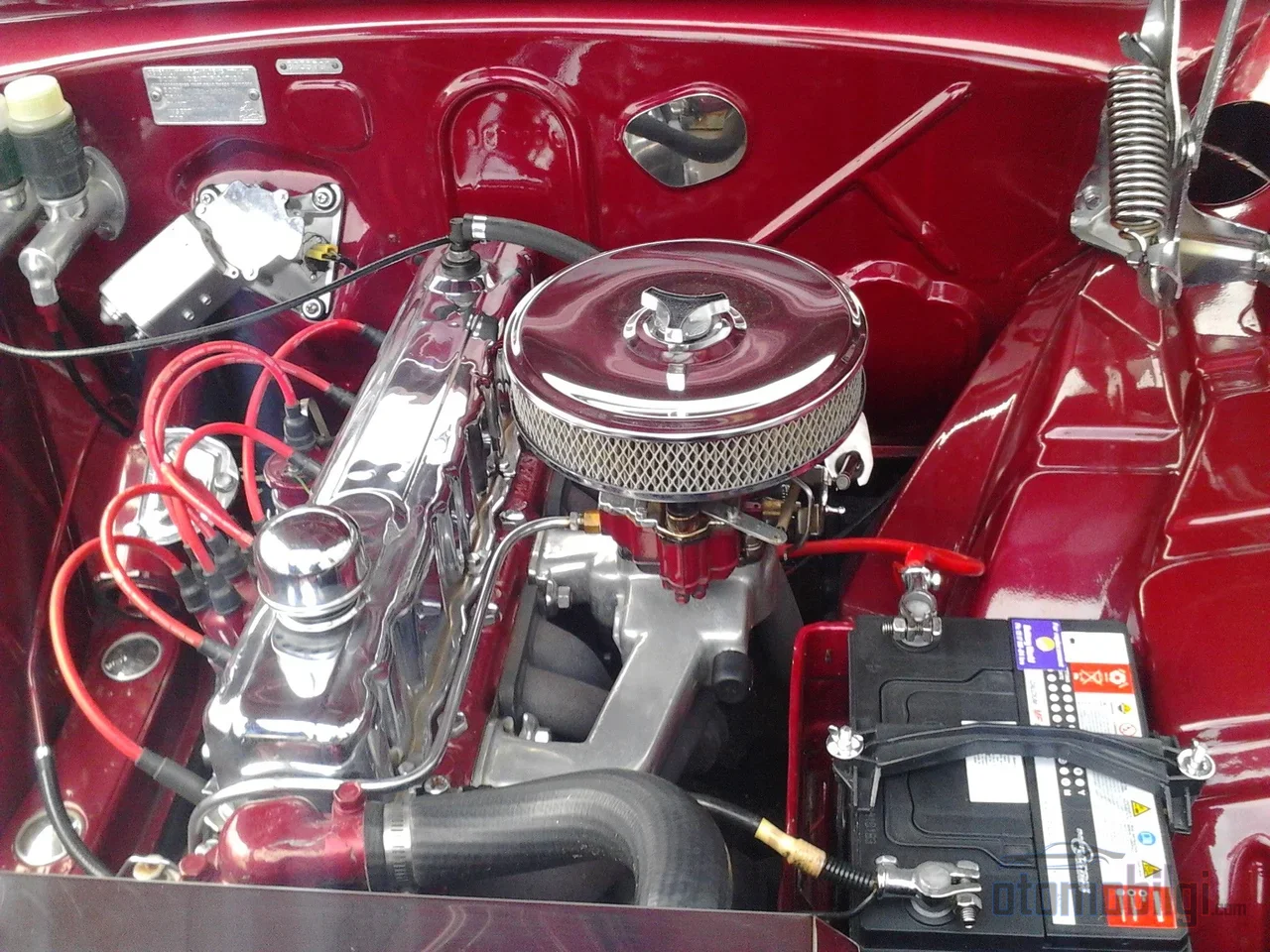
The carburetor is the heart of a classic engine, and modern ethanol-blended gasolines don't love that heart. Ethanol can, over time, degrade the seals, hoses, and carburetor internals of vintage fuel systems. That is precisely why classic cars in the UK are recommended to use E5 fuel instead of E10. The same logic applies in Türkiye: gasoline with a lower ethanol content at the pump is always a gentler choice for an old fuel system.
If you're going to park your car for longer than 30 days, a fuel stabilizer is a must. When fuel degrades, sediment and gel form inside the carburetor; cleaning it is both laborious and expensive. Carburetor cleaning and ignition adjustments are also regular items of the classic service routine: approximately every 3,000 miles, the carburetor and ignition system are manually adjusted. A carburetor with broken synchronization both consumes fuel and causes knocking and irregularity in the engine; getting these jobs done without delay is the way to protect yourself from big repair bills.
Battery and Tires: Those That Age While Waiting in the Garage
With a 3-5 year lifespan in classic vehicles, the battery is one of the fastest-wearing parts. Inactivity accelerates self-discharge and sulfation. The solution is cheap: connect a trickle charger for a vehicle parked for a long time. Cleaning the terminals with a baking soda solution is also the classic way to prevent corrosion. To give you an idea: a 50% depleted 60Ah classic battery takes about 24 hours to charge with a 1.25-amp charger.
Tires are more insidious. Tread depth may still look good, but rubber ages: it hardens, cracks, and a tire standing in the same spot for a long time develops flat spots. That's why 5-6 year-old tires should be disposed of regardless of tread. Regular driving also protects the tires: a rolling tire distributes the weight and prevents flat spots from forming. So the idea that "if the car sits in the garage, the tires won't wear out" works in exactly the opposite way.
Driving Itself Is a Maintenance Method: Actually Use the Car
My favorite principle in the classic car world is this: driving is maintenance itself. The experts' common advice is that a classic car should be used with real drives of at least 20-30 minutes that reach full operating temperature, at most once every 1-2 weeks. What does this trip accomplish? It circulates the fluids, charges the battery, cleans corrosion off the brake and clutch surfaces, lubricates the seals, and expels moisture from the exhaust.
The critical distinction here is the difference between idling and driving. Whether running the engine at idle for 20-30 minutes a week is enough is a classic forum debate; the general consensus is no. Idling starts the engine but doesn't provide real mileage, airflow, or temperature cycles. Moreover, an engine running for a long time at low rpm can't even reach the temperature needed to vaporize the moisture in the oil. Keep this in mind: it's not working the car hard that kills it, it's letting it sit.
The 5 Most Common Maintenance Mistakes New Owners Make
If you've just bought your first classic car, I'd say hang this list on the wall. These are the mistakes I wish I had known about on day one, that every new owner experiences in one way or another:
- Using modern synthetic oil: synthetic oil's long intervals don't suit classic engines; oil changes are still done on the 3,000-mile or annual rhythm.
- Mistaking idling for driving: just because the engine is running doesn't mean the battery is charging and the fluids are being renewed; a real 30-minute drive is needed.
- Not using the car for months: this is the worst mistake. Fluids degrade, seals dry out, brakes and clutch can seize, and rodents can chew through cables.
- Using modern fuel: ethanol-blended gasoline damages old fuel systems; fuel stabilizer should not be forgotten for parking periods longer than 30 days.
- Postponing small problems: saying "I'll deal with it later" about a small leak turns into an expensive repair; every service record should be kept with the date and mileage.
You also need to be realistic about the budget: an average band of $1,000-4,000 can be considered for annual maintenance and repairs. Finding spare parts for popular American classics is easier than for European exotic brands; this also makes your wallet more comfortable in the long run. In Türkiye, the most common post-purchase surprise is rust: door bottoms, inner fenders, the trunk floor, and the chassis should be checked regularly. The difficulty of finding spare parts and the fact that old spark plugs can directly damage the engine are also among the realities of classic ownership.
How Long Does Classic Car Maintenance Take, and When Is It Done? A Practical Calendar
To sum it all up, the essence is calendar discipline. Once a month, a quick check: brake fluid level, color, and leak inspection, battery terminal observation, tire pressure. Once every three months: keep the car running with real drives of at least 20-30 minutes. Once a year: oil and filter change (ideally right after winter), ignition system and carburetor adjustment, brake and drum inspection. Once every two years: brake fluid and antifreeze renewal. Once every five or six years: tires are replaced no matter how good they look, and if the battery has passed its third year, it goes on the watch list.
This rhythm won't give you the "have we hit 10,000 km yet?" panic of a modern vehicle, but in return it gives you something far more satisfying: a classic that runs smoothly every season, doesn't leave you on the road - and one you know won't. A classic that shines on the road, not in the garage, is the best advertisement for its maintenance.
Sources
- Classic Car Maintenance Checklist & Tips for Old Cars
- Do you do car maintenance schedule by mileage or time?
- Setting the record straight on motor oil for classic cars
- How Often Should You Change the Oil in a Classic Car?
- The Importance of Regular Oil Changes for Classic Cars
- Guide To Classic Car Servicing
- 5 Helpful Tips for Maintaining Your Classic Car
- Classic Car Battery Care: Collectors Complete Guide (2026)
- Driving is Maintenance: Why Your Classic Needs to Run
- How to maintain your classic car: best practices to follow
- How often should I drive my car?
- Tips for Classic Car Maintenance
- Brake Fluid Change
- Periodic Maintenance and Oil Change
- Things to Consider When Buying a Classic Car