Should You Buy a Restoration Project Someone Else Abandoned?
Share This Page
To give a short answer: yes, but only after calculating the true cost of the remaining work. A restoration project someone else abandoned can come far cheaper than a finished classic that appears worked-on and complete; yet missing workmanship, hidden corrosion, lost parts, and paperwork issues can quickly push the asking price beyond a fantasy. That is why the decision should be made by looking at a spreadsheet, not at your emotions.
Highlights
- A professional full restoration costs between £30,000 and £80,000 in the UK, and more for exclusive brands.
- In Türkiye a restoration can take between 6 months and 1.5 years, and the cost can exceed 400 thousand lira.
- Budget rule: double the cost you have in mind, then add 20% for surprises.
- A full restoration takes at least 18 months, most likely 2–3 years.
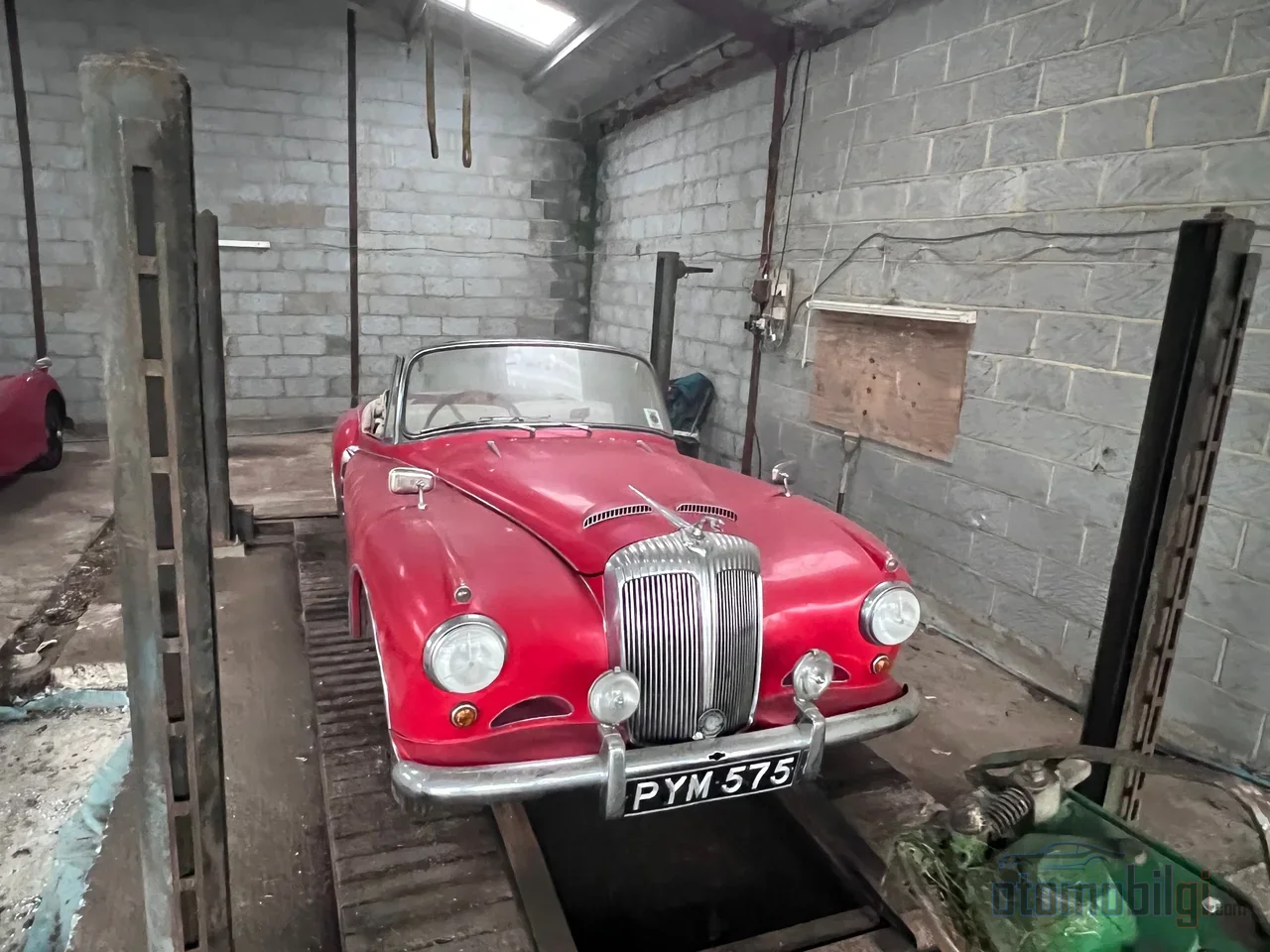
We have all come across that familiar picture in classified ads: a classic sitting in the corner of a garage, everything under the hood disassembled, the upholstery half removed, and the seller has added the words "for sale due to project reasons" in writing. The price can be less than half of the assembled version of the same model. A voice inside you immediately shouts: buy it, finish it in the garage, make a profit! But here is the truth of the matter: a restoration is never finished until the car is in sellable condition. In other words, what you buy in a half-finished project is not actually a car, but the sum of all the work remaining inside it. In this article I will explain how to calculate that sum, which questions to ask, and which projects to stay away from.
Why Does It Look So Tempting?
The appeal of a half-finished project is no lie. First of all, the price: a finished classic is many times more expensive than an assembled one. Second, some of the work has genuinely been done: maybe the body has been painted, maybe the interior has been renewed, maybe the engine is half disassembled but its parts have been purchased. Third is the emotional side: unlike new cars, classic vehicles can appreciate in value over the long term. According to value appreciation indexes, "Blue Chip" class classics rise at rates like 17.4% and post-war German cars at 16.5%, while a new car can lose 10–40% of its value in the first year. So the idea of "put your money into passion, not into depreciation" is not entirely absurd.
But right here you need to develop a reflex: these price comparisons are usually made with factory-original, untouched examples. If factory standards cannot be achieved during the restoration, the vehicle's value will always stay below that level. In short, the gates of heaven are real, but an accountant greets you at the entrance.
The Invisible Bill: What Does the Remaining Work Cost?
The biggest trap of a half-finished project is calculating the cost of the remaining work with your own free labor. Yet if you are thinking of selling the car later (or even if you are not), the remaining work should be written down at professional labor rates. If you count your own garage hours as "free," the math will always look sweet; but in real life, when paintwork is done by hand in Türkiye, it runs in the 50,000–100,000 TL range, while original fabric or leather interior upholstery falls in the 20,000–50,000 TL band.
And there's also the betraying math of the job: even a project with a painted body and axle irons ready and waiting demands a new budget of roughly the same size to finish the remaining part. In other words, "half finished" doesn't mean "half the money needed." Since restoration costs rise over time, the remaining work on a project abandoned years ago can cost far more today. A concrete example from Türkiye: scrap-condition vehicles can be returned to their original state, and restored cars are said to be valued at the 100,000–150,000 dollar level; but the cost of the road to that value is not a figure everyone's budget can cover.
Time has an invoice too
After money, the second secret weapon: time. Everyone involved in restoration underestimates the time; so doubling the first estimate you hear and adding 6 months is a sensible starting point. Cosmetic renewal takes 3–6 months, mechanical renewal 6–12 months, and a complete ground-up restoration a minimum of 18 months, often 2–3 years. For a non-running vehicle listed for sale, the tow truck fee is a separate line item per mile; storage and insurance are fixed costs that quietly gnaw away at a budget left to go stale. In short, a project car, true to its name, is like a subscription that pushes you a little harder every month.
Rust: The Thing That Kills Projects More Than Anything Else
The biggest killer of restoration projects is rust. But not every rust is equally dangerous; telling the two apart is your strongest card in a half-way negotiation. Surface corrosion, that familiar rust stain on door edges and chrome parts, is mostly a cosmetic issue. Structural rust is a different game: the kind that appears on chassis rails, the undercarriage, suspension mounting points and floor pans, requiring cutting and welding. The latter shakes the budget seriously, both in terms of labor and parts.
Read the following signs as alarm signals:
- Blistering paint heralds rust pushing up from beneath; that area needs to be completely stripped down and repaired.
- Sills under the doors, inner fenders hidden inside plastic cladding, and the area around the fuel tank are the favorite hiding spots of overlooked corrosion.
- The trunk floor and suspension mountings must always be inspected by hand and eye during an undercarriage check.
- Repeated corrosion failures in the inspection history may indicate the problem was covered up with a temporary repair.
As for the listing photos: a simple honesty test can be applied here. A seller who uploads 10 clear photos showing the damage, the undercarriage and problem areas is generally sincere; only 3 photos taken from flattering angles is a sign of concealment. Never make a decision without putting the car on a lift, because leaks, old damage and corrosion that don't show in the listing photos only reveal themselves when you're lying underneath. A buyer who wants to see problem areas does not clash with the seller; on the contrary, a buyer who truly knows their stuff is the person a seller is most comfortable with.
Questions to Ask When Inspecting a Half-Finished Project
The most critical skill when buying a project car is asking the right questions. The list below can be used as a checklist to work through on the phone with the seller or in front of the car:
- What parts are missing? If the engine, transmission, or interior trim is completely gone, the project becomes significantly more expensive.
- Are there invoices and photo records of the work done? A seller who documents everything gains a major advantage in the trust question.
- Do the chassis and VIN numbers match the registration certificate? A mismatch in numbers is one of the most critical mistakes in a purchase.
- Are there signs of previous amateur repairs? Filler, rivets, and bad welds mean the work has to be redone.
- Is there a history of fire damage? Fire-damaged cars are, for most hobbyists, the riskiest scenario to encounter.
- What quality are the reproduction parts? Bad replica parts sometimes turn out more expensive and shorter-lived than original second-hand ones.
Let me elaborate on the last point, because listings never say this: restorations done with a heavy replica bias can, due to panel gap differences, mismatched parts, and low workmanship quality, offer a many-times-worse driving experience than an original high-mileage car. So the phrase "we renewed everything" is not a value in itself, but a bundle of new questions to ask.
Work That Cannot Be Counted as "Already Finished"
It is essential to know how flexible the phrase "almost finished" is in listings. The following items, even if they look finished in the seller's eyes, should be written down on your account as open items:
- Purchased but not installed parts: A new carpet set not yet fitted or engine parts not yet renewed are half the job; buyers do not count these as finished.
- Engine and transmission not renewed: Until these are complete, the car counts as neither roadworthy nor ready for a for-sale listing.
- Body that has only been painted: A car whose body is painted but whose axles are sitting waiting requires another big budget for the remaining work.
- Surface rust cleanup: Surface rust having been cleaned from the chrome and door edges does not mean the structural problems in the floor pan and chassis rails have been solved.
Each of these items is a justified discount line in the price negotiation. When the seller says "there's a little work left," if you list each item at professional labor rates, you take the fate of the bargaining table into your own hands.
Getting the Math Right When Buying, Selling, and Negotiating
The value of projects should be assessed not by looking at listing prices, but by looking at completed sales. If you compare examples of the same model, same equipment, and same chassis condition, the real market picture emerges. In the negotiation, too, you should ask this question clearly: valuing the car not as it is now but in its finished state, how much does the remaining work cost? The answer, and the difference from the seller's price, is your negotiating space.
When setting up the budget, don't forget these items: towing fees, storage and insurance, parts sourcing, paint and materials. It's common for even cars bought at low-budget auctions to require serious extra expenses before hitting the road; for example, a car bought for £800 may demand at least £3,000 more before it runs. In other words, the listing price is the first line of the story, not the whole book.
The "almost ready" car alternative
I'll admit it, I too get carried away by the romance of a project, but there's a serious trend in the restoration world: a car that hasn't been fully restored but is "almost great" - one with a color change or in need of detailing - can be bought on credit and enjoyed without the hassle of restoring it from scratch. It should be approached with passion, not as profitable speculation; So in the "buy cheap, assemble in the garage" versus "buy one already assembled" debate, if your budget and technical knowledge are lacking, the second option often turns out to be the smarter choice. A mechanically sound car with a tired body is almost always a more sensible purchase than a running car with rust in a critical area.
The Half-Finished Project Market and the Paperwork Side in Türkiye
In Türkiye, interesting scenarios are still circulating on listing platforms: examples like a 1982 Mercedes-Benz 230 E W123 appear in listings with figures like 999,900 TL, while the classic car community keeps growing year after year. The final of the 2026 Türkiye Classic Car Championship was run in Istanbul with 40 classic cars; so it's possible to see just how broad the base of passion is. This dynamic environment also makes half-finished projects appealing: a cheap entry price and the thrill of "I'll finish it" go hand in hand.
The paperwork side should not be overlooked. While matching the registration document to the owner and declaring damage categories is critical in examples abroad, the inspection and registration regime matters in Türkiye as well. Private passenger cars have no inspection for the first 3 years, after which an inspection is required every 2 years; if the inspection isn't done, a fine is issued and an inspection becomes mandatory within 7 days. At the inspection, the registration certificate, national ID or driver's license, and insurance policy must be presented. Also, planning the documentation process required for classic car registration from the start largely prevents surprises down the road. In short, after the emotional purchase, bureaucratic patience is also needed.
Who Should Go For It, and Who Should Stay Away?
Carrying out a project is a personal journey in collecting, but also a financial risk. It should be approached with passion, not as a profitable speculation; chosen correctly, the car can gain value in the long term, but that's not guaranteed. Sometimes the combined cost of the car and restoration can exceed the market value of both. In other words, the math doesn't always add up; starting with this knowledge is the best insurance.
Recognizing the projects to avoid is just as important as finding the right one:
- Vehicles with major structural damage
- Vehicles missing the engine, transmission, or interior trim entirely
- Fire-damaged vehicles
- Vehicles showing poor amateur repair work such as filler, rivets, and bad welds
If none of these apply and parts availability is reasonable, a good "solid" project can be worth more than one that looks finished but hides cheap workmanship. The golden rule is this: when buying, don't think like a seller, think like a buyer; let your head win, not your heart. Someone who applies just the right amount of emotion and the exact amount of calculation can turn an abandoned project into a real treasure. Don't you think the character of the person who will finish a project matters as much as the project itself?
As a final word: a half-finished restoration project is a story that passes to your responsibility the moment you buy it. Writing the remaining pages requires both patience and budget. Someone who calculates them can, a few years later, turn that forgotten classic in the corner of the garage into one of the most talked-about cars on the road.
Sources
- Never underestimate how long or much money it will take to restore a classic car – Mark Waring
- FAQ: Is Classic Car Restoration a Good Investment? – Finch Restorations
- How to Find Perfect Project Cars for Restoration – RAW2K
- Classic Car Restoration Costs vs Scrap Value Explained – Global Ardour
- Does Restoration Add Value? Cost vs Sale Price – Classic Cars Arena
- Bringing classic cars to life – Anadolu Agency
- They hammer the scrap! Costs can exceed 400 thousand lira – Hürriyet
- Classic Car Restoration – Ceed Türkiye
- Classic Car Prices – sahibinden.com
- 2026 Vehicle Inspection Procedures – sahibinden Oto360
- How to Value a Barn Find Car – Yahoo Autos/Hagerty
- 5 Mistakes To Avoid When Buying A Classic Car – SlashGear