Patina or Paint: The Originality Debate in Classic Cars
Share This Page
Patina is the paint fading, light wear, and signs of aging that develop on a classic vehicle over the years; when preserved on the right car in the scene, it can be worth more than a resprayed restoration. So the question is not 'patina or paint' but 'which one for which car': in rare and documented vehicles originality is worth its weight in gold, while for common models a quality restoration or restomod may be the more sensible choice.
Highlights
- An unrestored, patinated 1965 Shelby Mustang at auction left its restored counterpart behind by about $100,000 after selling for $385,000.
- A restored BMW E9 coupe fetched $1,402,500 while an unrestored example found $1,897,500 - the premium paid for patina was $495,000.
- The Golden Sahara II however showed the opposite: $385,000 in its worn state, and after an extensive restoration in 2025 it sold for over $1.2 million. sold for.
- In today's market, original-paint examples can command 50-100% more than restored cars of similar mechanical condition.
- A quality comprehensive restoration costs on average between $40,000 and $120,000; show-quality work goes well beyond that.
What Exactly Is Patina, and What Is It Not?
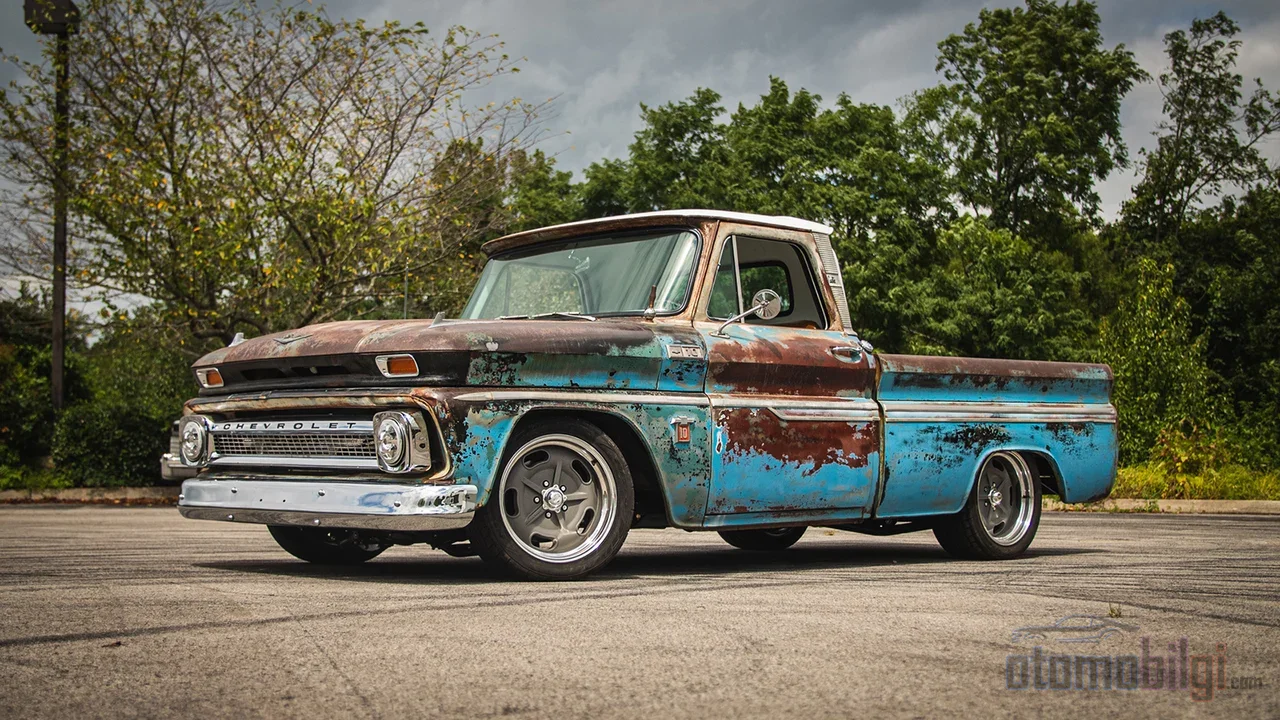
Think of it this way: the elbows of a favorite leather jacket fade over time, soften, and start to tell a story. Patina on a classic car is exactly that - paint slowly fading in the sun, the shine on door handles where fingers have touched for years, small cosmetic marks on the bodywork. These are not flaws; they are the record of the car's life. That is why, in the collecting world, patina is considered something earned; nobody calls it a 'tired look' - they call it 'authenticity.'
But there is a limit, and this is crucial: patina is not the same thing as damage and neglect. Rust holes are not patina. If the transmission tunnel is riddled with holes like Swiss cheese, that is not patina - that is a problem. Dirt on the windshield or gravel embedded in the carpet does not count as patina. In short, patina is a concept discussed on the assumption that the car is still solid and usable.
Survivor and barn find: two important terms
Let's get to know two concepts you will often encounter in the literature. Survivor car means a vehicle that has never been changed since it left the factory. Examples that have had only routine maintenance and consumable replacements - such as tires and cables - also fall into this category. Every survivor represents a piece of history that cannot be replicated; which is why, in the eyes of collectors, it holds an almost museum-grade status. Barn find as the name suggests, is a car discovered in a barn or garage, untouched. The popularization of this concept owes much to widely loved books of the 'I found a Shelby in my garage' variety.
Demand for these cars runs parallel to other areas of collecting. Think of a virtually unused Mickey Mantle card that sold for millions of dollars - not a copy in good condition, but the card itself. Originality is a finite resource; an authentic vehicle that has remained intact for decades is a truly miraculous find.
Why Is Patina Sometimes More Expensive Than a Resprayed Car?
Now for the part where the numbers speak. The examples from auction houses are striking: a 1965 Shelby Mustang sold in its unrestored, patinated state earned roughly $100,000 more than a restored Shelby. Even more interesting: after the roughly $100,000 spent restoring that Shelby, the car would still have remained around $285,000. In other words, the restoration did not add value; in a sense, it ate into it.
Another example: a restored BMW E9 coupe fetched $1,402,500 at auction, while the unrestored example sold alongside it reached $1,897,500. The difference - the premium paid for patina - was a full $495,000. These are somewhat dated figures, but the message is clear.
Why does this happen? First, original paint exists only once on most cars; one wrong sanding, one wrong shade of color can destroy it irreversibly. Today, examples labeled 'original paint' can appreciate 50-100% more than restored cars in similar mechanical condition. Second, when a good preservation story is supported by an unbroken chain of ownership, service records, and period photographs, the car's appeal grows exponentially. Documentation, you might say, is the currency of the patina world.
Patina tells the story of the car's life. In Europe, traces of age and wear are valued far more highly.
There is also a turning point for this perspective: in 2001, the preservation class judging at a prestigious concours event shook the equation of 'flawless shine = best car'. Since that day, a striped, faded but genuine body shell is weighed on the same scales as a flashy new paint job. Moreover, the owners of these cars do not put them in display cases - a Bentley 4½ Litre with around 200,000 km on it and painted in the 1930s, and an original-paint Jaguar E-Type SI with under 15,000 miles, are used in traffic. But be careful: a minor accident can instantly make restoration mandatory, destroying originality preserved for years.
So Why Aren't the Painters Wrong?
The other side of the coin is just as solid. The general rule of paint and body experts is this: well-executed paint and body work increases a car's value and draws interest. Value loss occurs only in extremely rare cars. Documenting the process with photographs significantly raises the paint's market value - all the questions of 'who did what, which color, which materials' must be answered with documentation on file.
The finest proof of this is Golden Sahara II. This iconic custom-built car took in $385,000 in 2018 in its worn, unrestored state. It then underwent a years-long comprehensive restoration, including the tire manufacturer reproducing period-appropriate tires, and in 2025 it went to its new owner at a price above $1.2 million - roughly a 212% increase in value over seven years. This example is the strongest evidence of the thesis that 'restoration does not erase history, it revives it'.
Then there is the matter of production numbers. High-production classics - early Mustang, Plymouth Valiant like this - a restomod conversion can increase value. But if the modification is poorly done, excessively trend-dependent, or too personal (polarizing colors, unusual interior trim), it lowers value. So paint and modification are not a magic wand; they are a tool that works when done appropriately for the vehicle.
A bad restoration can be worse than honest originality
The critical warning is this: a restoration done with wrong colors, non-original engines, and careless workmanship can be less valuable than an honest original vehicle, and fixing it proves costly. Especially in rare vehicles or with questionable workmanship, a respray can lower rather than increase value. Not every vehicle is a preservation candidate either - some garage finds are, unfortunately, so far gone that full restoration is the only way.
For such vehicles, a 'sympathetic restoration' is a smart middle path: repairing structural and mechanical integrity while preserving cosmetic character. The vehicle regains its soundness, while its story remains on the surface.
Fauxtina: The Fake Patina Phenomenon
Now let's move on to the slightly naughty side of the matter. Before auctions, some vehicles are deliberately dirtied, aged, and shown as worn - a practice known in the world as fauxtina, meaning fake patina. The experts' shared observation is ironic: real patina takes decades to form, the fake takes days. To tell the difference, you need to look at every centimeter of the vehicle - genuine wear is consistent; a quick 'aging' applied only to the prominent spots of the bodywork has no story behind it.
But there is a nuance here too: as long as it is not deceptive, skillfully executed aging originating from rat rod culture can be considered legitimate craftsmanship. What matters is being honest with the buyer; selling fake patina by claiming 'this vehicle has sat like this for 60 years' is an entirely different matter. This debate - is patina authenticity or fauxtina style - is not expected to be resolved anytime soon; both camps are stubborn.
Patina or Paint: Which Criteria Should You Use When Deciding?
Now to the real question. We have a classic and it's time to decide: original paint clinging to the door like a magnet, or a brand-new finish? Here is a practical framework drawn from common ground on the subject:
| Vehicle Condition | Sensible Path | Why |
|---|---|---|
| Historically significant, low production, documented, sound | Don't touch, preserve | Originality is finite and commands a premium; restoration is like filling the cracks in the Liberty Bell |
| Low production, low mileage muscle car | Absolutely don't touch | The original paint premium reaches 50-100%; turning it into a glossy replica destroys value |
| Genuine patina sound, no rust holes | Preserve, drive it | It gets back on the road much faster and cheaper without bodywork, sanding, and polishing |
| Commonly produced, in poor condition | Quality restoration or restomod | There is no valuable patina to preserve; good workmanship adds value |
| Structural/mechanical issues but full of character | Sympathetic restoration | Integrity is repaired, cosmetic character stays on the surface |
There is also the reality of cost: a quality, comprehensive restoration today averages $40,000-120,000 in between; show-quality, chassis-level work goes even more expensive. While a 'good' restoration costs around $50,000, a top-tier transformation can take a great deal more. So the 'paint it, it will gain value' idea doesn't pay for itself on every car - remember the Shelby example, the restoration cost wasn't added to the value.
And the final measure, the most important one: it's a matter of preference. The vehicle's monetary value isn't the only criterion. As PowerNation's paint expert put it, even if it won't save the value, you can paint your car any color you want - because everything is about what the vehicle means to you. But before the decision, it's essential to consult an expert who knows your goal; if your aim is to preserve history, leaving it untouched is the best course.
How Is Restoration Culture Going in Türkiye?
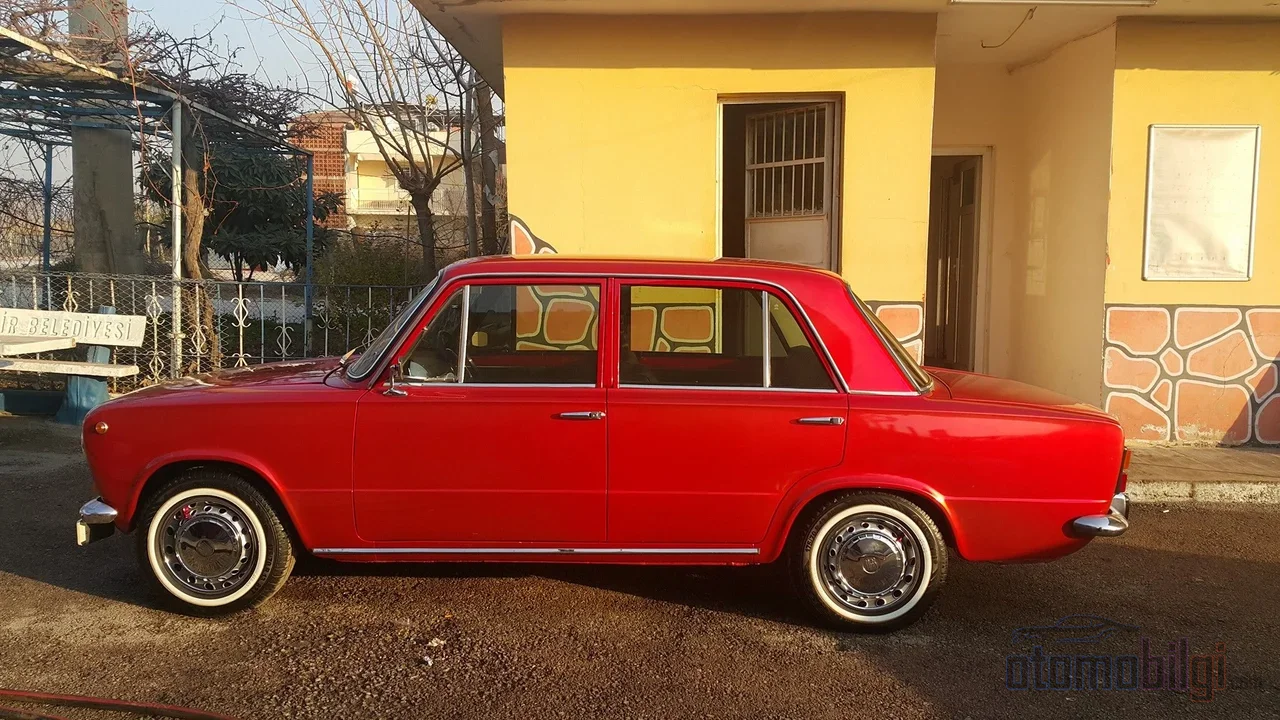
In Türkiye, this discussion has its own unique counterpart. The Ersöz family in Bursa has been restoring wrecked classic cars and returning them to their original condition for three generations. In Konya, Muhittin Kesercik, a master painter with about 40 years of experience, restores classics, including a 1968 Chevrolet, back to their original state from scratch. In Adana, Murat Yapru quit his job and opened a classic car garage; he brings wrecked vehicles back to their original appearance through restorations that take months.
The common challenge for all these workshops is always the same: finding original parts. Accessing original parts is one of the hardest parts of a project due to production techniques from decades ago. Solid data on how much patina premiums are paid in Türkiye is still limited; but in a culture that so loves master craftsmanship and "resurrection from the scrapyard" stories, it is not hard to predict that a good restoration done on the right car will find its reward. The global picture is also supportive: the market for classic car restoration and restomod services is estimated to be worth 7.4 billion dollars in 2025, with expectations of reaching 14.4 billion dollars.
Which Way Is the Market Leaning in 2026?
The short answer: it is not fully leaning any way. Over the past decade, interest in survivor cars has increased strongly, and the auction world now rewards a car-by-car judgment rather than a "restored" or "original" label. In other words, the same hall, on the same day, can reward one car's patina and another's restoration. There are even sales that push the limits of the story premium, such as a Ferrari selling well above its roughly 6 million dollar top value in the price guide.
Events that test the balance are also happening: a reserve-free barn-find dispersal of more than 180 cars in Europe is being watched as the cleanest exam of the difference between the "story premium" and "metal value." In 2026, the market is at a point where prices have not collapsed but have changed noticeably after the post-pandemic exuberance period. There are of course excessive examples: a 1980 pickup with 76 miles fetching $97,000 drew the "maybe not quite that much" comment from experienced eyes.
The summary formula is this: an original car preserves time and authenticity; a restored car celebrates craftsmanship, workmanship, and rebirth. The question is not which is better, but which serves that particular car best. Take another look at the car in your garage, ask its story: does that faded body tell a story, or has it simply started to rust? If you find the answer, you find the decision.
Sources
- Settling the Debate of Paint Vs. Patina With a Paint Specialist
- Column: Why Are Unrestored Cars Often Worth More Than Restored Ones?
- Restored Vs. Original Collector Cars: Which Is Worth More At Auction?
- To Patina or not to patina, that is the question - McKeel Hagerty
- How to identify if a classic car still wears its original paint
- How Much Does It Cost to Restore a Classic Car Today?
- What Separates Good Car Restorations from Great Ones
- Classic Car Restoration and Restomod Services Market
- Should You Restore a Classic Car or Leave It Original?
- Does Classic Car Painting Decrease Value? Debunking the Myths
- Answering the question of what's worth more: Restored or Survivor
- What Makes A Classic Car A 'Survivor Car'?
- Can you live with patina?
- Are Barn Finds and Project Cars in Trouble? - Hagerty Insider
- Barn find auction risk 2026 - ClassicTimers
- Are Classic Car Prices Dropping in 2026?
- Faded Glory – The Debate Over Patina and Fauxtina
- Turning classic cars from scrap into works of art across 3 generations - Anadolu Agency
- The differences between restomod and original restoration in classic cars - Otohaber
- He quit his job and opened a classic car garage - NTV