What Should You Pay Attention to When Transporting Your Classic Car Safely?
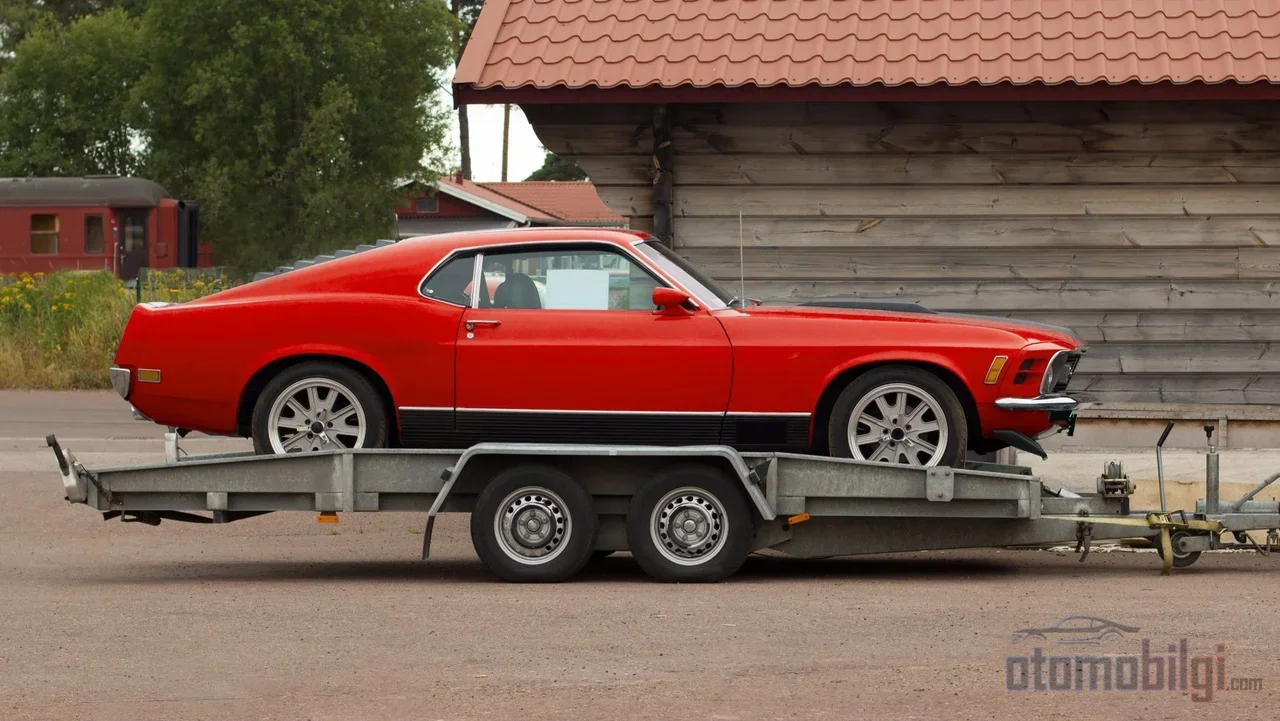
Share This Page
When transporting a classic car, focus on the three most critical issues: the enclosed trailerthat protects the vehicle from external factors, proper tie-down methods that do not damage the body, and transport insurance whose compensation limits are known in advance. When these three are set up correctly, the vehicle travels with the same confidence whether it is a city transfer or an intercontinental shipment.
Highlights
- Enclosed transport is on average 20–30% more expensive than open trailers, but damage claims are notably lower.
- Minimum insurance coverage on open carriers is 100,000 USD, while on enclosed carriers it is typically 500,000 USD.
- Tie-down points on classics are debated: from the chassis/suspension or from the tires? The answer varies depending on the vehicle type.
- For low vehicles, a long ramp, tilt-deck, or hydraulic liftgate can reduce the loading angle to below 4° .
- Before loading, always request a written insurance certificate from the carrier.
Why an enclosed trailer? The first decision in classic car transport
Think about it this way: would you want to leave a car you spent years restoring, its paint polished millions of times, right in the middle of wet asphalt spray and sand particles on the highway? That is exactly the risk of open transport. In multi-car carriers, vehicles travel side by side on a single trailer, secured with straps and chains; the cost is low, but there is always the risk of exposure to weather conditions and road debris. In enclosed transport, however, the vehicle travels entirely inside a locked metal trailer; the risk of stone chips, rain, sun, and theft is significantly reduced.
So what does this difference cost? Enclosed transport is on average 20–30% more expensive than open transport. Looking at the numbers, for a 500-1,000 mile distance, open transport runs roughly 200–800 USD, while enclosed transport is in the 600–2,000 USD and above range. For a high-value classic, this difference is almost negligible compared to the repair cost of a single stone chip. Moreover, the insurance ceiling is also higher with enclosed trailers: while the minimum coverage on open carriers is 100,000 USD (most companies carry 200,000–250,000 USD ), the typical level on enclosed carriers is 500,000 USD , and upon request it can go up to 2 million USD.
| Feature | Open Transport | Enclosed Transport |
|---|---|---|
| Cost (500–1,000 miles) | ~200–800 USD | ~600–2,000 USD+ |
| Price difference | Reference | On average 20–30% higher |
| Insurance ceiling | Minimum 100,000 USD | Typically 500,000 USD, up to 2 million USD |
| Weather and debris risk | High | Minimized |
| Additional advantages | Good ventilation, low loading height | GPS tracking, privacy, lock security |
To be fair, open transport has its defensible sides too: it can secure some insurance discounts, reduces condensation problems thanks to ventilation inside the trailer, and has a lower loading height. So it is not a must for every vehicle; but when we are talking about a classic that has just finished its restoration, with wire wheels and original paint, I think the choice is clear from the start. Also do not forget the seasonal effect: the surge in demand during summer months can push prices 10-25% upward, while in winter months 10% discounts are possible. If you can be flexible with your transport date, the winter calendar is good for your wallet.
Which enclosed trailer type suits which vehicle?
Do not think of a single box when it comes to enclosed trailers. Single-vehicle enclosed trailers are for ultra-luxury vehicles and prototypes; if multiple vehicles belong to the same owner, a multi-vehicle enclosed trailer is a more economical way. Trailers also come in soft-sided and hard-sided versions; hard-sided ones are recommended for show vehicles and high-value collectibles, because they offer a physical barrier against the risk of side impact.
When researching a transport company, look for these items in the trailer's feature list: air-ride suspension (absorbs road vibration like a sponge), hydraulic liftgate (lowers low vehicles down the ramp gradually instead of driving them up an incline), climate control, an interior tie-down system, and alarm/locking hardware. As of 2026, hydraulic liftgates have become so widespread in enclosed transport that the classic ramp problem for low-slung classic and exotic vehicles has largely become a thing of the past. Most enclosed trailers now come with real-time GPS tracking ; being able to see exactly where your vehicle is, down to the minute, means peace of mind over long distances.
Securing methods: should you strap from the chassis or the tires?
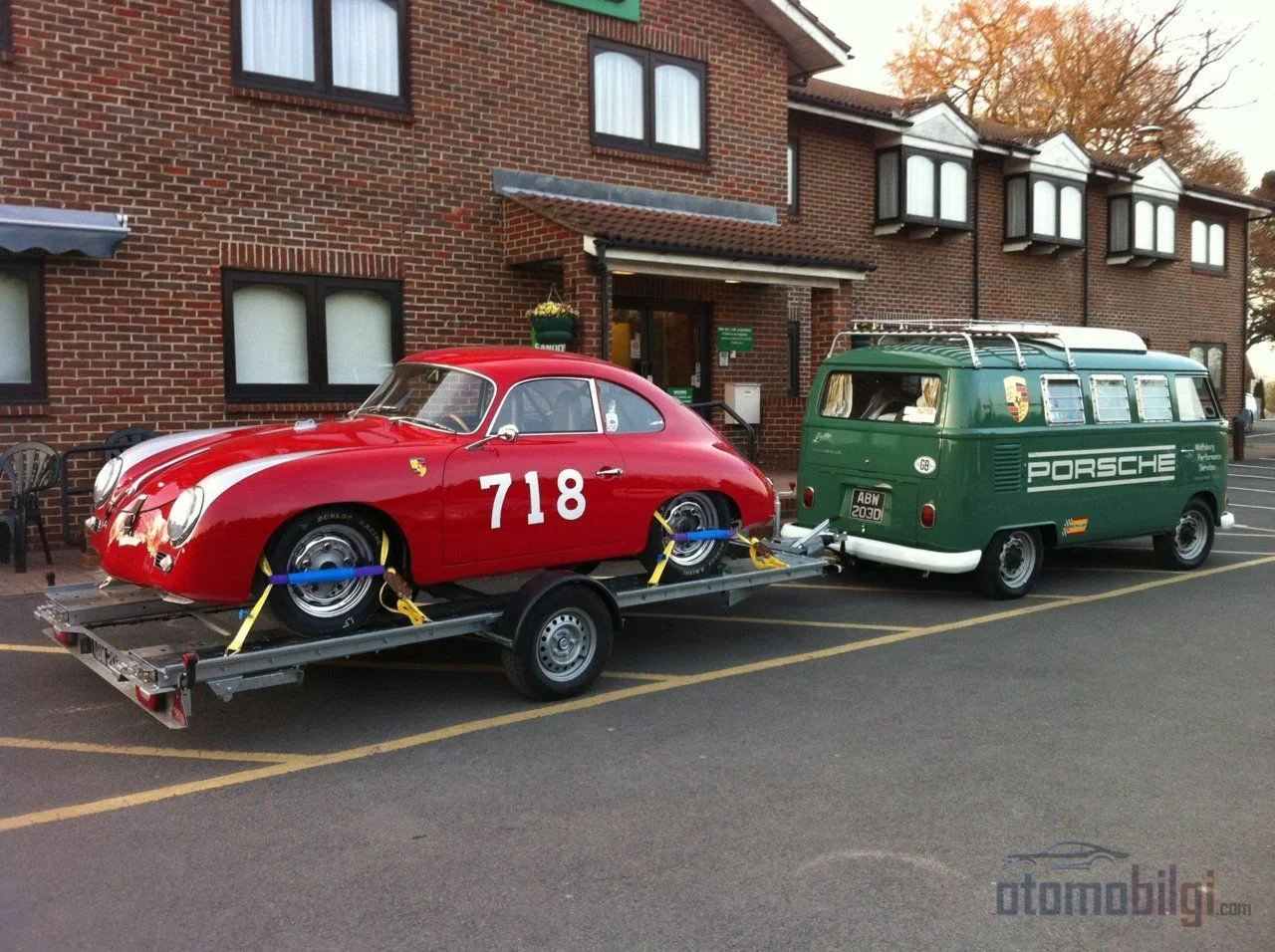
We have entered the trailer nicely, now the real question: what will we secure the vehicle with, and from where? There is an interesting debate here, and it is worth knowing. One of the well-established publications of the classic car world states the fundamental rule as follows: the connection should never be made from the body, it should be made from the chassis or suspension, and the vehicle must be secured with locking ratchet straps from all four corners before the trailer sets off. The logic is simple: body sheet metal cannot be an anchoring point on a forty-year-old automobile.
On the other hand, the soft-strap system adopted by companies that have been transporting classic vehicles in England for many years argues the exact opposite: securing is done from the tires, so the chassis and suspension are never stressed, and wire wheels and fragile vintage bodywork stay safe. This approach is supported with special wheel covers. A third camp consists of those who use wheel-nets, that is, wheel nets: this method, regarded as the "gold standard" for classics, applies no force to the suspension or body either. Axle straps and E-track systems are also among the recommended options.
So is there a need for confusion? In my opinion no, because the answer lies in the vehicle itself: with wire wheels, and for a vehicle with delicate bodywork, tying from the tires or with a net makes sense; on a sturdy-chassis, modern project, tying from the chassis is perfectly safe. The common rule that matters is this: connections are never made to body panels and all four corners are secured independently. If it is a non-running classic, meaning it cannot stand on its own wheels, full four-point tie-down is the only correct method; each corner must be locked separately.
Winch loading and the low clearance problem
One of the things classics hate most is the ramp. A vehicle with a front bumper, splitter, or exhaust outlet close to the ground risks scraping that infamous metal the moment it drives onto the trailer ramp. The solution is to reduce the ramp angle. Long ramps and tilt-deck trailers are the standard solution for low vehicles; with hydraulic systems, the loading angle can be brought close to zero. Special systems with extended door sections lower the loading angle to below 4°; exactly these kinds of solutions are designed for that low-riding car you will buy at auction.
The loading process itself is also a matter of discipline. The most practical method is an electric winch: instead of the vehicle climbing the ramp under its own power, it is pulled. Things to watch out for:
- The trailer must be parked on flat, solid ground.
- The wheels of the tow vehicle and the trailer must be chocked; nothing should move.
- The ramp angle must be reduced as much as possible.
- The vehicle must be centered on the trailer and pulled slowly and continuously with the winch.
These steps may seem simple, but one hasty move of the winch control can pin the front splitter to the ground. Patience is free here, while damage is expensive.
What does transport insurance cover, and what does it not?
Here we come to the most critical section, because most people settle for verbal assurance here. The rule is: before loading, always request the carrier's insurance certificate (COI) in writing. Check the insurance limit, exclusions, deductibles, and how the claims process works in this document. A verbal "everything is insured, my friend" carries no value against a document in the event of damage.
So what does transport insurance usually not cover? There are three classic exclusions:
- Items left inside the vehicle,
- weather damage from natural disasters such as hurricanes, typhoons, and earthquakes,
- mechanical faults that already existed before transport began (pre-existing).
That is why photographing the vehicle's condition before loading and after delivery is a lifesaver. Time-stamped photos form the strongest chain of evidence in a possible complaint. For high-value vehicles, special policies of approximately USD 5,000can be purchased in addition to standard cargo insurance; also be aware that the premiums for these extra coverages can increase by around 20 percent, and factor that into your decision.
The insurance landscape in Türkiye
On the Türkiye side, the picture is a bit more layered. There are cases where vehicle transport insurance can also cover damage during loading, unloading, and customs clearance; in other words, thinking that insurance is only valid on the road is wrong. On the other hand, mandatory traffic insurance, comprehensive insurance (kasko), cargo transport insurance, and carrier liability insurance are separate items; it is essential to clarify which one covers damage at the moment of transport. The exclusions of the Mandatory Highway Transportation Financial Liability Insurance under the Highway Transport Law are also discussed in legal literature. My practical advice is this: before handing over your classic car, clarify at the table the limits of the carrier liability insurance and your own comprehensive insurance, and follow up in writing. Do not wait until after you have started transporting to resolve coverage uncertainty.
How to plan transport after an auction purchase?
When the hammer falls at an auction, excitement is at its peak, but the journey of the car from the lot area to your home or garage is where the real work begins. The first decision is the familiar dichotomy again: open or enclosed? For a high-value vehicle coming out of an auction, the answer is almost always an enclosed trailer. Next, vet the carrier, verify the insurance coverage, and document the car's current condition with photographs - the record proving that the condition at delivery matches the condition in the auction report is your only protection in any disputes that arise later.
Take the paperwork seriously as well: coordinate the flow of the sales invoice, transfer documents, and lot release documents in advance. Especially at international auctions, there are time limits for lot release; if you try to find a carrier in the hours after the hammer falls, you will both pay extra storage fees and end up choosing the wrong company in a rush. The common advice of practical guides prepared by transport-focused publications for auction exits is the same: plan the transport before you buy.
The same planning discipline applies to long-distance restoration shipments. Companies in Türkiye offer intra-city and intercity transfers as well as event logistics; for classics carrying collection value, enclosed container solutions are recommended. When sending your car to a workshop in a distant city, clarifying in advance the loading/unloading responsibility between the workshop and the carrier prevents that famous "who loaded it, who unloaded it" argument from the very start.
Checklist before hitting the road
- For high-value vehicles, an enclosed trailer, preferably with solid sides and air-ride suspension.
- Insurance certificate (COI) obtained in writing; limits, exclusions, and deductibles read carefully.
- Tie-down method chosen according to the vehicle: over-the-tire or wheel-net strapping for wire wheels or fragile bodywork, chassis tie-down for solid frames.
- Independent securing at all four corners; no connections made to body panels.
- Long ramps, tilt-deck, or liftgate arranged for low vehicles; ground level, wheels chocked.
- Vehicle documented with photographs before loading and after delivery.
- At auction purchases, invoice, gate pass, and lot release documents coordinated.
In short, classic car transport is a process involving far more engineering and paperwork than it appears. But once you set it up correctly - enclosed trailer, proper tie-down, written insurance, photo documentation - your car can travel even to the other side of the world with peace of mind. Which stage do you think gets skipped the most? In my opinion, it's asking for the insurance certificate. Don't forget that one next time either.
Sources
- Trailer Basics: How to safely move your classic car - Hagerty
- Open vs Enclosed Car Transport - uShip
- Classic Car Transportation: Covered, Enclosed & Concours-Safe Methods - CMG
- Open vs. Enclosed Car Transport - WeMoveCars
- Auto Transport Insurance in 2026 - Sherpa Auto Transport
- Auto Transport Insurance: What's Covered & Not - Cargo Auto Transport
- How To Safely Transport A Non-Running Classic Car - Auto-Stable
- What Helps Load and Unload Low-Clearance Cars on a Trailer - CoastMac
- Enclosed Trailer Winch System vs Loading System - Rail Ryder
- How to Safely Transport a Classic Car on a Car Trailer - Neighbors Trailer
- Vehicle Transport Insurance Coverage - Hanbros Cargo
- Guide to Vehicle and Transport Insurance - Panacea Insurance
- How to Transport a Car After Winning at Auction - RemarketSpace
- Auction Car Transport: A Dealer's Guide - GBCargo
- International Vehicle Transport - Filo Nakliyat