The Cost Equation of Car Restoration
Share This Page
Buying a project car in barn-find condition and restoring it yourself usually ends up more expensive than buying a completed classic; the advantage of a project car is the low entry price and the ability to spread costs out as if paying in installments, while the advantage of a restored car is hitting the road immediately with a known budget. So which one is it for you? Here is the balance of cost, time and risk with real numbers.
Highlights
- A full restoration usually runs $40,000-120,000 ; show-quality frame-off jobs go above this band.
- A full restoration takes 9-18 months, frame-off work takes 12-24 months or more; total labor can reach 2,000 hours.
- Rust repair alone falls in the $10,000-32,500 range, and can climb far higher depending on scope.
- Originality preserves value: factory-correct restorations hold their value more strongly than restomods and later-added features.
- In Türkiye, classic car listings range from about 245,000 TL to 1.7 million TL.
Project car or restored car: Which is cheaper?
The honest answer to the question is usually disappointing: buying a finished vehicle is generally cheaper than restoring a barn find yourself. Why? Because while you are looking at the barn find's price, the shop is billing every rusty panel it removes and the surprises lurking underneath. A full restoration typically costs $40,000-120,000 depending on the model's condition; frame-off, concours-quality jobs go above this band. With a more modest goal, "driver-quality" jobs with only mechanical and cosmetic refreshes start at the $20,000-50,000 level.
The project car's single big ace, however, is cash flow. The purchase price is low, and expenses are spread across months and years. You are not emptying your wallet all at once - but the total you pay is almost always higher. That is why a repeated piece of advice exists in the restoration community: first calculate the restoration cost, then look at the prices of completed and restored cars. You will usually be surprised.
| Criterion | Project Car (self-restored) | Restored Car |
|---|---|---|
| Initial cost | Low | High |
| Total cost | Usually higher, with unexpected surprises | Known upfront, then surprise-free |
| Cash flow | Smooth, spread over years | One large payment upfront |
| Time | Can take years, depending on your hobby | Immediately ready to use |
| Risk | Hidden rust, hard-to-find mechanics and parts | Verifying craftsmanship quality at purchase |
Rust is restoration's silent budget killer
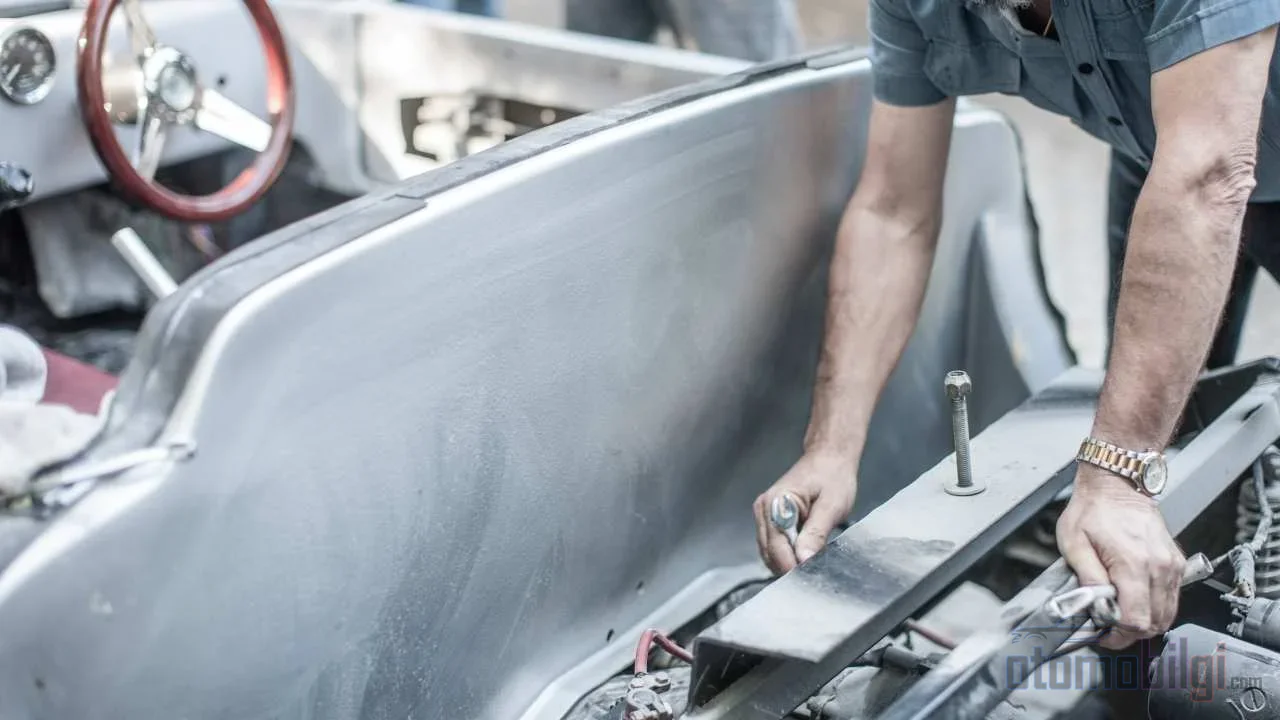
What makes restoration expensive is not the paint, but what you discover beneath it. Rust repair varies over a very wide range depending on scope: minor touch-ups stay at the $2,600 level, while deep repairs can exceed $78,000 . Most projects fall into the $10,000-32,500 band, and the biggest item in this category is labor. So unfortunately we are not talking about parts, but about the mechanic's effort.
What should you pay attention to when inspecting a car? A good purchase inspection looks at whether plastic filler has been used, paint cracks, chassis rust, and weld marks. On a junk car, these are your future bill; on a restored car, they are the seller's past bill. Which do you think is easier to manage?
How long does a restoration actually take?
The topic that doesn't hurt as much as cost but tests your patience is time. A partial restoration takes 3-6 months; a full restoration 9-18 months; show-quality work with chassis disassembly 12-24 months and beyond. For collection-quality work, 3-5 years is even being discussed. Panel fabrication, body preparation, and paint alone can exceed 600-1,000 hours .
Looking at it on an hourly basis, the picture becomes clearer: a full restoration is planned at around 2,500 hours but in practice there are jobs that reach 4,000-5,000 hours . For someone working in their own garage on weekends, this is literally a lifetime project. And there's the parts side: for original parts no longer in production, you need to turn to junkyards, forums, and custom manufacturing - which strains both your wallet and your calendar.
Why is finding a craftsman so critical?
The most real question of restoration in Türkiye is this: where will you find the right craftsman? In this trade, fine workmanship and choosing the right master are everything; it is said that in some cities the number of craftsmen who can paint a classic doesn't exceed the fingers of one hand. On platforms like Armut, 222 vehicle restoration companies are listed, meaning there are options - but distinguishing quality is up to you. The good news: classic car interest is growing in our country. Nostalgic vehicles from across the country participate in the Türkiye Classic Automobile Festival, which started in Ankara, and these venues are perfect for both finding craftsmen and listening to experience.
Originality, restomod, and value equations
There are three levels on the purity scale of restoration: a full restoration returning to factory condition, the restomod (engine swap, brake and suspension upgrades, air conditioning, modern sound system) which looks classic but is modern underneath, and the hybrids in between. On the value side, the scale is clear: restorations done with factory-correct colors, materials, and components hold value more strongly than jobs that add features later. Work done with original parts brings a higher sale value than work with aftermarket parts. "Matching numbers" - meaning engine and chassis numbers matching the factory originals - means a serious premium in the collector market.
The restomod, however, has its own balance. It is cheaper to build and maintain, highly reliable, and suitable for daily use. But it's hard to sell: the buyer pool is narrow and the sale price is generally lower. Later modifications can significantly reduce the market value of models with high collection value. In short, a restomod is for driving, a full restoration is for collecting - your usage style determines the decision.
Does the car's value cover the restoration cost?
So here's the heart of it in red: the answer is most often no. Restoration is a labor of love; not an investment. While costs on rare and unique vehicles can exceed expectations, value growth in the collector market is never guaranteed. A restored vehicle has the advantage of a higher and more stable resale value - but if you go in expecting to "recoup your costs," you'll most likely be disappointed. So why do so many people still do it? Because for some people, the sound of a screwdriver, the smoke from that first start, and the glances you get on the street make the numbers disappear.
What is the state of the classic car market in Türkiye?
Classic car prices in our country are rising rapidly due to increasing demand and exchange rate fluctuations. Looking at listings, the picture is broad: a 1975 Opel Ascona or 1979 Peugeot 504 starting at around 245,000 TL while some classic listings in Istanbul reach the 1.7 million TL range. The figures vary depending on listing date, so always check current listings when planning your budget. Also, although used motor vehicle imports are generally banned, antique vehicles with historical and collector value can be imported as an exception; there are also companies that import spare parts from abroad. On popular models - VW Beetle, Ford Mustang for example - finding parts is relatively easy; on rare models, sourcing is an adventure in itself.
Which one is for you: A decision guide
There are moments when both paths are justified. Ask yourself these questions, and the answer will guide you:
- Is your budget suited to a large one-time payment, or do expenses need to be spread over years?
- How much patience do you have in stock? Does a garage project that will take years excite you or scare you?
- Do you want to get your hands dirty, or is getting behind the wheel the real goal?
- Do you have access to mechanics and parts, or can you find a community you can reach out to?
If you want a quick and surprise-free classic, buy a restored vehicle. If you love the process itself - the donor iron, the rusty door, the moment of the first start - as a hobby, buy a project car but put a realistic surprise margin in your budget. If you're a beginner, add classic car insurance and periodic inspection to your plan; also, while the market was worth $39.7 billion in 2024, it's expected to nearly double by 2032, so it's not a bad time to enter this arena.
Final word: There is no single right answer in this business, only a well-calculated choice. Which side are you on - the greasy screwdriver garage adventure, or the joy of turning the key and hitting the road?
Sources
- Restored Classic Cars vs. Project Car Restoration: Which is Right for You?
- How Much Does It Cost to Restore a Classic Car Today?
- How Long Does a Classic Car Restoration Take?
- How Much Does It Cost to Restore a Classic Car?
- Classic Car Rust Repair Cost
- Before you dive into a restoration, read this
- How Restoration Affects the Value of a Classic Car
- Resto Mod vs. Original: Pros and Cons Explained
- The Realities of Buying a Classic Car
- Classic Car Import 2026
- How to Import a Vintage Vehicle? 2026 Guide
- Classic Car Listings
- Vehicle Restoration Price Quotes
- How Much Should You Expect to Spend Restoring